Step 1
Stop the water
Tarp the opening and control the water inside, so the next rain does not turn a small opening into a bigger repair. Emergency roof repair in Rochester handles the tarp and the first look.

Claims and Adjuster Help
A roof claim turns on records: the storm date, the photos, and a clear account of what the storm did. We help Rochester homeowners gather that record and get ready for the adjuster, so the claim rests on facts, not on memory.

How a claim works
A roof insurance claim starts with the storm. The storm date ties the damage to one event, the photos show what that event did, and a written record names what was found and where. Without those three, a claim is a conversation about a roof. With them, it is a file an adjuster can work from.
Rochester storms bring their own mix: lake-effect snow that loads a roof for weeks, spring wind that lifts shingles along the ridge, and summer hail that bruises shingles across a whole block. Each kind of damage leaves different marks, and the record has to name which storm did what. The National Weather Service Buffalo office posts storm reports for western New York, and those reports help pin the date to the damage.
We are roofers, not adjusters and not lawyers, and we do not decide claims. What we do is the roofing half of the claim: find the damage, document it clearly, and explain what the storm did in plain words, so you walk into the adjuster visit with facts in hand.
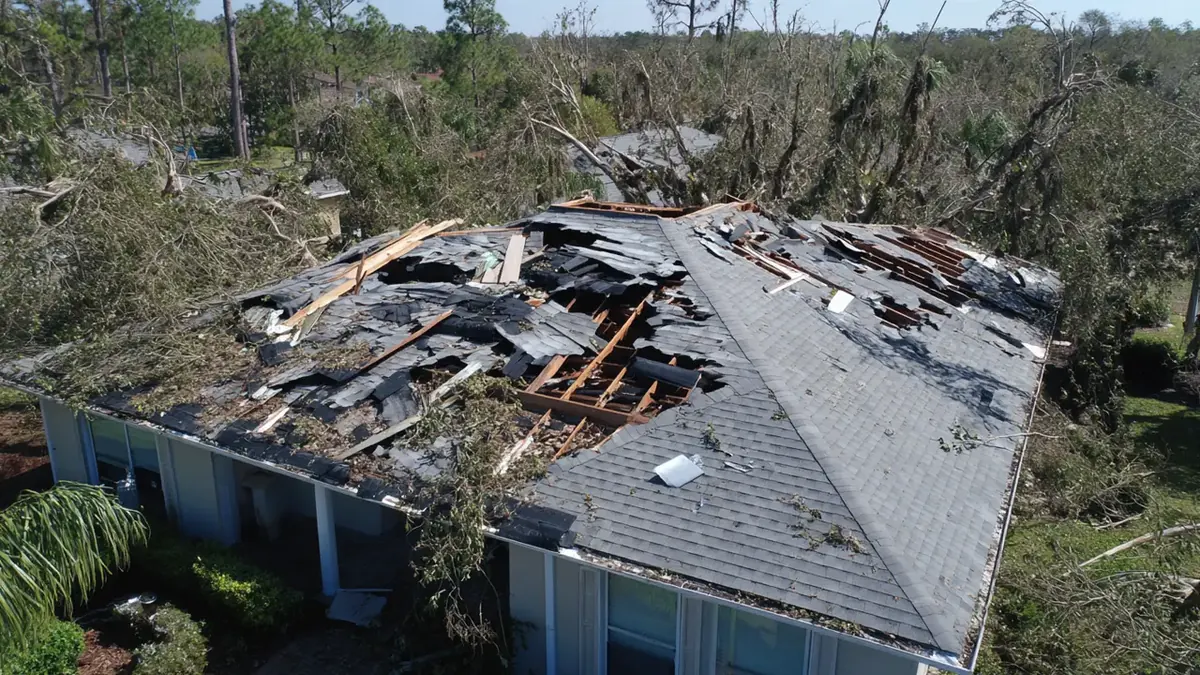
Wind damage is easy to see, since shingles go missing. Hail is quieter: the bruises hide under the granules, and a roof can look fine from the street while the shingles are bruised across every slope. Storm and hail damage repair in Rochester finds that damage with chalk marks and close-up photos, and the claim follows from the same record.
What the storm did
Every storm writes a different record on a roof. Here is what we look for after each kind of Rochester weather.
| Weather | Marks it leaves | Where we look first |
|---|---|---|
| Lake-effect snow | Heavy load, sagging valleys, ice dams at the eaves | Ridge lines, valleys, and the eaves above the gutters |
| Spring wind | Lifted tabs, creased shingles, missing ridge caps | Ridge, hips, and the windward slope |
| Summer hail | Round bruises, granule loss, dented vents and flashing | Every slope, plus metal vents and skylight flashing |
| Falling limbs | Punctures, cracked decking, torn underlayment | The strike point and the decking below it |
| Heavy rain | Stains on ceilings, damp insulation, rusted flashing | Valleys, chimneys, and skylight curbs |
The claim, step by step
The order matters: document first, repair second, and keep the record at every step.
Step 1
Tarp the opening and control the water inside, so the next rain does not turn a small opening into a bigger repair. Emergency roof repair in Rochester handles the tarp and the first look.
Step 2
Dated photos inside and out, the storm date, and a written list of what was found and where, before anything is covered up.
Step 3
Note the deductible, the ACV and replacement value terms, and what the policy says about storm damage and age, before the adjuster visits.
Step 4
Walk the roof with the adjuster when you can, with your roofer there to point out the bruises and lifted tabs that eyes from the ground miss.
Step 5
Once the claim is settled, agree the full repair in writing, so the work matches the record the claim was built on.
Before the adjuster visits
Gather the record first. Dated photos of stains, missing shingles, and dents, inside and out, taken before anything is moved or covered. The storm date, from the forecast or the news, so the damage ties to one event. And any receipts from the emergency work, such as tarping, which show what was done to stop the water.
Do not repair the lasting damage before the adjuster has seen it. A tarp is fine, and stopping the water is the right move, but the damaged roof should stay as the storm left it until the adjuster has had a look. Once the inspection is done, the repair can run, and the photos carry the record of what was there.
Walk the roof with the adjuster when you can, or have your roofer there for the visit. The adjuster sees many roofs in a day, and a roofer who knows the damage can point out the bruises and the lifted tabs that eyes from the ground miss. A roof inspection in Rochester gives the claim a full, documented look, slope by slope, and that record stays useful even when the claim question is still open.
The terms that matter
Three terms shape every roof claim in New York. Here is what each one means in plain words.
If the claim is denied
A denial is not the end of the claim. Ask for the denial in writing, with the reason named, and read it against your policy: a denial for wear and age reads differently from a denial for thin records, and the next step follows from the reason. A claim denied for thin records can be reopened with better photos and a clearer account of the storm date and the damage.
Whatever the outcome, the roof still needs its repair. A denied claim does not make the damage go away, and the water keeps coming in while the paperwork runs. Roof replacement in Rochester is the lasting answer when the storm damage is spread across the whole roof, and the repair can run while the claim question is still open. Roof repair in Rochester handles the smaller fixes, such as a torn valley or a lifted ridge, when the rest of the roof is sound.
Keep every paper the claim produces, from the first photos to the last letter. The record you build for this claim is the record you will reach for the next time a storm hits, and a homeowner who keeps it is a homeowner who never starts from zero.
People also ask
Short answers to the claim questions that come up most after a storm.
It depends on the deductible and the damage. When the repair sits near the deductible, filing may not be worth it, since the policy responds only above that figure. When the damage is spread across the roof, the claim is the right path, and the photos and records decide how far it goes.
Policies set their own deadlines, and they differ, so the policy is the document that answers it. The safe move is to file promptly after the storm, while the damage is fresh and the storm date is clear, and to keep the photos and receipts from the first day.
Yes. The policy covers the repair, and the choice of roofer is yours. The insurer may suggest names, but the roofer who does the work is the one you hire, and the written scope you agree with that roofer is the plan the repair follows.
The claim starts with the record, not the paperwork. Call and get the storm damage documented first.
Call (585) 868-0065Frequently asked questions
First the damage gets documented: dated photos, the storm date, and a written list of what was found and where. Then the claim is filed and the adjuster inspects the roof, often with the roofer there to point out the damage. The settlement follows the policy terms, and the repair runs once the claim is settled.
Actual cash value is the value of the roof as it stands today, with age and wear taken into account. Replacement value is what it takes to replace the damaged roof with a new one of like kind. Some policies settle on replacement value, and some settle on ACV first, so the policy is the document that decides.
Stop the water first with a tarp over any opening, then photograph the damage inside and out while it is fresh. Note the storm date, keep receipts from any emergency work, and do not repair the lasting damage before the adjuster has seen it. A clear record made on day one carries the whole claim.
Ask for the denial in writing, with the reason named, and read it against your policy. A denial for wear and age reads differently from a denial for thin records, and a claim denied for records can be reopened with better photos and a clearer account. The roof still needs its repair, whatever the outcome.
It often covers sudden storm damage, such as hail bruising shingles or wind tearing them off, but every policy reads differently and wear from age is usually excluded. Read your policy, note your deductible, and keep photos and receipts from the storm. Your insurer decides what the policy covers.
No. Tarping is emergency work, and stopping the water is always the right move. Cover the opening, photograph the damage first when you can, and keep the receipt for the tarp and the work. The adjuster can still see the damage from the photos and the record, and the tarp keeps a small leak from becoming a large one.
Keep going
A claim starts with the storm and ends with the repair. These pages walk both sides of it.
Storm damage repair in Rochester finds hail and wind damage and documents it with photos.
Learn more →Roof replacement in Rochester is the lasting answer when storm damage is spread across the whole roof.
Learn more →A roof inspection in Rochester gives the claim a full, documented look, slope by slope.
Learn more →Storm damage on the roof and a claim form waiting on the table? Call and talk through the damage photos and the next step.
Call (585) 868-0065The scope, line by line
The scope is the written list of what the insurer agrees to fix, and reading it line by line is where the claim is won or kept.
The scope lists the work slope by slope, and each line names a piece of the roof: the shingles on the front slope, the chimney flashing, the ridge cap, the vents, the gutters. A scope that reads "replace shingles, front slope" says nothing about the flashing beneath them, and the flashing is where the roof leaks first. The lines for flashing, underlayment, and ice and water shield matter as much as the lines for shingles, since a new roof over old flashing is a new roof with an old leak waiting in it.
Matching sits in the scope too, and it is easy to miss. A scope that names new shingles for one slope and leaves the other slopes untouched assumes the new shingles will match the old ones, and on a roof that has aged in the sun for years, the tone has shifted. The scope should name the shape and the tone, and the roofer should hold a sample against the existing roof before the work starts, so the repaired slope reads as part of the same roof instead of a patch that shows from the street.
The scope also carries the quantities, and they deserve a look. The number of shingles, the length of flashing, and the count of vents should match what the roof actually carries, and a scope that is short on flashing or missing a valley will leave the roofer short on the day. Walk the scope with the roofer, slope by slope, and ask what each line covers and what it leaves out. The questions are simple, and the answers show whether the scope matches the roof or only matches the photos.
Each slope gets its own lines, and the lines should name every slope the storm touched. A slope the storm bruised but the scope skipped is a slope that stays bruised, and the damage shows up as a leak in the next season.
Flashing at the chimney, the skylights, the walls, and the valleys gets its own lines, and each one should say whether the flashing is renewed or reused. Flashing that is reused after a storm has lifted it is a leak that the new roof inherits.
Supplements, in plain words
Some damage only shows once the shingles come off, and the claim has a path for that.
Tear-off is the moment hidden damage appears. The shingles come off, and the decking below shows rot where the leak ran for months, or the flashing at the valley comes away in pieces, or the insulation under a flat section is soaked through. None of that showed from the street, and none of it was in the first scope, since the adjuster could only read what the roof showed from above. The damage is real, and the claim has a way to add it.
The path is a supplement, which is an updated scope with the new damage added and documented. The roofer photographs the rotted decking, the worn flashing, and the wet insulation before any of it is covered over, and the photos go with a written note naming the damage and its place on the roof. The insurer reviews the supplement against the policy, and the added work joins the claim when the damage ties back to the storm. The roof stays covered while the supplement runs, so the house is dry through the wait.
The supplement works best when the record is built as the work runs. Photos taken the hour the damage is found carry more weight than photos taken days later, and a note written on the day says more than a memory written a week after. A roof inspection in Rochester walks every slope, photos in hand, and builds a record with written notes, and the record keeps its value while the claim is still being decided. Hidden damage is not a surprise to a roofer, and it is not a dead end for a claim, as long as the photos and the notes are made before the roof is closed up again.
| Hidden damage | How it shows | What documents it |
|---|---|---|
| Rotted decking | Soft boards under the shingles, found at tear-off | Photos of the soft boards with the slope named |
| Worn flashing | Flashing that lifts or crumbles when the shingles come off | Photos of the chimney, valley, or skylight flashing |
| Wet insulation | Soaked material under a flat section or in the attic | Photos of the wet material and the stain above it |
| Damaged underlayment | Torn or worn sheets below the shingles | Photos of the torn sheets with the slope named |
Common mistakes
Most weak claims are not denied for bad luck, and the mistakes behind them are easy to name.
The first mistake is waiting. A claim filed weeks after the storm has a blurred storm date, while the damage keeps changing in the meantime: the tarp has moved, the stain has dried, and the bruised shingles have weathered further. The adjuster reads a roof that no longer looks like the roof the storm left, and the file has to work harder to link the damage with a single storm. Filing promptly, while the marks are still fresh and the date of the storm is still easy to recall, keeps the claim tied to the storm that caused it.
The second mistake is clearing the damage before it is photographed. A homeowner who picks up the fallen shingles, sweeps the granules from the lawn, and patches the torn valley before the adjuster visits has tidied away the proof. The tarp stays, since keeping the water out is always the right call, and the lasting damage stays untouched until the adjuster walks the roof. Photos taken before anything is shifted, inside and out, carry the claim even when the roof itself has changed.
The third mistake is losing the paper trail. The first photos, the storm date, the receipts for the emergency work, the letters from the insurer, and the scope the adjuster leaves behind all belong in one place. A claim that loses its papers halfway through has to start again from memory, and memory is the weakest record a claim can carry. File the photos, the scope, and the final walk notes together, and the next storm starts with a record instead of a blank page.
A late claim has a blurred storm date and damage that has changed since the storm, and the file has to work harder to tie the two together.
Fallen shingles and granules swept away before the photos are proof that no longer exists, and the adjuster can only read what is left.
Photos, receipts, letters, and the scope scattered across drawers and phones leave the claim to run on memory, and memory is the weakest record there is.
A storm, a denial, or a claim you have not started yet. Call or email and tell us what the storm did.
Roofing Rochester, 75 S Clinton Ave Ste 510, Rochester, NY, (585) 868-0065