Granule loss across whole slopes
Gutters full of coarse, sand-like granules mean the shingles are shedding their shield against the sun. Once the asphalt underneath shows, the shingle bakes and cracks fast.
Full Tear-Off & New Roof
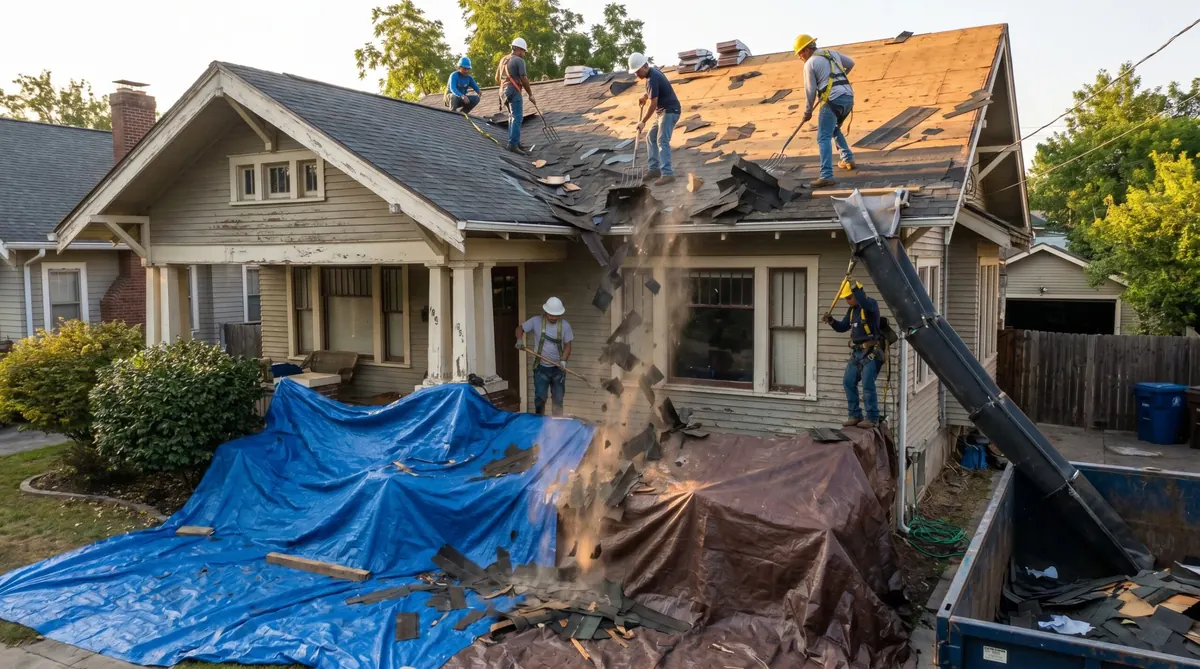
When patching stops working, a full replacement starts your roof over from the deck up. We tear off the old roof, check every board underneath, and build the new roof back layer by layer, so the roof over your head is sound from the inside out.
What a replacement is
A roof replacement is not a new layer on top of an old problem. It is a full tear-off: the old shingles, underlayment, and flashing come off down to the bare deck, so nothing worn or rotten stays hidden under the new roof. That bare deck is the moment of truth for the whole job, because every soft board shows once the covering is gone.
The new roof goes back on in order. Ice and water shield seals the eaves and valleys, underlayment rolls across the deck, then shingles run from the eave up to the ridge, with new flashing at every joint and a new drip edge along the edges. Architectural asphalt shingles in Rochester suit most homes here, while metal roofing in Rochester suits steep slopes and owners who want a longer-lived surface.
Cleanup is part of the job, not an afterthought. Debris goes straight into a dump trailer, the gutters are cleared, and the yard gets a magnet sweep with a magnetic nail sweeper so stray nails do not turn up in a tire or a bare foot later. When we leave, the roof is new and the yard is back to how it was.
Signs it is time
One sign alone can mean a simple fix. Several together usually mean the roof is near the end of its run.
Gutters full of coarse, sand-like granules mean the shingles are shedding their shield against the sun. Once the asphalt underneath shows, the shingle bakes and cracks fast.
Shingle edges that curl up or corners that lift catch the wind and let rain underneath. Curling across a whole slope is age showing, not one bad shingle.
A single leak can be a flashing detail. Leaks in two or three rooms at once usually mean the roof system itself is worn through in several places.
A deck that gives underfoot means the boards below are wet or rotted. New shingles over a soft deck will not hold nails, and they lift in the first strong wind.
A roof that has been patched twice on the same slopes is telling you the trouble is spread out. A third repair buys a season while the rest of the roof keeps failing.
A roof near the end of its expected life that also shows curling, granule loss, or leaks is not a candidate for more patching. The surface and the age agree with each other.
Wondering whether a repair will hold or a replacement is the honest answer? Call and talk through the options with a roofer.
Call (585) 868-0065Repair or replace
There is no single right answer, and the honest one depends on what the roof looks like up close.
Our rule of thumb: if a repair fixes the cause and the rest of the roof is sound, repair it. If a repair only buys a season while the rest of the roof keeps failing, a replacement stops the cycle. A roof inspection in Rochester gives you the facts to choose with, and the written scope spells out what each path includes.
Under the shingles
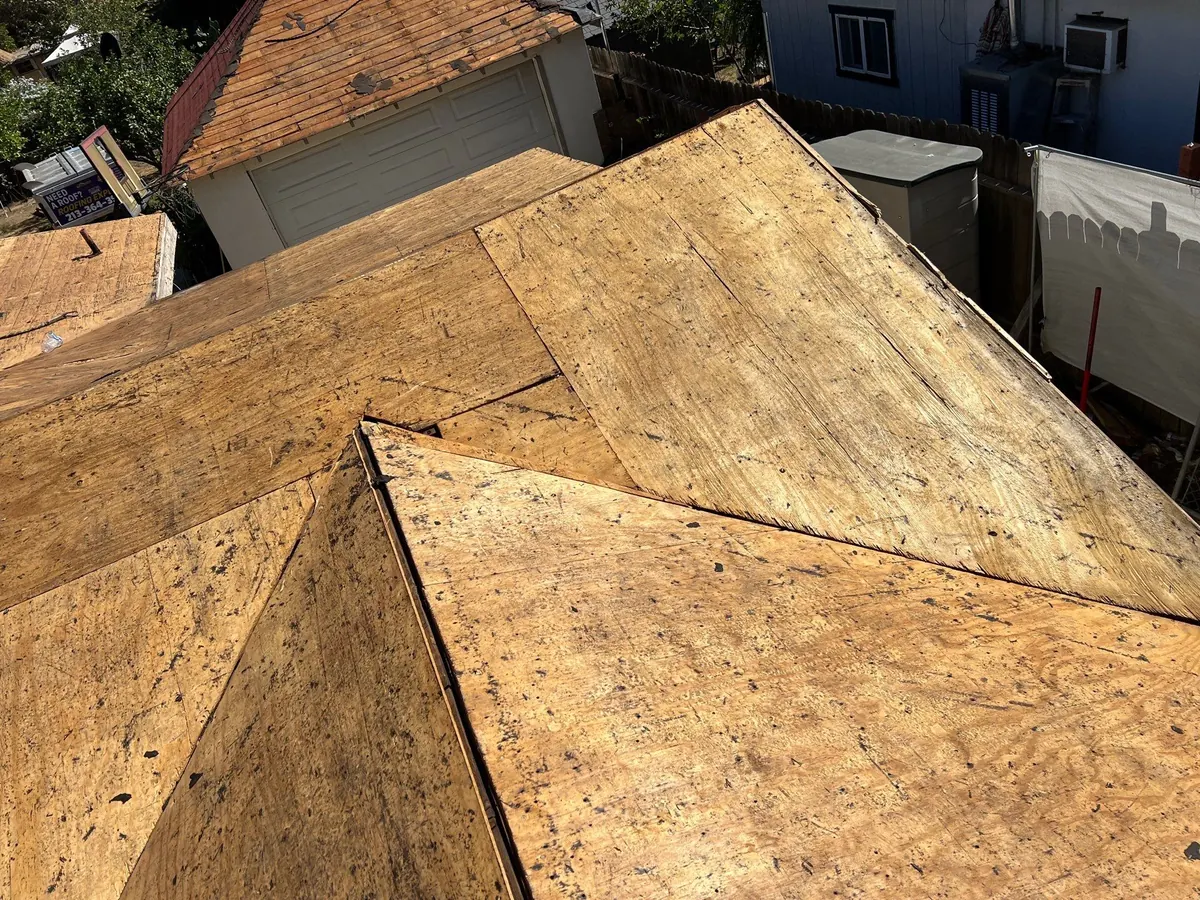
The tear-off is the only time anyone sees the whole deck at once, so we use it. Every board gets walked and checked, and any board that is soft, split, or rotted is swapped for new sheathing before anything else goes on. A new roof over bad decking is a new roof with a weak foundation, and it will not last.
Wood rot hides under shingles for years. It starts where water sat against the boards, often under a valley or beside a chimney, and it spreads quietly until the nails have nothing solid to bite. When we find rot, we cut it out to solid wood and fit new plywood or boards, so the new shingles nail into something that holds.
If solar panels are in your future, the replacement is the time to plan for them. We can set the layout so the sun-facing slope stays clear of vents and skylights, and we can plan a clean path for conduit from the roof to the panel box. The panels themselves come later, from a solar installer, but a roof built with them in mind saves rework down the road. Before the panels go on, it helps to read the post on solar roofing in Rochester, which weighs whether solar is worth it in upstate New York and what the roof underneath has to handle.
Two ways to reroof
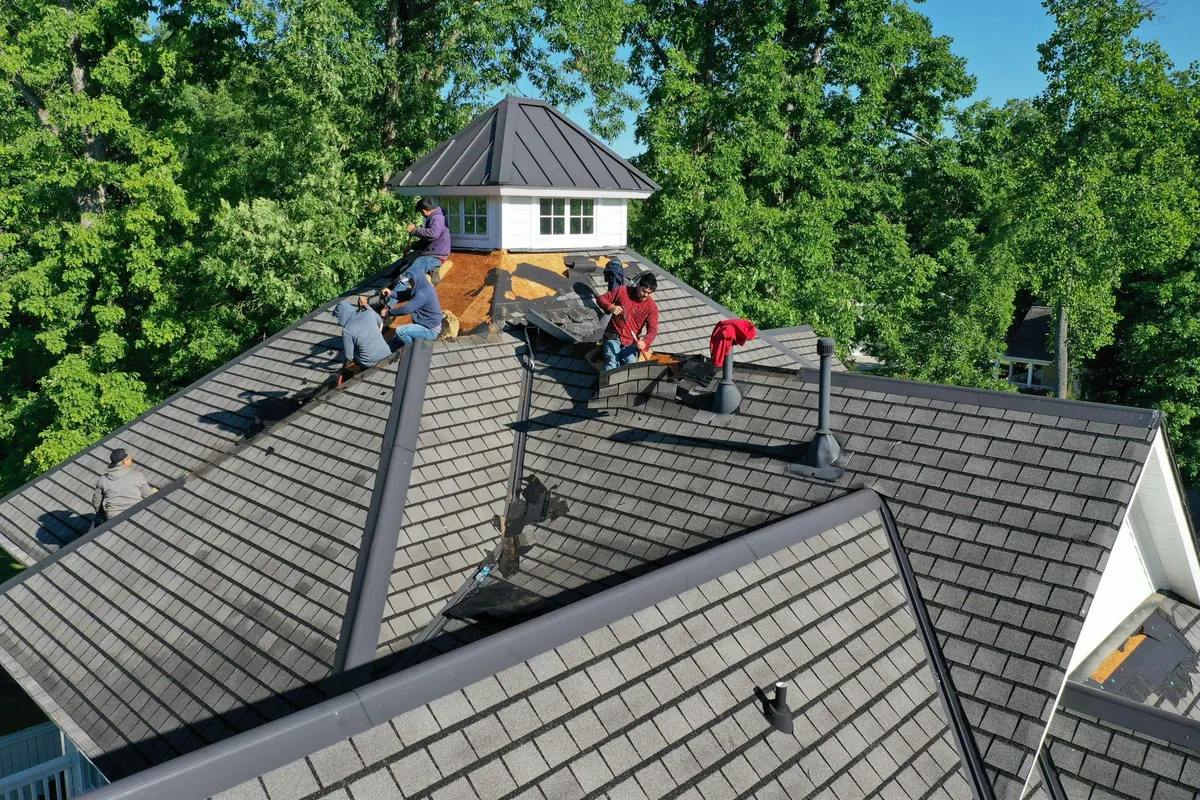
Roofing over old shingles is allowed in some cases, but it is not the same job as a tear-off. Here is how they differ.
| Option | What happens | Best when | Watch out for |
|---|---|---|---|
| Full tear-off | Old roof removed to the deck, deck checked and fixed, new system built up | The roof is old, worn, or has deck trouble | Takes longer and makes more mess for a day |
| Roof over | New shingles laid over the old layer | The old layer is flat, sound, and only one layer deep | Hides deck rot and adds weight to the roof |
Scroll sideways to see the full table.
Install week
A replacement is a loud, busy stretch of days. Knowing the shape of it makes it easier to live through.
Tear-off
Tarps go down over shrubs and walkways, then the old shingles, underlayment, and flashing come off down to the bare deck.
Deck check
Every board gets walked and checked. Soft or rotted decking is swapped out, and the written scope is updated to match what we found.
Dry-in
Ice and water shield at the eaves and valleys, underlayment across the deck, then shingles from the eave up to the ridge, with new flashing at every joint.
Finish
Ridge cap shingles and vents go on last, the gutters are cleared of debris, and the yard gets a full cleanup and a magnet sweep for stray nails.

Built for this climate
Rochester gets about 102 inches of snow in a season, much of it lake-effect snow off Lake Ontario, and that snow sits on roofs for weeks at a time. The National Weather Service Buffalo office tracks the lake-effect bands that drop the heaviest snow on the city, and our roofs are built with that load in mind, from the deck up.
Ice and water shield runs along the eaves and up the valleys, where meltwater backs up behind ice dams and tries to work under the shingles. Drip edge keeps that water moving into the gutters instead of behind the fascia. Attic ventilation and insulation in Rochester matter here too, since a warm attic melts roof snow from below and feeds the ice dam at the edge.
Some reroof work needs a permit, and work that touches the structure usually does. The City of Rochester handles permits for work inside the city, and we tell you before work starts whether your job needs one and who handles it. Before any work starts, you get the scope in writing: what we will do, what we found, and what happens if hidden damage shows up once the old roof comes off.
People also ask
Short answers to the roof replacement questions that come up most in real conversations.
Sometimes, when the old layer is flat, sound, and only one layer deep. But a roof-over hides the deck, so rot and soft boards stay unseen, and it adds weight to the roof. A full tear-off is the safer choice when the roof is old or the deck is in doubt.
The deck tells on itself once the old roof is off: boards that feel soft or spongy underfoot, boards that are split, and boards darkened by rot all need swapping. From the attic, daylight through the deck and damp, stained boards point the same way.
Late spring through early fall gives the steadiest weather, with warm days that help shingles seal and long daylight for the crew. Work can still run in colder months, but snow and short days slow the pace, so most owners plan the job for the warmer half of the year.
Still weighing a replacement against one more repair? Ask a roofer what your roof is actually doing.
Call (585) 868-0065Frequently asked questions
Look at the pattern across the whole roof, not one spot. Wide granule loss, curling across whole slopes, soft decking, or leaks in several rooms usually point to a replacement. A single leak near a pipe boot or a few lifted shingles after a storm usually points to a repair instead.
Most single-family homes take a few days from tear-off to final cleanup, depending on the size of the roof, the pitch, and how much decking needs replacing. Weather can stretch the schedule, since crews do not tear off more than they can dry in the same day.
A tear-off is the safer choice in most cases, because it lets us see and fix the deck underneath. Roofing over the old layer can work when the old shingles are flat and sound and only one layer is down, but it hides rot and adds weight, so we only suggest it when the deck is known to be solid.
The crew protects the yard, tears the old roof off to the deck, checks and repairs the decking, then builds the new roof back in layers: ice and water shield, underlayment, shingles, flashing, and ridge cap. The day ends with gutter clearing, a full cleanup, and a magnet sweep for nails.
No, most owners stay home through the job. Expect noise from hammers and nail guns, some vibration through the ceilings, and dust in the attic, so cover anything fragile up there and take pictures off the top-floor walls. The crew works outside, and the house stays livable throughout.
Yes, when it is built for this climate. Ice and water shield at the eaves and valleys, a sound deck, and new flashing at every joint keep meltwater out. Pair the new roof with sound attic ventilation and insulation, and ice dams have far less to feed on through the winter.
Keep going
A replacement touches more than the shingles. These services often go with it.
Architectural shingles are the most common choice for a Rochester replacement. See how they compare with three-tab shingles.
Learn more →Standing seam metal suits steep slopes and owners who want a roof that sheds snow and rain fast for decades.
Learn more →New gutters with your roof keep the drip edge and the fascia working as one system from day one.
Learn more →Picking the surface
The shingle that fits a Rochester roof is the one that matches the slope, the shade, and the winters it will face, not the one that looks best in a sample book.
Architectural laminate shingles are the common pick on Rochester houses, and they suit the city for plain reasons. Their layered build gives each shingle a thicker edge and a shadow line that reads well from the street, and the extra layer adds stiffness against wind lift on exposed slopes. On a roof that faces the lake wind, that stiffness matters more than the pattern, since a shingle that stays flat sheds water and a shingle that lifts lets it in.
Three-tab shingles still show up on sheds, garages, and low-slope porches, and they have a place where the roof is small and the pitch is gentle. Their flat profile lays close to the deck, which suits a roof that never takes a hard wind, but the single layer leaves less body to resist curling once the sun and the freeze cycles work on it year after year. On a main house roof in Rochester, they are usually a step down from laminate, not a match for it.
Designer shingles copy the look of wood shake or slate with a heavier laminate build, and they suit houses where the roof is a large part of what you see from the street. The look comes with more weight per square and a longer install, since the courses are cut and set to break up the pattern, and the valleys and ridges need matching pieces to keep the look straight. A look at asphalt shingle roofing in Rochester shows the three styles side by side, and the choice usually settles once you stand on the street and see how much roof your house actually shows.
The common pick for a main house roof. Layered shingles with a thick edge, a shadow line, and a stiff body that holds its shape through wind and freeze cycles.
A flat single layer that suits small roofs, sheds, and gentle pitches. It lays close to the deck and keeps a simple look, but it shows age sooner on a large slope.
A heavier shingle that copies shake or slate. It suits houses where the roof fills the view from the street, and it needs matching ridge and valley pieces.
The schedule
Most replacements run to plan, and the ones that slip usually slip for the same few reasons, so it helps to know them before the first shingle comes off.
Weather is the first reason a job stretches. A crew will not tear off more roof than it can dry in the same day, so a forecast of steady rain holds the tear-off until the sky clears, and a cold snap slows the sealing of the shingles, since the adhesive strips need warmth to set. Lake-effect bands can drop snow on one side of the city while the other side stays dry, so the crew watches the local forecast for your street, not just the county, and plans the tear-off around it.
The deck is the second reason. Rot and soft boards only show once the old roof is off, and a roof that has leaked for years can hide more bad decking than the first walk suggested. Each bad board is cut out and swapped, and that work adds time, but skipping it would put a new roof on a weak base, so the schedule bends to the deck, not the other way around.
Staging is the third reason, and it is the one you can help with. A clear driveway lets the dump trailer sit close to the eaves, which keeps debris off the lawn and shortens every trip up and down the ladder. Cars parked on the street, a clear path to the side gate, and shrubs covered before the crew arrives all keep the job moving, and a roof inspection in Rochester before the job starts gives the crew a clear picture of the deck, the flashing, and the vents they will meet.
Rain holds the tear-off, and cold slows the seal. The crew tears off only what it can dry the same day, so a wet forecast shifts the start rather than risking an open roof.
Rot shows only when the old roof is off. Bad boards are cut out and swapped before the new layers go on, and that work takes the time it takes.
A clear driveway puts the trailer by the eaves and keeps debris off the lawn. Cars on the street and a clear side gate keep the crew moving.
A replacement is loud, and the crew starts early. A word with the neighbors the day before keeps the street calm while the hammers run.
Living through it
You can stay in the house through a replacement, and most owners do, but the house feels different for a few days, and a little planning makes it easy.
Noise is the first thing you notice. Nail guns and hammers run from the morning start until the crew wraps, and the sound travels through the top floor more than the ground floor, so a room at the back of the house stays quieter than one under the ridge. If you work from home, plan calls for the morning before the crew starts or step out for the loudest stretch, and keep pets in a room away from the work or with a friend for the day, since the vibration and the strangers on the roof unsettle them more than the noise alone.
Dust is the second thing. The tear-off shakes loose the dust that has sat in the attic for years, and some of it drifts down through light fixtures and attic hatches, so cover stored items in the attic with a sheet and shut the attic hatch tight before work starts. Wall hangings on the top floor can rattle loose with the hammering, so take down anything heavy or fragile until the crew is done, and expect a thin coat of dust on the top-floor sills that wipes off once the job is over.
The yard is the third thing. Tarps go over shrubs and walkways before the tear-off starts, and the crew works to keep debris on the tarps and out of the beds, but a few shingle bits still find the lawn, so keep children and pets off the grass until the magnet sweep is done. Park cars on the street rather than in the driveway, keep the side gate clear, and by the last day the yard should look the way it did before the crew arrived, with the gutters cleared and the new roof over your head.
Tell us what your roof is doing, and we will take a close look and talk through the honest options with you.