Call (585) 868-0065
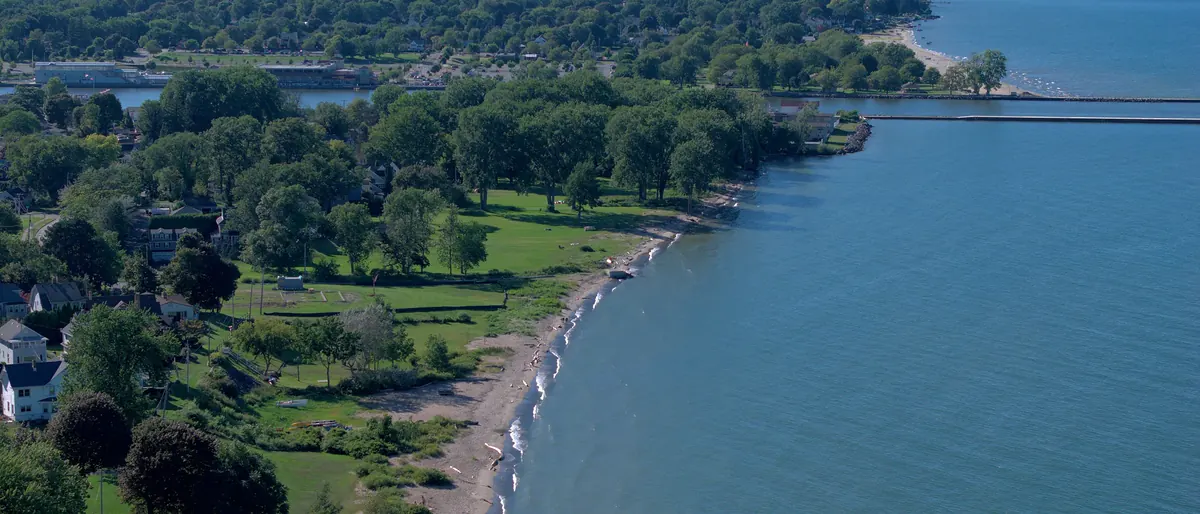
Aerial view of the Lake Ontario shoreline at Irondequoit, New York, with houses and trees along the beach

Lake Ontario Roofing

Lake Wind and Ice Dams on Irondequoit Roofs

Irondequoit runs from the Rochester city line to the Lake Ontario shore, and the lake sets the terms for every roof here. Wind off the water lifts shingles, lake-effect snow piles deep on low slopes, and ice dams form fast on the shaded north side of town. We work on roofs from Sea Breeze to the bay, and we read each one up close before we say what it needs.

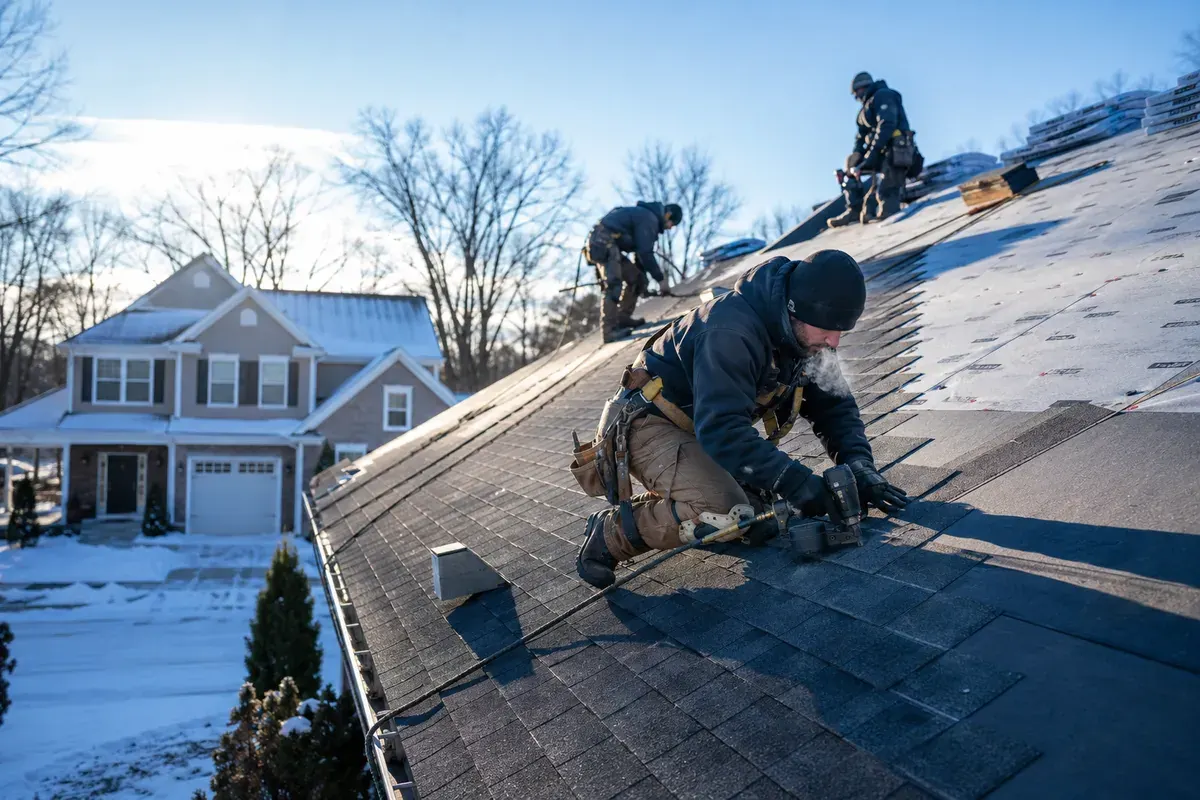
Roofer setting asphalt shingles on a snow-covered Irondequoit roof while a second worker carries a bundle up the slope

Irondequoit, NY

The lake writes the roof rules here

Three kinds of water wrap around Irondequoit: Lake Ontario along the north edge, Irondequoit Bay down the east side, and the Genesee River marking the west. Roofs here answer to all three. Streets just off Culver Road and East Ridge Road catch the lake breeze with nothing in front of it, while houses tucked behind Durand Eastman Park sit beneath old trees that hold snow and shade for days after a storm clears.

When a band forms over the lake, the National Weather Service office in Buffalo tracks where it will land, and this shore is usually first in line. A band can load one slope of a roof far heavier than the other, and the melt that follows has to get off the roof before the next band arrives. If it stalls at the edge, it turns to ice there, and the ice backs meltwater under shingles that were never meant to hold standing water. That is why roof snow removal and ice-dam prevention matter so much on a lakeshore roof.

Gutters and gutter guards carry that meltwater away, and the lake wind drives rain sideways into every joint along the run. A gutter that moves water off the edge keeps it from backing under the shingles, and a roof inspection after the first hard freeze of the season catches the damage while it is still small.
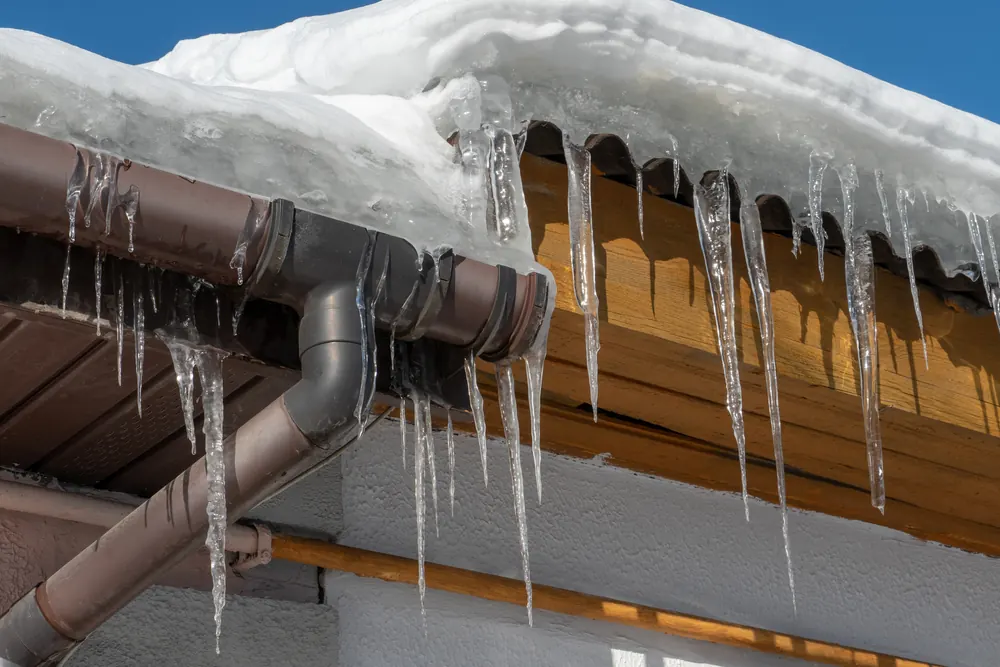
Long icicles hanging from a frozen gutter and roof edge on an Irondequoit house after a lake-effect storm

Winter at the eave

When the eave grows icicles

Icicles hanging from an Irondequoit eave look harmless, and they are easy to admire, but they mark the exact place where meltwater stopped moving. Snow over the warm middle of the roof melts on a sunny afternoon, runs down to the cold edge, and turns solid before it can drip away, and each cold day adds another layer to the same fringe. A short fringe after one cold night is ordinary on a lakeshore roof. A fringe that hangs for weeks means water is pooling behind it.

The icicles are not the problem. The dam behind them is. Water pooled at the eave slips under the shingles and into the deck, and the way to stop it starts in the attic, where warm air leaking through the ceiling melts snow from below. A look at the insulation and the venting usually shows where the heat escapes. Until the attic is sealed, the safest move is to pull snow off the eave with a plastic-edged rake, working from the edge upward and stopping before the shingles show.

Ice on the eaves and shingles lifting off the ridge? Call and we will start at the lake side.

Call (585) 868-0065

Lakeshore wear

What the lake does to an Irondequoit roof

Irondequoit roofs

Wind lift on the open slopes

Near the shore and the bay, the wind arrives with nothing to slow it, and it works on the rake edges and the ridge caps first. A tab that lifts along the rake gives the next gust a place to grab, so we look at the rake edges and the ridge caps before anything else on a lakeshore roof.

Irondequoit roofs

Ice dams on shaded north slopes

Snow melts over the warm center of a roof and turns solid again at the cold eave, and the dam grows a little with each thaw and freeze. Water pooled behind it finds nail holes and seams, and the stain inside shows up weeks after the dam formed.

Irondequoit roofs

Granule loss from heavy snow loads

Lake-effect snow sits heavy and wet, and clearing it roughly scrapes granules off with the snow. A roof that has been cleared hard for several winters often shows bare patches where the granules are gone and the asphalt shows through.

Corners of town

Sea Breeze cottages to bay-side colonials

Irondequoit packs a surprising spread of rooflines into a small town, and the roof over your head depends on which corner of it you stand in.

Sea Breeze Lake cottages

Small cottages and lake houses near the amusement park and the beach, where low slopes and lake wind make flashing and ridge caps the first things to check.

Durand Eastman Park Wooded slopes

Homes along the park edge sit under old trees, and the shade keeps roofs damp while leaves pile in the valleys every fall.

Titus Avenue Ranch rows

Long runs of mid-century ranches and split-levels, where the original low-slope roofs are now on their second or third set of shingles.

Culver Road Lake road homes

Houses strung along the road to the lake, where the wind comes straight off the water and the north-facing slopes take the worst of it.

East Ridge Road Ridge ranches

Brick ranches and Capes along the ridge, where the gutters carry a heavy leaf load from the mature street trees.

Irondequoit Bay Bay colonials

Colonials and newer homes along the bay shore, where water on both sides keeps the air damp and the north slopes slow to dry.

Compare

Picking a roof for a lakeshore street

Roof choices for Irondequoit homes, side by side
Roof optionWhere it fits in IrondequoitLake weather to watch
Architectural shingles for ranches and CapesMid-century ranches, Capes, and split-levels across townLake wind lifts tabs along the rake on the most open streets
Standing seam metal for bay and shore homesBay-side colonials and lakefront houses that take the wind head-onSnow slides off fast, so the gutters and the ground below need a plan for the slide
Three-tab shingles for older cottagesOlder Sea Breeze cottages still carrying an early roofThin tabs curl sooner where the lake wind works the edge every winter
Algae-resistant shingles for shaded slopesNorth-facing slopes under the trees near Durand Eastman ParkShade holds moisture, so moss still needs a look even where the shingles resist streaks

Services

The roof work Irondequoit calls for

Roof Replacement

Tear-offs for lakeshore ranches and bay-side colonials whose shingles have worn thin under lake wind and heavy snow.

Learn more →

Roof Repair

Leaks traced to their source on Sea Breeze cottages and ridge ranches alike, with the flashing and the deck checked too.

Learn more →
See All 22 Roofing Services

See every service we bring to Irondequoit roofs, from inspections to gutters. Or send us a note through the contact page.

Coverage

Two ZIP codes along the lakeshore

Irondequoit is a town in Monroe County, bordered by Lake Ontario to the north and Irondequoit Bay to the east, a short drive from downtown Rochester.

14617 14622

The 14617 ZIP covers the western half of town near the city line, and 14622 covers the eastern half toward the bay and the lake.

FAQ

What Irondequoit owners ask before they call

Warm air leaking into the attic melts the snow over the middle of the roof, and that meltwater freezes again at the cold eave, where it builds a dam a little taller with every thaw and freeze cycle. The lake wind drives snow hard against the north slopes, which makes the dam worse.

They need a roof built for wind first. Sea Breeze cottages sit in the open path of lake wind, so the ridge caps, the rake edges, and the flashing around the chimney take the hardest wear. A heavier architectural shingle or a standing seam metal roof lasts longer there than a thin shingle, and the fasteners and the underlayment matter just as much as the shingle.

Look for lifted tabs along the rake, granules piling in the gutters after a thaw, and stains on the ceiling near an outside wall. Heavy wet snow can also bow a low-slope section or crack an older deck board, and you may hear creaking on the coldest nights. A look from the roof itself finds the bruised shingles and the soft spots that never show from the driveway.

A roof rake from the ground can take the worst of it off a low eave, but climbing onto a snowy lakeshore roof is a bad idea, and a metal shovel scrapes granules off the shingles with every pass. We clear snow with a plastic-edged rake and a light touch, working from the eave up, and we leave a thin layer so the shingles never get scraped bare.

The valleys and the flashing go first. Bay-side colonials have more roof planes meeting at valleys, and the damp air off the water keeps those valleys wet longer after every rain. Step flashing at the dormers and the chimney flashing come next, because the wind off the bay works the joints year round. The field shingles usually outlast the metal around them.

Late spring through early fall gives the shingles the warmth they need to seal, and the lake wind is gentler then too. Winter work can happen when a leak forces it, but the shingles seal slowly in the cold and the crew has to manage the snow load up there. If the roof can last until the thaw, the crew works faster and the seal is stronger.

Nearby towns

Where to go next from Irondequoit

Webster runs east along the lake past the bay, and Brighton sits just south past the city line, and a visit to Irondequoit often stretches to one of those two towns too.

Three roof climates

Shore, bay, and inland: three Irondequoit roof climates

Irondequoit holds three roof climates in one town, and the street a house sits on decides which one its roof lives in.

A house on the lake shore, near Sea Breeze or the end of Culver Road, meets the wind head-on, with open water in front of it. Those gusts work the rake edges, the ridge caps, and any shingle tab that has already started to lift. Snow bands pile deep on the north-facing slope while the south slope stays almost clear, and the melt that follows has to leave through gutters that the same wind keeps filling with spray and grit.

A house on the bay side, along the Irondequoit Bay shore, trades some of that wind for damp air that never quite leaves. Fog off the bay keeps the north slopes damp well past sunrise, and the shade from the trees along the shore holds that moisture in place. Shingles there streak dark sooner than shingles on a drier street. Inland streets, behind Durand Eastman Park or up toward East Ridge Road, get the calmest version of the town, with tree shade in summer and snow that melts more evenly, and their roofs usually wear out at the valleys and the chimney joints first, not at the ridge.

How roof wear differs across Irondequoit shore, bay, and inland streets
Roof detailLake shoreBay sideInland streets
Hardest weatherOpen wind off Lake OntarioDamp air and morning fogEven snow, valley wear
First thing to checkRake edges and ridge capsNorth slope streaks and valleysChimney flashing and valleys
Snow patternDeep on the north slope onlySlow melt under shore treesFairly even across both slopes
Gutter troubleSpray, grit, and wind liftWet leaves packed in the runLeaf fall from the park trees
Covering that holds upArchitectural shingles or metalShingles with open, clear valleysArchitectural shingles, well vented

The practical point is simple: a roof read on the shore is not read the same way as a roof read two miles inland. The shore roof needs its edges checked after every hard blow, the bay roof needs its valleys cleared before the wet leaves set, and the inland roof needs its flashing watched where the shade keeps the deck damp. A roof inspection that starts with the street, not the shingle, catches the right trouble in the right place.

Park shade

What the park trees do to an Irondequoit roof

Durand Eastman Park gives Irondequoit its best shade and its most stubborn roof trouble, and the houses behind the park feel both sides of that bargain.

The old trees around the park and along the lake bluffs throw deep shade across the streets behind them, and that shade changes how a roof dries. A south slope under open sky dries within hours of a rain, while a north slope under the park canopy can stay damp into the next afternoon. Damp shingles grow algae streaks, the granules loosen sooner, and the deck underneath stays cool and wet through the warm months. The same trees drop limbs in a summer storm, and a limb that lands across a ridge can crack shingles that looked sound from the street.

Snow that stays put

Shade holds snow on a park-side roof long after the sunny streets have cleared. The snow melts from below where the house warms the deck, and the melt refreezes at the cold eave, so the dam grows while the rest of the street is already dry.

Limbs over the ridge

A branch hanging over the ridge rubs the same shingles every time the wind moves it, and the wear shows as a pale, bald line across the caps. Cutting the limb back stops the rubbing, and the caps underneath tell whether the wear has gone through to the mat.

Leaves in the valley

Park leaves gather where two slopes meet, and a wet mat of them holds water against the flashing for days. Clearing the valleys each fall keeps the water moving, and a valley that stays clear dries fast enough to keep the seam sound.

None of this means the trees should go. It means the roof under them needs a different rhythm: valleys cleared in the fall, gutters checked after the first hard freeze, and a spring look at the north slope before the algae streaks spread. The houses tucked behind Durand Eastman Park keep their shade and their value, and a roof that is read with the trees in mind lasts longer under them.

Patch or start over

Patch the lake-side slope, or start over

A lake-side slope can look ruined after one hard band and still have years left in the field, so the choice between a patch and a fresh start comes down to what the rest of the roof is doing.

Lake wind damage is often lopsided. One slope takes the blow while the other slope, sheltered by the ridge, comes through with its granules intact. That lopsided wear is the reason a close look matters more here than on a calm inland street. A roof that has lost tabs on the north slope alone may only need that slope rebuilt, with new underlayment and flashing where the wind opened the seams, while the south slope keeps working for years.

Patch it when

  • Wind lift sits on one slope while the other slope still lies flat
  • Granules still cover the field, with bare patches only near the rake
  • The deck feels solid underfoot across the whole roof
  • Leaks trace to one valley or one chimney joint, not to the field
  • The shingles are still flexible, not brittle at the edges

Start over when

  • Tabs lift on both slopes after the same lake blow
  • Granules wash out of the downspouts after every storm
  • The deck feels soft in more than one place when walked
  • Ice dams form at the same eave every winter despite new flashing
  • Repairs have already been made to the same slope twice before

When an Irondequoit roof sits on the line between patch and fresh start, we walk it with the owner and point at what the lake wind moved, and the roof itself settles the call.

The lake-side test is the rake edge. Run a hand along it after a blow, and a sound roof feels tight and even. A roof that is ready for a fresh start feels loose there, with tabs that lift at a touch and caps that shift under the hand. That one check, done on the slope that faces the water, usually settles the question before any other part of the roof is even looked at, and a roof repair that starts there holds because it starts where the wind starts.

Your Irondequoit roof, read before the next lake band

Lake bands pile snow on the bay side and grow icicles thick as a wrist along the eave, while a stain near the outside wall marks where the water got in. A message with the lakeshore street and the wall that stains lets the inspection start on the side the lake hits hardest.