Valleys
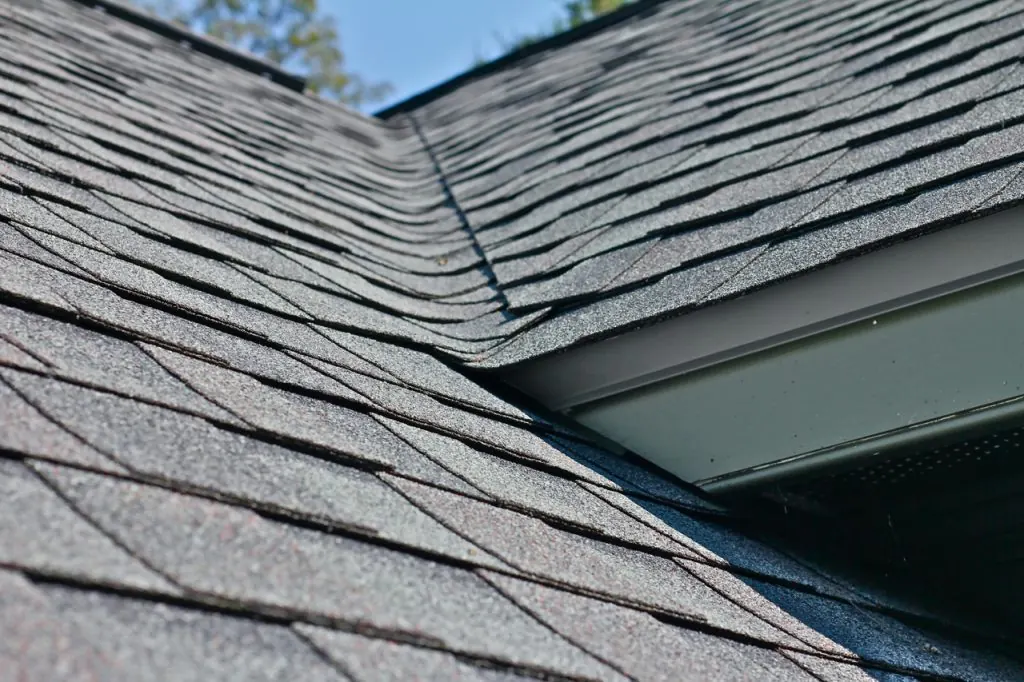
Two slopes meet and water concentrates there, so valley flashing wears first and valley shingles lift at the edges when wind gets under them.
Leaks Found and Fixed
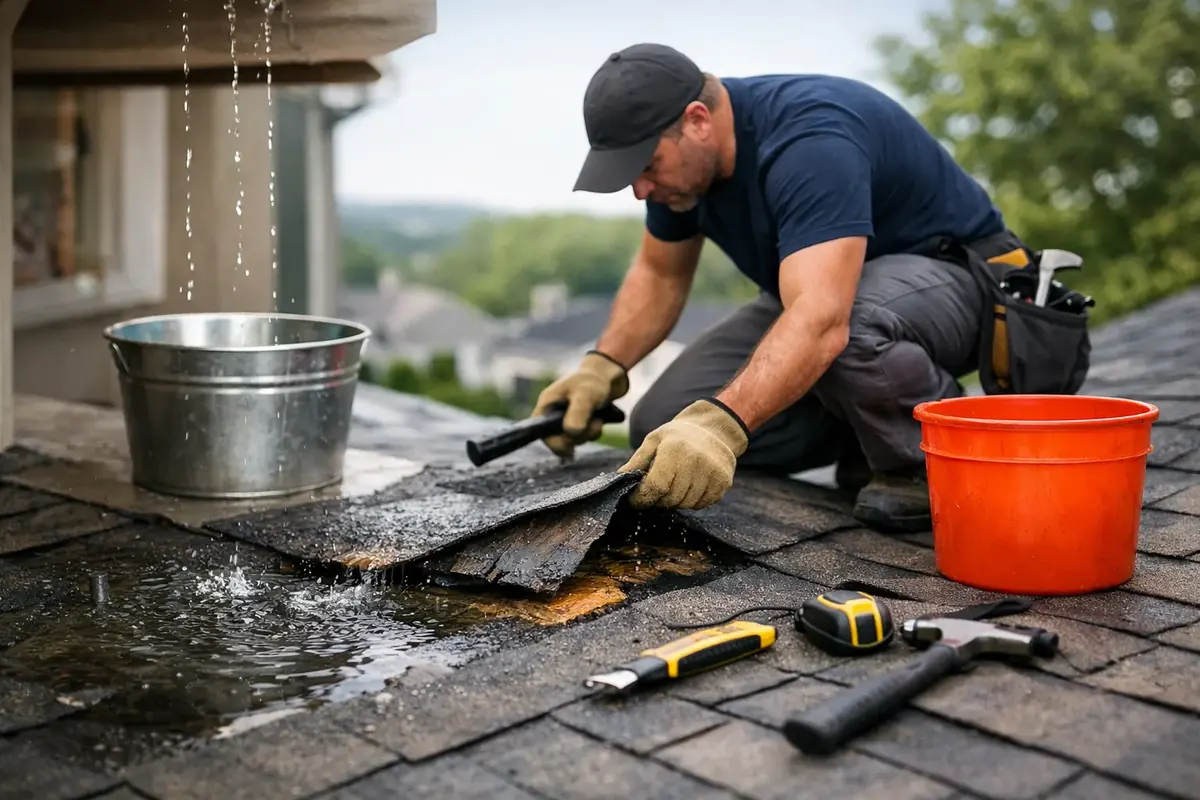
A roof repair is only a repair when it fixes the cause, not the symptom. We trace each leak to where the water actually gets in, fix that spot properly, and check the roof around it, so the same stain does not come back with the next rain.
How a repair starts
Water rarely drips straight down from where it gets in. It runs along the deck, follows a rafter, and shows up as a stain rooms away from the hole. That is why a repair starts with tracing, not with a tube of sealant. We look at the stain, then we walk the roof above it, checking the valleys, the flashing, the pipe boots, and the shingles uphill of the mark.
Most Rochester leaks trace back to a short list of causes: flashing that has cracked or lifted around a chimney or skylight, a pipe boot whose rubber collar has split, shingles lifted by wind on the windward slope, or a valley where water runs hardest. Storm and hail damage in Rochester adds its own causes, from torn shingles to dents that crack the surface. Each cause has its own fix, and the fix only holds when it matches the cause.
A roof inspection in Rochester is the right first step when the source is not clear from the ground. We walk the roof, lift the shingles around the suspect spot, and check the decking underneath for soft boards, so the repair we name is the repair the roof actually needs.
What are you seeing?
Tap a symptom to see what it usually points to on a Rochester roof.
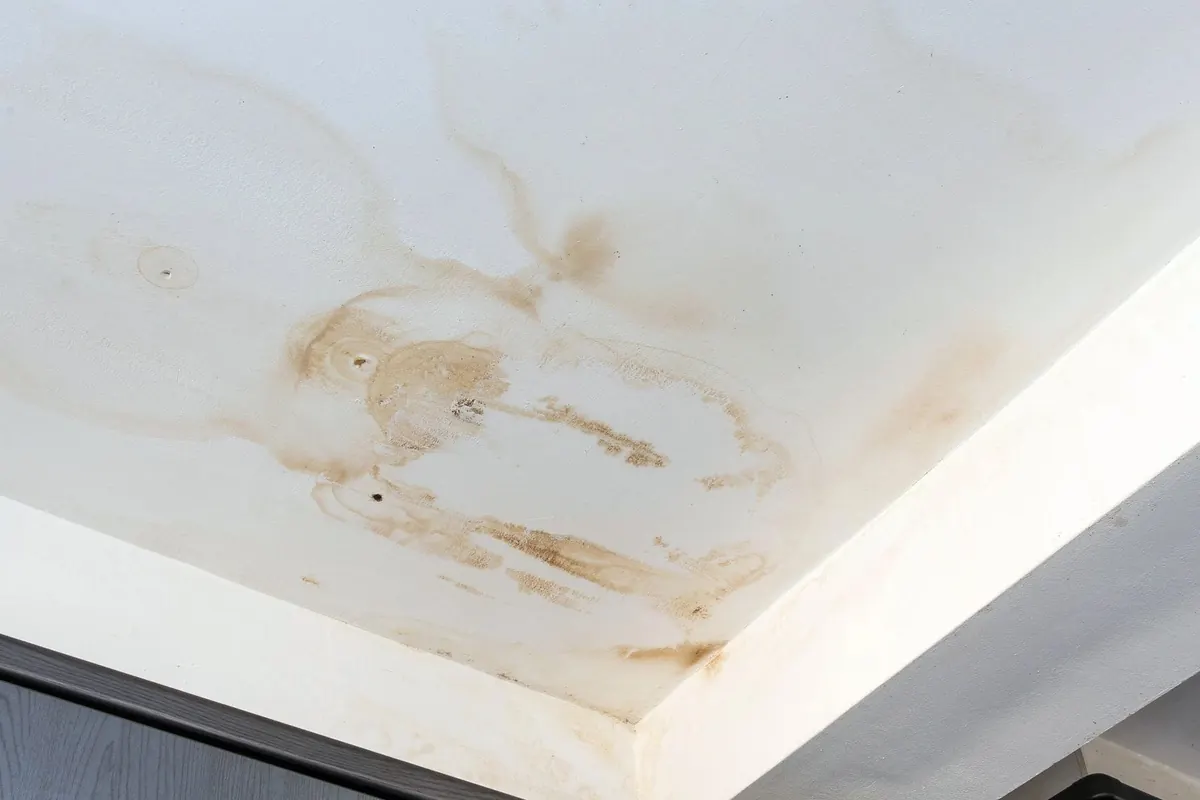
A brown ring on the ceiling is the end of a journey, not the start. Water got in uphill of the stain, ran along the deck or a rafter, and pooled above the drywall. The fix sits at the entry point, which is often a flashing joint, a valley, or a pipe boot above the stain, not above the stain itself.
Call (585) 868-0065Shingle granules shield the asphalt from the sun, and a gutter full of them means the shield is wearing off. Some granules after a new roof are normal. Grit by the handful, year after year, means the shingles are near the end of their run and repairs will not hold them together much longer.
Call (585) 868-0065Wind lifts the tabs that are already loose, and once one tab goes, the next course is exposed. The fix is to reset the lifted shingles and re-nail the ones beside them, and to check the whole windward slope, since wind rarely takes just one tab. A missing shingle left open lets rain straight onto the underlayment.
Call (585) 868-0065A drip you can see in the attic is good news in disguise: the water has not yet reached the ceiling. Look for the wet decking above the drip and follow it uphill to the entry point. In winter, that drip may be meltwater from an ice dam instead of rain, and attic ventilation and insulation in Rochester is part of the answer.
Call (585) 868-0065Common leak spots
Six places account for most of the leaks we trace, and each one has its own tell.
Two slopes meet and water concentrates there, so valley flashing wears first and valley shingles lift at the edges when wind gets under them.
Brick moves with the seasons, and the step flashing where brick meets roof cracks or lifts after years of freeze and thaw.
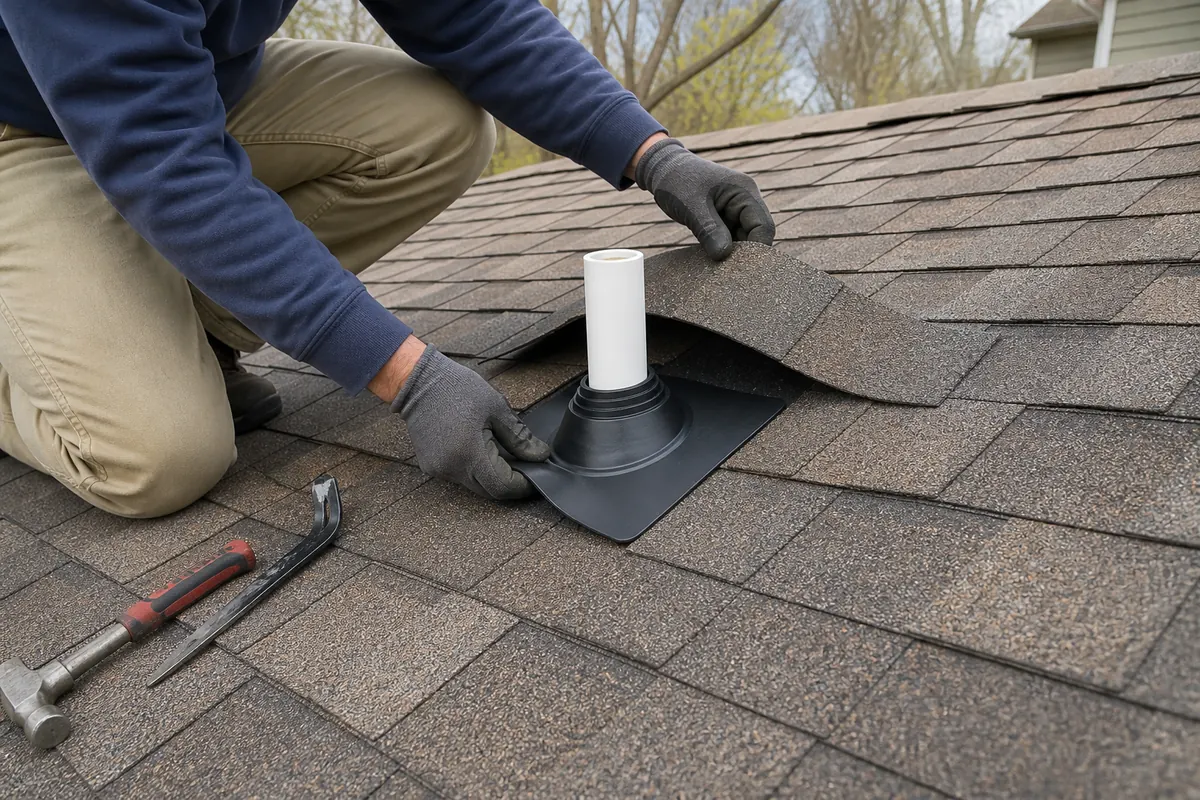
The rubber collar around a vent pipe splits with age and sun, and rain runs straight down the pipe into the attic.
A skylight is a hole in the roof, and its flashing kit and curb are the seal. When the seal ages, the leak shows at the skylight corners.
Ridge cap shingles take the full wind on the highest line of the roof, and when they lift, rain gets under the ridge vent.
Meltwater backs up behind ice at the eave and works under the shingles. Ice and water shield helps, but only where it was laid.
See a stain, a lifted shingle, or a drip after rain? Call and get the source found, not just the symptom covered.
Call (585) 868-0065What the fix looks like
The same symptom can mean a small fix or a bigger job. The roof decides, not the stain.
| Problem | What we do | What to watch |
|---|---|---|
| A few lifted shingles | Reset and re-nail the lifted tabs, seal the edges | Check the whole windward slope for more loose tabs |
| Split pipe boot | Fit a new boot collar over the pipe and reseal | Other boots the same age will split soon after |
| Cracked chimney flashing | Reset the step flashing and counterflashing, repoint the mortar | Brick that stays wet may need a mason as well |
| Valley leak | Open the valley, check the deck, set new flashing, weave shingles back | Soft decking under the valley means the fix grows |
| Ice dam leak | Clear the dam safely, check the shield and the attic airflow | The dam will return until the attic stops feeding it |
Scroll sideways to see the full table.
The quiet hero
Shingles shed water, but flashing directs it. Every place the roof changes direction or meets something else, a chimney, a wall, a skylight, a vent, needs a piece of shaped metal to carry water past the joint. When flashing is sound, you never think about it. When it cracks, lifts, or was never set right, water finds the gap on the first hard rain.
Step flashing is a set of small metal pieces woven into the shingle courses where a roof meets a wall or a chimney. Each piece overlaps the next, so water runs down the steps and off the roof. A repair here means lifting the shingles, setting new steps, and weaving them back in, never just smearing sealant over the top.
A pipe boot is a rubber collar that seals the gap where a vent pipe pokes through the roof. Sun and cold split the rubber over time, and the split lets rain run down the pipe. A new boot fits over the pipe and under the shingles above it, so water runs over the collar and down the roof instead of into the attic. Skylight repair in Rochester follows the same idea, with a flashing kit built for the skylight curb.
After the repair
A repair is done when the roof is dry and the cause is gone, not when the stain is painted over. The stain on the ceiling can wait for the next dry week. What matters first is that the entry point is sealed and the roof around it is sound, so the next storm tests the repair instead of the ceiling.
Some repair work needs a permit, and the City of Rochester handles permits for work inside the city. We tell you before work starts whether your repair needs one. And when the repair is done, roof maintenance in Rochester keeps small trouble small, with a regular walk of the slopes, the flashing, and the gutters.
People also ask
Short answers to the roof repair questions that come up most in real conversations.
Snowmelt behaves differently from rain. Snow sits on the roof, melts from attic heat below, and the meltwater runs to the cold eave, where it refreezes into an ice dam. Water then backs up behind the dam and works under the shingles. Rain runs off at once, so it never gets the chance to back up the same way.
Flashing, by a wide margin. Step flashing at chimneys and walls, pipe boots around vent pipes, and valley flashing wear out or lift after years of freeze and thaw. Shingles themselves rarely fail first. When a leak shows up, the joint where the roof meets something else is the first place we look.
A leak that keeps coming back is a cause that has not been found yet. Call and let us trace it to the source.
Call (585) 868-0065Frequently asked questions
Yes, and that is the best time to find it. A stain only shows after water has soaked through the decking and the drywall, so a leak can run for weeks before it marks the ceiling. On the roof we look for lifted shingles, cracked flashing, and split pipe boots, and in the attic we look for damp decking and daylight through the boards.
Most small repairs take part of a day: a few lifted shingles, a split pipe boot, or a cracked stretch of flashing. A valley repair or a chimney flashing reset can take longer, since shingles come off and go back on around the joint. Weather sets the pace, and we do not open a roof we cannot dry in the same day.
Yes, when the roof can be worked on safely. Cold shingles are stiff and can crack if they are bent, so winter repairs are done with care and often with a temporary seal until warmer weather allows a full fix. Ice dam leaks get the dam cleared first, then the shield and the attic airflow are checked once the roof is clear.
We match the shingle type and the shade as closely as the roof allows. New shingles always look a little different from weathered ones at first, since sun and seasons change the surface over time, and the new ones weather in over the months that follow. On an older roof, a small patch will always be visible up close and blend in from the street.
Wind drives rain uphill and sideways, under shingles that shed water fine in calm rain. The windward slope takes it first, and a lifted tab or a flashing joint on that side lets wind-driven rain in while the other slopes stay dry. The fix sits on the windward side, usually a lifted tab, a ridge cap, or a flashing joint that needs resetting.
Call now, even if the roof is wet. A roofer can trace a leak while it is active, and a wet roof shows the path the water takes. Waiting for a dry day means the trail goes cold and the stain dries out. If the leak is active, put a bucket under the drip, move anything valuable out of the way, and call.
A small leak is a small hole with water running through it, and water does not stop for the season. Over a winter it soaks the decking, feeds mold in the attic, and turns a small repair into deck work. If the leak is active, get it looked at now. A temporary seal holds the roof until a full repair can go in.
Keep going
A repair fixes one spot. These services look at the roof around it.
When the source is not clear from the ground, a full walk of the roof finds it, with plain-words findings.
Learn more →Wind and hail leave their own kind of damage. See how storm repairs differ from everyday leak repairs.
Learn more →Gutters full of granules say the shingles are thinning. New gutters and guards keep water moving off the roof.
Learn more →How a visit runs
A repair visit follows the same order every time, and knowing the order tells you what the roofer is doing on your roof and why.
The visit starts with the stain, not the shingles. The roofer looks at the mark inside, notes which rooms it touches and whether it grows after rain, then walks the roof above it, checking the shingles, the flashing, and the vents uphill of the stain. The attic comes next, since the decking tells the story from below: damp boards, stained rafters, and daylight through the gaps all point to the entry point, and the entry point is often a slope away from the stain itself.
Once the entry point is found, the fix is named in plain words, and the work starts with the shingles around the spot coming up so the layers below can be seen. A split boot is swapped for a new collar, a cracked stretch of flashing is reset and sealed, and lifted tabs are re-nailed and sealed at the edges, with the surrounding courses checked while the roof is open. The fix matches the cause, so a flashing repair is a flashing repair, not a tube of sealant spread over the top of the trouble.
A repair is not finished when the tools are packed. The roofer checks the roof around the fix for more loose tabs and cracked boots of the same age, looks at the decking under the repair for soft boards, and walks the gutters to see whether granules or shingle bits say the roof around the repair is wearing thin. The mark on the ceiling is the test: if it stops growing after the next rain, the repair is holding, and if it spreads, the source is still open and the roofer comes back to it.
Hold or cover-up
A repair that holds and a repair that only covers the stain look the same on the day, and the difference shows in the next hard rain.
The difference between the two shows up in the next hard rain, and it shows up fast. A repair that holds keeps the attic dry through a storm that drives rain sideways, while a cover-up lets the same stain spread a little wider with each storm, and each spread soaks more decking and more insulation. Rochester roofs face wind-driven rain off the lake and freeze cycles that pry at every weak joint, so a repair that only covers the stain rarely survives a full season, and the roof it leaves behind is wetter than the roof it started with. When the same slope needs patching again and again, the honest answer may be a full roof replacement in Rochester rather than another patch.
Old houses, own patterns
Rochester has a large stock of older houses, and their roofs carry the marks of every decade they have stood through, so the repairs they need follow a pattern of their own.
Brick chimneys are the first pattern. Many older houses in the city have brick chimneys that have moved a little with each freeze and thaw, and the step flashing where the brick meets the roof cracks or lifts as the mortar ages. A chimney repair on an older house often means resetting the flashing and repointing the mortar together, and chimney work in Rochester covers both, since new flashing set against crumbling mortar will not hold.
Plank decking is the second pattern. Houses built before plywood became the norm often have roofs laid over wide boards with gaps between them, and those gaps let shingles sag a little and let nails miss their bite. A repair on a plank deck needs longer nails and a check that the boards are still solid, and a board that has rotted under a long leak is cut out and swapped for a solid piece before the shingles go back on.
Past roof-overs are the third pattern. An older roof may carry two layers from a time when roofing over was the common choice, and the extra layer hides the deck and adds weight to the rafters. A leak on such a roof is harder to trace, since water runs between the layers before it shows inside, and a repair that opens the roof may find decking that no one has seen in decades. When the layers themselves are the trouble, a roof replacement in Rochester that strips the roof back to the deck is the repair that lasts.
Many older houses gained a porch or a back addition with a flatter pitch than the main roof. Water moves slowly on a low slope, so the flashing and the seams there need a closer look than the steep slopes above.
Original vents and skylights on an older house often outlast their seals. A vent boot that has baked in the sun for decades splits at the collar, and a skylight curb of the same age lets water in at the corners.
A stain, a drip, or a damp patch after rain all point somewhere, and a look at the roof finds where the water is getting in.