Call (585) 868-0065
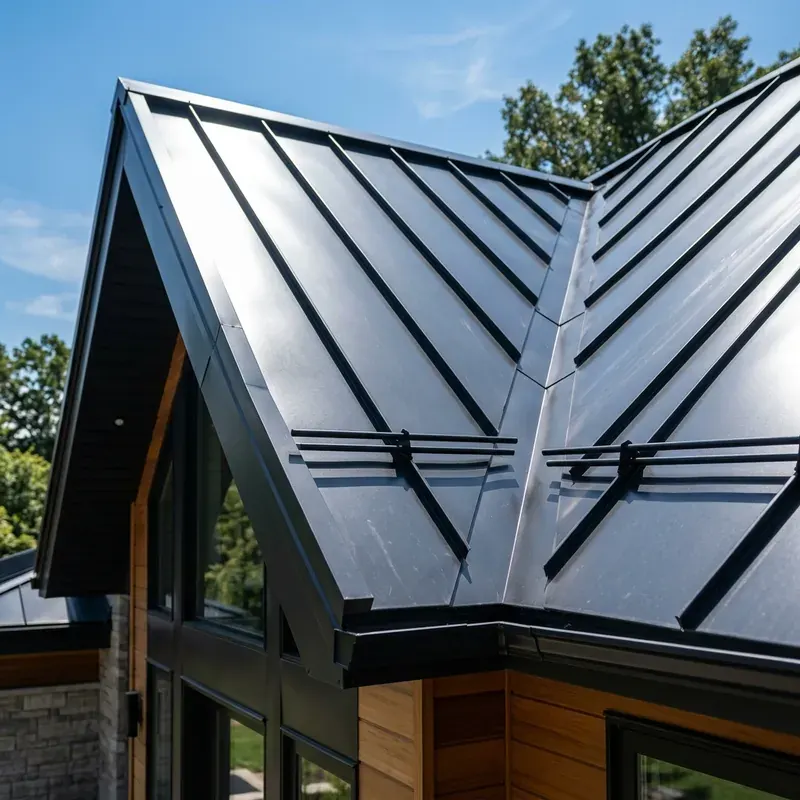
Dark standing seam metal roof on a modern Rochester house, with clean vertical seams and snow guards along the eave

Snow Sheds, Wind Holds

Metal Roofing in Rochester, NY

Metal suits Rochester winters. Snow slides off a standing seam roof instead of sitting on it, wind has little to catch, and the panels hold their shape through freeze and thaw. On a steep slope, metal is one of the soundest roofs a Rochester house can wear.

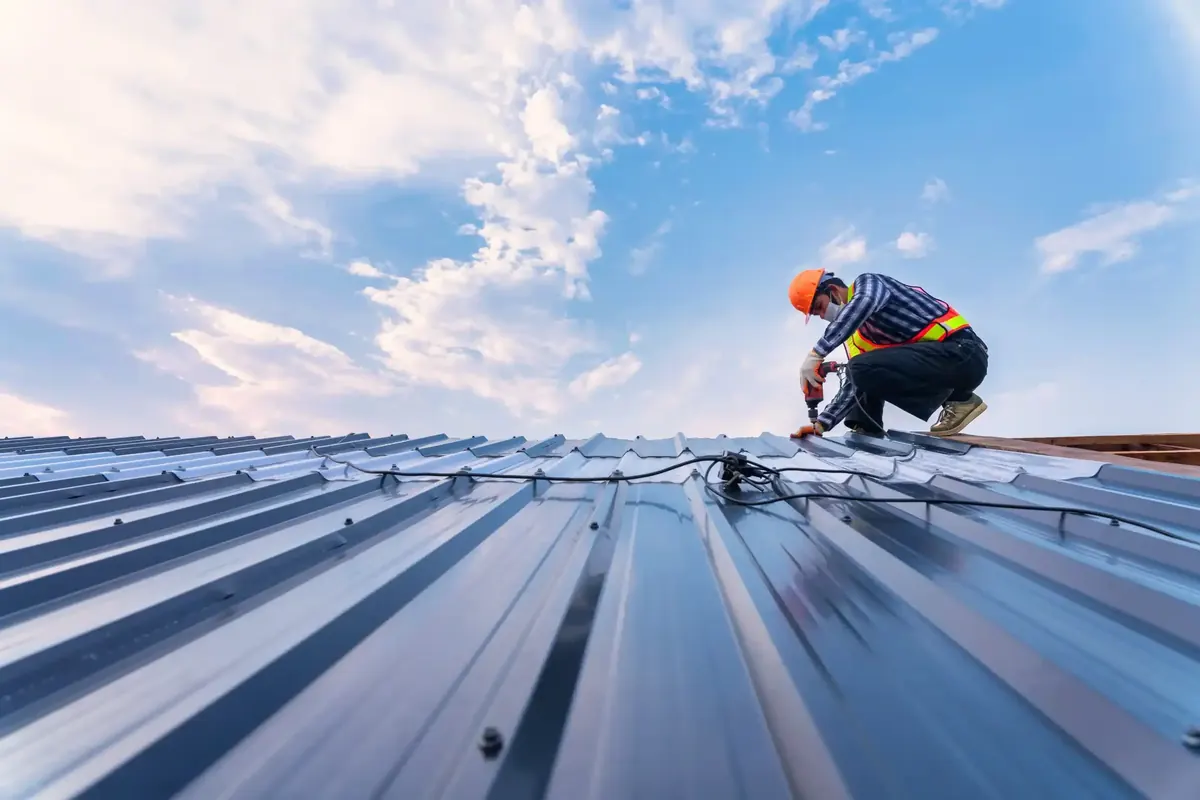
Roofer installing standing seam metal roof panels on a house roof under a blue sky
Standing seam panels lock together at raised seams, with no exposed fasteners on the surface.

Why metal suits Rochester

Why metal suits Rochester winters

Rochester gets about 102 inches of snow in a season, and a metal roof does not ask the house to carry it. Snow slides off a smooth metal slope instead of sitting for weeks, which takes load off the rafters and keeps ice dams from forming at the eaves. The panels are light for their strength, they do not crack in the cold, and they hold their shape through the freeze and thaw that splits lesser materials.

Metal also handles wind well. Standing seam panels lock together at raised seams, with the fasteners hidden underneath, so wind has no tab to catch and lift. Hail dents metal where it would crack a shingle, and a dented panel can be swapped without touching the rest of the roof. Asphalt shingle roofing in Rochester suits most homes and goes on faster, but metal earns its place on steep slopes and on houses where snow load is the main worry.

One thing metal needs is a sound deck underneath. Panels follow the deck, so a wavy deck shows through as a wavy roof. Before any metal goes on, we check the decking and the underlayment, and we set the ventilation right, since attic ventilation and insulation in Rochester matter as much under metal as under shingles.

Three metal systems

Standing seam, metal shingle, and exposed fastener

Metal roofing is not one product. Three systems cover most Rochester houses, and they behave differently.

Three metal roofing systems compared for Rochester homes
SystemHow it looksFastenersBest when
Standing seamClean vertical lines, raised seamsHidden clips under the seamsSteep slopes, snow shedding, long service
Metal shingleLooks like shingle, slate, or tileHidden, under each pieceA traditional look with metal strength
Exposed fastenerCorrugated or ribbed panelsScrews through the panel faceBarns, sheds, and outbuildings

Scroll sideways to see the full table.

Metal against asphalt

Metal against asphalt: the honest comparison

Both roofs keep the rain out. They differ in how they handle snow, wind, and time.

Metal usually fits when

  • The slope is steep and snow load is the main worry.
  • Wind lifts shingles on the windward side every storm.
  • You want a roof that sheds snow instead of holding it.
  • The house will wear this roof for decades.
  • The look of clean vertical seams suits the house.

Asphalt usually fits when

  • The roof has many valleys, dormers, and complex joints.
  • The house suits the look of shingles and the street matches.
  • The slope is low and snow sits no matter the surface.
  • The deck needs work that a tear-off handles best.
  • A simpler install suits the shape of the roof.

Our rule of thumb: steep and simple favors metal, complex and low favors shingles. A roof inspection in Rochester reads the slope, the deck, and the joints, and the written scope spells out what each path includes for your house.

Tired of snow sitting on the roof for weeks? Call and talk through whether metal suits your slope.

Call (585) 868-0065

Snow, ice, and the slide question

Snow, ice, and the slide question

Snow sliding off a metal roof is a strength and a hazard at the same time. The National Weather Service Buffalo office tracks the lake-effect bands that drop the heaviest snow on the city, and its forecasts show when the next band is coming. A whole slope of snow can let go at once, and it comes down hard over the door, the walkway, and the shrubs below. That is why a metal roof in Rochester usually gets snow guards: small bars or pads set in rows across the slope that hold the snow in place and let it melt off slowly instead of sliding in one sheet.

Snow guards sit above the places people walk and the places that need protection: doors, walkways, gutters, and the shrubs that sit under the eave. Gutters and gutter guards in Rochester matter here too, since sliding snow can tear at weak gutter hangers. And where the roof meets a lower roof or a porch, the guards keep the slide from burying the roof below.

Ice still forms on a metal roof, but it forms differently. Without snow sitting on the slope to melt from below, ice dams have less to feed on, and the meltwater that does form runs off the smooth surface instead of pooling behind a dam. Pair the roof with sound attic airflow, and the eaves stay clear through most of the winter.
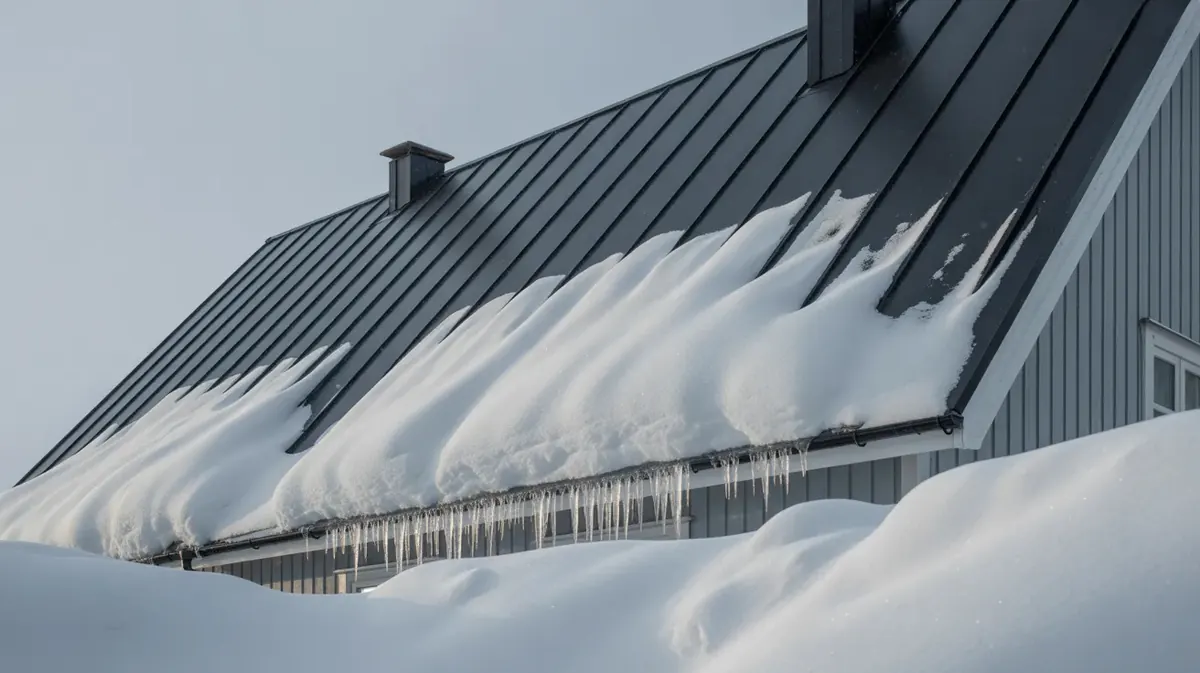
Snow sliding off a dark standing seam metal roof with icicles hanging along the eave
Snow sheds off a metal slope instead of sitting for weeks, which takes load off the rafters.

Plain English

Metal roofing words, in plain English

Six terms you will hear when a metal roof is discussed, and what each one means.

Standing seam
Metal panels joined at raised seams that run from the eave to the ridge, with the fasteners hidden underneath.
Clip
The hidden fastener that holds a standing seam panel to the deck and lets the metal expand and contract with heat.
Snow guard
A bar or pad set across the slope that holds snow in place so it melts off slowly instead of sliding in one sheet.
Galvalume
Steel coated with aluminum and zinc, the most common metal for residential standing seam roofs in the Northeast.
Panel
A single length of formed metal that runs the full slope, from the eave to the ridge, with no joints across it.
Flashing
Shaped metal that seals the joints where the roof meets a chimney, a wall, a skylight, or a valley.
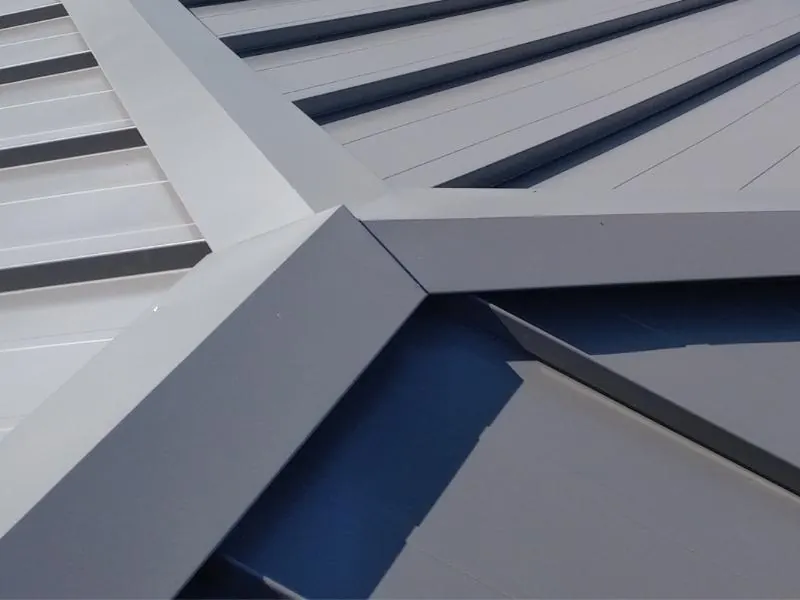
Close view of a metal roof ridge cap where standing seam panels meet at the peak
The ridge cap seals the peak where the two slopes meet, and it is set to let the roof breathe.

Under the panels

What a metal roof asks of the house under it

Metal is only as good as what sits under it. The deck must be flat and sound, since panels follow the deck and a wavy deck shows through. The underlayment must be a high-temperature type, since metal gets hot in the sun and ordinary felt can melt or stick. And the ventilation must be right, since heat trapped in the attic shortens the life of the shingles on any slope the metal does not cover.

Some reroof work needs a permit, and the City of Rochester handles permits for work inside the city. We tell you before work starts whether your job needs one. And when the roof is done, roof maintenance in Rochester keeps the panels, the flashing, and the snow guards checked, since a metal roof still needs a regular look, even one that sheds snow on its own.

People also ask

Metal roofing questions, answered in plain words

Short answers to the metal roofing questions that come up most in real conversations.

Does a metal roof make a house louder in the rain?

Not when it is installed over a solid deck with underlayment beneath it. The deck and the attic insulation soak up the sound, and most owners cannot tell the difference from inside the house. A metal roof over open rafters with no deck would be louder, but that is not how a Rochester house is built.

Is a metal roof safe in a lightning storm?

Yes. Metal does not attract lightning, and a metal roof spreads a strike across the surface instead of concentrating it in one spot. A house with a metal roof is no more likely to be struck than a house with shingles, and the roof itself does not burn.

Can solar panels go on a metal roof?

Yes, and standing seam is one of the best roofs for solar, since the panels clamp to the raised seams without any holes through the metal. The layout is planned during the roofing job, so the sun-facing slope stays clear of vents and skylights. The solar panels themselves come later, from a solar installer.

Steep slope, heavy snow, and wind that never quits? Call and ask whether metal is the right answer.

Call (585) 868-0065

Frequently asked questions

Metal roofing answers, straight from the crew

A standing seam metal roof lasts far longer than a shingle roof when it is installed right, often several decades. The panels do not crack in the cold, they do not lose granules in the sun, and they hold their shape through freeze and thaw. The fasteners and the flashing age first, and a regular check keeps them sound.

It can, which is why snow guards matter. Guards hold the snow in place so it melts off slowly instead of sliding in one sheet over the door or the walkway. Guards sit above the places people walk and the gutters that sliding snow could tear. A metal roof without guards is a roof that drops its snow where it pleases.

Sometimes, when the old layer is flat and sound and the deck underneath is known to be solid. A tear-off is the safer choice when the roof is old or the deck is in doubt, since metal follows the deck and a wavy deck shows through. We walk the roof and check the deck before naming the path.

Not in a house with a solid deck and attic insulation, which is how Rochester houses are built. The deck and the insulation soak up the sound of rain on the panels, and most owners cannot tell the difference from inside. A barn with open rafters and no deck would sound different, but that is a different building.

A dented panel can usually be swapped on its own, without touching the rest of the roof. Hail dents metal where it would crack a shingle, and the dent is a mark on the surface, not a hole through it. After a hailstorm, we walk the roof and check the panels, the flashing, and the vents for dents that need attention.

Yes, though less than a shingle roof. The panels themselves need little, but the flashing at chimneys and walls, the snow guards, and the sealant at the penetrations all age and need a look. A regular walk of the roof checks those joints and keeps a small fix from becoming a leak at the ridge or the eave.

Keep going

Related roofing services

Metal is one answer. These services cover the rest of the roof.

Three metals

Steel, aluminum, and copper, how the metals differ

Three metals cover most of the metal roofs in Rochester, and the choice comes down to how each one behaves through snow, wind, and wet seasons.

Steel, aluminum, and copper compared
MetalHow it behavesWhere it suitsWhat to watch
SteelStrong and stiff, holds its shape under snowMost house roofs in RochesterThe coating is the shield, so scratches need attention
AluminumLight, and it does not rustHouses near the lake, where the air carries moistureSofter than steel, so dents show more
CopperAges to a deep brown and then to green, and lasts for generationsBay windows, porches, and accent roofsIt is a showpiece metal, and it suits small areas best

Steel is the workhorse of the three, and it covers most of the metal roofs on houses in the city. Its stiffness holds the panel shape under a snow load, and the coating over the steel is what keeps the weather out, so the coating matters as much as the metal. Aluminum is the lighter choice, and it suits houses near the lake, where damp air works on steel faster, but it dents more easily, so a ladder set against it or a limb dropped on it leaves a mark. Copper is the third metal, and it is chosen for the way it ages rather than for the span it covers: a copper porch roof or a bay window roof turns a deep brown, then slowly green, and it outlasts the house around it, but it suits small areas rather than whole roofs.

Under the panels

Under the metal, underlayment, clips, and the quiet details

A metal roof looks like a set of panels, but the parts that keep it dry sit under the panels, and they are the parts that decide how long it lasts.

Underlayment is the first quiet part. A high-temperature underlayment goes down over the deck before the panels, and it seals around the fasteners and the clips, so any water that finds its way under a panel meets a second skin rather than bare wood. On a Rochester roof, the underlayment also carries the ice and water shield at the eaves and the valleys, where meltwater backs up behind ice dams and tries to work under the surface.

Clips are the second quiet part. Standing seam panels are held by clips rather than by screws driven through the face, and the clips let the panels grow and shrink a little as the metal warms in the sun and cools at night. That movement is small, but it runs the full length of the panel, and a roof that is screwed down tight at both ends will buckle or oil-can as the seasons change, so the clips are what let the roof move without breaking.

Fasteners and sealant are the third quiet part, and they age first. Exposed fasteners on a metal roof work loose a little with each season of movement, and the washers under them dry out and crack, so a metal roof asks for a look at the fasteners every few years, with loose ones tightened and tired washers swapped. The sealant at the ridge and the flashings ages the same way, and a roof inspection in Rochester catches it while the fix is a tube of sealant rather than a leak.

Metal on old houses

Metal on older Rochester houses, what to check first

Metal suits older houses well, but an older house brings its own questions, and the roof is checked for them before the first panel goes on.

The deck is the first question. Older houses often have plank decking with gaps between the boards, and metal panels need a solid surface to clip to, so the deck is checked board by board, and any board that is soft or split is swapped before the underlayment goes down. A deck that has carried two layers of shingles may also hide rot that no one has seen in decades, and the tear-off is the moment it shows.

The pitch is the second question. Metal sheds snow fast on a steep slope, and it needs a pitch that lets the snow slide rather than sit, so a low-slope addition or a porch roof may need a different panel or a different approach. The valleys and the chimneys are the third question, since an older brick chimney moves a little with each freeze and thaw, and the flashing where the metal meets the brick is reset with the roof, so the joint is new even where the chimney is old.

Weight is on your side

Metal is lighter than a double layer of shingles, so an older frame that has carried heavy roofs for decades takes a lighter load with metal. The rafters are still checked, but the roof adds less weight than the one it replaces.

Snow slides, so plan where it lands

Snow that slides off a metal roof lands in a heap at the eaves, so the crew plans for the walkway, the shrubs, and the doorway below. Snow guards hold the snow back where the slide would land on a path.

Snow that slides off instead of sitting for weeks.

Call and talk through whether a metal roof suits your slope, your house, and your winters.