Call (585) 868-0065
Aerial view of a large Penfield house with a pitched roof set among green trees and a wide lawn

Four Corners Roofing

Four Corners Colonials and Creek-Side Roofs

Penfield sits east of Rochester where Penfield Road meets Five Mile Line Road at the historic Four Corners, and the town stretches from the Irondequoit Creek valley in the west to the farm fields in the east. The houses near the Four Corners are colonials and Capes from the mid-century build-out, the Panorama area holds ranches and split-levels around the plaza, and the creek valley keeps the air damp on the west side of town. The roofs here face valley wear, ice dams, and gutter trouble in equal measure, and we read each one up close before we say what it needs. East of the city, the same close-set village houses show up in East Rochester, a planned railroad village built for the car shops, and the East Rochester page walks through the leaks and wear those close rows bring.

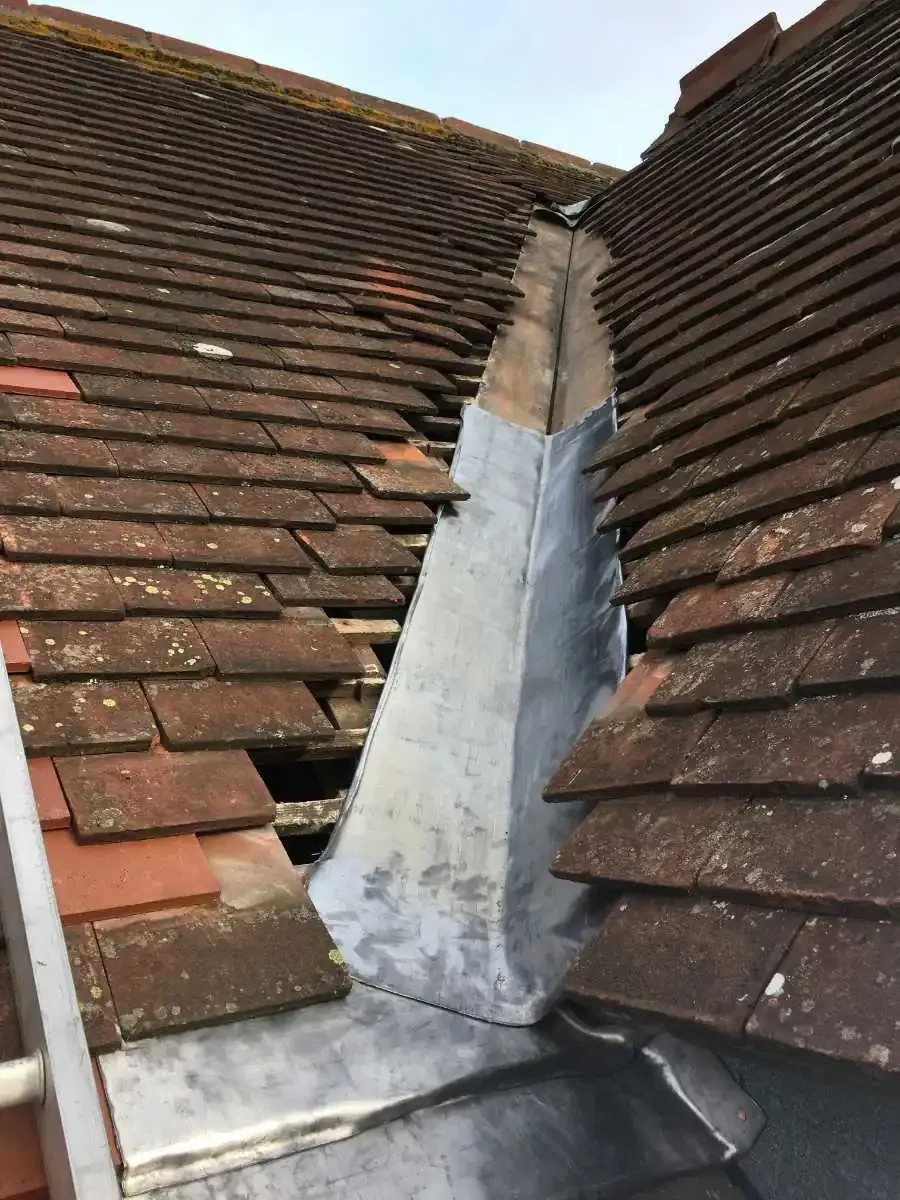
A roof valley with worn metal flashing and missing shingles where two slopes meet on a Penfield house

Penfield, NY

The Four Corners and the creek valley

The historic Four Corners of Penfield sits where Route 441, which runs as Penfield Road through the hamlet, meets Five Mile Line Road, and the town's oldest commercial center still clusters there. Schaufelberger Park fills the heart of the corner, the fire hall and the old church stand nearby, and the houses on the streets behind the corner are colonials and Capes that went up in the decades after the war. Panorama sits west of the corner where Route 441 meets Panorama Trail, with the plaza and the creek valley beside it, and the ranches and split-levels there share the damp air that rises off Irondequoit Creek.

Irondequoit Creek is the quiet fact of Penfield roofing. The creek crosses the southwest corner of town and forms part of the western border before it empties into Irondequoit Bay, and the valley it carved holds damp air long after a rain. Homes near the creek dry slowly, moss takes hold on the shaded slopes, and the gutters work harder than they do on the drier streets to the east. Gutters and gutter guards matter more on a creek-side roof than on a roof two miles east, and the National Weather Service in Buffalo tracks the lake-effect bands that drop their snow on the creek valley first.

The creek-side homes need their attics watched too, because the damp air off the creek keeps the roof deck wet from below as well as from above. Attic ventilation and insulation for Penfield homes keeps the deck dry and the eaves cold, and a roof inspection each fall catches the moss before it takes hold for the winter.

When a valley finally gives out, the fix is new metal under the old shingles, not a patch smeared over the top. Roof repair in Penfield opens the valley, sets new metal, and puts the shingles back in place, and a roof maintenance visit each spring keeps the new valley clear of leaves.

Roofer measuring a roof slope with a tape on a red tile roof in Penfield

Measure first

Measuring a roof is the first job, not the last

A Penfield colonial is a cut-up roof of valleys, hips, dormers, and chimneys, and no two of them measure the same, so the tape comes out before any other tool. We walk every slope and write down the length of each valley, the height of each dormer cheek, and the run of each ridge, because a roof that is guessed at is a roof that runs short of material halfway through the job. The sketch that comes out of that walk is the plan for the whole job, and it stays on the truck until the last shingle is set.

The measurement also settles the questions that matter most to the owner: how much of the roof is worn out, which slopes can be repaired, and where the flashing needs new metal. A valley that was patched once before shows up on the tape as a short run with old metal, and a chimney that has stained the ceiling shows up as a joint that needs counterflashing. Measuring first means the work starts with the facts on paper instead of surprises on the roof.

A valley that leaks every spring, or gutters full of creek-side leaves? Call and the valley gets the first look.

Call (585) 868-0065

Repair or replace

Fixing a Penfield colonial, or starting over

A Penfield colonial gets fixed or started over based on how much of it has worn out at once, and a close look from the roof itself settles it sooner than any rule of thumb.

Repair is the right call when

  • Leak confined to one valley or one chimney joint
  • A few shingles lifted in a storm while the field stays sound
  • One slope worn and the rest of the roof holding firm
  • A pipe boot cracked and the stain still small and new
  • Decking solid everywhere the crew can reach it

Replacement is the right call when

  • Decking soft in several places underfoot
  • Leaks showing in more than one room at once
  • Granule loss and curling across whole slopes
  • Flashing failed at the chimney and the dormers together
  • The same valley patched twice already

A colonial with a sound deck and a failed valley is a repair, not a replacement: the valley metal comes out, new metal goes in, and the shingles around it go back in place.

Corners of town

From the Four Corners to the east fields

Penfield runs from the creek valley in the west to open farm fields in the east, and the roof on each street faces different wear.

Penfield Four Corners Historic center

Colonials and Capes around the Route 441 and Five Mile Line Road corner, where the town's oldest streets hold roofs on their second or third set of shingles.

Panorama Creek valley

Ranches and split-levels around the plaza and the creek, where the damp air keeps the north slopes slow to dry.

Lloyd's Corners Route 441 and 250

Homes near the Route 441 and Route 250 junction, where the commercial strip gives way to residential streets.

East Penfield Open fields

Homes on the eastern side of town, where open lots face the fields and the wind runs unbroken across the roofs.

Irondequoit Bay side Northwest corner

Homes in the northwest corner near the bay, where the water on one side keeps the air damp all year.

Baird Road South streets

Quiet streets south of the Four Corners, where the colonials sit under mature trees and the leaf load is heavy.

Compare

Picking a roof for a Penfield colonial

Roof choices for Penfield homes, side by side
Roof optionWhere it fits in townCreek and valley wear to watch
Architectural shingles for colonials and CapesMid-century colonials and Capes near the Four CornersWet leaves in the valley feed moss where the creek air keeps the roof damp
Standing seam metal for open-lot homesHomes on the eastern fields that take the windSnow slides off fast, so the paths below the eave need a plan
Three-tab shingles for Panorama ranchesPanorama ranches still carrying an early roofThin tabs curl sooner where the damp air holds the roof wet
Algae-resistant shingles for creek-side slopesShaded north slopes near Irondequoit CreekThe shingles resist streaks, but the valleys still need clearing each fall

Through the year

Four seasons on a Penfield roof

Spring

Creek damp and valley leaks

When spring rain swells Irondequoit Creek, the valley air stays soaked, and the valleys on the colonials carry water from two slopes at once. A valley patched once already is the first to show it.

Summer

Shade and moss on the north side

Mature trees over the Four Corners streets keep the north slopes damp through summer, and moss takes hold where the sun never reaches. It holds moisture against the shingle surface.

Autumn

Leaves in the creek-side gutters

In October, leaves fill the gutters of the creek-side homes, and the first hard rain has nowhere to go. Water backs up under the shingle edge and into the deck.

Winter

Ice dams on the valley streets

Meltwater from the warm middle of the roof runs to the cold eave and turns solid there, and the dam grows a little with each thaw and freeze. The pond behind it finds the nail holes first.

Coverage

One ZIP code for the whole town

Penfield is a town in Monroe County, east of Rochester, with the historic Four Corners at Route 441 and Five Mile Line Road.

14526

The 14526 ZIP covers the Four Corners, Panorama, Lloyd's Corners, and the eastern streets of Penfield.

FAQ

The questions Penfield owners ask first

A valley carries the runoff from two slopes at once, so it bears twice the flow and twice the wear of any other part of the roof. Leaves pile in the valley and hold moisture on the metal, and the freeze and thaw of each winter pries the seams open a bit more. The field shingles can look new while the valley underneath has already worn thin.

It changes the moisture, not the roof itself. The air off the creek keeps the north-facing slopes wet longer after a rain, and the valley trees shade the homes nearest the water. That means more moss, slower drying, and more wear at the eaves on creek-side houses.

A ranch roof with architectural shingles runs about 20 to 30 years when the attic breathes and the gutters stay clear, and about 15 to 20 years with three-tab shingles. The creek damp shortens that span on the shaded slopes, because the shingles stay wet longer after every rain.

The metalwork fails first. A colonial has more dormers, more wall joints, and more chimney flashing than a ranch, and every joint is a place where water can get in. Step flashing at the dormers and counterflashing at the chimney both draw back from the brick and the siding a little with each passing year. The field shingles usually outlast the metal around them by a wide margin.

Worry is too strong a word, but the trees deserve attention. Falling limbs break shingles and dent gutters, leaves clog gutters and hold moisture against the roof edge, and deep shade feeds moss on the north-facing slopes. The trees are part of why the Four Corners streets look the way they do, so the answer is to clear the gutters each fall and give the roof a yearly look.

Late spring through early fall gives shingles the warmth they need to seal, and the creek valley is at its driest then too. A fall job works as long as the cold has not set in, and a winter job is possible when a leak forces it, though the shingles seal slowly in the cold. If the roof can wait out the cold, the job goes quicker.

Nearby towns

Roofing help in the towns around Penfield

Webster runs north past the town line toward the lake, and Fairport sits just south past the canal, and a visit to Penfield often stretches to one of those two towns too.

Creek-side damp

Irondequoit Creek damp on the west side of Penfield

Irondequoit Creek keeps the west side of Penfield damp all year, and the roofs along the valley wear that damp on their north slopes.

Houses along the valley sit in that damp, with shade from the creek-side trees and fog on cool mornings, and their north-facing slopes grow moss and algae sooner than the same shingles would on a dry street. The moss holds water against the granules, and the granules loosen, so a valley-side roof can look ten years older than a roof the same age on the east fields.

Panorama lies west of the Four Corners, where Route 441 meets Panorama Trail, beside the plaza and the creek valley, and the ranches and split-levels there share the damp air that rises off the water. Those valley roofs collect leaves from the creek trees, and a wet mat of leaves holds water against the flashing for days. Clearing the valleys each fall and giving the north slope a look each spring keeps the creek wear from turning into a leak, and a roof maintenance visit in the valley starts at the creek-facing slope, because that slope is the one the damp reaches first.

The damp also shows in the gutters. A gutter on a valley street fills with leaves and silt from the creek trees, and the downspouts clog where the silt settles at the bends. The overflow runs down the siding and stains the wall below the eave, and the stain is the easiest clue on the whole house to read. When the stain appears, the gutter is already full, and the roof above it has been holding water longer than it should.

Two roof shapes

Panorama ranches and east-field colonials: two Penfield roof shapes

Penfield holds two roof shapes at opposite ends of town, and the Panorama ranch and the east-field colonial fail in different places.

How Panorama ranch roofs and east-field colonial roofs differ in Penfield
Roof detailPanorama ranchEast-field colonial
ShapeLow, wide, one ridgeSteep, dormers, two ridges
Hardest weatherCreek damp and valley leavesOpen wind across the fields
First wearMoss on the north slopeRidge caps lifting in the wind
Gutter troubleSilt and leaves at the bendsLong runs sagging in the middle
Snow patternSlow melt under the valley treesDeep drifts on the low side

On the east fields, snow piles deep on the low side of the colonials, and the melt must leave through gutters the same wind keeps packing with grit from the fields. At the Four Corners, Penfield Road meets Five Mile Line Road, and the town's oldest streets run behind the corner, where the colonials and Capes are mid-century houses whose roofs have already been replaced once or twice.

Lloyd's Corners, where Route 441 meets Route 250, and Baird Road on the south side, hold more of the same mix: colonials on wide lots, ranches tucked under mature trees, and the Irondequoit Bay side in the northwest corner, where the shore damp touches the roofs the way the creek damp touches the valley. The town is read from the valley eastward, with the damp first, the wind second, and the age of the street third, and a roof inspection that follows that order finds the right trouble on the right street.

Gutter trouble

Four Penfield gutter troubles and where each one starts

Penfield gutters fail in four different ways, and each one starts in a different place on the roof.

Silt at the bends

Creek-side silt settles where the downspout bends, and the blockage builds from the bottom up. The gutter above it fills first, and the overflow stains the siding below the eave before anyone looks inside the run.

Leaves over the outlet

A mat of leaves settles over the downspout outlet, and the whole run backs up behind it. The water rises in the gutter and spills over the front edge, and the fascia below stays wet for days after the rain stops.

A sag in the long run

A long ranch run sags at its middle when the hangers give way, and the dip holds a pool of water that never drains. That standing water adds weight, the dip deepens, and the gutter pulls away from the fascia at the ends.

The fourth trouble is the one that looks like a gutter problem and is not: a valley that dumps water into one short section of gutter faster than the downspout can take it. The water overshoots the gutter in a hard rain and lands on the ground beside the house, and the fix is not a bigger gutter but a valley diverter that slows the flow. A gutters and gutter guards look that starts at the valley, not the downspout, tells the four troubles apart, because each one leaves a different mark on the siding and a different pile at the ground below.

Your Penfield roof, read from the valley up

Down in the creek valley a Penfield colonial keeps leaking at the same valley, and the chimney joint stains the ceiling every time the rain comes from the east. Send the Four Corners street or the field road, with the valley in the note, and the look will begin where the water has been running.