Call (585) 868-0065
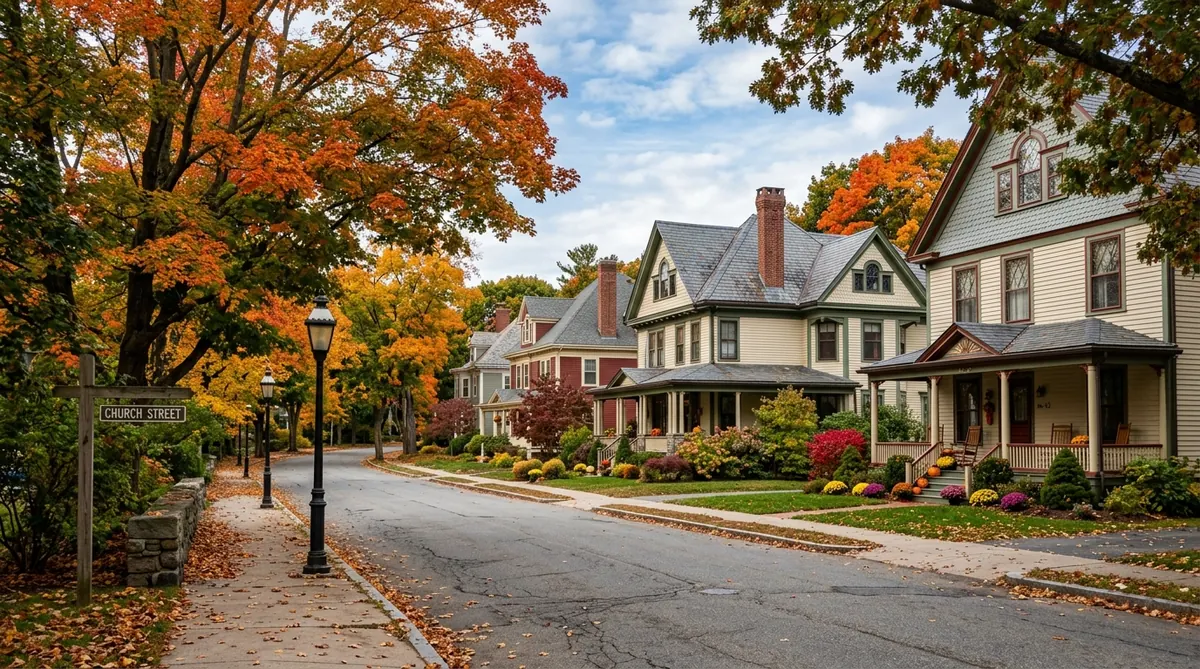
A tree-lined Brighton street in autumn with historic colonial houses and pitched shingle roofs

Twelve Corners Roofing

Old Trees, Old Colonials, and Brighton Roof Wear

Brighton is the town where Rochester's oldest suburbs meet its busiest corner, and the roofs here have been standing under mature maples and oaks for generations. Twelve Corners anchors the town, the Monroe Avenue corridor runs through it, and the colonials and Tudors on its side streets carry shingles that have weathered decades of shade, leaves, and spring hail. We work on those roofs one at a time, and we explain what we find in plain words.

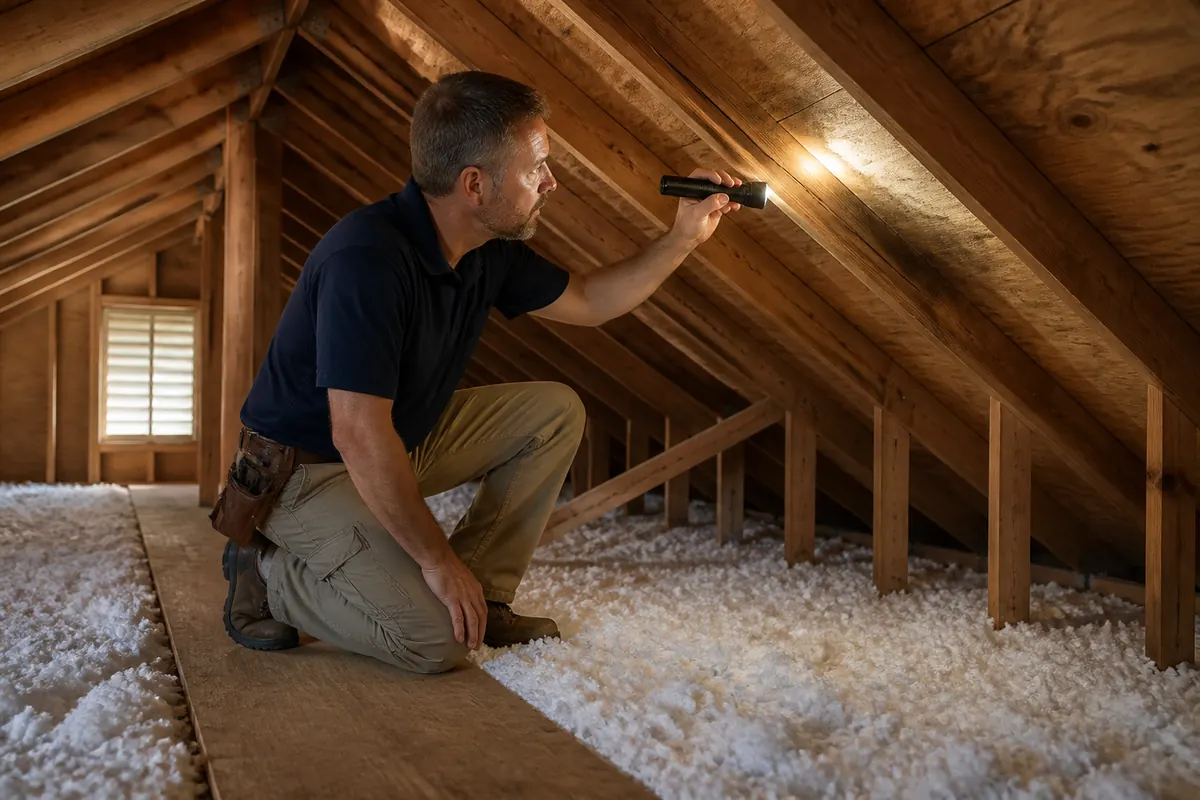
Inspector kneeling in a Brighton attic with a flashlight, checking rafters and insulation above the roof deck

Brighton, NY

Twelve Corners and the streets around it

Monroe Avenue, Elmwood Avenue, and Winton Road all meet at Twelve Corners, and that crossing works as Brighton's main street even though the town never built a village center. Shops and restaurants cluster around the corner, Brighton High School and the middle school sit a short walk away, and the residential streets fan out from the crossing in every direction. Most of those streets were laid out between the 1920s and the 1950s, and the houses on them, colonials, Tudors, and Capes in brick and wood, are now on roofs that have already been replaced once or twice.

A maple canopy is the town's best feature and its hardest roof problem in one. The canopy keeps a Brighton house cool in July and drops a heavy load of leaves into every gutter and valley in October, and the shade that follows keeps the north-facing slopes damp well into November. Attic ventilation and insulation matter here because a damp, shaded roof deck rots quietly from the inside while the shingles still look sound from the street. Monroe County runs highway and parks programs across Brighton, and the tree-lined streets are part of why lake-effect snow sits so hard on the older roofs here.

An attic that cannot breathe tells the rest of the story. Warm, damp air rises into it and settles against the underside of the deck, and the deck stays wet for months while the shingles above still look fine. Attic ventilation and insulation in Brighton keeps the deck dry and the eaves cold, and a roof maintenance visit each fall clears the valleys before the leaves turn to mulch.
Through the year

Brighton roofs through the year

Spring

Hail finds the oldest shingles first

Hail from spring storms over the Monroe Avenue corridor lands on roofs already thinned by decades of shade and leaf litter. A bruised shingle can look whole from the driveway while its mat is cracked underneath.

Summer

Shade feeds moss on the north side

Under the maple canopy, July heat never reaches the north-facing slopes, and moss settles into the damp. It holds moisture against the shingle surface and hides the wear underneath it.

Autumn

Leaves choke the gutters

October leaves settle into the gutters and the valleys, and the first hard rain finds nowhere to go. Water backs up under the shingle edge and into the deck, and the stain shows up inside near an outside wall.

Winter

Ice dams on the shaded eaves

Heat slipping through a thin attic floor turns the middle of the roof into a slow melt zone, and the runoff locks up solid where the eave sticks out past the warm wall. The ridge of ice that forms there holds back a small pond, and that pond works its way under the shingles.

Leaves in the gutters and streaks on the north slope? Call and we will start at the gutter line.

Call (585) 868-0065
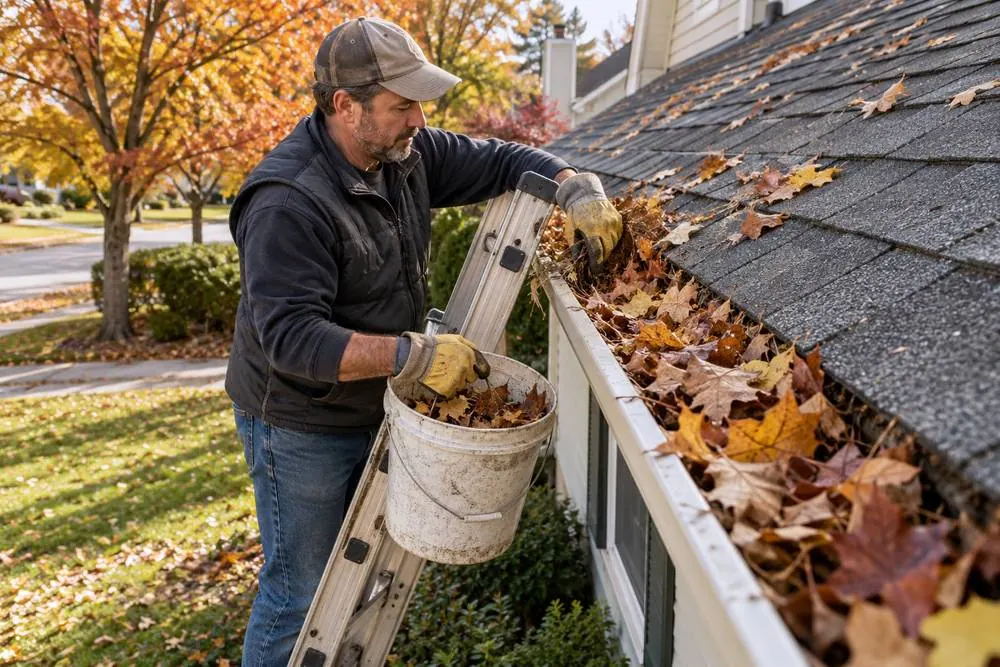
Worker clearing wet autumn leaves from a gutter on a Brighton colonial house

Homes and roofs

Colonials, Tudors, and Capes with long histories

Brighton holds one of the oldest housing stocks in the Rochester suburbs, and the mix is wider than a drive down Monroe Avenue suggests. Streets near Twelve Corners hold 1920s colonials and Tudors with steep pitches and slate or wood details on the oldest ones. Streets further south hold 1940s and 1950s Capes and ranches, and the neighborhoods near the Highland Park edge hold larger homes on deep lots. Architectural asphalt shingles cover most of these roofs now, and the older ones have already seen one or two replacements.

Brighton roofs fall into two ages, and only a roof inspection from the roof itself tells which side of the split a house sits on. The 1920s and 1930s stock often hides soft decking under shingles that still look whole, because the deck has been breathing damp air for decades. The mid-century stock shows its age more openly, with curling tabs, bare patches where granules have washed away, and valleys patched more than once. Both kinds fail the same way when leaves sit wet against them, so the inspection starts at the gutter line and works up.

Warning signs

Three signs a Brighton roof needs a look

Dark streaks down the north slope

Algae streaks trace the path of water down a shaded slope, marking the spots where moisture lingers longest. Streaks alone do not mean the roof is failing, but they mark the slopes to check first.

Granules piling at the downspout

Storms always wash a few granules off the shingles. When the pile at every downspout keeps growing, the shingle surface is thinning across whole slopes, and the asphalt underneath is starting to show.

A ceiling stain near an outside wall

Stains near an outside wall usually start at the eave, where a clogged gutter or an ice dam pushed water under the shingle edge. The leak rarely starts above the stain, so the roof edge gets the first look.

Compare

Which roof suits a Brighton house

Roof choices for Brighton homes, side by side
Roof optionThe house it fits bestTree and shade wear to expect
Architectural shingles for colonials and Tudors1920s colonials and Tudors near Twelve CornersHail bruises the older shingles first, and the bruise hides under moss on shaded slopes
Standing seam metal for steep Tudor pitchesSteep-pitched Tudors with complex rooflinesLeaves slide off with the snow, but the flashing at every wall joint needs care
Slate for the oldest village-edge homesThe oldest homes with original slate still in placeA slipped slate lets water straight to the deck, so the fix is one slate at a time
Algae-resistant shingles for shaded CapesMid-century Capes under the maple canopyThe shingles resist streaks, but wet leaves in the valley still feed moss at the edges

Coverage

Three ZIP codes around Twelve Corners

Brighton sits in Monroe County, directly southeast of the city of Rochester, with Twelve Corners at its center and the Monroe Avenue corridor running through it.

14610 14618 14620

The 14618 ZIP covers Twelve Corners and the Monroe Avenue corridor, 14610 covers the northern streets near the city line, and 14620 covers the southern streets toward Henrietta.

FAQ

Questions Brighton owners bring to the first call

They can, in three ways. Falling limbs break shingles and dent gutters, leaves clog gutters and hold moisture against the roof edge, and deep shade feeds moss and algae on north-facing slopes. The trees are part of why Brighton looks the way it does, so the answer is not to cut them down.

Most likely at the eave. A clogged gutter or an ice dam pushes water under the shingle edge, and the water runs along the deck until it finds a seam or a nail hole, then drips down inside near the wall. The stain rarely sits under the spot where the water got in.

Slate repairs well one piece at a time. A slipped or cracked slate comes out, a new one goes in with a copper hook or nail, and the surrounding slates stay put. The flashing matters more than the slate itself, because a failed valley or chimney flashing lets water past even a sound slate field. We keep the original slate where it is sound and replace only what has failed.

The south slope dries in the sun within hours of a rain, and the north slope can stay damp for days under the tree canopy. Moss needs that steady damp to take hold, so it colonizes the north side first and spreads from there. The fix is part roof work and part tree work: clear the valley, keep the gutters open, and let a little more light reach the slope.

Once a year is the honest answer for a town with this much tree cover, and twice a year if the house sits under the heaviest canopy. A fall look catches the leaf load and the gutter wear before winter, and a spring look catches the hail bruising and the ice-dam damage from the cold months.

Walk the yard for granules and broken limbs, then look at the gutters for dents and the downspouts for granule piles. Hail bruising hides well, so a close look from the roof itself is the only way to know whether the shingles were cracked.

Nearby towns

Towns just past Brighton

Pittsford runs east along the canal corridor, and Henrietta sits just south past the town line, and a visit to Brighton often stretches to one of those two towns too.

Streets off the Corners

Elmwood, Winton, and the streets that branch off them

Twelve Corners is the address everyone knows, and the roof story of Brighton lives on the streets that branch off it in every direction.

Elmwood Avenue heads west from the Corners past rows of colonials and Tudors set back behind lawns and old maples, with steep roofs cut by dormers and shaded for most of the day. Winton Road runs south and north with a mix of brick colonials and Capes, and the houses along it sit on lots where the trees grew up with the houses, so the canopy is thickest on the blocks closest to the Corners. Monroe Avenue carries the shops and the traffic, and the houses on the side streets just off it hear the road and feel its wind, while the streets a block deeper in are quiet and still.

The age of the street shows in the roof. Blocks laid out in the 1920s and 1930s hold Tudors with slate and steep pitches, and their valleys are narrow and deep, so leaves and snow pack into them and stay. Blocks from the 1950s hold brick colonials with simpler two-slope roofs, and their wear shows at the chimney joints and the ridge caps first. The newest streets, on the edges of town toward Pittsford and Henrietta, hold wider colonials with architectural shingles, and those roofs are younger and plainer, and simpler to read from the yard.

Streets near the Corners

Dormers cut the slopes into small faces, and each small face has its own valley and its own flashing, so a leak on one dormer cheek can look like a leak from the main field. The fix starts at the dormer, not the ridge.

Streets toward the town edges

A wide colonial with one ridge and two clean slopes sheds snow evenly, and the wear shows as granules thinning across the whole field rather than at a single joint. The gutters run longer here, and a sag in the middle of a long run is the first sign the hangers have given way.

The high school and the middle school sit a short walk from the Corners, and the streets around them carry the same mix of old brick and old trees as the rest of the town. A roof on one of those streets is read the same way as any Brighton roof: from the dormers down, from the chimney out, and from the gutter line up, with the maple canopy overhead kept in mind the whole time.

Under the canopy

How a Brighton maple canopy ages a roof

A Brighton maple canopy keeps a house cool in July and ages its roof faster than open sky ever would, and the trade is written on the north slope.

Maples and oaks arch over most Brighton streets, and the shade they throw is the town's best feature in summer. The same shade keeps the north-facing slope damp for hours after a rain, and damp shingles grow the dark algae streaks that mark so many Brighton roofs. The streaks themselves are mostly a stain, and they do not mean the roof is failing, and they do show which slope stays wet longest. A roof that dries fast keeps its granules longer, and a roof that stays damp loses them sooner, so the north slope of a shaded Brighton colonial usually needs attention years before the south slope does.

A gutter full of wet leaves holds water against the fascia until the corners soften. The valleys fill the same way, and a valley packed with leaves holds water against the flashing until the seam gives way. Clearing the gutters and the valleys after the leaves fall, and again after the first hard freeze, keeps the water moving off the roof instead of sitting on it.

Spring brings the other half of the canopy problem. Hail rides in over the trees, and the bruising it leaves on a shaded shingle hides well, because the shade keeps the bruise from drying out and showing. Only a close look from the roof itself shows whether hail cracked the mat, and a storm and hail damage check after the first spring storm of the year catches the bruising while the shingles are still young enough to take a repair.

Gutter clues

Three Brighton roof troubles that show up in the gutters

Brighton roofs often give themselves away at the gutter line, and three clues there tell more than a look at the shingles ever will.

Granules piling at the downspout

Granules wash off aging shingles and collect where the downspout meets the ground. A thin dusting after a storm is ordinary wear, and a growing pile means the field is shedding its cover and the shingles underneath are going bare.

A gutter pulling away from the fascia

Wet leaves add weight to a gutter run, and the hangers give way a little at a time. A gap opening between the gutter and the fascia lets water run down the wall, and the stain on the siding below the gap shows where the water has been going.

Streaks below the eave

Dark streaks running down the siding below the eave mark water that overflowed the gutter instead of running through it. The overflow usually means a blockage upstream, and the blockage is most often a mat of leaves sitting over the downspout opening.

The gutter line is the easiest place on a Brighton roof to read, because it sits at eye level from the yard and it collects everything the roof sheds. A walk around the house after a rain, looking up at the eaves and down at the ground below the downspouts, shows the granules, the gaps, and the streaks in a few minutes. When any of the three clues shows up, a gutters and gutter guards visit settles whether the trouble is a blockage, a hanger, or the roof above it, and the answer is usually clear once the gutter is open and empty.

Your Brighton roof, checked under the old trees

Under the old maples around Twelve Corners, a Colonial or a Tudor gives itself away at the gutter line, with granules in the downspout and a stain spreading near the wall. Ring or write, name the street, and the first look will land on the slope that faces the trees.