Step 1
Stay off the roof
Wet shingles are slick, and a storm-damaged slope hides soft decking. Look from the ground and from the attic, not from the ridge.
After the Storm Passes
A Rochester storm can strip shingles, dent vents, and drop a limb through a slope in one evening. We assess the damage from the ridge to the gutters, make the roof dry again, and repair what the storm broke, so the next storm meets a sound roof.
What storms do here
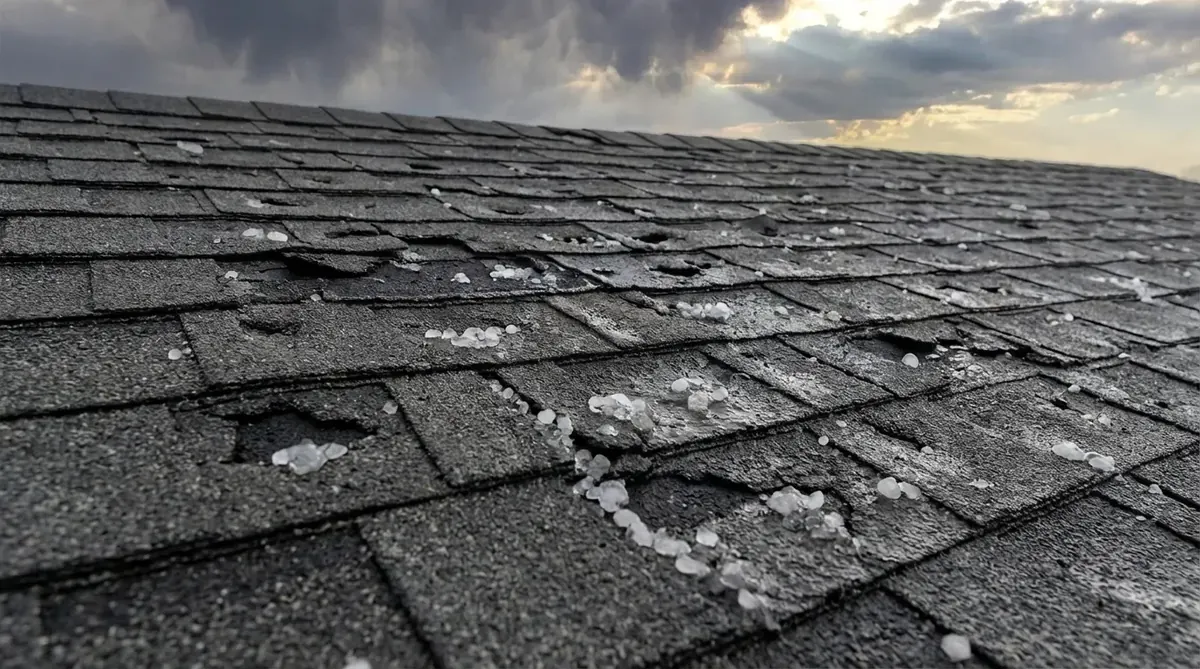
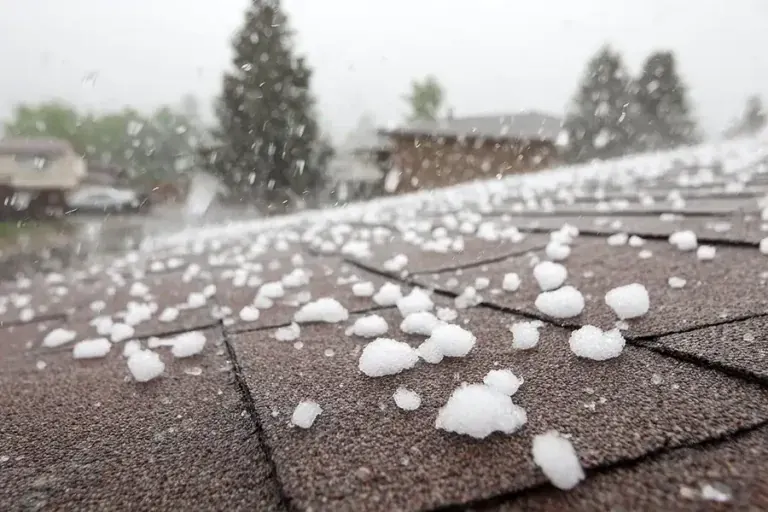
Rochester storms come in three kinds, and each one breaks a roof differently. Hail bruises shingles, cracks the surface, and knocks granules off in round patterns, and the damage hides until the bruised mat lets water through. Wind lifts tabs on the windward slope, tears ridge caps off the highest line, and drives rain uphill under shingles that shed calm rain fine. Falling limbs punch through the deck and open the roof to the sky.
Spring and summer bring the strongest storms, with thunderheads rolling in off Lake Ontario and wind that changes direction as the front passes. The National Weather Service Buffalo office tracks those fronts and posts the warnings that Rochester watches, and its storm reports are the best record of what a given storm actually did. Winter brings its own storm damage, from heavy snow load to ice dams, and snow removal and ice dam prevention in Rochester covers that side of the year.
The first look after a storm matters most. A roof inspection in Rochester after a hail or wind event finds the bruises and lifted tabs while they are still small, and the photos from that look become the record for whatever comes next, including an insurance claim.
First day after the storm
Five steps, in order, from the moment the sky clears to the moment the roof is dry again.
Step 1
Wet shingles are slick, and a storm-damaged slope hides soft decking. Look from the ground and from the attic, not from the ridge.
Step 2
Binoculars show missing shingles, bent vents, and limbs on the roof. Note which slopes face the wind, since they took the worst of it.
Step 3
Look in the attic for drips and damp decking, and in the top rooms for new stains. Put a bucket under any active drip.
Step 4
Photograph the damage from the ground and the stains inside, with the date. Those photos are the record for the repair and the claim.
Step 5
A roofer walks the roof, tarps what is open, and writes down what the storm broke, so the repair starts from facts.
Hail, size by size
Hail is measured by size, and the size decides what the roof looks like after.
| Hail size | What it looks like | Roof damage | What to check |
|---|---|---|---|
| Pea size | About the size of a pea | Granule loss in round spots | Gutters for grit, shingles for bare spots |
| Marble size | About the size of a marble | Soft bruises in the shingle mat | Shingles by hand, vents for dents |
| Golf ball size | About the size of a golf ball | Cracked shingles, split mats | Whole slopes, flashing, skylights |
| Larger than golf ball | Bigger than a golf ball | Broken shingles, torn flashing, pierced decking | Decking, skylights, gutters, siding |
Scroll sideways to see the full table.
A storm just passed and the roof looks different? Call and have it looked at before the next rain tests it.
Call (585) 868-0065Wind damage
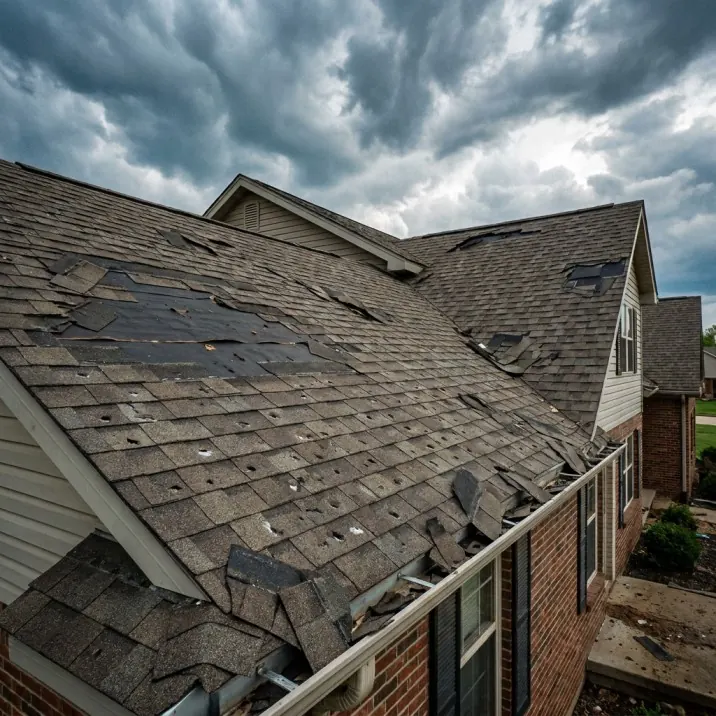
Wind does its work on the edges of a roof. It catches a lifted tab on the windward slope and peels the course above it, it tears ridge caps off the highest line, and it drives rain uphill under shingles that shed calm rain without trouble. A roof that looks sound from the street can have a whole windward slope of lifted tabs, and each one is an open door for the next rain.
The repair starts with the windward slope. Lifted shingles get reset and re-nailed, torn ones get swapped for matching shingles, and the ridge caps get set back with new nails and sealant. Metal roofing in Rochester holds up well to wind when its panels are locked tight, and roof repair in Rochester covers the everyday wind damage that does not need a full replacement. After the repair, the whole roof gets a walk, since wind rarely damages just one slope.
First, make it dry
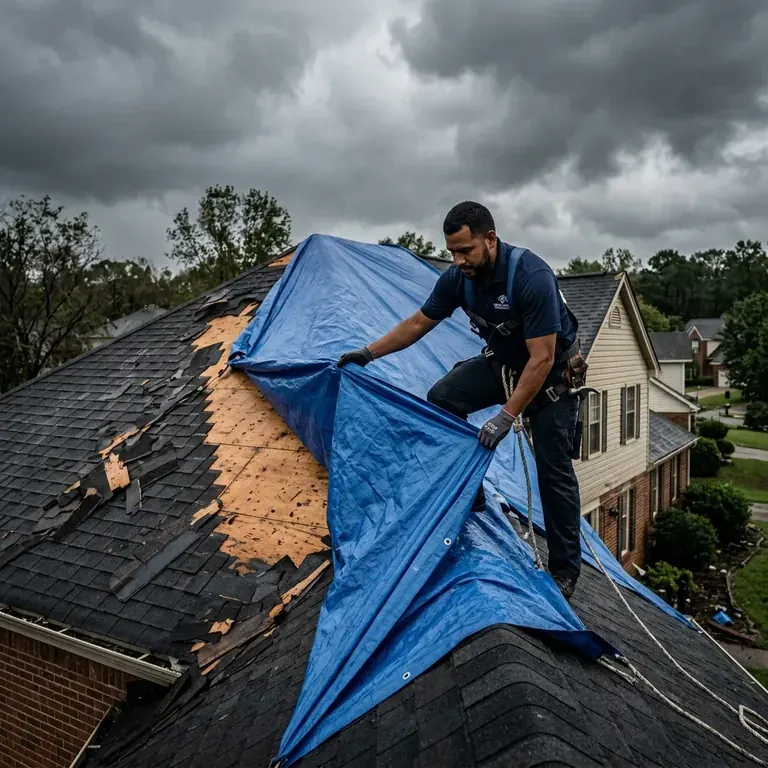
A tarp is not a repair, but it is the right first step when the roof is open and rain is coming. A tarp goes over the damaged slope, is fastened at the ridge and the eaves so wind cannot lift it, and stays until the repair crew can work in dry weather. A tarp that is thrown over the damage and left loose does more harm than good, since wind works it against the shingles and tears more of them loose.
When the roof is open to the sky, emergency roof repair in Rochester is the call to make, day or night. And when the storm has left debris across the yard and the roof, the EPA guidance on debris and damaged buildings covers how to handle damaged materials safely, including what to leave alone until trained help arrives.
After the storm
A storm claim starts with a record. Photos from the ground, photos from the roof, and the written findings from the inspection together show what the storm did and when it did it. Take the photos as soon as the sky clears, before any repair covers the damage, and keep the notes with the dates. A roofer can help with the record, and insurance claim help in Rochester walks through the claim process step by step, from the first call to the final walk of the repaired roof.
One thing matters more than the rest: do not wait for the claim to make the roof dry. A tarp goes on as soon as the roof is open, and the repair follows once the roof can be worked on. Water does not wait for paperwork, and a roof that stays open through the next rain turns storm damage into water damage inside the house.
People also ask
Short answers to the storm & hail damage repair questions that come up most in real conversations.
Look for granules in the gutters, round bare spots on the shingles, and dents on vents, flashing, and gutters. On the roof, hail leaves soft bruises in the shingle mat that you can feel by hand. From the ground, those marks rarely show, which is why a roof walk after a hailstorm matters more than a look from the driveway.
After a strong storm, yes. Wind and hail can lift tabs and bruise shingles without leaving anything visible from the ground, and the damage only shows when the next rain finds it. A quick look after the storm catches lifted tabs and torn ridge caps while the fix is still small and the record is fresh.
Damage the storm caused, not wear that was already there. Missing or torn shingles, cracked or bruised shingles from hail, dented vents and flashing, and holes from fallen limbs all count. Granule loss and curling from age do not. A roofer documents which is which, with photos of each mark and notes on where it sits on the roof.
The storm is over, but the roof is still telling the story. Call and get the damage read properly.
Call (585) 868-0065Frequently asked questions
Stay off the roof and look from the ground first. Note missing shingles, dented vents, and granules in the gutters, then check the attic for drips and the top rooms for new stains. Take photos with the date, and call a roofer for a walk of the roof. The photos and the written findings become the record for the repair and any claim that follows.
Yes, and that is the most common kind of hail damage. Hail bruises the shingle mat underneath the surface, knocking granules off and softening the asphalt, without cracking the shingle open. The bruise lets water through over time, so the roof looks sound for months and then starts leaking. Feeling the shingles by hand finds the bruises that eyes miss.
As soon as the sky clears and the roof is safe to walk. A look within the first day or two catches lifted tabs and torn ridge caps while the fix is still small, and it gives the claim a fresh record. Waiting weeks lets the next rain test the damage, and a leak that starts in the attic can soak the decking before it shows on the ceiling.
Yes. When the roof is open and rain is coming, a tarp goes over the damaged slope, fastened at the ridge and the eaves so wind cannot lift it. The tarp keeps the rain out while the repair is planned and the materials arrive. It is a temporary step, not a repair, and it comes off as soon as the real work starts.
That depends on your policy and on what the storm actually did, and we cannot answer for your insurer. What we can do is document the damage with photos and written findings, so the claim has a clear record of what the storm broke and where it sits on the roof. Insurance claim help in Rochester walks through how that record is used.
Call a roofer once the tree crew has made the area safe, and do not climb onto the roof yourself. A fallen limb can punch through the deck and leave the roof open, and the weight of the tree can hide more damage underneath. We tarp the opening, assess the decking and the rafters, and plan the repair from the structure up, not from the shingles down.
Keep going
Storm damage touches more than the shingles. These services pick up where the storm leaves off.
When the roof is open and rain is coming, emergency repair makes it dry first and plans the rest after.
Learn more →After the storm, a full walk with photos records the damage and finds the bruises eyes miss from the ground.
Learn more →Photos, written findings, and a clear record of what the storm did, step by step through the claim.
Learn more →First walk after the storm
The storm leaves its marks in the yard before you ever look at the roof, and a slow walk around the house finds most of them.
Start on the ground, once the wind has dropped and it is safe to be outside. Shingle pieces in the grass, granules washed into piles by the downspouts, and limbs or branches resting on the roof all say the roof took a hit, and the side of the yard where the pieces landed says which slope the wind hit hardest. A fence panel down or a trash bin rolled across the yard says the wind was strong enough to lift tabs, even where no shingle came off.
Look at the roofline from the street and from the yard. A ridge line that has lost caps shows as a gap along the top, a slope with lifted tabs shows as a ripple where the courses no longer lie flat, and a dented vent or a bent gutter says hail came with the wind. Look at the houses around you too: when several roofs on the street show the same marks, the storm hit the whole block, and your roof likely took the same force.
Look inside before you call anyone. New stains on the ceilings, damp patches on the top-floor walls, and water in the attic all say the roof is open somewhere, and the rooms they touch say which slope to check first. Note the time the storm passed and the time you found each mark, since the notes you make now are the record you will need later, and a same-day emergency look in Rochester is the right call when water is coming in.
Telling the marks apart
Hail, wind, and limbs leave three different marks, and the mark tells you what the storm did to the roof.
Hail leaves round bruises where the stones struck, and the bruise often hides under the surface, so the shingle looks whole until you press it and feel the soft spot. The granules are knocked off in a small circle, and the mat below shows through.
Wind bends a shingle tab back and forth until it creases near the nail line, and the crease is a straight fold across the tab. A creased tab may lie flat again, but the fold is a weak line, and the next wind takes the tab off at the crease.
A falling limb scrapes a line across the shingles, tearing granules off in a streak and sometimes splitting the shingle along the scrape. The mark follows the path the limb took, and the torn shingles beside the path are the ones that need replacing.
The three marks call for different fixes, and telling them apart is what keeps the repair right. Hail bruises mean the slope took a rain of stones, so the whole slope is checked, not just the spots you can see from the ground. Wind creases mean the tabs on the windward slope are weakened, so the slope is checked tab by tab. Limb scrapes mean the damage follows one path, so the fix follows the same path, and the roof around it is checked for the smaller hits the limb left on its way down.
The record
A claim is decided on the record you hand over, so the notes and photos you make in the first day carry more weight than anything you remember a week later.
Write the storm down while it is fresh: the day and the time it passed, the wind and the hail you saw, and the rooms where water showed up. A short note with the time and the weather is worth more than a long account written days later, since the record matches the storm reports the insurer checks against, and it keeps the claim tied to the storm that caused the damage.
Photograph the damage from the ground first, then closer up where it is safe to do so. A wide shot of the slope shows the scale of the damage, a close shot of a bruised shingle or a creased tab shows the mark itself, and a photo of the shingle pieces in the yard shows what the wind took. Keep the damaged pieces in a bag or a box rather than throwing them out, and photograph the ceilings and the attic where water came in, since the inside damage is part of the same record.
| Record | What to write down |
|---|---|
| The storm | Day, time, wind, and hail as you saw it, not as you guessed it later |
| The roof | Which slopes show marks, and what the marks look like |
| The inside | Which rooms show stains, and when they appeared |
| The yard | Shingle pieces, limbs, and where they landed |
Keep every note and photo together in one place, and send copies, not the only copies, to anyone who asks for them. A look at insurance claim help in Rochester walks through the claim step by step, from the first call to the adjuster visit, and the record you built in the first day is what the adjuster reads first.
Call and get the damage assessed, the roof made dry, and the repair planned from facts, not guesses.