Call (585) 868-0065
Roof inspector with a clipboard examining shingles at the eave of a Rochester house, standing on a ladder

A Full Walk, Top to Bottom

Roof Inspection in Rochester, NY

A roof inspection is a close look at the whole roof system, not a glance from the driveway. We walk the slopes, check the flashing and the gutters, look in the attic, and tell you in plain words what we found, what needs attention now, and what can wait.

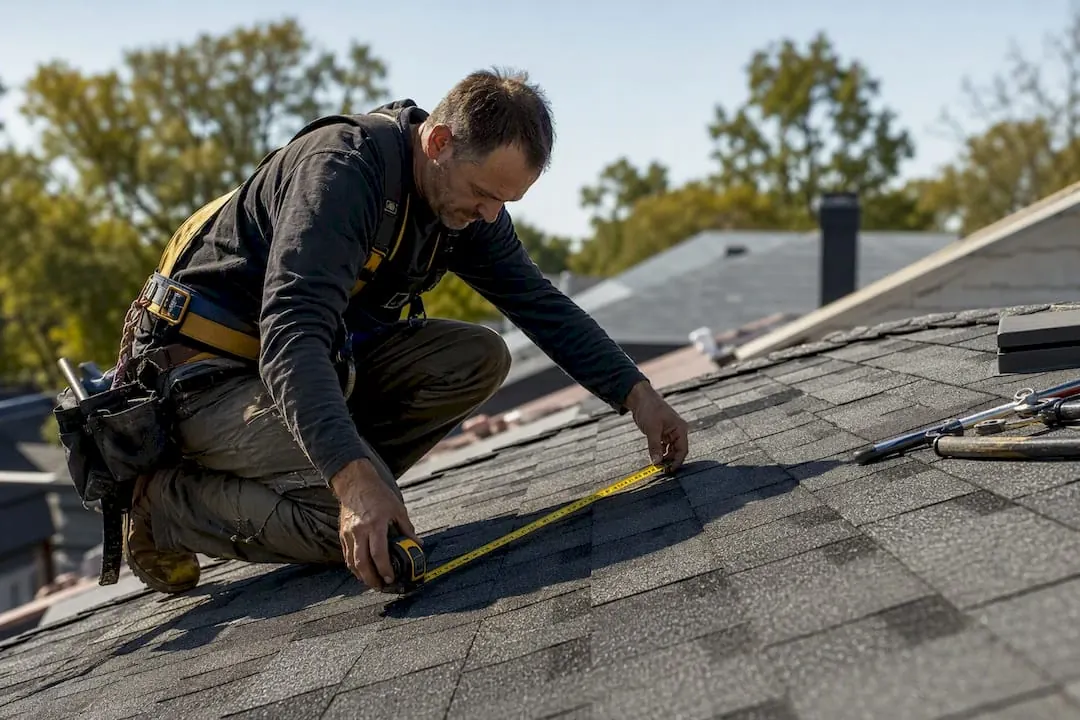
Roofer measuring shingles with a yellow tape measure on a residential roof
Measuring and checking shingles up close, course by course, on the windward slope.

What an inspection is

What a real roof inspection covers

A real inspection touches the roof. We walk every slope we can reach safely, lift a few shingle tabs to check the layers underneath, and look at the decking from the attic for damp boards and daylight. A drone or a pair of binoculars can help on a slope too steep to walk, but neither one replaces hands on the shingles.

The inspection covers the whole system, not just the surface. Shingles, flashing, valleys, ridge caps, vents, pipe boots, gutters, and downspouts all get a look, because a roof fails at its joints more often than in the middle of a slope. Storm and hail damage in Rochester gets its own checks too, from bruised shingles to dented vents, since hail damage hides under the surface.

You get the findings in writing, in plain words, with photos of what we saw. The report sorts everything into what needs attention now, what to watch, and what is sound, so you can plan the next step with facts instead of guesses. A roof replacement in Rochester and a roof repair in Rochester both start from the same place: an honest look at the roof as it is.

Inside, outside, and up on the roof

Every part of the roof gets a look

An inspection is a checklist walked in order, from the ridge down to the gutters and back up through the attic.

What a roof inspection checks in each part of the roof
AreaWhat we checkWhat trouble looks like
ShinglesCurling, cracking, granule loss, lifted tabs, missing piecesBare patches, grit in the gutters, tabs that lift in the wind
FlashingStep flashing, valley flashing, chimney and skylight jointsCracked sealant, lifted metal, gaps where brick meets roof
Ridge and ventsRidge caps, ridge vent, pipe boots, exhaust ventsLoose caps, split rubber collars, blocked vents
GuttersHangers, seams, downspouts, water flowSagging runs, leaks at seams, water pooling at the foundation
AtticDecking, insulation, ventilation, daylight, dampStained boards, thin insulation, blocked soffit vents

Scroll sideways to see the full table.

Two seasons matter most

Spring and fall: the two inspections that matter in Rochester

Rochester roofs take their hardest hits in winter, so the inspections that matter most sit on either side of it.

Spring

After the snow leaves

Spring shows what winter did: lifted tabs from wind, cracked vent boots, flashing that moved with the freeze and thaw, and ice dam damage at the eaves. A spring inspection catches all of it while the fixes are still small, and it shows whether the attic stayed dry through the cold months.

Fall

Before the snow arrives

Fall is the last chance to get the roof ready for months of snow. Gutters get cleared of leaves, loose tabs get reset, and cracked boots get swapped before they freeze. A fall inspection also checks the attic airflow, since a warm attic feeds the ice dams that form at the eaves all winter.

Not sure whether your roof needs a repair or a replacement? An inspection gives you the facts to choose with.

Call (585) 868-0065

Photos that mean something

Drone photos and attic photos, explained

A photo is only useful when someone explains what it shows. Our inspection photos come with plain-words notes: what the photo shows, where it sits on the roof, and whether it matters now or later. A drone photo of a steep slope shows the shingle courses and the ridge caps that cannot be walked safely. An attic photo shows the decking, the insulation depth, and the baffles that keep the soffit vents open.

Drone imaging helps most on steep pitches, tall houses, and roofs that are wet or icy, where walking would damage the shingles or risk a fall. It does not replace the walk on the slopes that can be reached, since a drone cannot lift a tab or feel a soft board. Attic ventilation and insulation in Rochester are part of every inspection, because the attic decides how long the roof lasts and how many ice dams form at the eaves.

New York does not issue a statewide roofing license, so there is no single license to check. When you hire a roofer, ask to see the license and insurance the job calls for, and ask for the findings in writing. The New York State site lists the agencies that handle contractor and consumer questions, and the Monroe County site lists local offices and services for homeowners in the county.

Drone flying above a tiled house roof during a roof inspection, with an operator standing in the driveway below
A drone reaches steep slopes that cannot be walked safely, and its photos go into the written report.

Your inspection checklist

The inspection, step by step

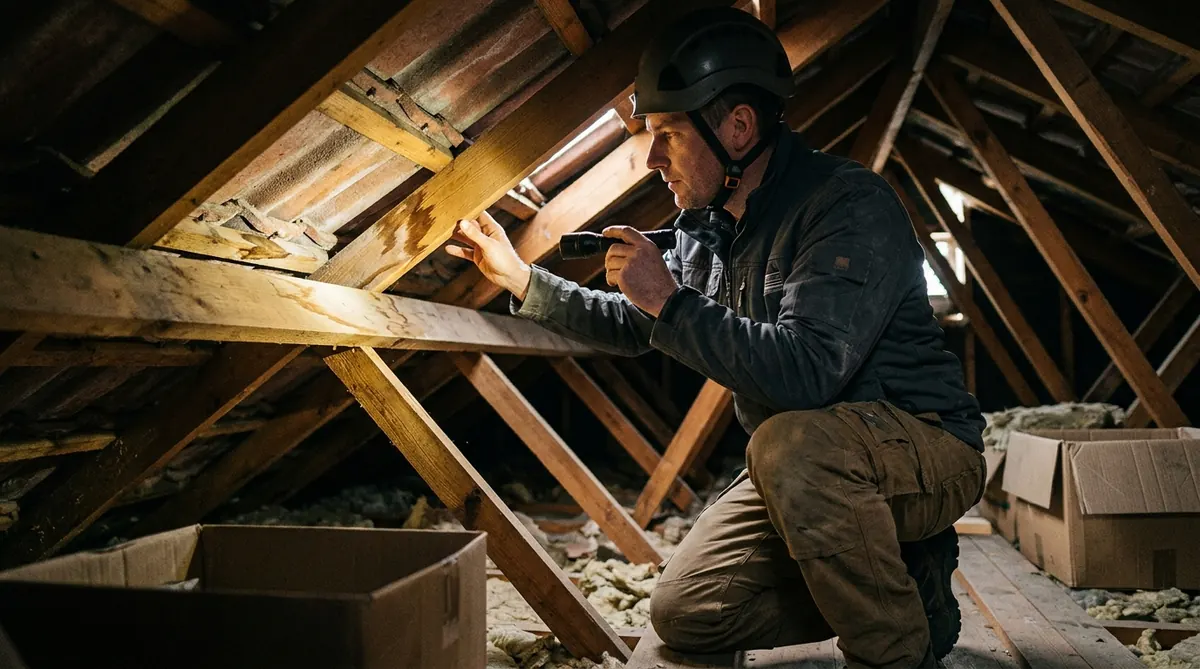
Inspector with a flashlight examining wooden rafters and decking inside a dark attic
The attic tells the truth about the roof: damp boards, thin insulation, and blocked vents all show from inside.

The written report

What the written report tells you

The report is the inspection. It lists what we found on each slope, each joint, and in the attic, with a photo for each finding and a plain-words note on what it means. Findings are sorted into three groups: what needs attention now, what to watch over the next season, and what is sound. That sorting is the whole point, since it turns a list of observations into a plan.

A report also helps when a storm has done damage and an insurance claim follows. Photos taken before the storm and after it show what changed, and the written findings give the claim a clear record to work from. Insurance claim help in Rochester walks through that process, and roof maintenance in Rochester keeps the findings from the report from growing into repairs.

People also ask

Inspection questions, answered in plain words

Short answers to the roof inspection questions that come up most in real conversations.

How often should a roof be inspected in Rochester?

Once a year is a good rhythm, with spring the best season for it. A spring inspection finds what winter did while the fixes are still small, and a fall inspection gets the roof ready before snow arrives. After a strong storm or a hail event, an extra look is worth it even if the roof was checked recently.

Can a roof inspection find hail damage I cannot see from the ground?

Yes. Hail bruises shingles in ways that rarely show from the ground: soft spots in the mat, cracked surfaces, and granule loss in round patterns. On the roof we feel for bruises by hand and look for dents on vents and flashing. Those marks tell whether the hail hit hard enough to shorten the life of the roof.

What does a roof inspector look for in the attic?

Damp or stained decking, daylight through the boards, thin or uneven insulation, and blocked soffit vents. The attic shows leaks before the ceiling does, and it shows whether warm air is escaping into the roof and feeding ice dams. An inspector also checks that baffles keep the airflow path open from the soffit to the ridge.

Do I need to be home during a roof inspection?

It helps, but it is not required. Being home means we can show you the findings on the roof and in the attic as we go, and answer questions while the roof is in front of us. If you cannot be home, the written report with photos covers the same ground, and we walk through it with you after.

A roof you have not looked at in years is a roof full of guesses. Call and get the facts in writing.

Call (585) 868-0065

Frequently asked questions

Inspection answers, straight from the crew

A walk of every reachable slope, a check of the flashing at chimneys, walls, valleys, skylights, and vents, a look at the ridge caps and pipe boots, a check of the gutters and downspouts, and a look inside the attic at the decking, insulation, and ventilation. You get the findings in writing with photos.

Most single-family homes take an hour or two, depending on the size of the roof, the pitch, and how much of the attic can be reached. Steep or tall roofs take longer, since the drone does the looking where the crew cannot walk safely. The written report follows after the walk, with photos of each finding.

It gives you an honest range, not a date. The shingles, the flashing, and the decking each age at their own pace, and the inspection reads all three. A roof with sound decking and worn shingles has a different outlook from one with soft decking and sound shingles, and the report says which one yours is.

Yes, with limits. Snow hides the shingles, so a winter inspection leans on the attic, the gutters, and the ice dam patterns at the eaves, plus drone photos where the snow has slid off. A full surface inspection waits for a clear roof in spring, when every slope can be walked and every tab can be lifted.

Yes. Flat roofs get a different checklist: seams, ponding water, drains and scuppers, flashing at the parapet, and the membrane around vents and HVAC curbs. Flat, foam, and single-ply roofing in Rochester covers the systems we inspect and repair, from EPDM to TPO to spray foam.

Keep going

Related roofing services

An inspection points the way. These services do the work it finds.

Roof Repair

When the inspection finds a leak, a repair traces it to the source and fixes the cause, not just the symptom.

Learn more →

Three kinds of callers

Who asks for an inspection, and what each one is looking for

Three kinds of people ask for an inspection, and each one is looking for a different answer from the same walk of the roof.

An inspection is the same walk in each case, but the questions change. A buyer asks how long the roof has left, an owner planning work asks what the job will touch, and an owner after a rough winter asks what the season damaged. The report answers each one in plain words, with photos that show the roof as it is, so the next step is a decision made with facts, not a guess made from the driveway.

A buyer before closing

A buyer wants to know what the roof will ask for in the first years of living there. The inspection looks for age, wear, and the repairs that will land soon, so the buyer walks into the house knowing what the roof will ask for.

An owner planning work

An owner planning a replacement or a large repair wants the scope right before the work starts. The inspection maps the deck, the flashing, and the vents, so the plan matches the roof as it is.

An owner after a rough winter

An owner who has lived through a winter of ice dams and wind wants to know what the cold months did. The inspection checks the eaves, the boots, and the attic for the marks winter leaves behind.

Making sense of the report

Reading your inspection report like a roofer

The report sorts everything the inspection found into three groups, and the groups tell you what to do first.

The first group is the work that needs attention now: an active leak, a split boot, a stretch of flashing that has lifted, or a soft board in the deck. These are the findings that let water in with the next rain, so they sit at the top of the report, and the report names the spot on the roof and the fix it needs, so a roofer can plan the work from the page alone.

The second group is the work to watch: shingles that are thinning, granule loss that is building, flashing that is aging but still sound, and gutters that are starting to sag. These findings are not leaks yet, and the report says so, with a note on what to look for and when to look again, so a small change gets caught while the fix is still small.

What each mark in the report means
MarkWhat it meansWhat happens next
Needs attention nowWater is getting in, or will with the next rainBook the repair before the next storm
WatchWear is showing, but the roof is still dryCheck again after the next season, and sooner after a storm
SoundThe part is in good shape and doing its jobNothing to do, and the note stays in the report for next time

Keep the report with the house papers. The next inspection starts from it, and the roofer who reads it can see what changed since the last look, which turns a fresh inspection into a comparison instead of a fresh start. A roof maintenance visit in Rochester builds on the same notes, with the same plain-words list, so the roof is watched over time rather than looked at once and forgotten.

From the ground

Between inspections, what you can spot from the ground

You do not need a ladder to keep an eye on your roof, and the signs you can see from the yard are the ones that tell you when to call for a closer look.

Start with the gutters. Granules by the handful say the shingles are shedding their shield, and shingle bits in the trough say tabs are breaking off above. A gutter that sags or pulls away from the fascia says the hangers have loosened or the fascia behind them is wet, and a downspout that spills at the seams in a hard rain says the run is blocked or pitched wrong.

Look at the slopes with binoculars from the yard. Lifted tabs show as a ripple along a course, curling shows as a lifted edge that catches the light, and a missing shingle shows as a dark patch where the underlayment shows through. Walk around the house and look at each slope in turn, since the windward slope wears first and the slope you never see from the street is the one that fails unnoticed.

Look in the attic twice a year, in spring and in fall, with a flashlight. Damp boards, stained rafters, and daylight through the deck all say water is getting in, and insulation that is flat and matted says it has been wet. Do not climb on the roof yourself: wet shingles are slick, steep slopes are unforgiving, and a fall from a roof is a hospital visit, so the ground and the attic are the right places to look, and the roof itself belongs to a roofer with the gear for it.

After a storm, the same ground-level look takes a few minutes and saves a season. Walk the yard for shingle pieces and limbs, look at the ridge line for lifted caps, and check the ceilings inside for new stains. If the yard holds shingle pieces or the ceilings show a fresh mark, call for a storm damage look in Rochester rather than waiting for the next rain to test the roof.

Know what your roof is doing before the next storm tells you.

Book a full walk of the roof, the attic, and the flashing, and get the findings in writing with photos.