Water pouring into a room
A steady drip or a stream from the ceiling means the roof is open above that room. Put a bucket under it and call.
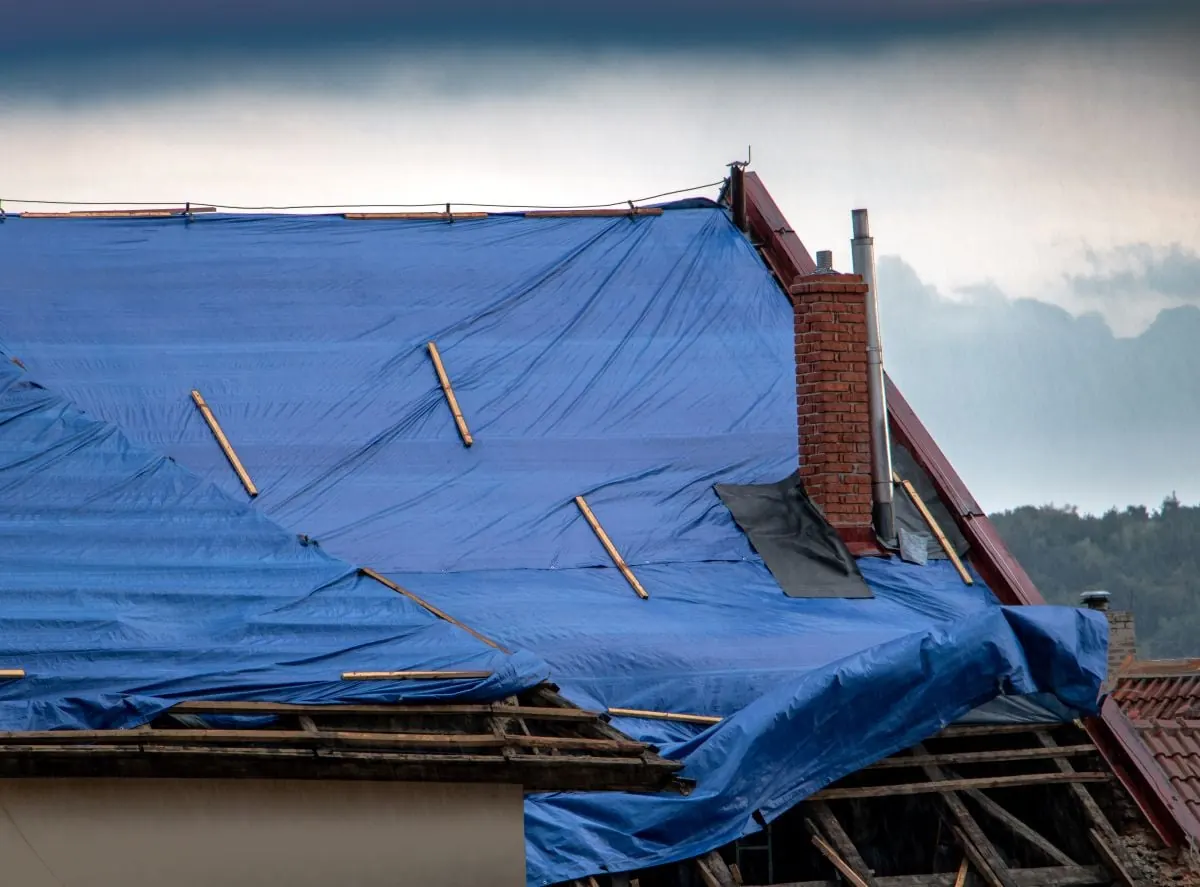
When the Roof Cannot Wait
Some roof problems can wait for a dry day. An open roof cannot. When a storm tears the roof open or a limb punches through the deck, we make the roof dry first, then plan the full repair, so the rain stays outside while the work is lined up.
What counts as an emergency
An emergency is a roof that is open to the sky, or a leak that is actively damaging the house. A missing stretch of shingles with rain coming, a limb through the deck, a skylight that has blown out, or water pouring into a room all count. A stain that has been there for months and is not growing does not, and it can wait for a scheduled visit.
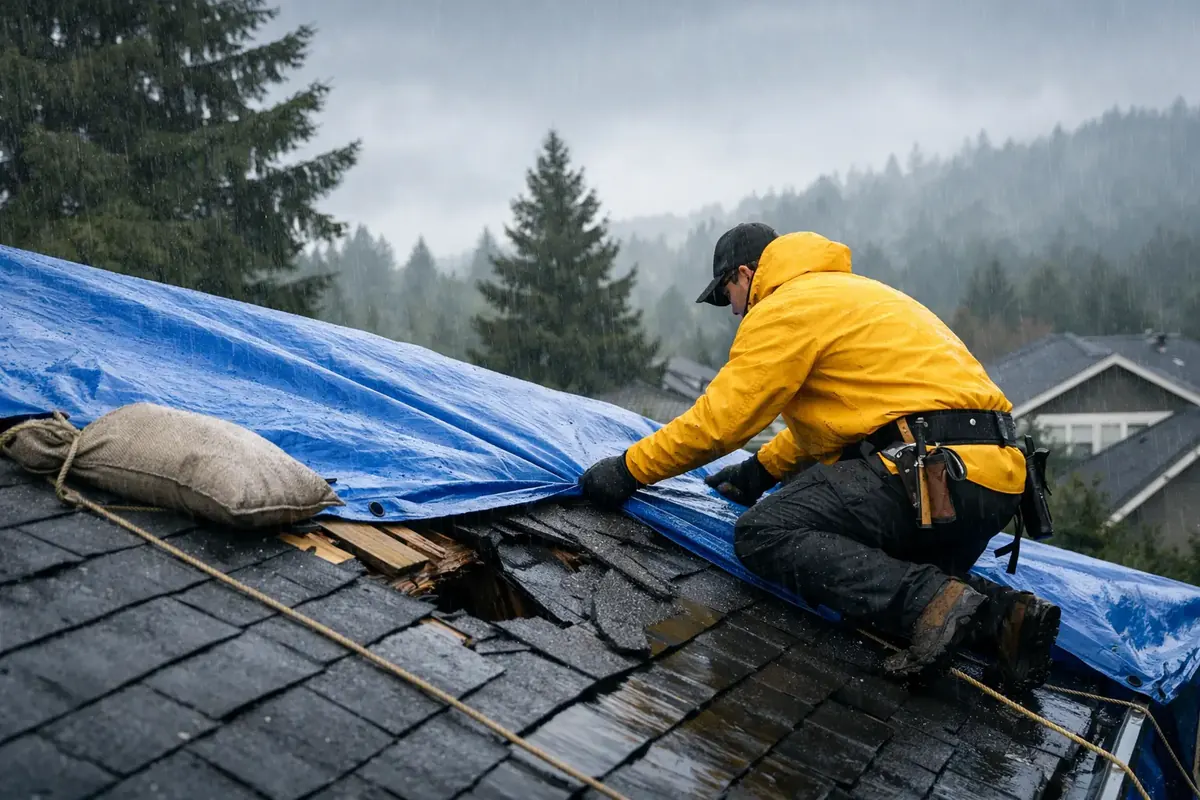
The first job in an emergency is to stop the water. That usually means a tarp over the open slope, fastened so wind cannot lift it, or a temporary cover over the hole until the deck can be seen properly. Storm and hail damage in Rochester covers what the storm broke, and roof repair in Rochester covers the everyday leaks that can wait for a dry day. In an emergency, the tarp comes first and the questions come after.
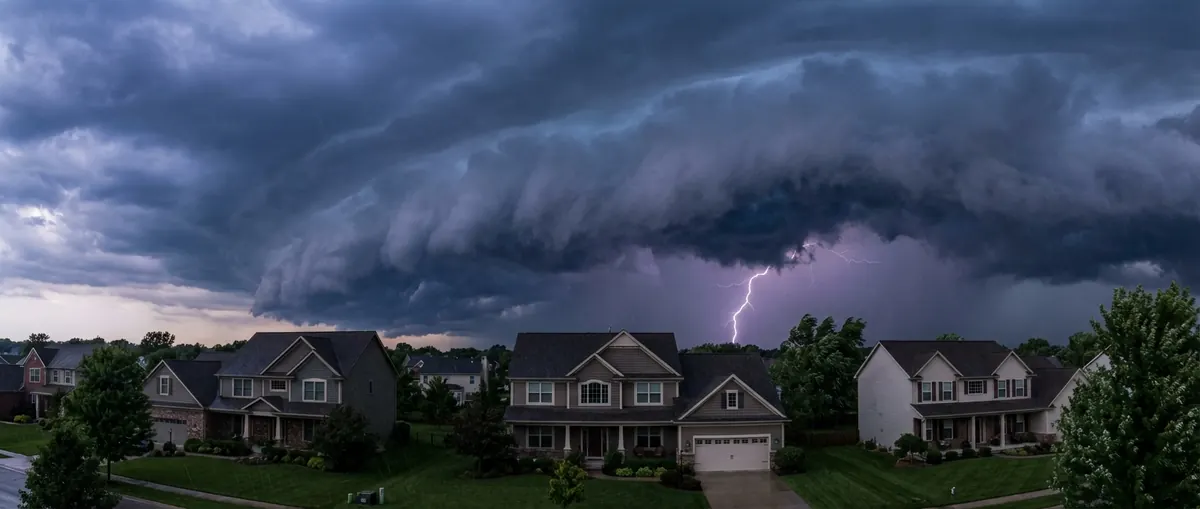
Call as soon as the roof is open. A roofer can make the roof dry while the rain is still falling, and the longer the roof stays open, the more water gets into the decking, the insulation, and the rooms below. The National Weather Service Buffalo office posts the storm warnings Rochester watches, and its forecasts show when the next rain is coming, so the tarp goes on before it arrives.
Act now
If any of these is happening, the roof is open or the water is already inside. Call now.
A steady drip or a stream from the ceiling means the roof is open above that room. Put a bucket under it and call.
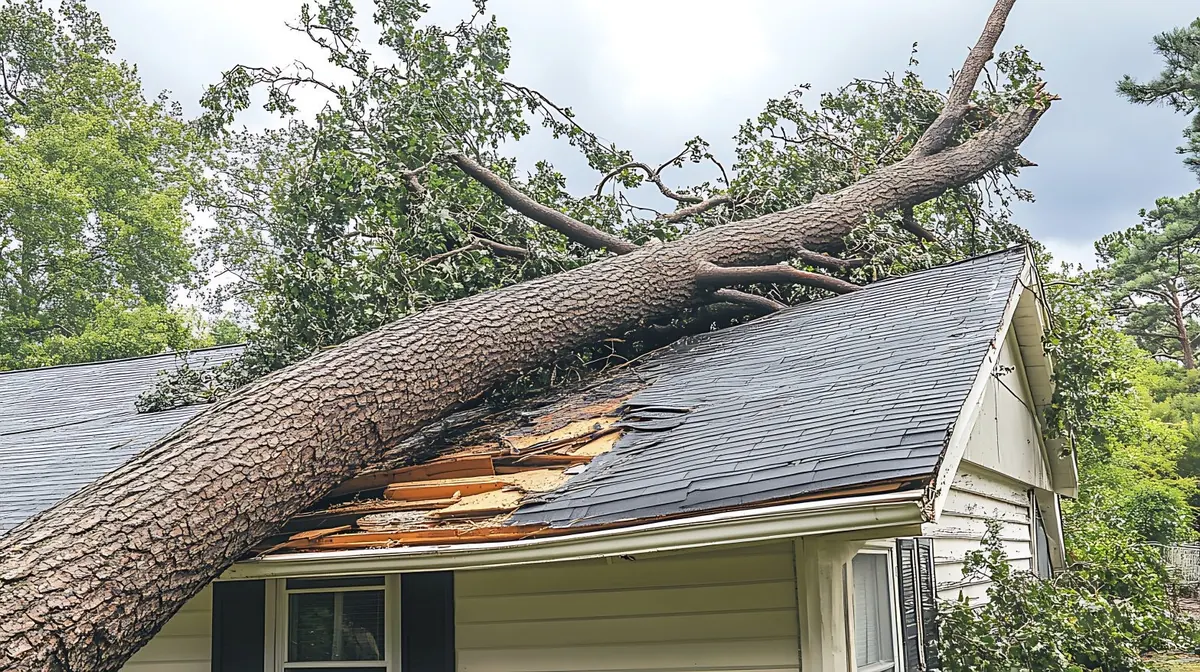
A fallen limb punches through the deck and leaves a hole the rain pours through. Stay out of the room below it until the tree is clear.
Wind can strip whole courses off the windward slope, leaving the underlayment bare. The next rain goes straight through.
A skylight that has blown out or cracked open is a hole in the roof the size of a window. Cover it from inside and call.
A ceiling that sags or bulges is holding water above it, and it can come down. Move out of the room and call.
An ice dam can push meltwater under the shingles and into the walls, and the water shows up far from the dam itself.
Water coming in and the roof is open? Call now and we will make it dry.
Call (585) 868-0065The first hours
An emergency call follows a set order, so nothing gets missed while the rain is falling.
First call
You tell us what happened, where the water is, and whether the roof is open. We talk through what to do right now, before anyone climbs a ladder.
Dry-in
The crew arrives, checks the roof from the ground and the attic, and tarps the open slope or covers the hole so the rain stays out.
Full assessment
Once the roof is dry, we walk it and write down what the storm broke: shingles, flashing, decking, and anything the water reached inside.
Repair plan
You get the findings in plain words and a plan for the full repair, with the tarp holding the roof until the work can start.
Tarping, done right
A tarp is a simple tool, and it is easy to get wrong. A tarp thrown over the damage and weighted with bricks will lift in the next gust, flap against the shingles, and tear more of them loose. A tarp done right runs from above the damage to below it, is fastened at the ridge with battens and at the eaves so wind cannot get under it, and is checked after the next wind.
The tarp stays until the repair can go in properly, which means dry weather, the right materials, and a crew that can work safely. In winter, that wait can be longer, since cold shingles are stiff and snow hides the damage. Snow removal and ice dam prevention in Rochester covers the winter side of emergency work, and the Monroe County site lists local emergency services and offices for homeowners in the county.
Before we arrive
After the tarp
The tarp buys time, and the time is used to plan the real repair. Once the roof is dry, we walk it and write down the full damage: the shingles the storm took, the flashing it bent, the decking the limb broke, and the water that got inside. That list becomes the written scope for the repair, so the work that follows fixes the cause, not just the hole.
Some emergency damage leads to a repair, and some leads to a replacement. A roof that lost a few courses on one slope usually gets a repair. A roof that lost whole slopes, or one whose decking is broken across the ridge, usually gets a roof replacement in Rochester. Either way, the decision comes from the walk of the roof, not from the size of the hole. And when a claim follows the storm, insurance claim help in Rochester walks through the record the claim needs.
People also ask
Short answers to the emergency roof repair questions that come up most in real conversations.
A roof that is open to the sky, or water actively damaging the house. Missing shingles with rain coming, a limb through the deck, a blown-out skylight, or a sagging ceiling all count. A stain that has sat for months without growing does not, and it can wait for a scheduled visit instead.
As soon as the crew can reach the roof safely. In most cases that means the same day you call, once the storm has passed and the roof can be walked. A tarp goes over the damaged slope and is fastened at the ridge and the eaves, so it holds through the next wind while the full repair is planned.
The roof is open and the rain is coming. Call now and we will make it dry.
Call (585) 868-0065Frequently asked questions
Put a bucket under the drip, move furniture and anything valuable out of the way, and call. If the ceiling sags or bulges, leave the room, since it is holding water and can come down. Do not climb onto the roof yourself. A roofer makes the roof dry first, then plans the repair once the water is stopped.
Yes, when it can be done safely. A tarp in the rain is slow work, and a roof in the dark hides soft decking, so the crew works carefully and lights the slope. When the roof cannot be walked safely, the tarp waits for daylight and the crew covers what it can from the ladder and the attic instead.
A tarp is a temporary cover, and it should come off as soon as the real repair can go in. Weeks is common while materials arrive and dry weather is lined up. Months is too long, since wind works the tarp against the shingles and the fasteners wear the roof underneath. The repair plan sets the date the tarp comes off.
Call once the tree crew has made the area safe, and stay out of the rooms below the impact. A fallen limb can punch through the deck and break rafters, and the weight of the tree hides more damage underneath. We tarp the opening, assess the decking and the structure, and plan the repair from the structure up, not from the shingles down.
The emergency visit makes the roof dry, and the full repair that follows fixes it for good. The tarp stops the water, then the crew walks the roof, writes down the damage, and plans the repair or the replacement the roof needs. A tarp left in place is not a repair, and it will not hold through a Rochester winter.
Yes. An ice dam that is pushing water into a room is an emergency, and the dam gets cleared safely from the roof, without chopping or hammering at the ice. Once the water is stopped, we check the attic airflow and insulation that feed the dam, since the dam will return until the attic stops melting the snow from below.
Keep going
The emergency makes it dry. These services finish the job.
When a storm broke the roof, storm repair assesses the full damage and repairs what the storm took.
Learn more →When the leak is not an emergency, a repair traces it to the source and fixes the cause properly.
Learn more →When winter is the emergency, safe snow removal and ice dam work stop the water at the eave.
Learn more →Tonight or tomorrow
An emergency is a roof that is open to the weather right now, and the line between tonight and tomorrow is whether water is coming in.
When water is coming in, the roof is an emergency, and waiting for morning means a night of water running through the deck, the insulation, and the ceilings below. When the roof is damaged but dry inside, the fix can wait for daylight, when the crew can see the roof and work on it safely. The call itself is never the wrong move: describe what you see, and the roofer will tell you honestly whether the crew needs to come tonight or whether morning will do, and what to do in the meantime.
Inside while the roof is open
While the roof is open, the job inside the house is to catch the water, move what it can reach, and keep the damage to one room.
Put a bucket or a basin under each drip, and lay towels around it to catch the splash. A drip that lands in a bucket is water you control, and a drip that lands on the floor spreads under the baseboards and into the rooms below. If the ceiling is sagging under water, do not stand under it, and do not poke it: a sagging ceiling can give way, and the water above it will come down all at once.
Move furniture, rugs, and anything you value out of the wet room, and cover what cannot be moved with plastic sheeting or a tarp. Electronics and paper come first, since water ruins them fast, and the mattress and the sofa come next, since they soak up water and hold it. In the attic, put a basin under the drip and lay a sheet of plastic under the basin, so the water that misses the basin still lands on plastic instead of the insulation.
If water is dripping near a light fixture or a socket, stay clear of the fitting and switch the light off at the wall. Do not touch a wet switch or a wet fitting, and call an electrician if the water has reached the wiring.
A basin in the attic catches the drip before it reaches the ceiling, and a plastic sheet under the basin catches what misses. Note where the drip lands, since the spot points to the hole above.
Take a photo of each wet spot before you move anything, and note the time you found it. The photos are the record of what the storm did, and they help the roofer find the hole from above, since the wet spot inside points to the slope that is open. Once the inside is as dry as you can make it, the next step is the tarp, and storm damage help in Rochester covers what the crew does on the roof once the weather lets them up there.
After the tarp
A tarp stops the water, but it is a temporary cover, not a repair, and the days after it goes on are when the lasting fix takes shape.
The tarp will flap in the wind, and the sound is louder than you expect, since the tarp is a sail stretched over the roof. The crew nails and weights it so it stays put, but a strong gust will still lift an edge and drop it again, so do not be alarmed by the noise, and do not climb up to adjust it yourself: a wet tarp on a wet roof is a slick surface, and the fix belongs to the crew.
The next step is a daylight look at the roof, once the weather clears. The roofer walks the roof, lifts the tarp at the edges to see the damage underneath, and checks the decking for soft boards and the flashing for lifts, so the lasting fix is named from what the roof actually needs rather than from the size of the hole you saw from inside. The fix may be a roof repair in Rochester that patches the torn slope, or it may be larger if the decking underneath is wet, and the roofer will tell you which it is before any work starts.
While you wait, keep the buckets in place and check the ceilings after each rain. A ceiling that stays dry under the tarp means the cover is doing its job, and a new damp patch means the tarp has shifted and the crew should know. The tarp buys time, and the time it buys is for a fix done right, not a fix done fast, so the roof that comes after the tarp is the roof that keeps the next storm outside.
Call and tell us what the roof is doing. We will make it dry first, then plan the full repair.