First look
Tear-off and deck check
The crew strips the old shingles down to the deck, and the deck gets a full look board by board. Soft spots come out and new decking goes in before anything else happens.
Erie Canal Roofing
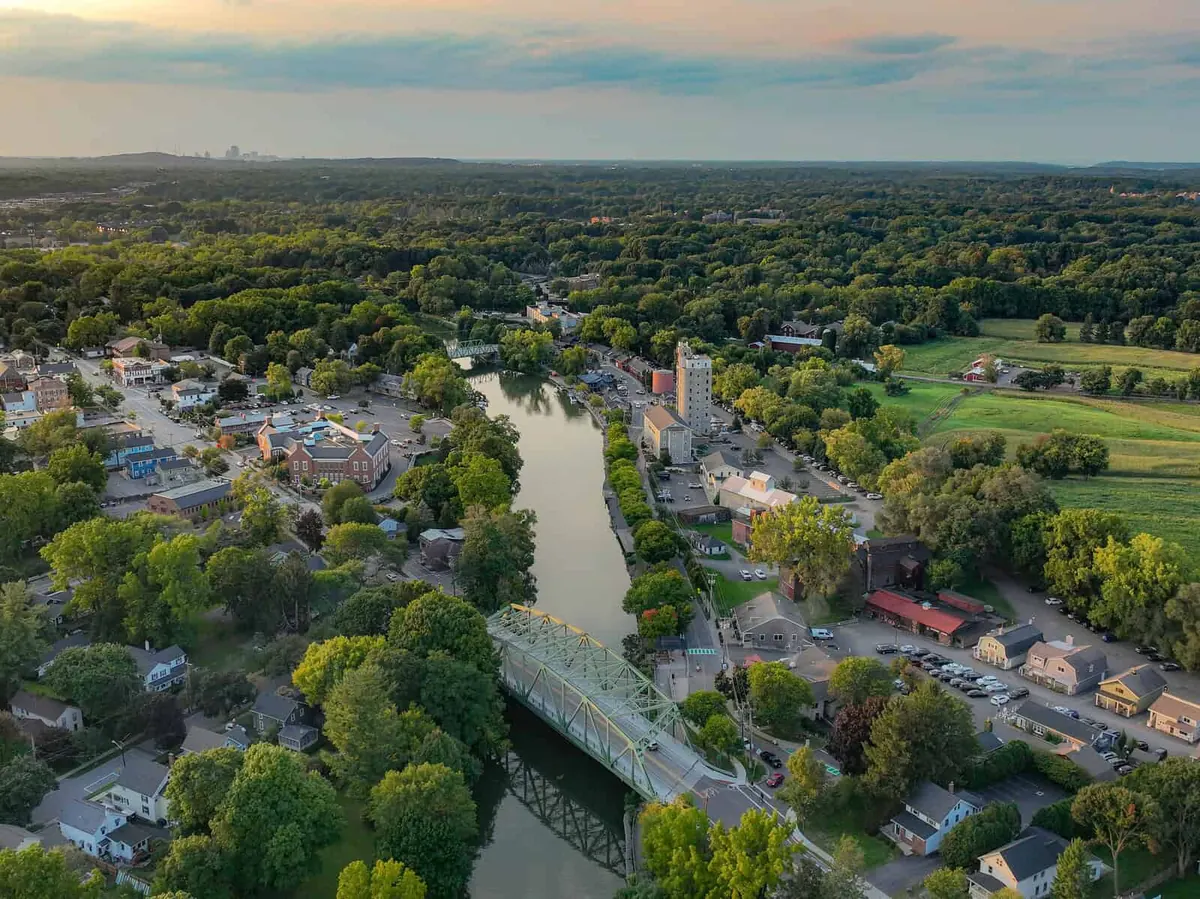
Pittsford grew up around the Erie Canal, and the village still turns toward the water. Schoen Place lines the canal bank, North Main Street runs through the old village center, and the homes around them range from nineteenth-century village houses to large colonials on deep lots. The roofs here carry slate, cedar, and architectural shingles in equal measure, and the valleys and dormers on the bigger homes ask for careful flashing work. We read each roof up close before we say what it needs.
Pittsford, NY
The Erie Canal runs straight through Pittsford Village, and the town grew around it the way mill towns grow around a river. Schoen Place faces the canal towpath, the old grain elevators and warehouses along the water now hold shops and restaurants, and the village streets behind them hold some of the oldest houses in Monroe County. A walk from the canal bridge down North Main Street passes homes built across two centuries, and their roofs tell that story plainly: slate on the oldest, cedar shake on a few, and architectural shingles on most of the rest.
Pittsford roofs face a quieter version of Rochester weather than the lakeshore towns do, because the town sits inland from the lake-effect bands that hammer Irondequoit and Greece. Snow still comes, and ice dams still form on the shaded eaves, but the wind is gentler here and the hail is rarer. What wears a Pittsford roof out is age and complexity: more valleys, more dormers, more chimney joints, and more places for water to find a seam. The canal and its towpath stay open to the public, and from the far bank you can see the village roofs plainly, which is often how someone first spots a cracked slate or a gutter pulling loose.
Historic roofs
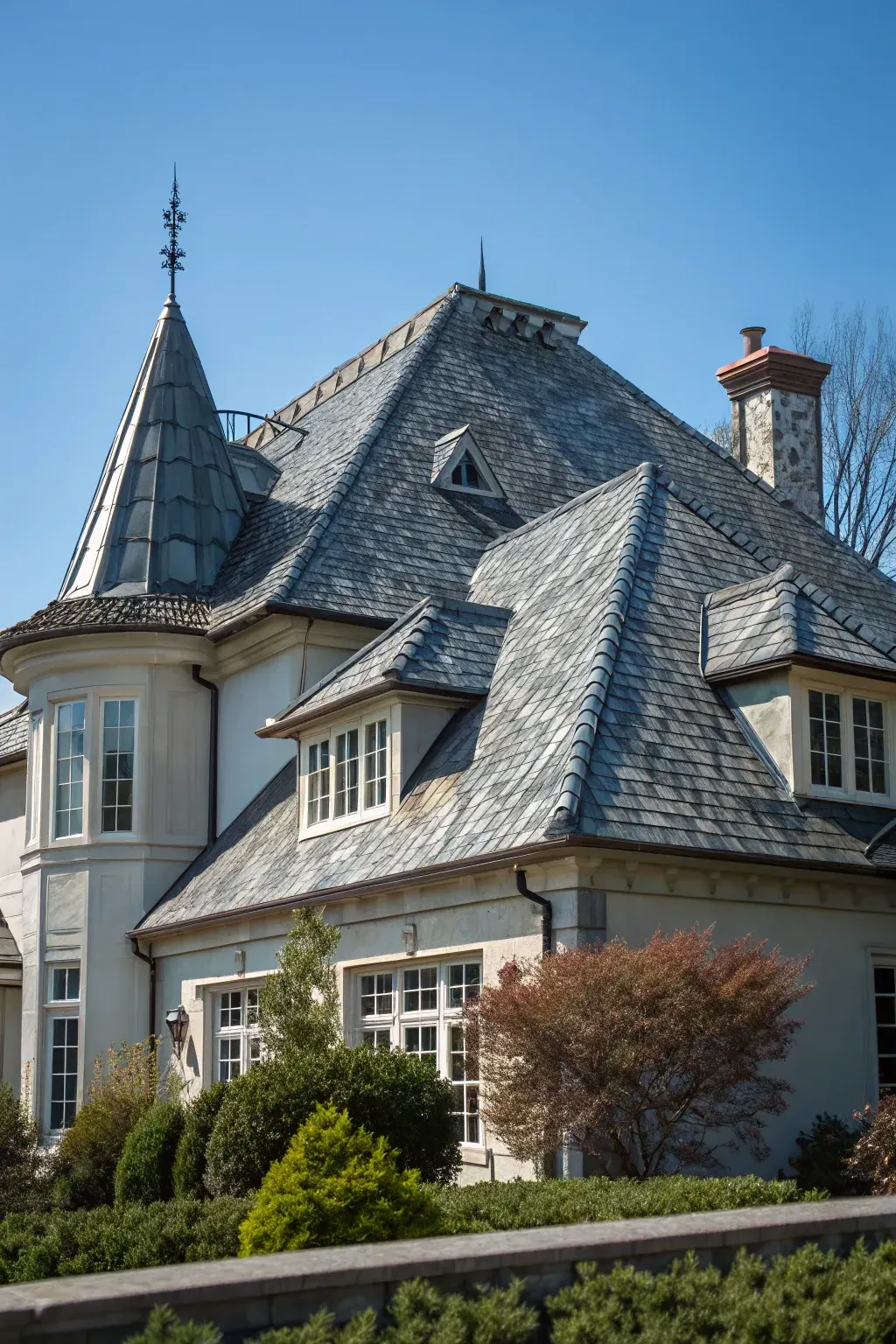
The oldest homes in Pittsford Village still carry slate, and slate is a roof that rewards patience. A single cracked slate comes out and a new one goes in, the copper nails and hooks hold for decades, and the field itself can outlast the house. The weak point is never the slate, it is the valley flashing and the chimney flashing around it, and those need a look every few years because the metal gives out long before the stone does.
Cedar shake shows up on a handful of older homes and on newer homes built to look old, and it asks for air. Shake needs to dry between rains, so the shaded lots near the canal are hard on it, and moss takes hold where the sun never reaches. Architectural shingles cover the newest homes and most of the replacements, and slate and specialty roofing work sits alongside them for the houses that were built with something better than shingles in mind. We keep the original material where it is sound and change only what has failed.
A slipped slate or a valley that keeps leaking? Call and we will look at the flashing first.
Call (585) 868-0065
The chimney joint
A Pittsford chimney is usually brick, tall, and older than the roof around it, and the joint where the brick meets the shingles works harder than any other joint on the house. Rain runs down the brick and hits the flashing at the base, and in winter the freeze and thaw opens the mortar joints a little more each year, so the water finds a new path in. Step flashing carries the water off the shingles and counterflashing covers the top edge, and the two pieces have to stay tight against the brick through every winter.
The brick itself tells the story before the ceiling does, because a chimney that needs attention shows white salt stains on the brick and soft mortar that crumbles under a fingernail. A look from the roof finds the loose flashing and the cracked mortar in one visit, and the repair is new metal set into a fresh mortar joint, with the original shingles laid back over it. Village chimneys were built to last, and with the flashing kept tight they usually outlast the roof around them.
A roof day
First look
The crew strips the old shingles down to the deck, and the deck gets a full look board by board. Soft spots come out and new decking goes in before anything else happens.
Tear-off
Ice and water shield goes on the eaves and the valleys, felt or synthetic underlayment covers the field, and the valley metal is set and sealed while the roof is still open.
Dry-in
Shingles go on from the eave up, step flashing goes in at every dormer and wall, the chimney flashing is set, and the ridge cap closes the peak.
Finish
Gutters get cleared of debris, the yard gets a magnet sweep for nails, and we walk the roof and the ground with the homeowner before we leave.
Corners of town
Village houses, canal-side shops, and large-lot colonials sit within a few miles of each other here, and each roof meets the weather on its own terms.
Nineteenth-century homes on North Main Street and the side streets, where slate fields and chimney flashing need a specialist eye.
Canal-side buildings and the homes just off the towpath, where damp air off the water keeps the north slopes slow to dry.
Large colonials along the Route 96 corridor, with multi-slope roofs, long valleys, and dormers at every turn.
Deep-lot homes with wide roof spans, where the ridge runs long and the gutter length adds up fast.
Homes toward the Mendon line, where the lots open up and the roofs take the wind across open fields.
Shops and offices along the commercial corridor, where flat and low-slope sections need a different eye from the pitched houses.
Repair or replace
For a Pittsford roof, the fix-or-start-over call turns on how much of it has worn out, not on how old the house is. A walk on the roof settles it sooner than any rule of thumb.
A village slate roof is the exception to the usual math: the slate field can outlast two sets of flashing, so a slate repair often means new metal under old stone.
Services
Slate repairs happen one piece at a time, with copper hooks holding each tile and new valley metal where the old flashing gave out.
Learn more →Full tear-offs for big-lot colonials whose valleys and dormers have worn past the point where patching holds.
Learn more →The brick-to-roof joint leaks most often on village homes, so chimney flashing, caps, and repointing get attention there first.
Learn more →A roof-level look at slate, cedar, and shingle roofs alike, with the deck, the valleys, and the attic checked in one visit.
Learn more →See every service we bring to Pittsford, from slate repairs to gutters and skylights. Or reach out on the contact page about your roof.
Coverage
Pittsford town and village sit in Monroe County, southeast of Rochester, with the Erie Canal running through the village center.
The village of Pittsford and the town around it, including the canal corridor and the big-lot streets to the south, all sit in the 14534 ZIP.
FAQ
We lift a few slates and look at the stone, the nails, and the metal underneath. Slate that rings true when tapped and holds its nail holes can stay for decades more; the roof usually fails at the flashing around it, not the stone. Cracked or slipped pieces get replaced one at a time, and the sound slates go back where they belong.
Valleys carry the water from two slopes at once, so they see twice the flow and twice the wear of any other part of the roof. Leaves rest in the valley and keep damp against the metal, and winter's freeze and thaw loosens the seams a little each year. The shingles on the field can look new while the valley underneath is already thin.
Cedar needs sun and air to dry between rains, and a shaded lot near the canal gives it neither. Shake on a damp, shaded slope grows moss fast, and the moss holds moisture against the wood until the shakes start to cup and split. If the lot is shaded, an architectural shingle or a standing seam metal roof will outlast cedar by a wide margin.
The crew arrives early, strips the old roof to the deck, and checks every board before anything new goes on. Underlayment and valley metal go in first, then the shingles from the eave up, with step flashing at every dormer and wall. The ridge cap closes the peak, the gutters are cleared, and the yard is swept with a magnet for nails.
A leak that shows up as a stain on the ceiling near the chimney, or on the wall below the chimney breast, usually starts at the flashing. Step flashing and counterflashing work together to turn water away from the joint, and when the counterflashing pulls away from the brick, water runs straight down the chimney and into the house.
They need the same gutters cleared more often. The towpath trees drop leaves into the gutters and valleys of the houses nearest the canal, and the damp air keeps the north slopes wet after rain. Full gutters hold that damp against the eave and feed moss. A fall clearing and a spring check keep the canal-side roofs dry.
Canal-side shade
Schoen Place sits on the canal bank in the shade of the village trees, and the damp air off the water shapes every roof along it.
The canal runs straight through the village, and the towpath along it draws walkers all summer. The houses and shops facing Schoen Place sit close to the water, and the air there stays damp long after the streets a block inland have dried. That damp settles on the north-facing slopes first, and it feeds the moss and algae that grow on shingles in the shade. A roof on Schoen Place is read from the canal side in: the slope that faces the water, the valley that catches the towpath leaves, and the flashing where the roof meets the wall above the canal bank.
Warehouses and old grain elevators along the water now hold shops and restaurants, with roofs that mix old timber frames and newer flat sections. Over a shop, a flat section holds water after a rain, and the seams work open in the freeze and thaw of winter, so the ponding spots are checked first and the drains cleared before the cold arrives. Behind the shops, the village houses are older still, with slate and cedar on the oldest streets, and their chimneys rise through steep slopes where the flashing must carry water at every angle.
North Main Street runs through the old village center, and the homes along it run from nineteenth-century village houses to large colonials on deep lots. The village roofs carry the town's history in their coverings, and the canal damp touches all of them the same way: slowly, from the shaded side, one wet season at a time. A roof inspection in the village starts at the canal-facing slope and works inland, because the slope nearest the water is the one that wears first.
Two roof lives
Pittsford holds two roof lives side by side, and the village slate and the town shingles age on different clocks.
| Roof detail | Village slate | Town shingles |
|---|---|---|
| Where it sits | Old streets near the canal and North Main Street | Big-lot streets off Thornell Road and Mendon Road |
| How it wears | One slate slips, the rest hold for decades | Granules thin across the whole field at once |
| Weakest joint | Valley flashing under the heavy slates | Chimney flashing on the big colonials |
| Snow behavior | Snow slides off the steep pitch in sheets | Snow sits longer on the lower pitches |
| Typical repair | Single slates refastened, flashing renewed | Valley or chimney joint rebuilt, field left alone |
Slate fails one piece at a time. A slipped slate leaves a gap the size of a hand, and the rain finds it at once, so the stain inside shows up fast and the fix is small. Shingles fail across the field, with granules thinning everywhere and tabs curling on every slope, and the wear is easy to miss because it happens so evenly. The village roof asks for a slate-by-slate look, and the town roof asks for a field-wide look, and the two looks are not the same job.
Thornell Road holds the big-lot homes east of the village, and Mendon Road carries the south side toward the open fields, and both streets hold large colonials with wide, simple roofs. Those roofs take the wind across the open lots, and their ridge caps work loose first. The village roofs, tucked between the canal and the old trees, take the damp instead, and their valleys wear first. A slate and tile specialty crew reads the village roof, and a shingle crew reads the town roof, and each one starts where that roof's own weather starts.
Dormer joints
A Pittsford dormer asks more of its flashing than any other joint on the roof, because four seams meet on one small face.
The big colonials and village houses of Pittsford are cut up with dormers, and each dormer is a small roof of its own, with a front face, two side cheeks, and a valley where it meets the main slope. Water runs down the main slope and hits the dormer valley at speed, and the flashing there has to turn it without letting any of it under the shingles. The side cheeks are the weak point: step flashing runs up the cheek in small pieces, and one piece that lifts or rusts lets water behind the siding, where it runs down inside the wall and shows up as a stain far from the dormer itself.
Most dormer leaks start at the cheek, not the valley. The cheek flashing sits behind the siding, and the siding hides the gap until the stain appears inside. A look at the cheek from the roof, with the shingles lifted at the edge, shows whether the step flashing is still tight or has opened a finger-width gap.
Putting a dormer right means opening the cheek, laying new step flashing piece by piece, and sealing the valley with fresh underlayment before the shingles go back. The work is slow and fiddly, and it rewards a crew that has done it on village houses before, because the old framing underneath is never quite straight.
Village dormers are older than the ones on the big-lot streets, and their framing has settled a little over the years, so the flashing has to follow a line that is no longer straight. A dormer that has been flashed to a straight line on a settled frame leaves a gap at one end, and the gap is where the water goes. The fix is to fit the flashing to the settled frame, not to the drawing, and a chimney and flashing visit that includes the dormers catches the gaps before the stains reach the ceiling.
On a village street in Pittsford, old slate and cedar carry the canal damp, and the chimney joint is the first place the flashing gives way. A call or a note naming the street and the slate tells the crew which slope to climb first and what to carry up the ladder.