Flashing that has lifted
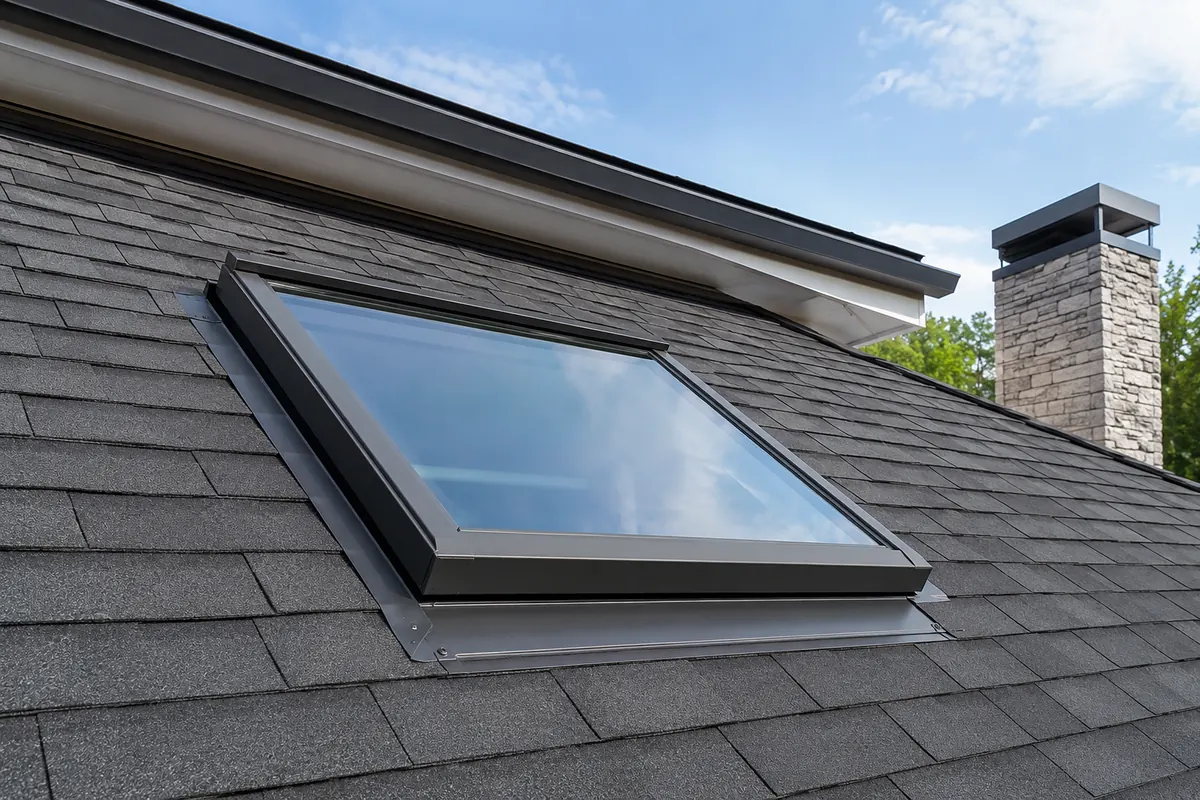
The flashing kit seals the joint where the skylight meets the roof, and freeze and thaw work it loose a little each year until rain gets under it.
Light In, Weather Out
A skylight is a hole in your roof, done well. When the flashing, the curb, or the seal ages, that hole lets the weather in, and the leak shows up on the ceiling below. We repair leaking skylights, replace worn ones, and install new ones that hold Rochester winters out.

A hole in the roof, done well
A skylight does two things at once: it brings daylight into a room that would otherwise stay dark, and it opens a hole in the roof that the weather wants to get through. The skylight itself is a sealed unit, and the roof around it is sealed by a flashing kit and a curb. When all three are sound, the room stays bright and dry. When one of them ages, the leak shows up at the skylight corners first.
Rochester winters test a skylight harder than most climates do. Snow sits on the glass, melts from the heat of the room below, and refreezes at the edges, and the flashing kit has to hold through every cycle. Roof repair in Rochester often starts at a skylight, since the leak that shows on the ceiling below it can come from the flashing, the curb, or the seal, and each one has its own fix.
A roof inspection in Rochester looks at every skylight on the roof, since a skylight that is sound today can start leaking next winter when the seal ages one season further. The inspection checks the flashing, the curb, the glass, and the ceiling below, so the repair we name is the one the skylight actually needs.
Why skylights leak here
Four causes account for most skylight leaks, and winter makes each one worse.
The flashing kit seals the joint where the skylight meets the roof, and freeze and thaw work it loose a little each year until rain gets under it.
The curb is the wooden frame the skylight sits on, and when water gets under the flashing, the curb rots from the inside out.
The seal between the glass and the frame dries out and cracks with sun and cold, and the leak shows as condensation or a drip at the corners.
Snow melts off the warm glass, refreezes at the cold edges, and the meltwater backs up under the flashing and into the room below.
Water showing at the skylight corners? Call and get the flashing, the curb, and the seal checked.
Call (585) 868-0065Three kinds of skylight
Three skylight types cover most Rochester houses, and they suit different rooms.
| Type | What it does | Best room | Watch out for |
|---|---|---|---|
| Fixed | Brings in light, does not open | Hallways, stairwells, living rooms | No airflow, so the room can overheat in summer |
| Vented | Opens for air as well as light | Kitchens, bathrooms, stuffy upper rooms | More moving parts, and the seal ages faster |
| Tubular | Pipes light down through a tube | Closets, baths, and rooms with no roof above | Less light than a full skylight |
Scroll sideways to see the full table.
Part by part
Tap a part to see what it does and what happens when it fails.
The glass is a sealed double-pane unit that keeps the weather out and the heat in. When the seal between the panes fails, the glass fogs from the inside and cannot be wiped clear. A fogged unit needs a new glass, not a new skylight, when the frame and the flashing are still sound.
The flashing kit is a set of shaped metal pieces that weave into the shingles around the skylight and carry water past the joint. When the kit lifts or the sealant under it cracks, rain gets under the shingles and into the room below. A new kit is set with the shingles lifted and woven back in, never just sealed over the top.
The frame holds the glass and carries the hinges on a vented skylight. Sun and cold age the frame seals, and a frame that has warped will not close tight. A vented skylight that will not close is a skylight that leaks in the next rain, and the frame seal is the first place to look.
The curb is the wooden box the skylight sits on, and it lifts the skylight above the roof surface so water runs around it instead of pooling against it. When water gets under the flashing, the curb rots from the inside out, and a rotted curb must be rebuilt before a new skylight can go on it.
Flashing kits and curbs
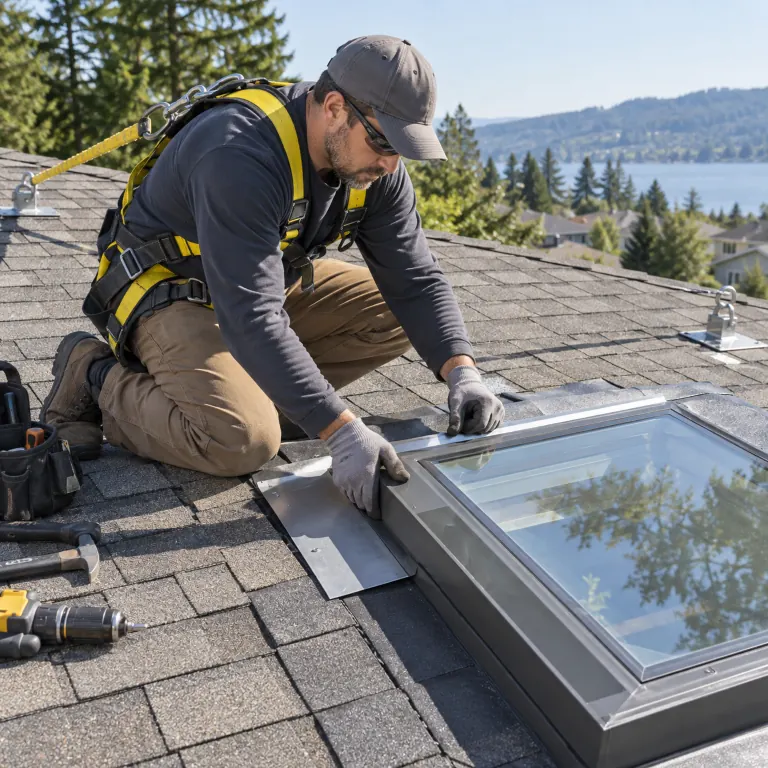
A skylight can be deck-mounted, sitting flat on the roof deck, or curb-mounted, sitting on a wooden box that lifts it above the roof. A curb mount suits a flat or low-slope roof, since it lifts the skylight clear of standing water, and it suits a replacement, since the new skylight can go on the old curb when the curb is sound. A deck mount suits a steep shingle roof, where the flashing kit weaves straight into the shingle courses.
The flashing kit is matched to the roof covering, not just to the skylight. A kit for shingles will not fit a metal roof, and a kit for a low slope will not fit a steep one. When a skylight is replaced, the kit is replaced with it, since the old kit has aged with the old skylight and will not seal a new one. Metal roofing in Rochester needs a kit built for standing seam panels, and flat, foam, and single-ply roofing in Rochester needs a curb tall enough to clear the membrane and the insulation.
Glass, condensation, and winter mornings
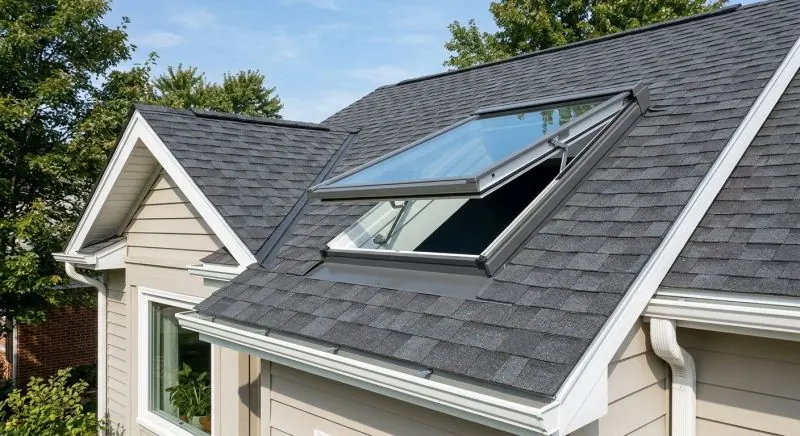
Condensation on a skylight is not always a leak. Warm, damp air from the room below rises to the cold glass and beads on it, and the beads run down to the corners and drip. That is condensation, and it means the room is humid and the glass is cold, not that the roof is open. A leak, by contrast, comes through the flashing or the curb and shows as a stain on the drywall around the skylight, not as beads on the glass.
Some reroof work needs a permit, and work that opens the roof structure usually does. The City of Rochester handles permits for work inside the city, and we tell you before work starts whether your skylight job needs one. And when a new skylight goes in during a roof replacement in Rochester, the skylight, the flashing kit, and the shingles around it all go in as one system, so the roof and the skylight age together.
People also ask
Short answers to the skylight repair & installation questions that come up most in real conversations.
It depends on what is leaking. A lifted flashing kit or a cracked seal can be repaired in place, and a fogged glass unit can be swapped without touching the frame. A rotted curb or a warped frame needs a replacement, since the skylight cannot seal to a frame that has moved. The roof walk tells which one it is.
Because snow and ice change how water moves around it. Snow sits on the glass, melts from the heat of the room below, and refreezes at the cold edges, and the meltwater backs up under the flashing. In summer the same skylight sheds rain fine. The fix is in the flashing and the attic airflow, not in the glass itself.
A skylight that drips every winter is a skylight asking for a look. Call and get the flashing and the curb checked.
Call (585) 868-0065Frequently asked questions
Condensation beads on the glass and runs to the corners, and it shows on cold mornings when the room is humid. A leak shows as a stain on the drywall around the skylight, or a drip from the frame, not the glass. If the drywall is stained or soft, the roof is open. If only the glass is wet, the room needs less humidity.
Yes, when the roof around it is sound. The shingles around the skylight come off, the old skylight and kit come out, the new skylight goes in with a new kit, and the shingles go back on. When the roof is near the end of its life, it makes more sense to do both together, since the skylight, the kit, and the shingles then age as one system.
A well-built skylight lasts many years, but the flashing kit and the seals age faster than the glass, and Rochester freeze and thaw work at them each winter. The flashing usually needs attention first, then the seals, and the glass lasts longest of all. A regular look at the skylight during a roof inspection catches the aging parts before they leak.
A skylight brings in sun as well as light, and a south-facing skylight can warm a room in summer. Low-emissivity glass and a shade or a blind cut the heat, and a vented skylight lets the hot air out. The room below the skylight stays cooler when the attic above it is ventilated, since the hot air has somewhere to go.
Yes, when the roof structure allows it. The opening is cut between the rafters, the curb is built, the skylight goes in with its flashing kit, and the shingles go back on around it. A structural check comes first, since the rafters carry the load and the opening must not weaken them. Work that opens the roof structure usually needs a permit, and we tell you before work starts.
The seal between the two panes of glass has failed, and damp air has got in between them. The fog cannot be wiped clear, since it sits inside the sealed unit. A new glass unit fixes it when the frame and the flashing are still sound, and the skylight does not need to come out of the roof for the glass to be swapped.
Keep going
A skylight is part of the roof system. These services cover the roof around it.
When the leak sits at the skylight, a repair traces it to the flashing, the curb, or the seal, and fixes the cause.
Learn more →When the roof is near the end of its life, a new skylight goes in with the new roof, so both age together.
Learn more →When condensation fogs the glass, the answer often sits in the attic airflow and the humidity of the room below.
Learn more →Install day, step by step
A skylight install runs in a set order, and each step protects the step after it.
The day starts inside the house, not on the roof. The crew covers the floor below the skylight and moves furniture out of the way, since dust and small debris fall through the opening while the work runs. A ladder goes up to the roof, and the crew walks the slope to the spot where the skylight will sit, checking the shingles and the decking around it before anything is lifted.
The opening comes next, and it is opened up between the rafters so the roof frame stays whole. The shingles around the opening are lifted and set aside, the decking is cut through, and the curb is built or the deck mount is prepared. On a curb mount, the wooden box is set level and square, since a curb that leans will never seal right. On a deck mount, the opening is trimmed tight to the skylight frame, and the decking edges are checked for soft spots before the skylight goes in.
The skylight is set into the opening and fixed in place, and the flashing kit goes on around it course by course. Each piece of flashing weaves into the shingles above and below it, so rain running down the slope rides over the joint instead of slipping into it. The lifted shingles are woven back in around the kit, and the sealant at the joints is laid in a thin, even line, since a thick bead cracks when the cold comes. The crew checks the skylight from inside and outside, looking for gaps at the corners where leaks start.
The inside finish closes the job. The light shaft is trimmed, the drywall around the opening is patched where the work touched it, and the room is cleaned of dust and debris. The crew walks the homeowner through the skylight, showing how a vented unit opens and closes and where the flashing sits. A hose run over the skylight from above shows whether the seal holds before the crew leaves.
Clear the room beneath the skylight, move furniture and rugs out of the way, and take pictures off the wall beneath the opening, since the work shakes the ceiling. Keep pets and children out of the room while the roof is open, and leave a clear path from the door to the ladder.
Walk the room with the crew, look at the skylight from below and the flashing from above, and ask to see the hose check. The opening should be trimmed, the floor should be clean, and a vented skylight should open and close without sticking.
Placement and the Rochester sun
A skylight earns its place where daylight is scarce and the roof over it is simple.
A skylight does its best work in rooms that sit far from a window. A dark hallway, a stairwell, a bathroom with no outside wall, and a kitchen that faces a shaded yard all gain more from one skylight than a bright living room with tall windows ever will. The rooms that need light are the rooms where the skylight belongs, and the roof above those rooms decides whether the install is simple or involved.
Direction shapes what the skylight gives the room. A north-facing skylight brings steady, soft light through the day with little glare, which suits a kitchen or a workroom. An east-facing skylight catches the morning sun and warms the room early, which suits a bedroom or a breakfast nook. A west-facing skylight brings strong late light that can overheat a small room in summer, so it needs a shade or a vented unit that releases the hot air. A south-facing skylight gives the most light and the most heat together, and it suits a stairwell or a hallway where the warmth spreads through the house.
Snow shapes the choice too. A skylight on a north slope holds snow longer, since the sun rarely reaches it, and the flashing there works through more freeze and thaw cycles than a skylight on a south slope. A skylight near the ridge sheds snow sooner than one near the eave, where meltwater gathers. The slope, the direction, and the room below all belong in the same decision, and a skylight placed with all three in mind stays dry longer.
| Room | What the light does | What to watch | Skylight type that fits |
|---|---|---|---|
| Kitchen | Brightens a work surface that sits far from a window | Steam from cooking, which fogs cold glass | Vented, so steam has a way out |
| Bathroom | Lights a room with no outside wall | Steam and privacy, since the glass looks down into the room | Fixed with frosted glass, or vented for steam |
| Stairwell and hallway | Carries daylight into the center of the house | Heat rising to the top of the stair, which a vented unit releases | Fixed or vented, sized to the stairwell |
| Bedroom | Wakes the room with morning light | Late sun and early light, which a shade tames | Fixed with a shade, or vented for summer air |
| Living room | Adds light over a seating area or a reading corner | Glare on screens and strong afternoon sun | Fixed, placed away from the screen wall |
Waiting has a shape
A skylight leak never stays a skylight leak.
A drip at the skylight corner looks small, and it is small on the first day. The water runs down the light shaft, marks the drywall, and dries between rains, so the room looks fine again. Under the flashing, the water is doing slower work. It soaks the curb a bit deeper with every rain, and the wood softens from the inside, where no one can see it. By the time the stain on the ceiling grows, the curb may already need rebuilding.
Winter speeds the whole chain up. Meltwater from snow on the glass finds the lifted flashing, runs under it, and freezes at night, and the ice pries the flashing a fraction further open. Each thaw lets more water in, and each freeze opens the joint a little wider. A skylight that drips once in January and stays quiet through spring is still a skylight with a joint that has moved, and the next winter starts from a worse place.
The water does not stop at the skylight either. A soaked curb passes damp into the decking around the opening, and the decking softens until the shingles above it lose their grip. Damp in the light shaft feeds mold on the drywall and the trim, and a musty smell in the room below is often the first sign the homeowner notices. What started as a flashing fix becomes a curb rebuild, a decking repair, and a drywall and paint job, and the room stays open longer while each piece is done.
The fix is small when it is caught early. A flashing kit that has lifted can be set back down, a seal that has cracked can be laid fresh, and a fogged unit can be changed on its own, all while the curb and the decking stay in place. Roof repair in Rochester traces a skylight leak to the seal, the curb, or the flashing, and puts it right before it grows. A stain that is new, a drip that shows after rain, and a corner that feels soft are the signs to act on, and the sooner the look happens, the smaller the work stays.
A ceiling mark around the skylight that gets wider after each rain means water is still coming in, and the drywall below it is soaking through.
Wood at the skylight curb that feels soft under a fingertip has rotted from the inside, and no new skylight will sit tight on a curb that has gone soft.
A stale, damp odor in the room under the skylight after rain points to moisture trapped in the light shaft, and damp in the shaft means the joint above it is open.
Call and get the skylight, the flashing, and the curb checked by a roofer who knows skylights.