Greece roofs
Hail off the lake
Spring hail rides in off the water and hits the north side of town first. The bruise hides under the shingle surface, and the leak shows up months later as a stain on the ceiling.
Lake Ontario Roofing
Greece is Monroe County's largest town, and it runs from the Rochester city line all the way to the Lake Ontario shore. Ridge Road cuts across it, Long Pond Road runs north to the lake, and the neighborhoods between them hold post-war ranches, Capes, split-levels, and colonials in numbers no other suburb matches. The lake sets the weather here, and the lake wind and the lake-effect snow wear roofs out faster on the north side of town than anywhere else in the county. We take Greece roofs street by street, reading each one up close before we say what it needs.
Greece, NY
Barnard is the old lake neighborhood at the north end of Greece, where the streets run down to the Lake Ontario shore and the houses are a mix of lake cottages, post-war ranches, and newer homes built to face the water. Long Pond Road and Latta Road carry traffic north from Ridge Road, and the closer you get to the lake, the harder the wind hits the roofs. A Barnard roof takes the weather with nothing between it and the water, and the shingles on the north-facing slopes show it first.
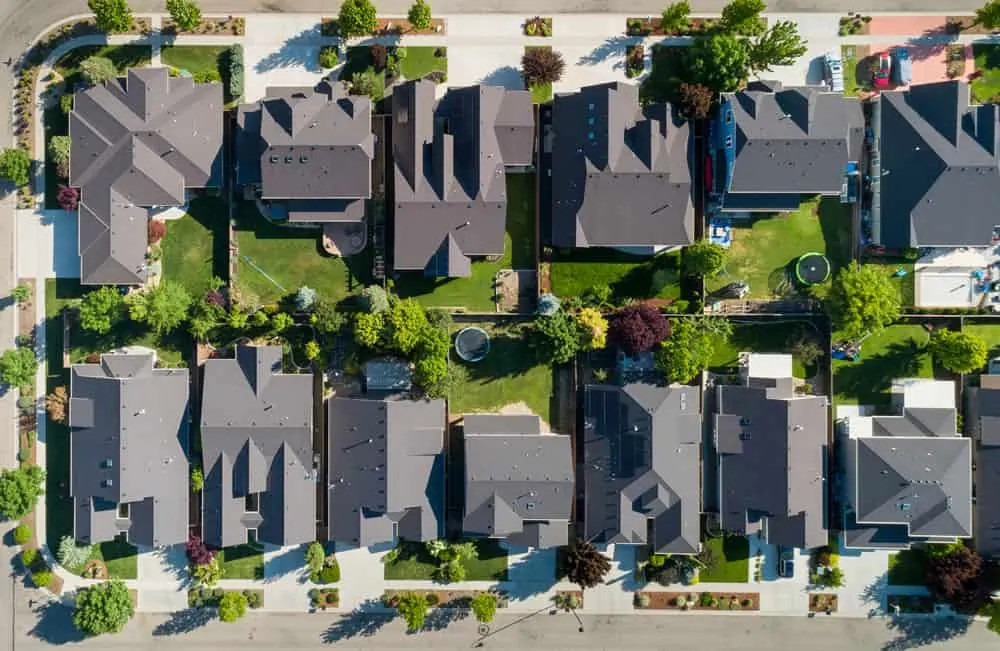
The rest of Greece is subdivisions, miles of them, built mostly in the 1950s through the 1970s along Ridge Road, Dewey Avenue, and the side streets off Long Pond Road. Those homes share a roof story: architectural shingles on a simple two-slope frame, gutters that run long, and a deck that has already carried one or two replacements. Storm and hail damage repair is a regular job here, because the lake-effect bands and the spring storms both cross Greece on their way inland, and after any storm that tears shingles off a roof, the EPA page on dealing with debris and damaged buildings is worth reading.
The subdivisions share another roof habit: the gutters run long, and a long run needs its slope checked along the full length, not just at the corners. Gutter and guard work in Greece keeps the leaf load moving off the roof edge, and a sag in the middle of a long run ponds water that turns to ice and pulls the gutter away from the fascia.
A yearly look is the habit that saves a Greece roof, because hail bruising and granule loss never show from the driveway. A roof inspection in Greece photographs the bruised shingles and the soft deck spots, and a roof maintenance visit each spring clears the valleys before the summer storms arrive.
After the storm
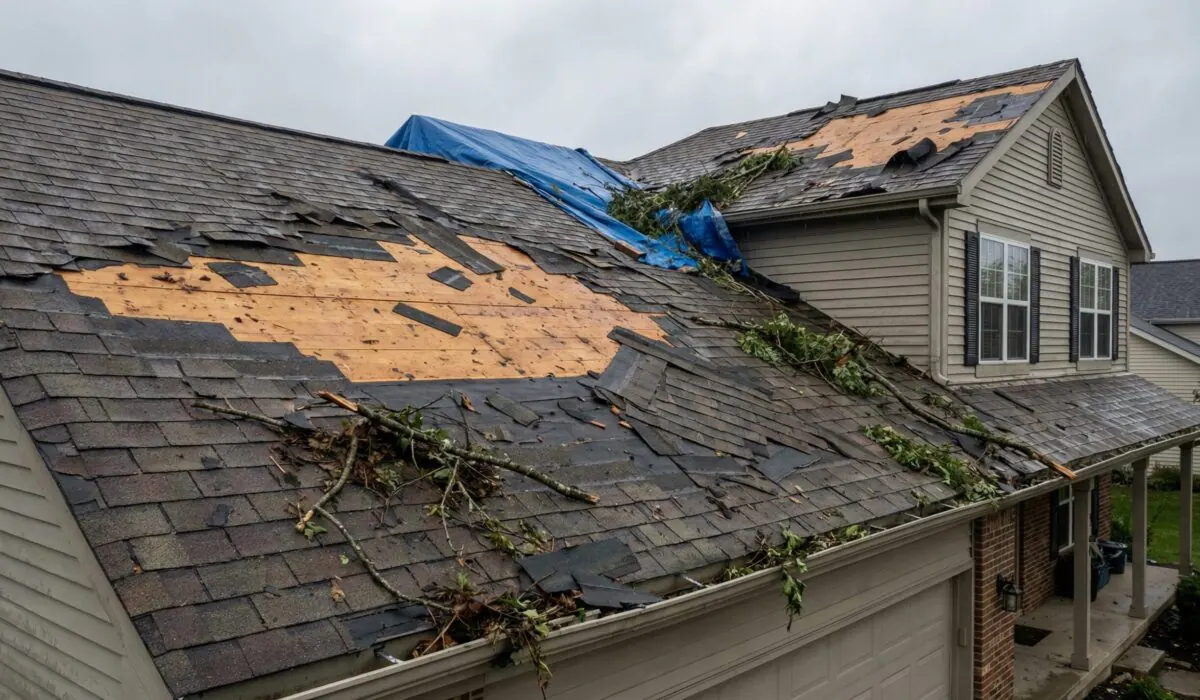
A summer storm on Ridge Road can strip shingles off a whole slope in one gust, and the roof it leaves behind shows bare deck boards and torn underlayment where the shingles used to be. The first job is not the repair but the cover, because a blue tarp over the open section keeps the next rain out of the attic while the work is planned. We walk the yard before anything is moved and photograph the shingles on the ground and the bare spots on the roof, so the record is clear.
The tarp goes on the same day when the roof is open, because a single night of rain can soak the deck and the insulation below it. Once the roof is covered, the crew can read the damage at leisure: which slopes lost shingles, which valleys held, and whether the deck boards underneath are still sound. A roof that lost shingles to one gust is often a roof whose tabs were already lifting, and the storm only finished what the wind had started.
Shingles in the yard after the last storm? Call and we will tarp the open spot first.
Call (585) 868-0065Lake weather
Greece roofs
Spring hail rides in off the water and hits the north side of town first. The bruise hides under the shingle surface, and the leak shows up months later as a stain on the ceiling.
Greece roofs
The open corridor along Ridge Road funnels wind across the long roof slopes of the subdivisions. Tabs lift along the rake, and one lifted tab lets the next gust get underneath.
Greece roofs
Lake-effect snow piles deep and wet on the low-slope ranches of the 1950s subdivisions, and the meltwater that follows has to leave the roof before the next band arrives.
Compare
| Roof option | The home it suits | Lake weather to keep an eye on |
|---|---|---|
| Architectural shingles for subdivision ranches | Post-war ranches, Capes, and split-levels off Ridge Road | Hail bruises the shingles first on the north side of town |
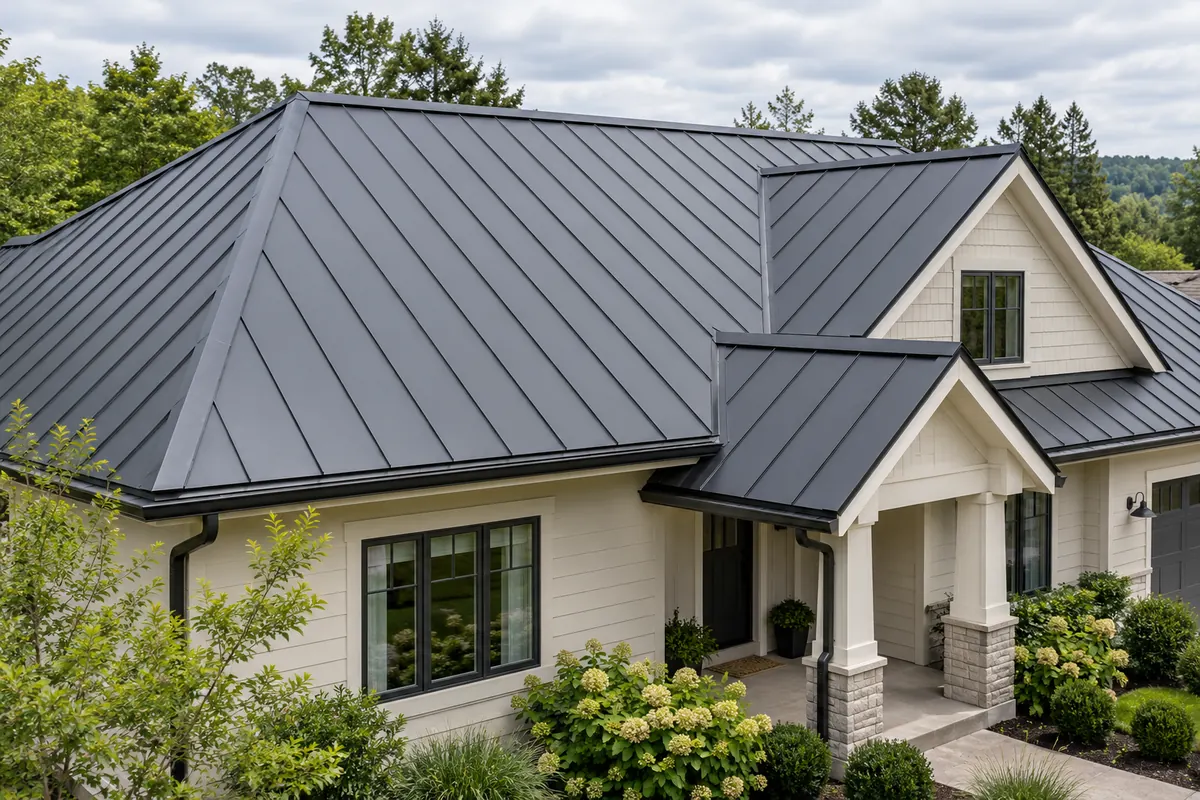
| Standing seam metal for lake-facing homes | Barnard cottages and lakefront houses on the shore | Snow slides off fast, so the gutters and the walkways below need a plan |
| Three-tab shingles for the Ridge Road ranches | 1950s ranches still carrying the original roof | Thin tabs lift sooner where the wind runs along the Ridge Road corridor |
| Impact-rated shingles for hail streets | Streets that have taken hail more than once | The shingles resist bruising, but the flashing and the gutters still take the hits |
Corners of town
Greece holds lake cottages, old farm roads, and some of the biggest subdivisions in the county, and the roof on each one faces different wear.
Lake cottages and ranches near the shore, where the wind comes off the water with nothing in front of it and the north slopes wear first.
Homes along the road to the lake, where the snow bands drop their heaviest loads and the gutters work hardest.
Post-war ranches and Capes along the town's main east-west road, where the wind runs unbroken across the long slopes.
Houses strung along the lake road, where the shore weather hits the roofs before it reaches the rest of town.
Homes on the old farm roads toward the lake, where big lots open to the fields and the wind comes straight off the water.
Neighborhoods around the mall corridor, where the subdivisions are dense and the roofs share the same age and the same wear.
Through the year
Spring
When spring storms cross the lake, hail lands on the shore neighborhoods first. Bruised shingles never show from the driveway, and only a look from the roof itself finds them.
Summer
In July, the sun bakes the dark shingle slopes of the subdivisions, and the attic below turns into an oven without steady air moving through it. Shingles age faster when the attic cannot breathe.
Autumn
Mature trees in the older subdivisions drop leaves into gutters that run long, and a clogged run spills water over the edge and under the shingles.
Winter
On the low-slope ranches, snow bands pile deep. The meltwater that follows has to drain off before the next band arrives, or it turns to ice at the eave.
Coverage
Greece is the largest town in Monroe County, running from the Rochester city line north to the Lake Ontario shore.
The 14612 and 14615 ZIPs cover the eastern neighborhoods near the city line, 14616 covers the central subdivisions, 14626 covers the lake shore and Barnard, and 14515 covers the western edge of town.
FAQ
The storms build over Lake Ontario and cross the shore neighborhoods first, so Barnard and the lake roads take the hail while it is still at full strength. By the time the same storm reaches the inland towns, it has spent some of its force. The bruise hides under the shingle surface, so a roof can look fine from the driveway while the mat underneath is cracked.
It fits the lake-facing lots well. Snow slides off a standing seam roof instead of sitting on it, the wind has no tabs to lift, and the panels hold up under hail that would bruise shingles. The trade is the slide itself: the snow has to go somewhere, so the gutters, the walkways, and the shrubs below the eave need a plan.
It changes the drainage, which changes everything else. A low slope sheds water slowly, so the underlayment and the valley work carry more of the load than the shingles do. Ice and water shield belongs on the whole field of a low-slope roof, not just the eaves, and the shingles need a higher overlap to keep wind-driven rain out.
First, stay off the roof and keep everyone out of the yard under the damaged slope. Then photograph the damage from the ground, including the shingles in the yard and the bare spots on the roof. A tarp over the open section keeps the rain out while the repair is planned, and the sooner it goes on, the less water gets to the deck.
Walk the gutters first. Granules heaped at the downspouts mean the shingle surface is thinning across whole slopes, pointing toward a new roof. A lone leak at a valley or a pipe boot points toward a repair, because the trouble lives in one place. When the granule loss, the curling, and the leaks all show up together, the roof is telling you the whole field has worn out at once.
They need cleaning more often than short runs, because a long gutter collects leaves from a whole side of the house and a single clog backs water up along the entire eave. The slope of a long run matters too: a sag in the middle ponds water, and the pond freezes in winter and pulls the gutter away from the fascia.
Nearby towns
Irondequoit runs east along the lake past Barnard, and Gates sits just south past the town line, and a visit to Greece often stretches to one of those two towns too.
Street by street
Greece is Monroe County's largest town, and its roofs wear differently from Dewey Avenue in the south to the shore in the north.
Dewey Avenue runs along the south side of Greece, past post-war ranches and Capes on modest lots, and the roofs there sit under mature trees and take the weather after it has crossed the city. The wear is gentle and even: granules thinning across the field, gutters filling with leaves each fall, and ice dams forming on the shaded eaves in a cold January. Ridge Road cuts across the middle of town, and the subdivisions along it hold the same ranches and split-levels in long rows, with the wind running down the corridor and lifting the tabs along the rake edges.
Traffic runs north from Ridge Road on Long Pond Road and Latta Road, and the closer a house sits to the shore, the harder the weather hits. Barnard is the old lake neighborhood at the north end, where the streets run down to the Lake Ontario shore and the houses mix lake cottages, post-war ranches, and newer homes built to face the water. A Barnard roof takes the weather with open water in front of it, and the shingles on the north-facing slopes show it first, with tabs lifting and granules washing out after every hard blow.
| Roof detail | Dewey Avenue side | Ridge Road subdivisions | Barnard and the shore |
|---|---|---|---|
| Hardest weather | Tree shade and leaf fall | Corridor wind along the road | Open lake wind and snow bands |
| First wear to show | Granule loss across the field | Tabs lifting at the rake edges | Ridge caps working loose |
| Gutter trouble | Leaves from the mature trees | Long runs sagging in the middle | Spray and grit packed in the run |
| Snow pattern | Even, melts from the top down | Drifts against the ridge | Deep on the north slope only |
North Greece, past Latta Road toward the farm roads, holds the town's newest and most open roofs, with wind running across the fields and snow piling deep on the low slopes. Along the Greece Ridge Mall corridor, flat and low-slope roofs cover the shops, and those roofs pond water after a rain and need their drains cleared before winter. A roof inspection in Greece starts by naming the street, because the street names the weather the roof has been living under.
Ranch ridges
A Greece ranch roof ages at the ridge first, because the ridge is the highest, windiest, and most sun-beaten line on a low house.
The ranches that fill the Greece subdivisions are low and wide, with a single ridge running the length of the house and two long, gentle slopes falling away from it. The ridge caps sit at the top of that shape, exposed to the wind from every direction and to the sun for the longest hours of the day. The caps dry out and crack there first, and a cracked cap lets rain run down into the deck along the very line where the two slopes meet. The field shingles below can look sound for years after the ridge has started to go, and the leak that follows shows up as a stain along the center of the ceiling, far from any valley or chimney.
The low pitch makes the ridge problem worse. Snow sits on a low slope instead of sliding off, and the melt runs slowly toward the eave, so the ridge stays wet longer after each storm. The sun then bakes the wet caps, and the cycle of wet and dry, freeze and thaw, works the caps loose a little at a time. A ranch roof that is read from the ridge down tells the truth sooner than one read from the eave up, because the ridge is where the age shows first and where the next leak will start.
The fix for a tired ridge is small when it is caught early: new caps, fresh sealant at the ends, and a look at the venting underneath to make sure the attic is not cooking the caps from below. A ridge that has been left to crack for several seasons needs more, because the deck underneath has been wet and the rot has spread along the line. The difference between the two jobs is a few seasons of watching, and a roof maintenance visit that starts at the ridge keeps the small job small.
After the storm
After a lake storm, a Greece walk-around in the right order finds the damage while it is still small, and the order matters.
Start on the ground, at the north side of the house, and look up at the rake edge and the ridge. The rake is where the wind grabs first, and a tab lifted there shows as a dark line against the lighter shingles below it. Walk the yard for shingles and granules: a shingle on the lawn names the slope it came from, and a pile of granules at a downspout names a field that is shedding its cover. Look at the gutters for dents and for limbs, and check the downspouts for granule piles that were not there before the storm.
Inside, look at the ceilings under the north slope and around the chimney, and open the attic hatch and look at the deck from below. A fresh leak shows as a dark, wet line on the deck boards, and the line points uphill to the gap that let the water in. A stain that is dry and pale is old, and a stain that is dark and damp is from this storm.
When the walk-around finds lifted tabs, a bare patch, or a wet line in the attic, the next step is a storm and hail damage look from the roof itself. Hail bruising hides well on a Greece ranch, and wind lift hides under the tabs, so the roof-level look is the one that settles whether the storm left a repair or a bigger job behind.
The walk-around is worth doing the morning after the storm, before the next band arrives, because the damage from one storm is easiest to see before the next storm adds to it. A Greece roof that is walked in order, ground first and attic second, gives up its story in a few minutes, and the story is usually clear: the north slope took the blow, the ridge caps took the wind, and the gutters took the granules.
From Barnard to the Ridge Road subdivisions, lake wind tears shingles off the rake and hail bruises the north slope of a Greece ranch. Send the subdivision and the slope that took the hit when you write, and the first walk will cover the lake side before anything else.