Granules in the gutter
A handful of granules after a storm is normal wear. A thick layer in every gutter means the shingles are shedding their surface, and the roof is aging faster than it should.

Twice a Year Care
Rochester gives a roof a hard year: lake-effect snow, spring wind, summer hail, and fall leaves in the gutters. Twice-a-year care catches the small problems while they are still small, and it keeps a good roof good for longer.
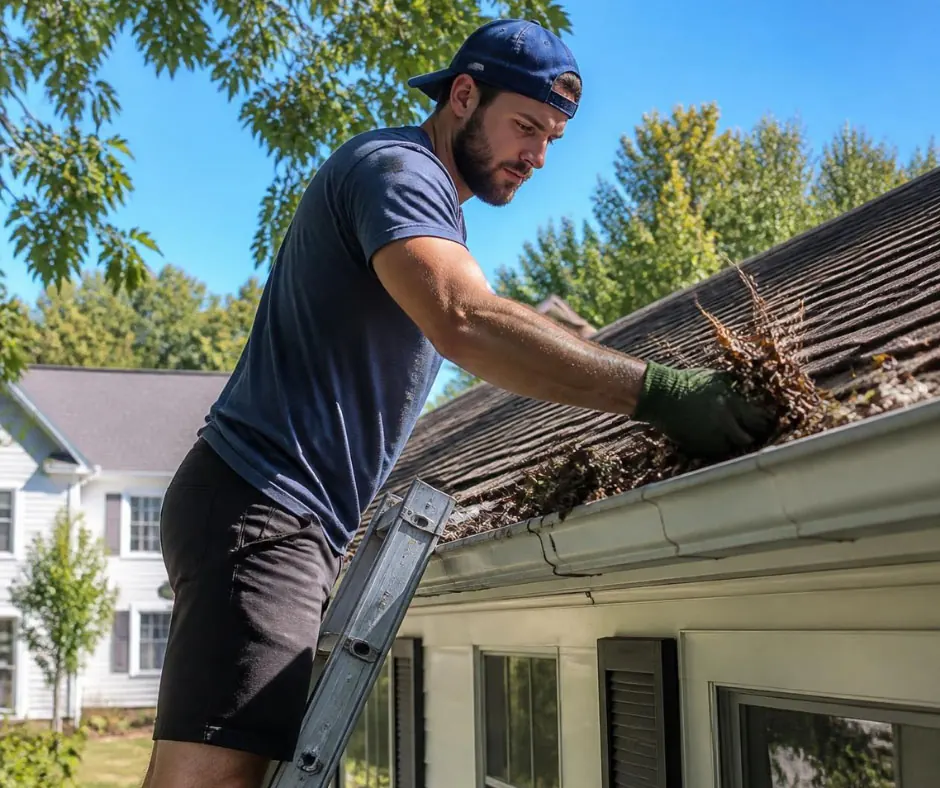
The Rochester rhythm
A Rochester roof works hardest in winter, so the care runs on the seasons around it: once in spring, after the snow has gone, and once in fall, before it comes back. The spring visit finds what the winter did, and the fall visit gets the roof ready for the next one. A roof that is checked twice a year rarely surprises its owner.
Spring care starts with the shingles: lifted tabs, creased ridges, and granules washed into the gutters, all signs the winter was rough. Fall care starts with the gutters and the valleys, where leaves pile up and hold water against the roof. Both visits end in the attic, where stains on the decking tell the truth about leaks the outside never shows. The fall visit pairs with gutters and gutter guards in Rochester, since leaves in the valleys hold water against the roof all winter.
Maintenance is not a repair, and it is not a sales call. It is a look, a clean, and a short list of what needs attention, in plain words, so you can plan the work on your own time. A roof inspection in Rochester goes deeper when the maintenance visit finds something worth a closer look.
Your care checklist
Catch it early
A handful of granules after a storm is normal wear. A thick layer in every gutter means the shingles are shedding their surface, and the roof is aging faster than it should.
Tabs that lift in the wind and never lie flat again let water run under the shingle. A few lifted tabs are a quick fix, and a slope full of them is a sign the roof is nearing its end.
A brown ring on a ceiling means water has already crossed the decking and the insulation. The stain is the last stop, not the first, and the leak above it has been running for a while.
Gutters that pull away from the fascia hold water against the roof edge, and the fascia rots from behind. The fix starts with the gutter, and it often ends with the fascia board.
Moss holds water against the shingle and lifts its edges a little more every season. Shaded north slopes in Rochester grow it fast, and a gentle clean stops it before it spreads.
Daylight showing through the decking is a gap in the roof, and a gap is a leak waiting for the next rain. It is the one sign that never waits for the next scheduled visit.
A maintenance visit
A normal visit takes a morning. Here is how it runs.
First hour
We walk the ground first, looking at the slopes, the gutters, and the chimney from below, then we climb up and walk the roof slope by slope.
Second hour
Shingles, flashing, valleys, and vents get a close look, with photos of anything worn, lifted, or cracked, so you can see what we see.
Third hour
Gutters get cleared, debris comes off the valleys, and small sealant cracks get resealed while we are up there.
Last half hour
We finish in the attic, then sit down with the photos and a short written list: what is fine, what needs watching, and what needs work, in plain words.
Gutters, moss, and algae
Gutters are the roof's drain, and a clogged gutter is a roof problem. When leaves block the flow, water backs up under the shingles at the eave, and in winter that standing water turns to ice at the edge. Gutters and gutter guards in Rochester keep that water moving, and the fall clean is the single most useful hour of the year for a Rochester roof.
Moss and algae are Rochester problems because the climate stays damp and the north slopes stay shaded. Algae shows as black streaks running down the shingles, and moss shows as green patches that lift the shingle edges. Both hold water against the roof, and both come off with a gentle wash, never with a pressure washer, which strips the granules and shortens the roof's life.
The attic is the other half of maintenance. A dry attic with clear vents and dry insulation is a healthy roof, and a damp attic is a roof telling you something. Attic ventilation and insulation in Rochester keeps the attic dry and the roof deck at the right temperature through the winter, which is the real fix for ice dams.

On the calendar
Maintenance follows the seasons. Here is the Rochester calendar we work to.
| Job | Best season | Why then |
|---|---|---|
| Full roof check | Spring and fall | Spring finds winter damage, and fall prepares the roof for the next winter |
| Gutter cleaning | Late fall | After the leaves drop, so meltwater has a clear path all winter |
| Moss and algae clean | Late spring | Dry days and mild weather, before the growth spreads through summer |
| Flashing reseal | Early fall | Sealant sets best in mild weather, before the cold stiffens it |
| Attic vent check | Spring | Clear vents before summer heat builds up in the attic |
| Ice dam watch | Midwinter | After the first heavy snow, check the eaves for ridges of ice and icicles |
People also ask
Short answers to the maintenance questions that come up most.
Twice a year is the rhythm that works here: once in spring, after the snow has gone, and once in fall, before it comes back. The spring visit finds what the winter did, and the fall visit gets the roof ready for the next one. A roof that is checked twice a year rarely surprises its owner.
A full look at the shingles, flashing, valleys, and vents, a gutter and downspout clean, a check of the attic for stains and damp, and a short written list of what needs attention. Small sealant cracks get resealed on the visit, and anything larger goes on the list with photos.
Yes, and in Rochester they matter more than in most places. A clogged gutter holds water at the eave, and in winter that water turns to ice, which lifts shingles and backs meltwater under them. A clear gutter is the simplest ice-dam protection a roof has.
A gentle wash is fine when you can reach the slope safely from a ladder, but never use a pressure washer on shingles, since it strips the granules and shortens the roof. Steep slopes, tall homes, and heavy moss are jobs for a roofer with the right gear and footing.
Spring or fall, the best time for a roof check is now. Call and book a maintenance visit.
Call (585) 868-0065Frequently asked questions
Twice a year, in spring and in fall. Rochester winters are long and hard on roofs, with lake-effect snow, thaw cycles, and ice at the eaves, so a roof that is checked after winter and prepared before winter stays ahead of the damage. A single yearly visit misses half the story.
A walk of every slope, a close look at shingles, flashing, valleys, and vents, a gutter and downspout clean, an attic check for stains and damp, and a short written list with photos. Small sealant cracks get resealed on the visit, and larger work goes on the list for you to plan.
Spring, after the snow melts, and late fall, after the leaves drop. Spring finds the winter damage while it is fresh, and fall clears the gutters and seals the flashing before the cold sets in. Midwinter visits happen too, but only when something needs attention right away.
Yes. Most roof failures start small: a lifted tab, a cracked seal, a clogged gutter, a damp attic. Maintenance finds those small problems while they are still small, and a roof that is looked after twice a year keeps its shingles, its flashing, and its decking in better shape for longer.
Algae, which grows on shaded, damp slopes and shows as black streaks running down the shingles. It is common on north-facing slopes in Rochester, and it comes off with a gentle wash. A pressure washer is never the answer, since it strips the granules that protect the shingle.
Yes, and it is the single most useful job of the fall. Clear gutters let meltwater run off the roof all winter, and clogged gutters hold it at the eave, where it turns to ice and backs under the shingles. The fall clean is quick, and it protects the roof through the whole winter.
Yes. The attic tells the truth about the roof: stains on the decking, damp insulation, and daylight through the boards all show leaks the outside never reveals. Every maintenance visit ends with an attic look, and the vents and insulation get checked at the same time.
Keep going
Maintenance touches every part of the roof. These pages cover the parts it touches most.
A roof inspection in Rochester goes deeper when maintenance finds something worth a closer look.
Learn more →Gutters and gutter guards in Rochester keep meltwater moving off the roof all winter.
Learn more →Attic ventilation and insulation in Rochester keep the attic dry and the roof deck at the right temperature.
Learn more →A roof that has not had a proper look in a few seasons? Call and set up a maintenance walk before winter arrives.
Call (585) 868-0065Care by roof age
A young roof and an old roof need different care, and the visit changes with them.
A young roof is checked for the install settling in. The seal strips on the shingles bond in the first warm spell, the flashing settles against the chimney and the skylights, and the ridge caps sit down into their line. The crew watches in these years for shingles that never bonded, flashing that moved as the house settled, and leaves blown into the valleys over the first winter. The work is light, and the aim is to catch small install issues while the roof is still new.
A mid-life roof is checked for the pace of wear. Granule loss is set beside the last visit's notes, so the crew can see whether the shingles are shedding faster than they should. Sealant at the vents and the flashing is checked for cracks, since it ages faster than the shingles around it. Moss on the shaded slopes gets a gentle wash before it lifts the shingle edges, and the gutters get a hard look, since they have carried a decade of leaves and ice. The visit starts to name the work the roof will need in the coming years, so the homeowner can plan it.
An older roof is checked for the end of its life. Tabs that lift and never lie flat, valleys that wear thin, and decking that feels soft underfoot are read together, and the visit says plainly where the roof stands. The twice-a-year rhythm stays, and the work inside each visit shifts from small fixes to watching the wear and planning the replacement. A roof that is watched closely in its last years rarely fails without warning, and the replacement is planned on a dry week instead of forced by a leak in a storm.
| Roof age | What the visit watches | What usually needs doing | How the visit changes |
|---|---|---|---|
| Young roof | Seal strips bonding, flashing settling, debris in valleys | Small sealant touches and a gutter clean | Light work, and a check that the install settled right |
| Mid-life roof | Granule loss pace, sealant cracks, moss on shaded slopes | Gentle moss wash, sealant renewal, gutter care | The visit starts naming the work the coming years will need |
| Older roof | Lifted tabs, worn valleys, soft decking | Watching the wear and planning the replacement | Small fixes give way to planning the next roof |
Between visits, from the lawn
A homeowner can spot most roof trouble from the lawn, without a ladder.
After a storm, walk the ground around the house and look up. Shingles on the lawn, granules washed into the driveway, and a ridge cap sitting crooked are all visible from below, and they say which slope took the wind. Binoculars help on a tall house, since they bring the ridge, the valleys, and the flashing at the chimney close enough to read. The walk takes ten minutes, and it catches the damage while the storm date is easy to recall.
The gutters tell their own story from the ground. A gutter that overflows in light rain is blocked, and the blockage is usually leaves packed at the downspout. A gutter that pulls away from the fascia shows as a gap at the roof edge, and water running behind it stains the fascia boards. A downspout that pours water beside the foundation instead of away from it is a downspout that has come loose or clogged at the elbow. None of these need a ladder to spot, and all of them are worth a note before the next visit.
The attic is the last place to look, and it is reached from inside the house. After heavy rain, look at the decking for stains that were not there last month, and mark the edge of a new stain with a pencil so the next look shows whether it is growing. Light coming through the boards means the roof has an opening, and a damp smell in the attic after rain points to a leak the outside never showed. A roof inspection in Rochester looks closer when a maintenance visit turns up something worth a second look, and the notes from the ground give the inspection a head start.
Shingles or shingle pieces on the ground after a storm say which slope lost them, and the bare patch above is open to the next rain.
A gutter that spills over in a light rain is blocked at the downspout, and the water backing up at the eave lifts shingles and feeds ice in winter.
A new mark on the ceiling means water has crossed the decking, and marking its edge with a pencil shows whether it is still growing.
The yard and the roof
The trees around a Rochester home shape the roof as surely as the weather does.
Limbs that reach over the roof brush the shingles whenever the wind moves them, and the brushing wears the granules off the surface bit by bit. A limb that hangs over the roof also drops twigs and leaves into the valleys, where they hold water against the shingles, and in a storm the limb itself can come down on the slope. Trimmed back so they clear the roof by a few feet, the limbs stop brushing the shingles, keep the valleys clearer, and let the sun reach the slope after rain.
Shade is the quieter half of the same story. A slope that stays shaded holds damp after rain, and damp shade is where moss and algae grow fastest on a Rochester roof. The north slope of a house under mature trees stays shaded longest, and it is the slope where the green patches appear first. Cutting back the limbs over that slope lets the sun dry it, and a gentle wash takes off the growth that is already there. The trees stay, and the roof gets the light it needs to dry.
Leaves are the fall job that ties the yard to the roof. Leaves pile in the valleys and the gutters, and a valley full of leaves holds water against the shingles all winter. The fall clean clears the valleys and the gutters together, so the meltwater runs off the roof instead of sitting at the eave. Gutters and gutter guards in Rochester move that water off the roof, and the fall clean runs with them, since a valley packed with leaves keeps water sitting against the shingles through the cold months. A yard kept clear of the roof is a roof that dries faster, sheds snow cleaner, and ages slower.
Limbs reaching over the roof brush the shingles, drop debris into the valleys, and risk falling on the slope in a storm. Cut them back so they clear the roof, and the slope gets sun and air to dry after rain.
Leaves pile in the valleys and the gutters, and the pile holds water against the shingles through the winter. Clear the valleys and the gutters in the fall, and the meltwater runs off the roof instead of sitting at the eave.
Spring or fall, a morning of care now beats a leak later. Call or email and tell us about your roof.
Roofing Rochester, 75 S Clinton Ave Ste 510, Rochester, NY, (585) 868-0065