Warehouses
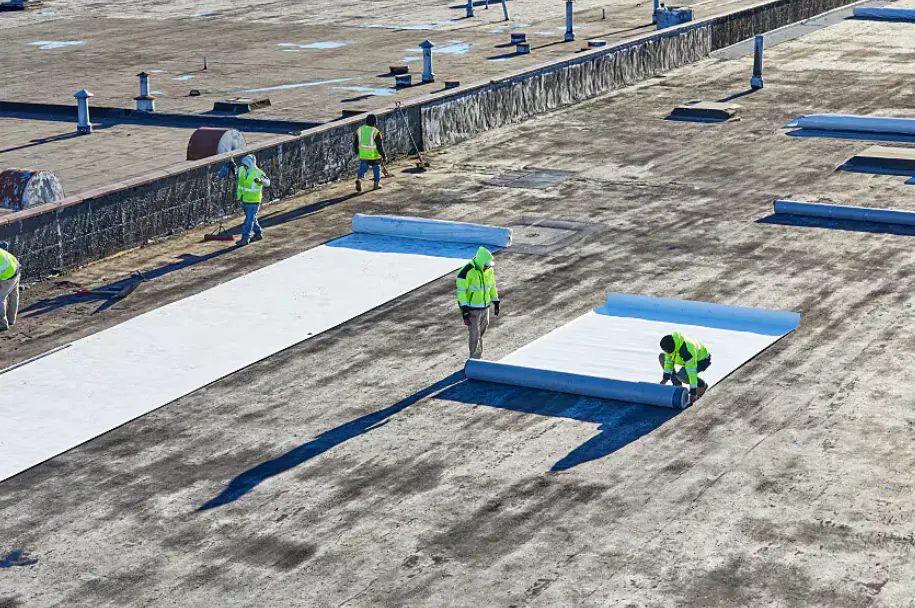
Big, simple fields of membrane with long drains and few penetrations. The trouble spots are the seams and the ponding at the low end.
Roofs That Work for a Living
A commercial roof is a system, not a surface. It carries HVAC units, vents, drains, and foot traffic, and it has to stay dry through Rochester winters while the business below keeps running. We build, repair, and maintain flat and low-slope roofs for warehouses, offices, shops, and schools.
A system, not a surface
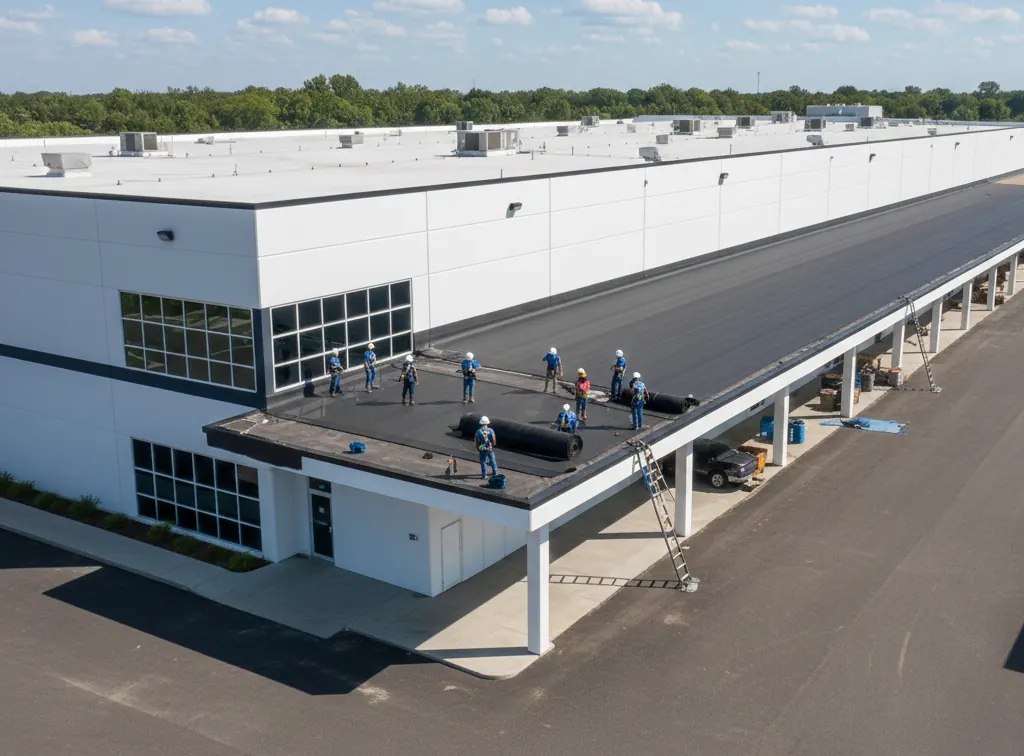
A commercial roof carries more than weather. HVAC units sit on curbs, vents poke through the membrane, drains move water off a nearly level surface, and crews walk the roof to service the equipment. Every penetration is a joint that can leak, every unit is a place where the membrane is cut, and every footstep tests the seams. A commercial roof fails at its details more often than in the middle of the field.
Rochester winters add their own load. Snow sits on a flat commercial roof for weeks, melts from the heat below, and refreezes at the drains. The membrane must stay flexible in the cold, the seams must hold through freeze and thaw, and the drains must stay open. Flat, foam, and single-ply roofing in Rochester covers the membrane systems themselves, and roof inspection in Rochester for a commercial building walks the membrane, the seams, the drains, and every penetration.
Buildings we work on
Six building types, six sets of roof habits, and each one needs a different eye.
Big, simple fields of membrane with long drains and few penetrations. The trouble spots are the seams and the ponding at the low end.
HVAC curbs, vents, and skylights crowd the roof, and every one is a joint. The flashing around each curb gets the closest look.
Signs, vents, and rooftop units sit close together, and the roof must stay dry while the shop below stays open.
Large flat fields with gym roofs, vents, and drains that must handle a full building of people. Summer is the season for the big work.
Multiple roof sections over many homes, with vents and stacks for every unit. A leak in one flat affects the homes below it.
Kitchen vents carry grease onto the roof, and the membrane near them needs a system that stands up to it. PVC handles grease best.
Membrane systems, compared
Four systems cover most commercial roofs in Rochester, and the building decides which one fits.
| System | What it is | Seams | Best when |
|---|---|---|---|
| EPDM | Rubber sheet, black | Glued or taped | A simple, proven rubber roof |
| TPO | White plastic sheet | Heat-welded | A bright roof that reflects summer sun |
| PVC | White plastic sheet, flexible | Heat-welded | Grease or chemicals reach the roof |
| Modified bitumen | Layered asphalt sheets | Torched or glued | A tough, multi-layer roof is wanted |
Scroll sideways to see the full table.
Water still sitting on the flat roof days after the rain? Call and get the membrane, the seams, and the drains checked.
Call (585) 868-0065Phase by phase
A commercial roof is a project, not a day of work. Four phases, in order, keep the business running while the roof is rebuilt.
First look
We walk the whole roof, map the wet insulation, check the deck, and write the scope, so the work starts from facts.
Phasing
The roof is split into sections, and each section is stripped and rebuilt before the next one opens, so the building stays dry throughout.
Build
Deck, insulation, membrane, flashing, and drains go in layer by layer, with every penetration sealed as the work passes it.
Walk-through
The finished roof gets a full walk with the building owner, the drains are tested, and the maintenance plan starts from day one.
Maintenance that keeps watch
A commercial roof that is checked twice a year lasts longer than one that is only looked at when it leaks. A maintenance visit walks the membrane, checks the seams and the flashing at every penetration, clears the drains and the scuppers, and looks for ponding that stays after a rain. Small trouble, a split seam, a lifted flashing joint, a blocked drain, gets fixed while it is still small.
The plan is written for the building, not from a template. A warehouse with a simple field needs a different rhythm from a restaurant with grease on the roof or a school with a gym roof that takes foot traffic. Roof maintenance in Rochester covers the residential side, and the commercial plan adds the drains, the penetrations, and the foot traffic that a business roof carries. Some work needs a permit, and the City of Rochester handles permits for work inside the city.
Traffic, curbs, and penetrations
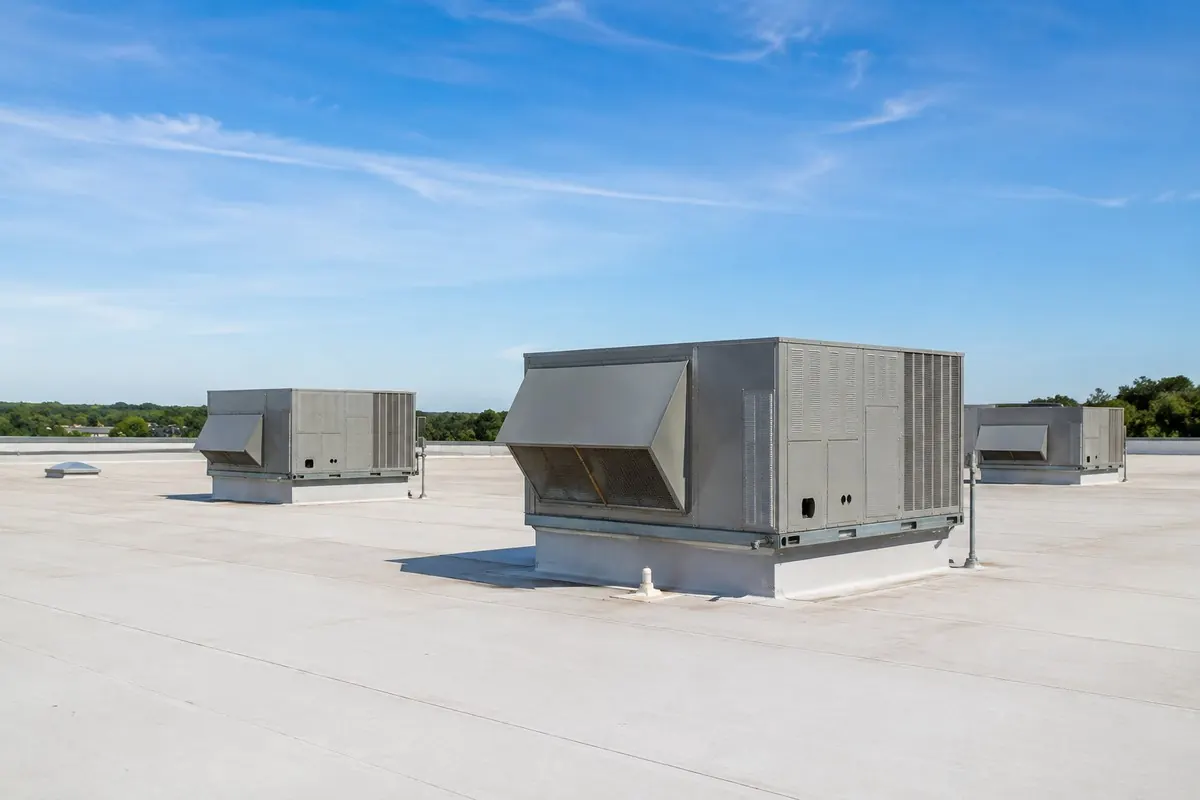
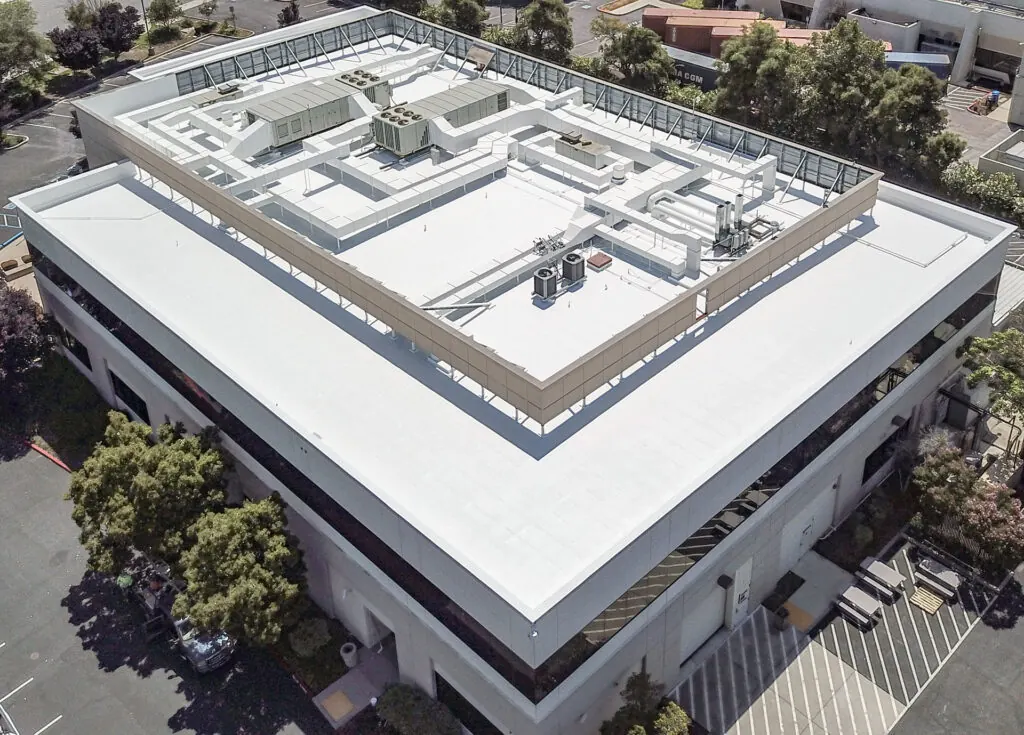
Every person who walks a commercial roof tests the membrane, and every unit that sits on it cuts a hole through it. Walkway pads protect the membrane where crews cross to the HVAC units, and the flashing around each curb is checked every visit, since a curb flashing that lifts lets water straight into the building. Pipes, vents, and conduits each get their own flashing, and each one is a joint that ages on its own.
When a new unit goes on the roof, the membrane around it gets cut and reflashed, and the work is done by a roofer, not by the HVAC crew alone. And when the storm leaves debris on the roof, the EPA guidance on debris and damaged buildings covers how to handle damaged materials safely. A commercial roof that is walked with care, flashed at every joint, and checked twice a year is a roof that stays dry while the business below keeps running.
People also ask
Short answers to the commercial roofing questions that come up most in real conversations.
Twice a year at least: once in spring, after the snow leaves and the seams can be seen, and once in fall, before the snow arrives and the drains freeze. A roof with heavy foot traffic or many penetrations needs a closer look each time, since every unit and every walkway is a joint that can open.
There is no single best system, and the building decides. EPDM suits a simple rubber roof, TPO suits a bright roof that reflects summer sun, PVC suits a roof where grease or chemicals reach the membrane, and modified bitumen suits a tough multi-layer build. The survey reads the roof and names the system that fits it.
Yes, in most cases. The work is phased by section, so each part of the roof is stripped and rebuilt before the next one opens, and the building stays dry throughout. Noise and odors are planned around the business hours, and the sections over the busiest rooms are scheduled first or last, as the owner prefers.
A flat roof over a working business cannot wait for a leak to show. Call and get the membrane, the seams, and the drains read properly.
Call (585) 868-0065Frequently asked questions
A well-built commercial membrane lasts many years, but freeze and thaw shorten that life when the seams are weak or the drains stay blocked. The survey reads the seams, the ponding, and the deck, and the report says where the roof stands. A coating or a foam layer can extend the life of a tired membrane when the deck is sound.
Flashing at penetrations, split seams, blocked drains, and punctures from foot traffic. HVAC curbs, vents, and pipes each cut a hole through the membrane, and the flashing around each one ages on its own. Freeze and thaw work at the seams a little more with each cycle, and ponding water finds every weak spot the seams leave open.
Yes, with limits. Cold membranes are stiff, and snow hides the seams, so a winter visit leans on clearing the drains, sealing the worst seam, and stopping the water until spring. A full membrane replacement waits for a dry, warm stretch, when the seams can be welded properly and the roof can be walked safely.
The scale, the traffic, and the penetrations. A commercial roof is larger, carries more HVAC units and vents, takes more foot traffic, and must stay dry while the business below keeps running. The membrane systems are the same, but the phasing, the walkway pads, and the maintenance plan are built for a working building, not a house.
Yes, when the deck is sound and the insulation is dry. A coating goes over the old membrane, seals the seams, and gives the roof a seamless top layer. A coating over wet insulation traps the water inside, so the survey maps the wet insulation first and the soft boards get swapped before any coating goes on.
Keep going
A commercial roof connects to the rest of the building. These services cover the systems it touches.
The membrane systems themselves: EPDM, TPO, PVC, and spray foam, and how each one handles freeze and thaw.
Learn more →A commercial inspection walks the membrane, the seams, the drains, and every penetration, with photos and a written report.
Learn more →Where a commercial roof meets a sloped section, gutters carry the water off the eave and away from the building.
Learn more →Phasing and the working day
A commercial roof is rebuilt in sections so the business below never stops.
The work is divided into zones before anything is lifted, and each zone is taken down and rebuilt before work starts on the next one. The building stays dry through the whole job, since no zone is left open overnight, and the crew leaves each day with the part they touched sealed and watertight. The zones are planned around the rooms below them, so the work over a busy sales floor, a classroom, or a dining room runs at the hour that disturbs it least.
Noise and smell are timed to the business day. Tear-off is the loud part, and it runs early, before the doors open, or late, after the last customer leaves. Adhesives and hot work carry smells that drift down through the vents, so the crew times that work for the hours when the building is empty, or seals the vents above the rooms in use. A shop that stays open through the job gets a schedule in writing first, so the owner knows which days are loud and which days are quiet.
Deliveries and staging need room, and a commercial site has more of both than a house does. Membrane rolls, insulation boards, and drains arrive on a truck that needs a place to park and a path to the roof, and the staging area is set where it blocks the fewest customers and staff. Roof access is controlled during the job, so only the crew and the building owner walk the roof, and the HVAC technicians who service the units get a clear path to their equipment that does not cross fresh membrane.
The big work runs in the summer, when the halls are empty and the gym roof can be rebuilt without classes below. The job is phased by wing, so the roof over the gym, the classrooms, and the offices each gets its own window.
The work runs around the trading day, with tear-off early and quiet work during opening hours. Kitchen vents stay clear, since grease on fresh membrane is a stain that never comes off, and the dining room below stays dry and open.
Meetings set the schedule, and the loud work runs before the first meeting or after the last one. The crew keeps the roof access door clear, so staff can reach the roof units without crossing the work area.
Drainage and the business below
Water leaves a flat roof through its drains, and the building notices first when that path fails.
The first sign of drainage trouble usually shows inside the building, not on the roof. A stain spreads across a ceiling tile, a drip appears near a drain line, or a room smells damp after rain, and the staff notice it long before anyone walks the roof. The maintenance visit reads those signs from below as well as above, since a stain under a drain says the drain is blocked, and a stain far from any drain says the water is traveling across the field to find a way down.
Winter is the hard season for drainage. Snow melts from the warmth of the building below, and the meltwater runs to the drains, where it meets the cold air and refreezes at the strainer. A drain that freezes shut leaves the meltwater with nowhere to go, and the water spreads across the field until it finds a seam. The fall visit clears the drains before the first freeze locks the leaves in place, and the spring visit checks them again once the snow has gone, so the roof starts the warm season with its drains open.
Standing water after rain is the survey finding that matters most. Water that is still standing well after the rain has stopped says the fall toward the drains has gone, whether the deck has sagged or the insulation has compressed under foot traffic. The survey maps the low spots, reads the taper, and names whether the fix is a new drain, a re-shaped fall, or a rebuild of the low section. Gutters and gutter guards in Rochester move the water off the sloped parts of a building, and the flat roof drains do the same job on the level fields.
| What you notice inside | What it means on the roof | What the visit does |
|---|---|---|
| Stains on ceiling tiles | Water is getting past the membrane near a drain or a seam | The visit traces the stain to the drain or the seam above it |
| A drip near a drain line | The drain below is blocked or frozen, and water is backing up | The strainer is cleared and the drain is checked for ice |
| Water pooling near the parapet | The edge drains are blocked and the water has nowhere to run | The openings are cleared and the water level is watched after rain |
| Standing water days after rain | The fall toward the drains has gone and the low spots hold water | The survey maps the low spots and names the fix |
Three paths, one survey
A tired commercial roof has three paths forward, and the survey decides which one fits.
The survey starts by mapping the wet insulation. A crew walks the roof with a moisture reader, marking the boards that hold water and the ones that are dry, and the map shows whether the wet spots are scattered or spread across the field. The deck below gets checked where the insulation is wet, since a deck that has rotted under a leak cannot carry a new membrane. The seams, the flashing at every curb, and the drains are read next, and the report sets out the roof's condition in plain words.
Repair fits when the trouble is local. A seam that has split, a flashing joint that has lifted at one curb, or one drain that has blocked are repairs, and they are done while the rest of the roof keeps working. A fresh top coat, or a foam layer, fits when the membrane is tired across the field but the deck is firm and the insulation underneath is dry. The coating closes the seams and leaves a smooth, jointless top coat, and the foam adds a layer that sheds water and insulates at the same time. Neither one belongs over wet insulation, since the water stays trapped inside and the rot keeps going underneath.
Replacement fits when the trouble is spread across the roof. Wet insulation across the field, a deck that has softened in several places, and seams that split in more than one section all point to a rebuild, and patching one section after another only falls further behind. The rebuild runs in the warm months, when seams bond as they should and crews can move across the roof without ice underfoot. The new system goes in from the bottom up: deck, insulation boards, membrane, flashing, and drains, and the twice-a-year checks begin on the day the work ends, so the new roof is looked after from its first season.
A new top layer suits a membrane that is worn but sound underneath, with dry insulation and a firm deck. The crew walks the roof with a reader first, marking the boards that hold water, and the soft ones are swapped before the coating goes on, so the new top layer sits on a dry roof.
A full rebuild suits a roof where the wet insulation is spread wide and the deck has softened in several places. The old system comes off section by section, the deck is made sound, and the new layers go in from the bottom up.
Call and talk through the membrane, the phasing, and the maintenance plan for your building.