Cracked or broken panels
A cracked panel lets wind-driven rain straight through to the barrier behind it. One cracked panel is a quick swap, and a wall full of them means the siding has reached its end.
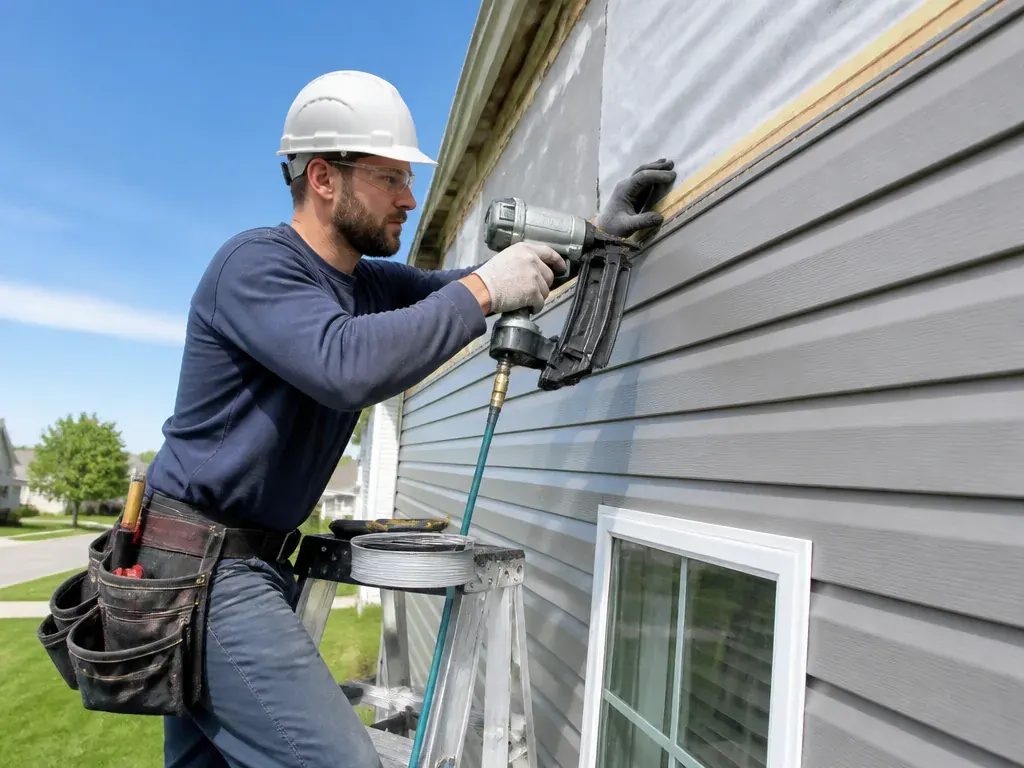
Siding for Snow Country
Siding is the walls' weather skin, and Rochester winters test it hard: wind-driven rain, snow piled against the walls, and thaw cycles that work every joint loose. We repair damaged siding and install new siding that is built for this climate.
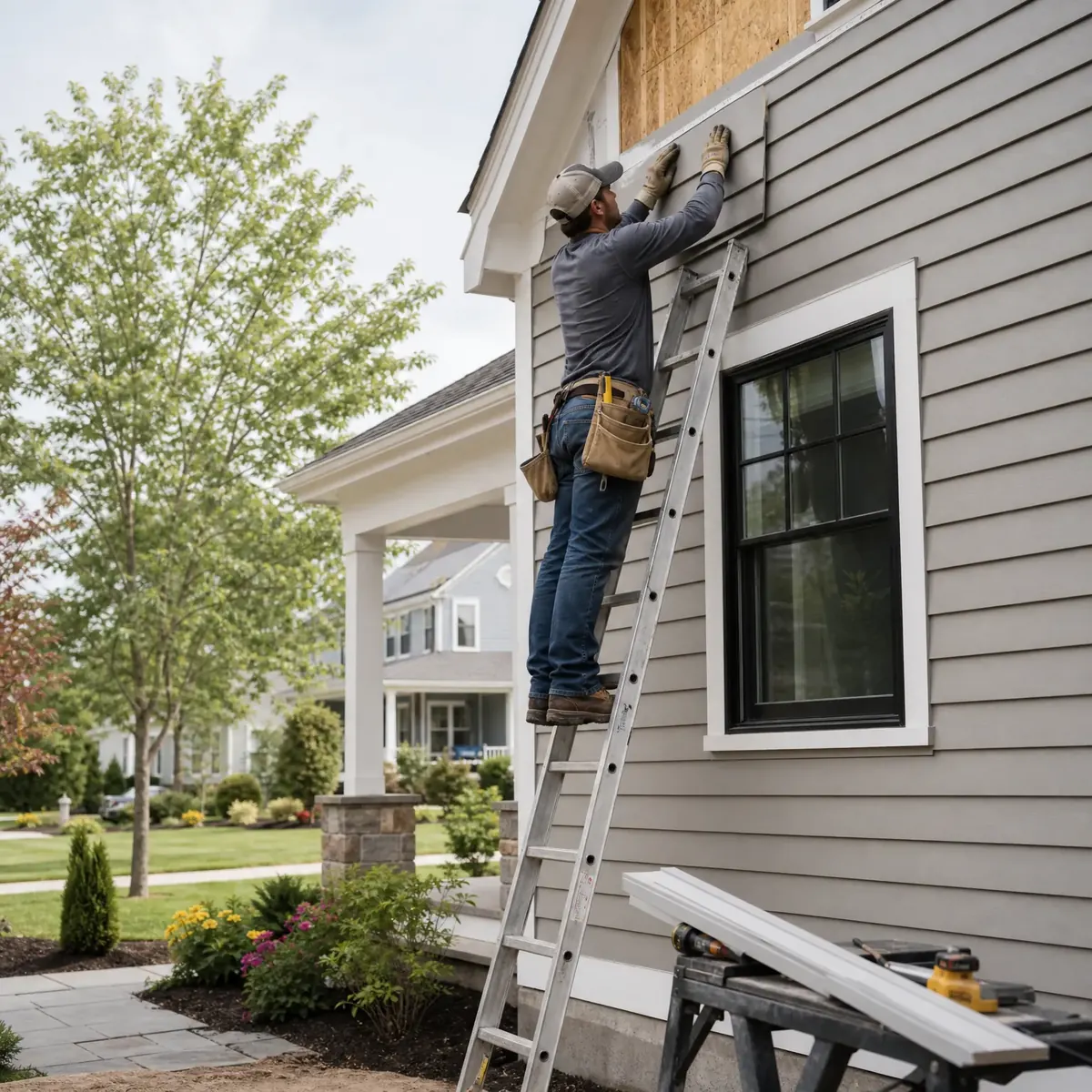
Winter damage
Siding fails where water finds a way in, and Rochester gives water plenty of chances. Wind drives rain against the walls, snow piles up along the foundation and melts against the bottom courses, and thaw cycles open the joints a little more every year. The damage starts small: a cracked panel, a loose corner, a gap at a window, and it grows from there.
Vinyl is the most common siding in Rochester, and it handles the cold well when it is installed with room to move. Vinyl expands and contracts with temperature, so a panel nailed too tight buckles in summer and cracks in a hard frost. Fiber cement is the heavier answer: it holds its line through every season, and it does not burn, rot, or feed insects.
The wall behind the siding matters as much as the siding itself. A weather barrier and flashing at every opening keep water out of the sheathing, and when the siding comes off for a repair, the barrier gets checked too. Roof repair in Rochester often runs alongside siding work, since a leaking roof edge and damaged siding usually share the same cause.
Catch it early
A cracked panel lets wind-driven rain straight through to the barrier behind it. One cracked panel is a quick swap, and a wall full of them means the siding has reached its end.
Boards that bow out from the wall were usually nailed too tight to move with the seasons. The fix is to refasten them with room to expand, or to replace the run.
Corner posts and J-channels that pull away leave gaps where water and insects get in. The joints around windows and doors wear first, and they are checked at every visit.
Siding that chalks when you run a hand across it has lost its surface, and the color will keep fading. Fading is cosmetic at first, but it often comes with brittleness underneath.
The bottom courses sit closest to snow and splashback, and soft or swollen boards there mean water has reached the sheathing. Soft spots never wait for the next season.
Damp patches on inside walls, peeling paint, and a musty smell near an outside wall can all point to siding that has let water through. The wall is checked from both sides.
Four materials
Four materials cover nearly every Rochester home. Here is what each one offers.
Light, low-care, and the most common choice in Rochester. It moves with the seasons, comes in many colors, and a damaged panel swaps out in minutes.
Heavy, steady, and the toughest siding here. It holds its line through frost and thaw, does not burn or rot, and suits homes that want a painted-wood look without the upkeep.
Cedar and pine clapboard with a warm, natural look. It suits historic homes and Craftsman bungalows, and it needs paint or stain on a regular cycle to stay sound.
Thin stone panels that give a wall the look of a stone foundation or chimney breast. It suits entries, gables, and foundation walls, and it pairs well with vinyl or fiber cement.
Side by side
Each material asks something different of the home and the homeowner.
| Material | Look | Winter handling | Care it needs |
|---|---|---|---|
| Vinyl | Clean, many colors | Moves with temperature, needs room to expand | Wash, panel swaps, joint checks |
| Fiber cement | Painted wood look | Steady through frost and thaw | Paint cycle, caulk and joint checks |
| Wood | Warm, natural clapboard | Needs a sound finish to shed water | Paint or stain cycle, rot watch |
| Stone veneer | Real stone look | Heavy, needs a sound wall | Mortar and cap checks |
Repair or full install
A repair fits when the damage is local: a few cracked panels after a storm, a loose corner, a worn run at a window. The damaged pieces come out, matching pieces go in, and the wall behind gets checked at the same time. Matching matters, since siding fades with sun, and a new panel beside a faded wall can show.
A full install fits when the siding is worn across the whole house: panels cracking in many places, boards warping on more than one wall, or water reaching the sheathing in several spots. A full install resets the wall system at once, with a new weather barrier, new flashing at every opening, and siding that matches from wall to wall.
Either way, the roof edge and the siding meet at the eaves, and the two have to work together. Fascia and soffit in Rochester covers that joint, where the roof overhang meets the top of the wall, and gutters and gutter guards in Rochester carry the roof water away from the siding below. A siding job that ignores the eaves and the gutters is a job half done.
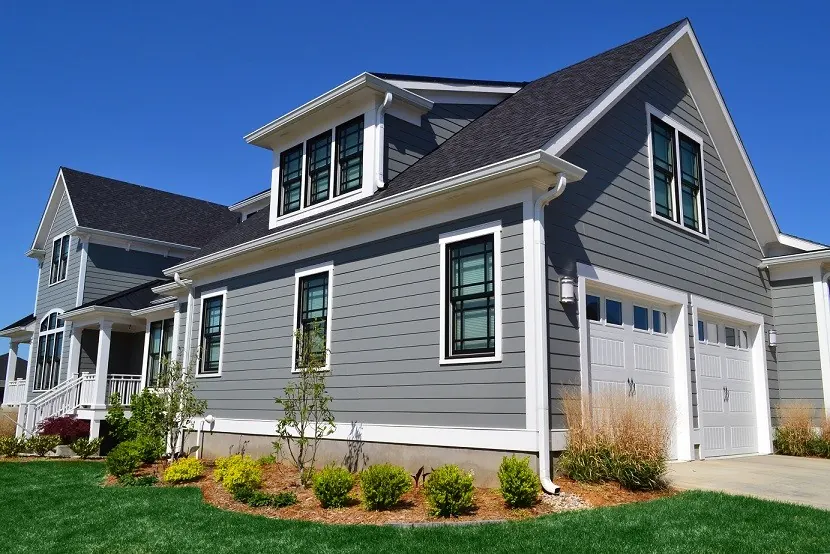
The visit
Before anyone says repair or full install, the wall gets read up close.
The visit starts with a loose panel lifted by hand, not a glance from the driveway. Under it, the barrier shows whether water has been reaching the sheathing, and a probe at the bottom courses shows whether the wood behind is sound or soft. The corners and the joints around the windows get the same treatment, since those are the places water finds first.
Then comes the daylight test: a new panel is held beside the old wall in full sun, because siding fades and a repair that matches in shade still shows in bright light. The number of walls touched, the age of the run, and the repairs already made on the same walls all go into the call, and the call follows what the wall shows, not what anyone hoped it would show. The eaves get the same attention, since fascia and soffit in Rochester carry the joint where the wall meets the roof.
People also ask
Short answers to the siding questions that come up most.
Vinyl and fiber cement are the two strongest choices here. Vinyl is light, low-care, and moves with the seasons when it is installed with room to expand. Fiber cement is heavier and steadier, holds its line through frost and thaw, and suits homes that want a painted-wood look without the upkeep.
Yes, when the damage is local. A few cracked panels, a loose corner, or a worn run at a window can be swapped without touching the rest of the wall, and the barrier behind gets checked at the same time. Matching matters, since siding fades with sun, and a good match blends in.
Look for soft spots at the bottom courses, warped boards, peeling paint inside near an outside wall, and a musty smell that will not go away. The wall is checked from both sides, and the barrier behind the siding tells the truth about how much water has reached the sheathing.
Cracked panels, loose corners, or a whole house ready for new siding? Call and talk about your walls.
Call (585) 868-0065Frequently asked questions
Vinyl siding commonly serves for decades when it is installed with room to move and kept clean. What ends its life is usually brittleness from age and sun, cracking in a hard frost, and fading that no wash will lift. A yearly look at the joints and the bottom courses shows where it stands.
Yes, and it is one of the steadiest choices here. Fiber cement holds its line through frost and thaw, does not burn or rot, and keeps its paint longer than wood. It is heavier than vinyl, so the wall and the fasteners carry more weight, and the install takes more time.
Yes, with care. Vinyl gets more brittle in the cold, so panels are handled gently and cut with room to move, and the crew works around the coldest days. Fiber cement handles the cold better. A winter install takes more time, and the joints are checked again in spring.
Heat and tight nailing are the usual causes. Vinyl expands in summer, and a panel nailed too tight has nowhere to go, so it bows out from the wall. The fix is to refasten the run with room to expand, or to replace the warped panels and set the new ones with the right gap.
Not always, but it is the natural time to look at it. The roof edge and the siding meet at the eaves, and the crew is already on site with ladders and staging. When the siding is sound, it stays, and when it is worn, the roof job is the right moment to renew it in the same project.
A soft wash with a garden hose and a mild soap is enough for most siding, worked from the bottom up so dirty water does not streak down over clean panels. Never use a pressure washer on siding, since it drives water behind the panels and can crack vinyl or strip paint from wood and fiber cement.
It can help, but the siding is only part of the answer. A full install adds a new weather barrier and seals the joints at every opening, which cuts the drafts that come through the walls. The attic, the windows, and the doors matter too, and the biggest gains come when the whole shell is looked at together.
Keep going
The walls meet the roof at the eaves. These pages cover the joints and the parts around them.
Fascia and soffit in Rochester covers the joint where the roof overhang meets the top of the wall.
Learn more →Gutters and gutter guards in Rochester carry roof water away from the siding below.
Learn more →Roof repair in Rochester often runs alongside siding work, since both share the same storm.
Learn more →Siding cracked, warped, or letting winter wind whistle through the walls? Call and describe the damaged boards and where they sit.
Call (585) 868-0065Where wall meets roof
The joint where a roof slope meets a wall is the most leak-prone seam on the outside of a house, and siding and roofing share the job of keeping it dry.
Step flashing runs up that joint in small overlapping pieces, one for each course of shingles, and the siding overlaps the flashing so water running down the wall steps out onto the roof instead of behind it. When the siding is cut tight against the shingles, or the flashing is missing a step, meltwater finds the gap and runs behind the wall covering, where it soaks the sheathing out of sight.
Kick-out flashing sits at the bottom of that joint, where the roof ends and the wall continues, and it kicks the water running down the valley out into the gutter instead of letting it pour down the wall. Homes built before kick-out flashing became standard often show a stain or soft siding right at that spot, and the stain is the sign that the joint has been leaking for a while. Roof repair in Rochester and a siding repair done together fix the joint from both sides, which is the only way the fix holds.
Gutters tie into this joint too. A gutter that ends short of the joint dumps its water onto the siding below, and a downspout that empties against the wall keeps the bottom courses wet all winter. The wall, the roof edge, and the gutter have to be read as one system, and a repair that fixes only the siding while the gutter still dumps water on it will not last.
Small metal pieces overlap up the joint, one per shingle course, carrying water out onto the roof surface.
A small angled piece at the bottom of the joint throws valley water into the gutter instead of down the wall.
The repair process
A siding repair starts by taking the damaged pieces off gently, so the wall behind them stays intact for the new pieces.
The crew works from the damaged area outward, freeing each piece from its lock or its nails without prying against the wall. Vinyl unlocks with a small tool that frees the seam, fiber cement comes off piece by piece at its nails, and wood comes off board by board so the sound boards around it stay put. The point of the care is the weather barrier underneath: a tear in the barrier becomes a leak path, and a repair that tears the barrier trades one leak for another.
Once the damaged pieces are off, the wall gets a look before anything goes back. The sheathing is checked for soft spots, the barrier is checked for tears, and the flashing at the windows and doors gets checked for gaps. Soft sheathing gets swapped, torn barrier gets patched, and only then do the new pieces go on. New pieces are cut to fit the opening, locked or nailed in with room to move, and sealed at the joints where the old pieces met the trim.
| Layer | What gets checked | What happens if it fails |
|---|---|---|
| Weather barrier | Tears, gaps, and loose seams | Patched before new siding goes on |
| Sheathing | Soft spots and dark staining | Swapped out while the wall is open |
| Window flashing | Gaps at the sill and the sides | Resealed so water sheds outward |
| Insulation at the wall | Damp or settled batts | Noted for the homeowner to follow up |
Older homes
Rochester has whole streets of homes built before modern siding, and those walls hide a few things a newer home never shows.
Many older homes wear vinyl over the original wood clapboard, and the vinyl hides the condition of the wood beneath it. A soft spot felt through the vinyl, or a section that bows outward, points to wood that has been wet for a long time, and the vinyl has to come off that section before anyone knows how far the damage runs. Homes in Park Avenue and Corn Hill show this pattern often, since their walls have seen a century of winters.
Lead paint is the other thing older walls hide. Homes built before the late 1970s often carry lead paint under the newer layers, and disturbing those layers calls for care that a standard siding job does not need. The U.S. Environmental Protection Agency publishes guidance on lead-safe work in older homes, and a crew working on a pre-1978 home follows that guidance before the first piece comes off.
Older homes also settle, and settling shows in the siding as doors that rub, corners that gap, and courses that no longer run level. A siding job on a settled home starts by reading those signs and deciding which ones are old movement and which ones are still moving. Fascia and soffit in Rochester often need the same reading, since the eave sits on the same settled frame, and gutters and gutter guards in Rochester hang from that eave.
A soft spot through the vinyl points to wet wood beneath, and the section has to come off before the damage can be measured.
Homes built before the late 1970s often carry lead paint under newer layers, and those layers call for lead-safe handling.
Courses that no longer run level and corners that gap point to a frame that has moved, and the siding has to be read against that movement.
A repair, a full install, or a question about what is on your walls now. Call or email and tell us about it.
Roofing Rochester, 75 S Clinton Ave Ste 510, Rochester, NY, (585) 868-0065