Fascia board
The upright board along the roof edge. It carries the gutters, closes the roof edge, and takes the weather full on. A fascia board that rots lets the gutters sag and pull away.
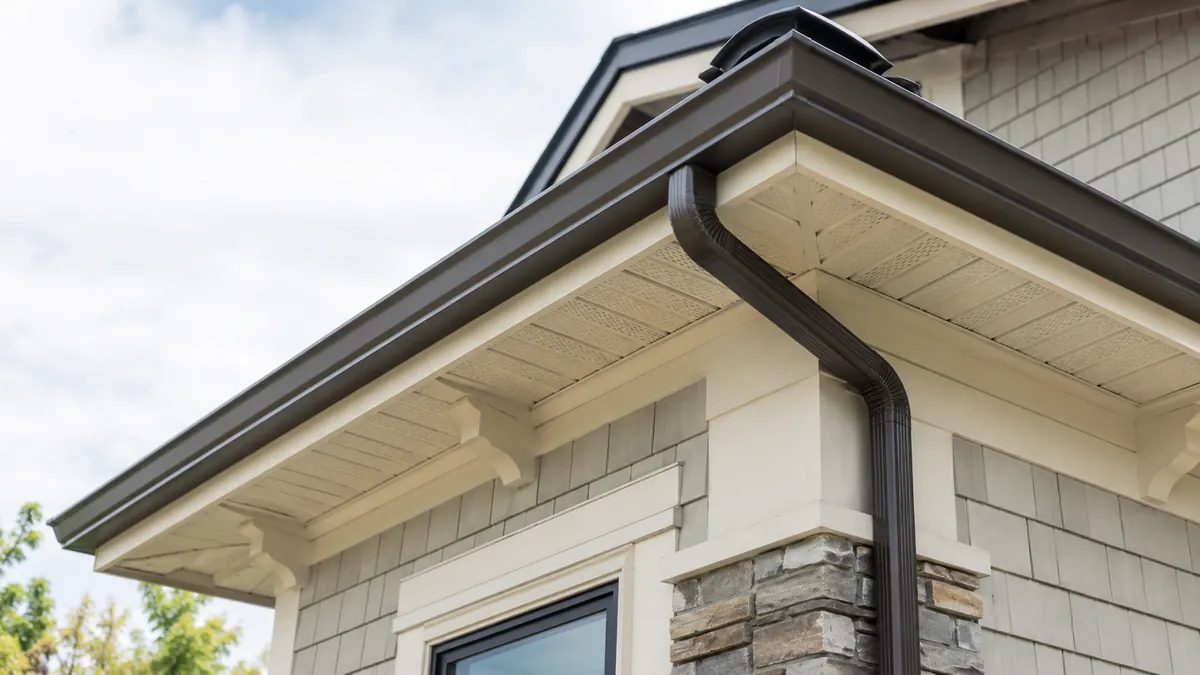
Eaves and Overhangs
Fascia and soffit are the quiet parts of a roof: the boards and panels at the eaves that carry the gutters, vent the attic, and keep water and animals out of the roof edge. In Rochester they take a beating from snow and ice, and when they fail, the roof edge fails with them.
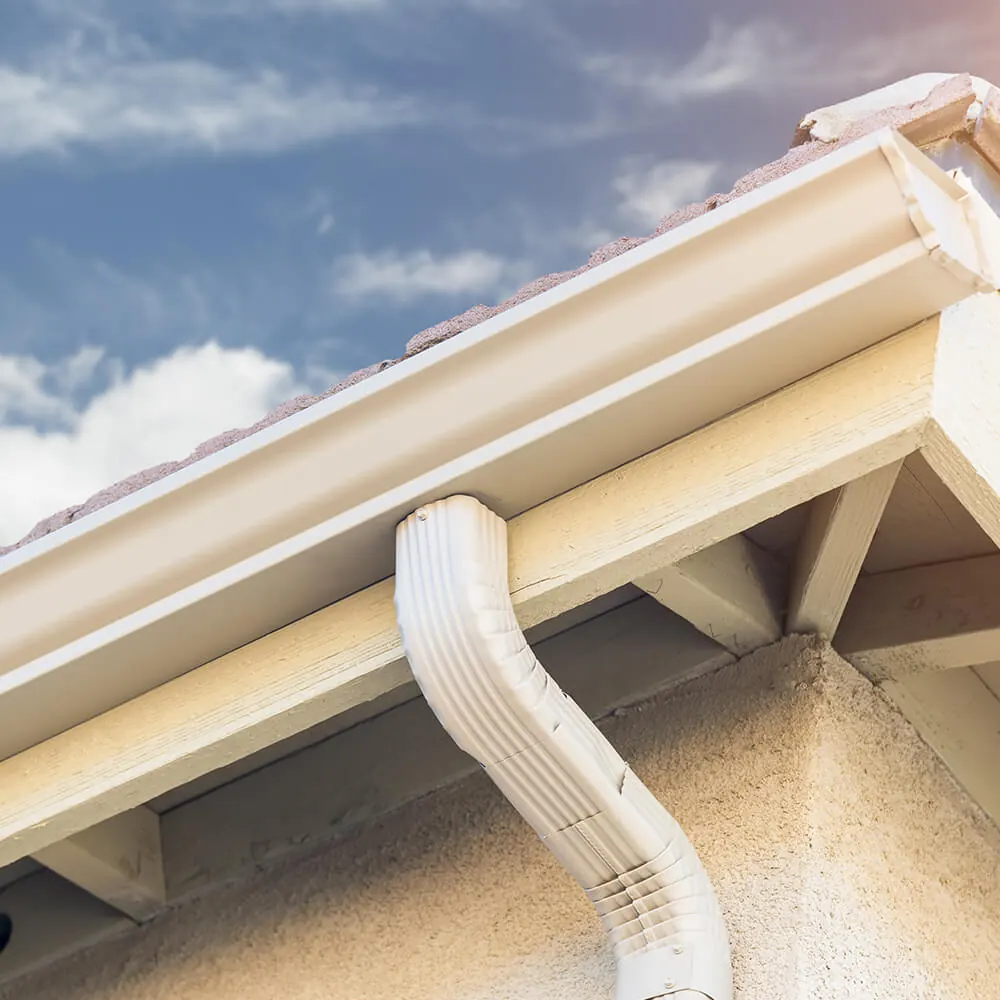
What they do
Fascia is the upright board that runs along the edge of the roof, closing the gap between the roof deck and the wall. It carries the gutters, it gives the roof edge its clean line, and it takes the weather full on: rain, snow, and ice all hit the fascia first, and a fascia board that rots lets the gutters pull away with it.
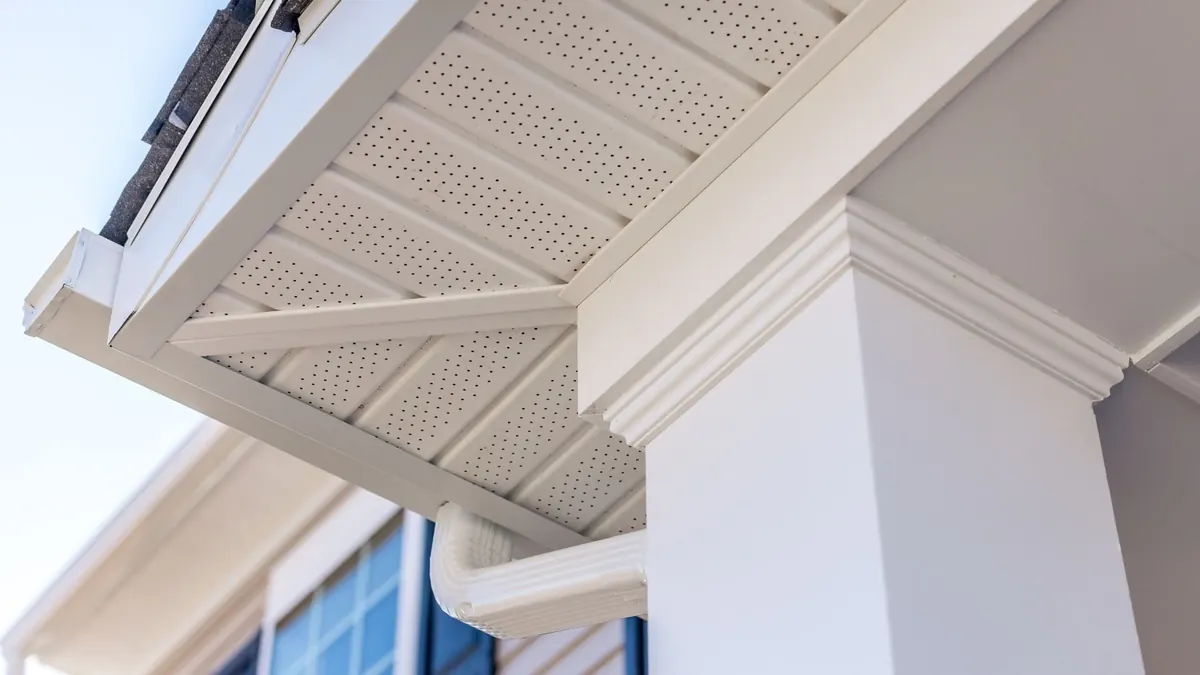
Soffit is the panel underneath the overhang, closing the gap between the fascia and the wall. It keeps birds and insects out of the attic, it hides the rafter tails, and, most importantly, it vents the attic: perforated soffit panels let cold air in at the eaves, and that air rises out through the ridge vent, keeping the attic dry and cold.
The two work as a pair, and they fail as a pair. A rotting fascia lets water into the soffit, and a blocked soffit starves the attic of air, which builds ice dams at the eaves above it. Gutters and gutter guards in Rochester hang from the fascia, so a fascia job and a gutter job often run together, and attic ventilation and insulation in Rochester starts at the soffit vents.
The eave, part by part
An eave is five parts working together. Tap each one to read its job and its weak point.
The upright board along the roof edge. It carries the gutters, closes the roof edge, and takes the weather full on. A fascia board that rots lets the gutters sag and pull away.
The panel under the overhang, closing the gap between the fascia and the wall. It keeps birds and insects out of the attic and carries the vents that let cold air in at the eaves.
Perforated panels or round vents in the soffit that let air into the attic. Blocked vents starve the attic of air, and a starved attic builds ice dams at the eaves above.
A metal strip along the roof edge that guides water off the shingles and into the gutter, instead of letting it run back under the roof or down the fascia face.
The ends of the rafters that form the overhang. The fascia and soffit hide them, and when the fascia rots, the rafter tails are the next thing the water reaches.
Catch it early
Paint that peels and flakes on the fascia or soffit means water has reached the wood below. The paint is the first layer to go, and the rot follows behind it.
A fascia board that feels soft when you press it, or a soffit panel that sags, has rotted from behind. Soft boards never wait for the next season.
Gutters that pull away from the house are usually hung from a fascia board that has rotted and will not hold the fasteners anymore. The gutter is the symptom, and the fascia is the cause.
Birds nesting in the eaves, or wasps coming and going at the soffit, mean a gap has opened in the soffit panels. A gap that lets a bird in lets weather in too.
Brown stains on the soffit panels mean water is running back under the roof edge instead of into the gutter. The drip edge is the usual source, and the fascia is the next thing in line.
Soffit vents painted shut or blocked with insulation starve the attic of air, and the attic runs warm and damp. A warm attic builds ice dams, and the dams wear the fascia from above.
Repair or replace
A repair fits when the damage is local: a short run of fascia that has rotted at one corner, a few soffit panels that have sagged, or a vent that has been painted shut. The damaged boards come out, matching boards go in, and the gutters are rehung on the sound wood. A repair is a small job, and it is done in a day. When the rot reaches the rafters, roof repair in Rochester covers the deck and the edge together, since the two fail as one.
A replacement fits when the rot has spread: fascia that is soft along a whole side of the house, soffit panels sagging in several places, or rafter tails that show rot when the fascia comes off. A full eave replacement resets the edge at once, with new fascia, new vented soffit, and a new drip edge, so the gutters hang on sound wood and the attic breathes again.
The eave meets the roof, the siding, and the gutters at one joint, so the work often runs together. Siding repair and installation in Rochester meets the soffit at the top of the wall, and the fascia is where the two systems join. A roofer who looks at the whole eave, not just the one bad board, catches the rot before it reaches the rafters.
Three materials
Three materials cover nearly every Rochester eave. Here is what each one brings.
The traditional choice: painted boards with a warm, solid look that suits historic homes. Wood needs paint on a regular cycle, and it rots when the paint fails.
Light, low-care panels that never need paint and vent well through perforated sections. The common choice for soffits, and a good match for vinyl siding.
Metal fascia that caps the wood board, shielding it from rain and snow. It holds its color, never rots, and suits homes that want an eave that asks little of them.
Two different jobs
Homeowners often mix the two up. Here is the difference in one table.
| Part | Where it sits | What it does | How it fails |
|---|---|---|---|
| Fascia | Upright, along the roof edge | Carries the gutters, closes the roof edge | Rots from weather, lets gutters sag |
| Soffit | Flat, under the overhang | Vents the attic, keeps animals out | Sags, gaps open, vents block up |
| Drip edge | On the roof edge, over the fascia | Guides water into the gutter | Lifts or rusts, lets water run back |
| Gutter | Hung from the fascia | Carries roof water away | Sags when the fascia behind it rots |
People also ask
Short answers to the fascia and soffit questions that come up most.
Fascia is the upright board along the roof edge, and it carries the gutters and closes the roof edge. Soffit is the flat panel under the overhang, and it closes the gap to the wall and vents the attic. The two work as a pair, and they fail as a pair, since a rotting fascia lets water into the soffit.
Look for peeling paint at the eave, boards that feel soft when you press them, gutters that sag or pull away from the house, and stains on the soffit below. A fascia board that has rotted will not hold the gutter fasteners, so the gutter is often the first sign that the board behind it has gone.
Yes, more here than in most places. Soffit vents let cold air into the attic, and that cold air keeps the roof deck cold, which stops snow melting from below and building ice dams at the eaves. Blocked or painted-shut vents starve the attic of air, and the dams that follow wear the fascia from above.
Yes. Fascia and soffit are replaced from ladders and staging at the eave, without touching the shingles above them, unless the drip edge or the roof edge also needs work. A full eave replacement is a common standalone job, and it often runs alongside a gutter renewal on the same visit.
Peeling paint at the eave, or gutters pulling away? Call and get the eave looked at.
Call (585) 868-0065Frequently asked questions
Water and time are the cause. Rain and snow hit the fascia full on, and when the paint fails or the drip edge lifts, water runs down the board face and soaks in. Winter makes it worse, since ice at the eave holds water against the board for weeks. A sound drip edge and a fresh coat of paint are the best protection.
A small repair, a short run of fascia or a few soffit panels, takes a day. A full eave replacement around a whole house takes a few days, depending on the size and the height. The gutters come off and go back on as part of the job, and the attic vents are checked at the same time.
Yes. The vents stay open all year, since they let cold air into the attic and keep the roof deck cold, which stops ice dams from forming at the eaves. Closing the vents in winter traps warm air in the attic, and that warm air is exactly what builds a dam. The vents are never blocked or painted shut.
Yes, when a gap opens in the soffit panels or the fascia pulls away from the wall. Birds, squirrels, and wasps all use a gap at the eave to get into the attic, and once they are in, they nest in the insulation. Sealing the soffit and the fascia closes the entry, and a yearly look at the eaves catches the gaps early.
Aluminum caps the wood board and shields it from rain and snow, so it never rots and never needs paint, which suits homeowners who want an eave that asks little of them. Wood has a warmer look and suits historic homes, but it needs paint on a regular cycle, and it rots when the paint fails.
A drip edge is a metal strip along the roof edge that guides water off the shingles and into the gutter, instead of letting it run back under the roof or down the fascia face. Every Rochester roof needs one, since water running back under the shingles rots the decking and the fascia together, and a missing drip edge is a common find on older homes.
Keep going
Fascia and soffit sit where three systems meet. These pages cover all three.
Gutters and gutter guards in Rochester hang from the fascia, so the two jobs often run together.
Learn more →Siding repair and installation in Rochester meets the soffit at the top of the wall.
Learn more →Roof maintenance in Rochester includes a look at the eaves, the fascia, and the soffit vents.
Learn more →Peeling paint at the eaves, sagging gutters, or a soffit that birds have found? Call and describe the eave trouble from the ground.
Call (585) 868-0065One edge, three parts
The gutter, the fascia, and the drip edge form a single system at the roof edge, and a failure in any one of them shows up in the other two.
The drip edge is a strip of metal that runs along the edge of the roof deck, under the first course of shingles and over the fascia, and it carries meltwater out past the fascia and into the gutter. Without it, meltwater curls under the shingle edge and runs down the face of the fascia, soaking the board from the top. With it, the water lands in the gutter, and the fascia stays dry.
The gutter hangs from the fascia on brackets or spikes, and it carries the water the drip edge hands it to the downspout. A gutter hung level holds water instead of moving it, a gutter hung with a sag holds a pool at its low point, and a gutter full of leaves holds a wet mat against the fascia all winter. The fascia rots fastest where the gutter holds water against it, which is why a rotting fascia often points to a gutter problem rather than a fascia problem.
The fix runs in order: the gutter comes off, the fascia is checked and swapped where it has gone soft, the drip edge is checked and replaced where it has lifted, and the gutter goes back on with a proper slope toward the downspout. Gutters and gutter guards in Rochester cover the gutter half of that job, and the two halves belong together, since a new fascia under an old sagging gutter will rot again.
A metal strip that carries meltwater past the fascia and into the gutter, keeping the board dry from the top.
A slight fall toward the downspout keeps water moving, while a level gutter holds a pool against the fascia.
Air under the eave
The air that keeps a Rochester attic dry enters through the soffit, and the path it takes from the eave to the ridge decides whether the attic stays cold in winter.
Perforated soffit panels carry rows of small slots, and cold air comes in through those slots, travels up under the deck, and leaves through the ridge vent. The path has to stay open the whole way: insulation pushed tight against the eave blocks it, a painted-over vent blocks it, and a soffit panel installed without slots blocks it from the start. When the path blocks, the attic warms, the snow on the roof melts from below, and ice dams form at the eaves above the very vents that stopped working.
Baffles keep that path open. A baffle is a shaped channel fixed between the rafters at the eave, holding the insulation back and leaving a clear gap for air to rise. They go in when the soffit is open or when the insulation is redone, and they are the small part that makes the whole vent system work. Attic ventilation and insulation in Rochester covers the insulation side of that job, and the soffit side is the intake that feeds it.
| Part of the path | What it does | What blocks it |
|---|---|---|
| Soffit slots | Let cold air in at the eaves | Paint, dirt, or solid panels |
| Baffles | Hold insulation back from the eave | Missing baffles, packed insulation |
| Rafter channel | Carry air up under the deck | Insulation stuffed into the channel |
| Ridge vent | Let warm air out at the peak | Shingles or snow covering the vent |
Keeping the edge sound
The eave is the most exposed wood on a house, and the paint or wrap on it is the layer that stands between the wood and the weather.
Wood fascia takes paint well, and the paint has to be kept up, because bare wood at the eave soaks up meltwater and rots from the top down. Peeling paint at the eave is not a cosmetic matter: it is the sign that the coating has failed and the wood beneath it is taking water. Scraping the loose paint, priming the bare wood, and repainting before winter keeps a small paint job from becoming a fascia replacement.
Aluminum wrap is the other answer, and it covers the wood fascia with a formed metal skin that sheds water and never needs paint. The wrap has to be fitted tight, with its seams lapped so water runs off rather than in, and the joints have to be sealed where the wrap meets the soffit and the gutter. A loose wrap flaps in the wind and lets water behind it, which rots the wood out of sight, so the wrap gets checked at the same spring look-over as the rest of the eave.
Vinyl soffit asks for less care than wood, and its upkeep is mostly a wash: pollen, soot, and leaf stains rinse off, and the panels themselves do not rot. The vents in vinyl soffit need a look too, since a season of dust and cobwebs can narrow the slots, and a soft brush clears them without bending the panels. Siding repair and installation in Rochester often runs alongside eave work, since the wall and the eave meet at the same corner, and the two finishes have to line up.
Loose paint at the eave means the coating has failed and the wood beneath it is taking water.
Wrap that flaps in the wind lets water behind it, and the wood rots out of sight.
A season of dust narrows the soffit slots, and a soft brush clears them without bending the panels.
A rotting board, a sagging gutter, or vents that have gone quiet. Call or email and tell us about your eaves.
Roofing Rochester, 75 S Clinton Ave Ste 510, Rochester, NY, (585) 868-0065