First look
Tarp the yard, strip the roof
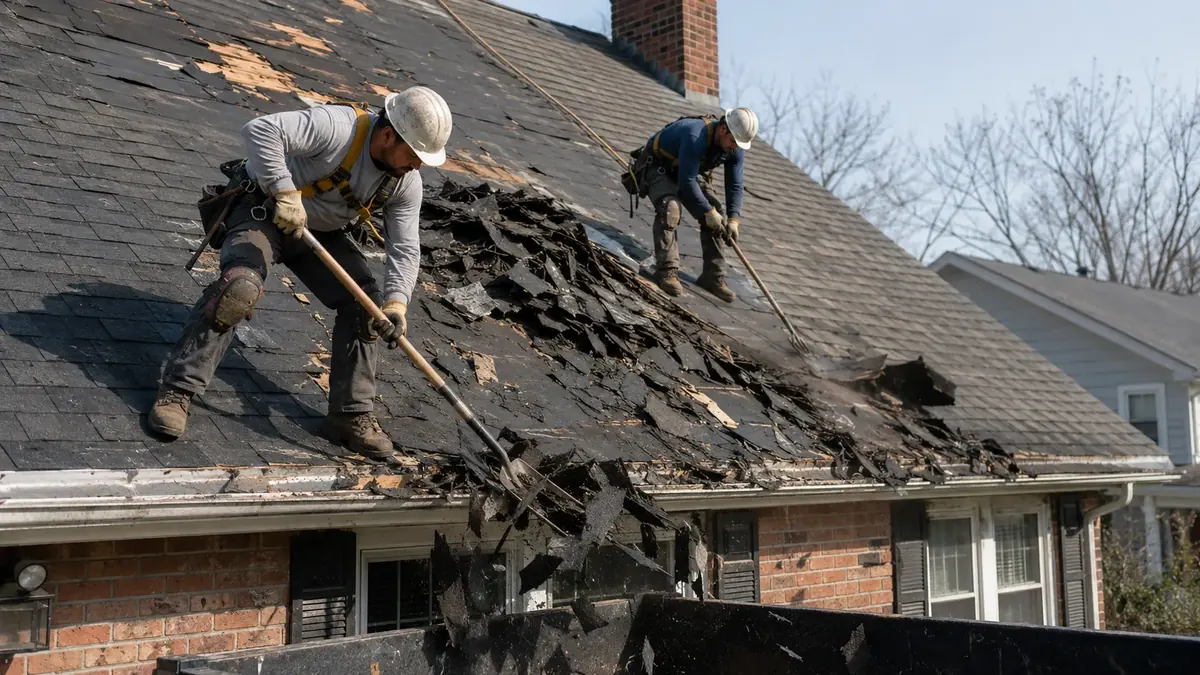
Tarps go down over the shrubs and the walkway, and the crew pulls the old shingles off down to the deck. The debris goes straight into the trailer, so the yard stays clear.
Buffalo Road Roofing
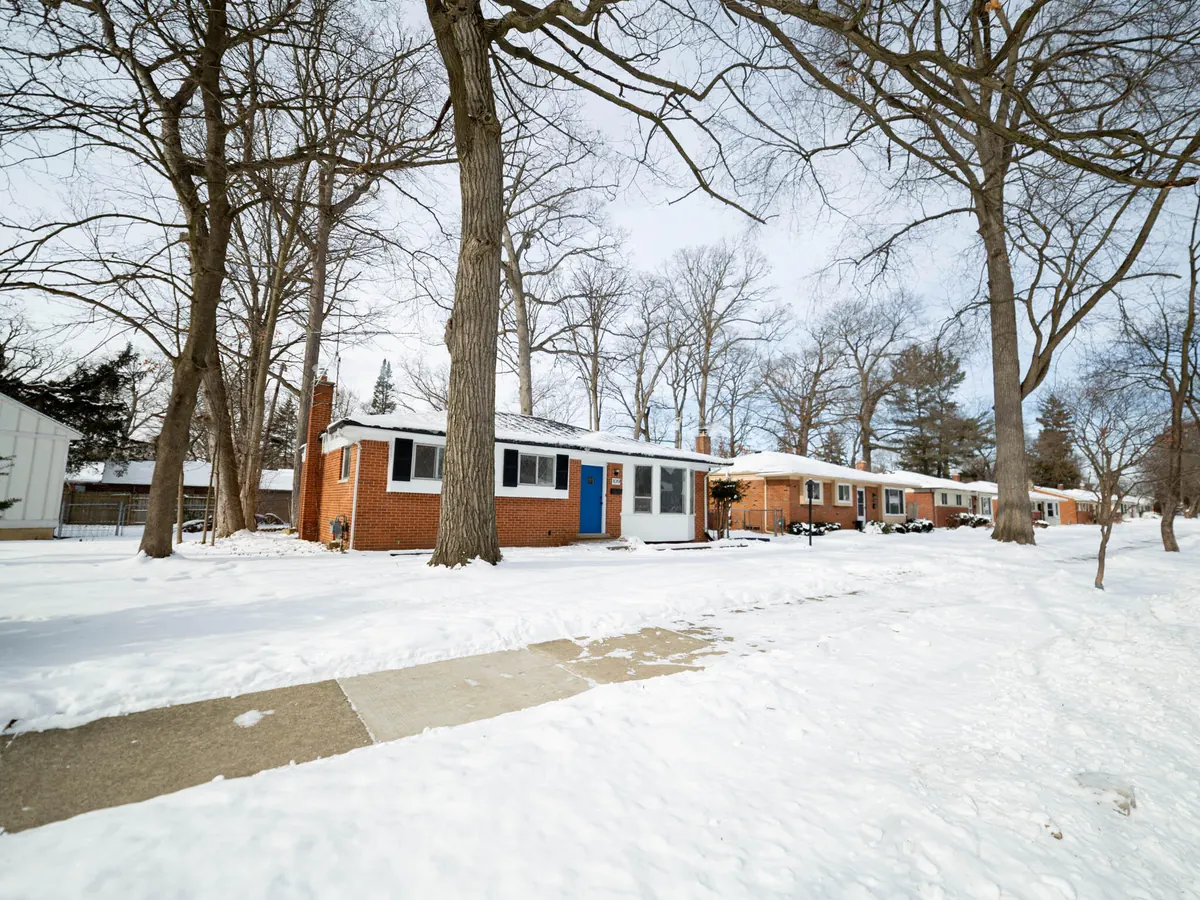
Gates sits just west of Rochester on Buffalo Road, and the town is a corridor of ranches, Capes, and split-levels built in the decades after the war. Lyell Avenue runs along the north side, Spencerport Road runs along the south, and the neighborhoods between them hold some of the oldest suburban roofs in the county. The wind runs down Buffalo Road with nothing to break it, the hail rides in off the lake, and the gutters on the long ranch runs work harder than they do anywhere else in town. We work on Gates roofs street by street, and we read each one up close.
Gates, NY
Buffalo Road is the spine of Gates, a straight east-west road that has carried traffic between Rochester and Buffalo since the days of the stagecoach, and the neighborhoods on either side of it hold the town's oldest suburban houses. The ranches and Capes along the side streets went up in the 1950s and 1960s, and many of them are now on a second or third roof. The lots are modest, the trees are mature, and the roofs are simple two-slope frames with long gutter runs and a single chimney.
The corridor wind is the quiet fact of Gates roofing. Buffalo Road runs open to the west, and the wind that comes down it hits the ranch roofs with nothing to break it. Tabs lift along the rake, and one lifted tab lets the next gust slip underneath. Roof replacement is a regular job here, because the first roofs on these ranches are long past their best years, and the City of Rochester sits just east of the town line, so the corridor weather that crosses the city reaches Gates with its full strength still in it.
The corridor wind also works the gutters, because a gust down Buffalo Road can lift a loose gutter clean off its hangers. Gutters and guards in Gates hold the run tight to the fascia, and a roof inspection each spring checks the hangers along the full length of the run.
A yearly look is the habit that saves a Gates roof, because the rake wear and the granule loss never show from the driveway. Roof maintenance in Gates clears the valleys and checks the flashing before the summer storms, and a roof repair visit after a hailstorm photographs the bruising while the evidence is still fresh.
Water on its way down
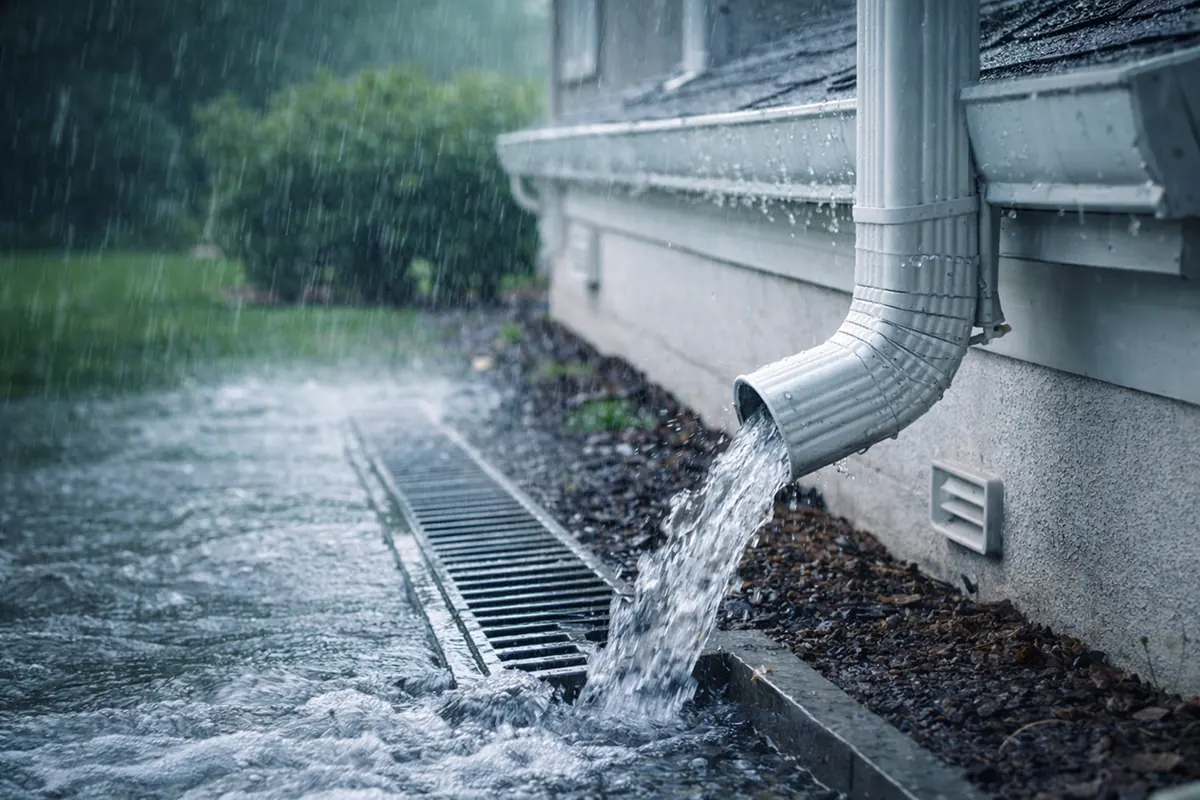
A Gates ranch can have a hundred feet of gutter on one side, and every drop of it has to leave through a downspout at the corner. When the rain comes hard, the downspout pours a steady stream into the drain grate beside the foundation, and that stream is the roof doing its job. When the stream slows to a trickle, the gutter above it is holding leaves, and the water that cannot get out will find the fascia instead.
The downspout also shows the first sign of trouble after a storm, because granules wash down with the rain and collect at the drain. A few granules are normal wear, but a pile that grows at every downspout means the shingle surface is wearing thin across whole slopes. The fix is usually a cleaning and a look at the shingles, not a new roof, and a downspout that runs clear after a cleaning has done its job.
Tabs lifting along the rake, or a gutter that overflows every storm? Call and we will start at the rake.
Call (585) 868-0065A roof day
First look
Tarps go down over the shrubs and the walkway, and the crew pulls the old shingles off down to the deck. The debris goes straight into the trailer, so the yard stays clear.
Tear-off
Every deck board gets a look and a press, soft spots come out, and ice and water shield goes on the eaves before the underlayment covers the field.
Dry-in
Shingles go on from the eave up, the chimney flashing is set, the pipe boots go on, and the ridge cap closes the peak before the light goes.
Finish
We clear the gutters, sweep the yard for nails with a magnet, and walk the roof and the ground with the homeowner before leaving.
Corridor wear
Gates roofs
Wind down Buffalo Road lifts tabs along the rake first, and the damage spreads from the edge inward. A careful nail pattern at the rake holds up better than a thin shingle does.
Gates roofs
A ranch gutter collects leaves from a whole side of the house, and a single clog backs water up along the entire eave. The slope of a long run matters as much as the cleaning.
Gates roofs
The chimney on a Cape sits in the middle of the roof, and the flashing around it takes the weather from every direction. Counterflashing that pulls away from the brick lets water straight down the chimney.
Compare
| Roof option | The house it suits | Corridor wind to watch |
|---|---|---|
| Architectural shingles for the ranches and Capes | Post-war ranches and Capes off Buffalo Road | Wind lifts tabs along the rake on the most open streets |
| Standing seam metal for the open-lot homes | Homes on the western edge that take the corridor wind | Snow slides off fast, so the paths and walkways below the eave need a plan |
| Three-tab shingles for the older ranches | 1950s ranches still carrying an early roof | Thin tabs curl sooner where the wind runs down the corridor |
| Impact-rated shingles for the hail streets | Streets that have seen hail more than once | The shingles resist bruising, but the gutters and the flashing still take the hits |
Coverage
Gates is a town in Monroe County, directly west of Rochester, with Buffalo Road running east to west through its center.
The 14606 ZIP covers the eastern neighborhoods near the city line, and 14624 covers the western streets toward Spencerport.
FAQ
The rake is the edge of the roof that faces the wind, and the wind down Buffalo Road hits it with nothing to break it. The tabs along the rake take the full force of every gust, and the nails at the edge work loose a little each year. Once one tab lifts, the next gust gets underneath it and the damage spreads inward.
Begin at the gutters. Granules collecting at the downspouts mean the shingle surface is wearing thin across whole slopes, pointing toward a new roof. One leak at a valley or a pipe boot points toward repair, because the trouble is confined to one spot. When the granule loss, the curling, and the leaks all appear together, the roof is telling you the whole field has worn out together.
Tarps go down over the shrubs and the walkway first, then the crew strips the old shingles down to the deck and checks every board. Soft spots come out, ice and water shield goes on the eaves, and the underlayment covers the field. Shingles go on from the eave up, the chimney flashing is set, and the ridge cap closes the peak.
Leaves and granules narrow the gutter channel until a hard rain has nowhere to go, and the water spills over the edge or backs up under the shingles. A sagging run or a clogged downspout elbow does the same thing.
It often is. The chimney on a Cape sits in the middle of the roof, and the flashing around it takes the weather from every direction. Step flashing and counterflashing work together to turn water away from the joint, and when the counterflashing draws away from the brick, water runs straight down the chimney and into the house.
They cause the same trouble they cause all over the county: leaves in the gutters, shade on the north slopes, and limbs that break in a storm. The ranch neighborhoods here have mature maples over most of the streets, and the October leaf load is heavy. Clearing the gutters each fall and looking at the roof each spring keeps the tree wear from turning into a leak.
Three roads
Gates is a corridor town, and Buffalo Road in the middle, Lyell Avenue in the north, and Spencerport Road in the south each give the streets between them a different roof.
Buffalo Road is the spine of Gates, a straight east-west road that has carried traffic between Rochester and Buffalo since stagecoach days, and the neighborhoods on either side hold the town's oldest suburban houses. The ranches and Capes along the side streets went up in the 1950s and 1960s, and many of them now wear a second or third roof. The lots are modest, the trees are mature, and the roofs are plain two-slope frames with long gutter runs and one chimney.
Lyell Avenue runs along the north side of town, past the same ranches and Capes on streets where the trees are tallest and the shade is deepest, so the north slopes there stay damp longer and grow the dark streaks that mark a shaded roof. Spencerport Road runs along the south side, past split-levels and colonials on wider lots, where the wind runs open and the ridge caps work loose first. The streets between the three roads share the corridor wind, because Buffalo Road runs open to the west, and the wind that comes down it strikes the rake edges of every roof it passes.
Off Lyell Avenue, the roofs sit under the tallest trees in town, and the leaf fall in October is heavy. The valleys fill with wet leaves, and the gutters clog at the downspout outlets, so the fall clearing matters more here than the winter snow, and a gutter that is cleared in the fall stays clear through the first hard freeze.
Off Spencerport Road, the roofs sit in the open, and the wind and the hail ride in off the lake with nothing to slow them. The tabs along the rake lift first, and hail bruising hides well on a sun-baked shingle, so only a look from the roof itself shows whether the hail cracked the mat.
The corridor is the quiet fact of Gates roofing, and the three roads name the three versions of it. A roof inspection in Gates starts by naming the road nearest the house, because the road names the shade, the wind, and the age of the roof in one breath.
Corner joints
Gates gutters fail at the corners first, because the corner is where the long ranch run turns, the water slows, and the joint works open.
A Gates ranch carries a long, straight gutter run along each eave, and the run turns at the corners to meet the downspout. The corner joint is the weakest point on the whole run: the sealant there dries out in the sun, the metal expands and contracts with the freeze and thaw of winter, and the water that runs down the long slope arrives at the corner with speed and weight behind it. The first sign is a drip at the corner after a rain, and the second is a stain on the siding below it, where the water has been running down the wall instead of through the downspout.
The long runs make the corner problem worse. A ranch gutter run in Gates can stretch the whole length of the house, and the water in the middle of the run has a long way to travel before it reaches the corner. When the hangers in the middle give way, the run sags, and the sag holds a pool of water that stays put. The pool adds weight, the sag deepens, and the corner joint at the end takes the strain. The fascia at the corners softens first, because the water sits against it longest, and the soft fascia lets the gutter pull away a little more with each season.
The fix starts at the corner, with the joint resealed and the hangers along the run tightened so the water moves toward the downspout instead of pooling in the middle. A gutter that is read from the corners inward tells the truth about the whole run, and a gutters and gutter guards visit that checks the corners, the hangers, and the downspout in that order finds the sag before the fascia goes soft.
Ridge to eave
A Gates Cape roof is a steep triangle with dormers cut into it, and reading it from ridge to eave finds the wear in the order the water meets it.
| Roof part | What it faces | First sign of wear |
|---|---|---|
| Ridge | Open corridor wind, full sun | Caps cracking and lifting |
| Dormers | Water running down the steep slope | Step flashing opening at the cheek |
| Chimney | Snow piling on the uphill side | Flashing lifting where snow sits |
| Field | Sun, hail, and leaf fall | Granules thinning across the slope |
| Eave and gutter | Melt stalling at the cold edge | Ice dams, corner drips |
The Cape is the steepest common roof in Gates, and the steep pitch sheds snow well, which is why the ridge and the dormers wear before the field does. Snow slides off the steep slope in sheets, and the sheets carry granules with them, so the field thins a little with each winter. A Cape dormer cuts the steep slope into small faces, and each face carries its own valley and flashing, so a leak at one dormer cheek can pass for a leak from the main field until the cheek is opened and the step flashing is seen.
The chimney on a Cape sits in the middle of the steep slope, and snow piles on its uphill side and melts against the flashing, so the flashing there works harder than the flashing on a low ranch chimney. A roof repair on a Gates Cape starts at the ridge and works down, because the water starts at the ridge and the wear follows it down the slope, past the dormers and the chimney, to the eave where the ice dam forms.
Along Buffalo Road the tabs lift at the rake and the downspout fills with granules, the usual story of a Gates ranch after a corridor winter. A call that names the street and the rake gives the crew a place to begin before they ever climb the ladder.