Crown
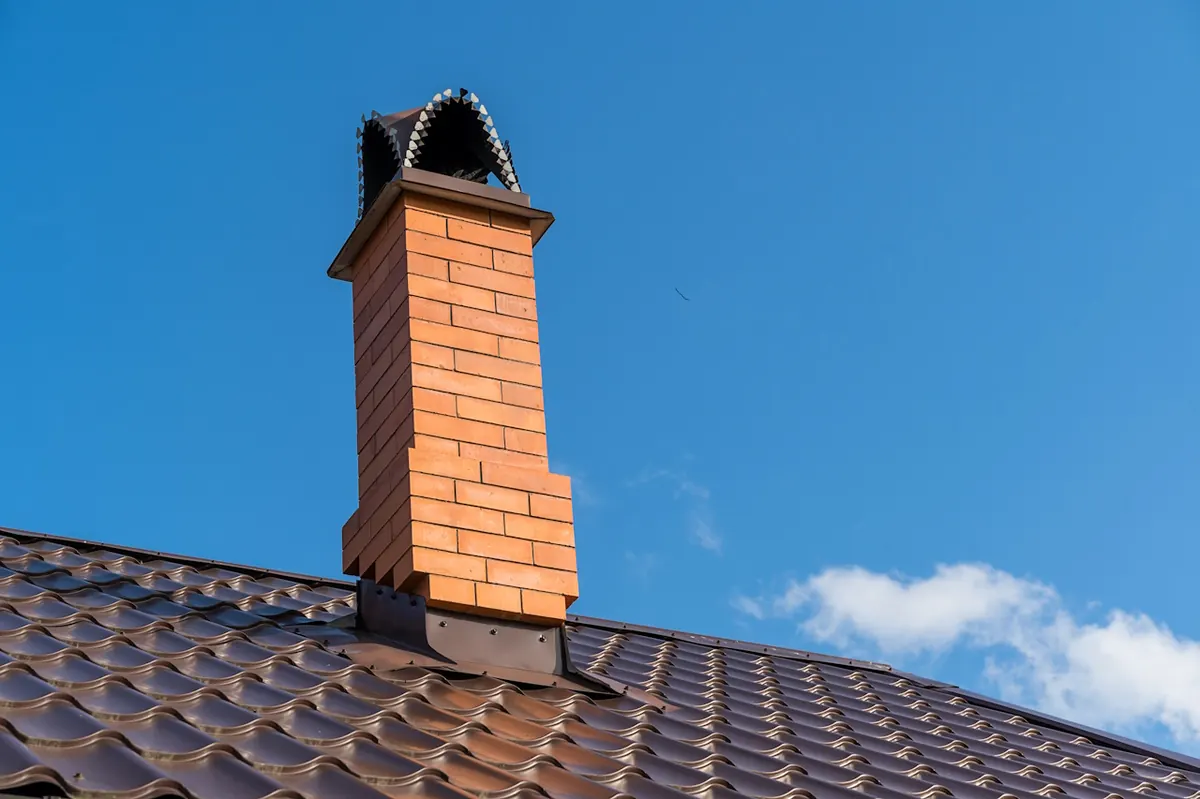
A sloped concrete cap on top of the chimney that sheds rain away from the brick. A cracked crown lets water straight into the brickwork, and it is the most common chimney leak in Rochester.
Chimneys and Leaks
The chimney is where Rochester roofs leak most. Brick, flashing, and flue meet the roof at one joint, and every winter works that joint a little looser. We repair chimneys, fit liners and caps, and reflash the joint so the leak stops for good.
Where roofs leak
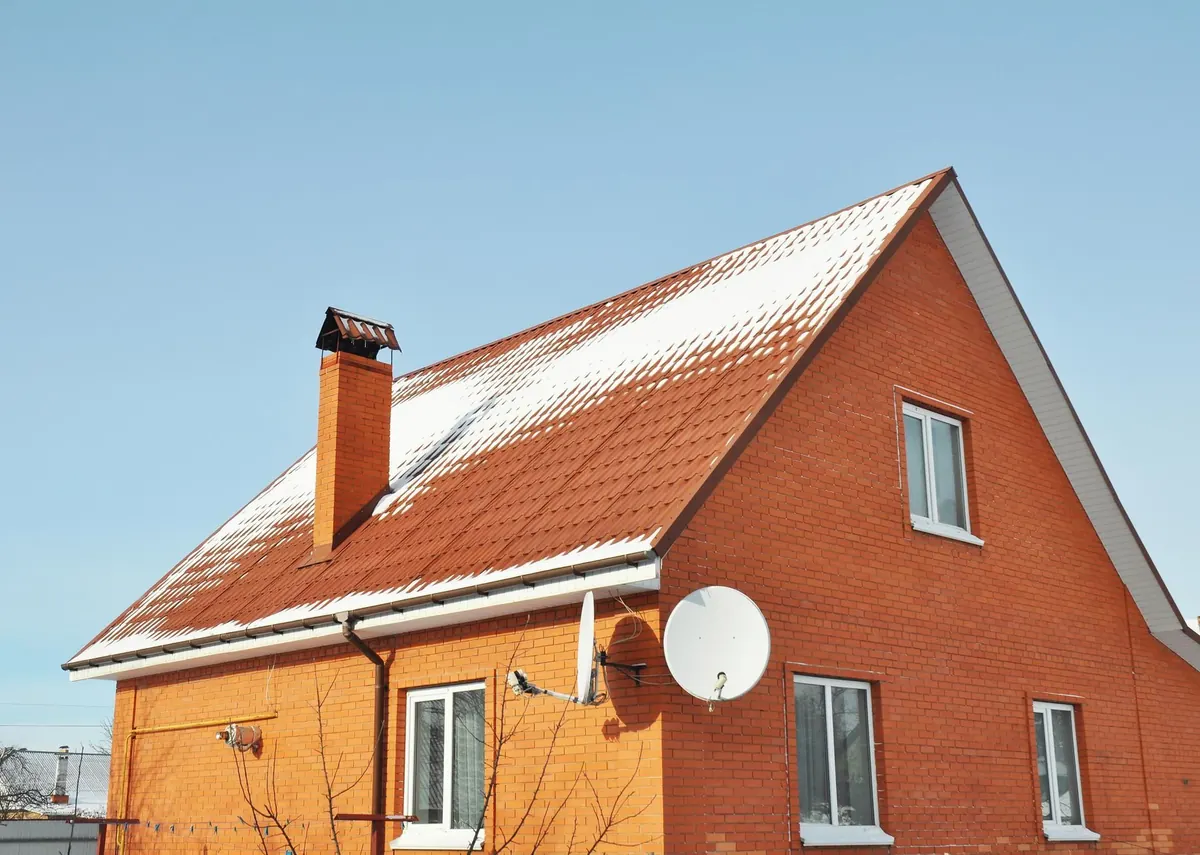
A chimney is a hole in the roof with a brick tower standing in it, and the joint where the tower meets the roof is the hardest joint on the whole house to keep dry. Flashing seals it, mortar holds the brick, and the cap keeps the rain out of the flue, and when any one of those three gives way, the water comes in at the chimney and shows up as a stain on the ceiling nearby.
Rochester winters are hard on chimneys. Frost works into hairline cracks in the mortar and opens them a little wider every year, and the thaw cycles that run all winter keep the brick wet and cold in turn. A chimney that looked sound in fall can show a cracked crown and loose brick by spring, and the leak that follows is often blamed on the roof when the chimney is the real source.
Chimney work is roofing work and masonry work at once, and the two have to be done together. A new flashing on a crumbling chimney will not hold, and a rebuilt chimney with old flashing will still leak. Roof repair in Rochester on a chimney leak starts with the flashing and the mortar together, and a roof inspection in Rochester on an older home always includes a close look at the chimney.
The chimney, part by part
A chimney is five parts working together. Tap each one to read what it guards and how it gives way.
A sloped concrete cap on top of the chimney that sheds rain away from the brick. A cracked crown lets water straight into the brickwork, and it is the most common chimney leak in Rochester.
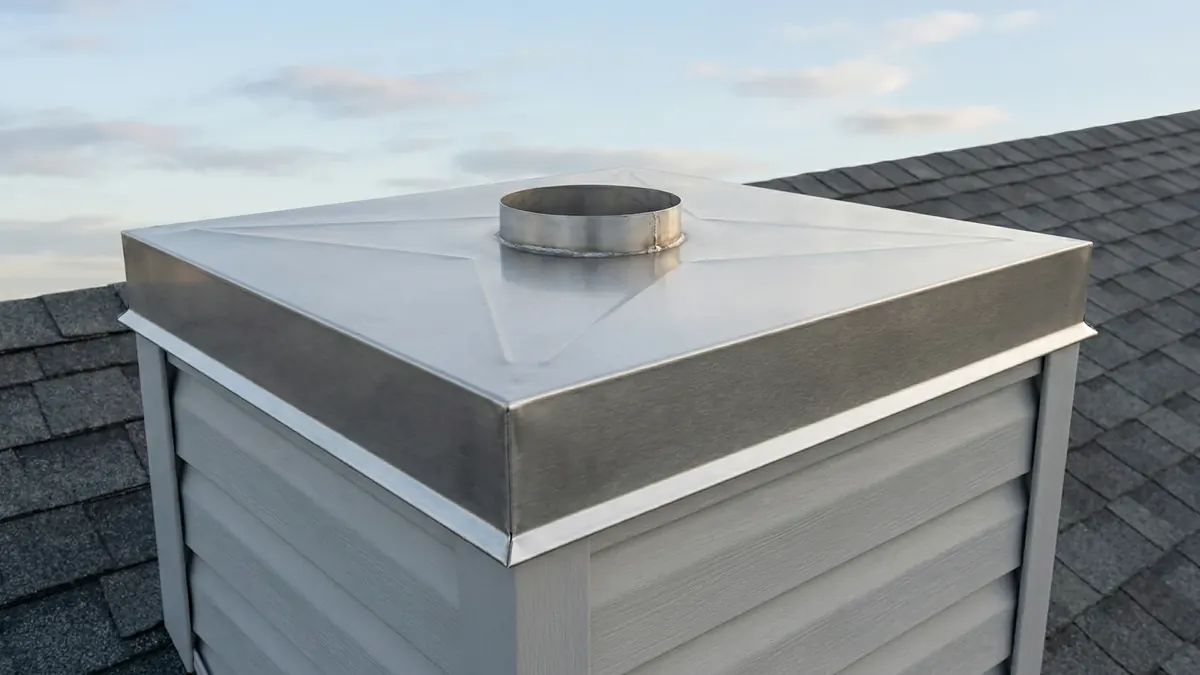
A metal cover over the flue opening that keeps rain, snow, and animals out while letting smoke escape. A missing or rusted cap lets water run down the flue and into the house.
A clay or metal tube inside the chimney that carries smoke and heat up and out. A cracked liner lets heat and gases reach the brick, and a liner that is too small or too large draws poorly.
Metal step flashing and counterflashing that seal the joint where the chimney meets the roof. Most chimney leaks start here, not in the brick, and reflashing is the most common chimney repair.
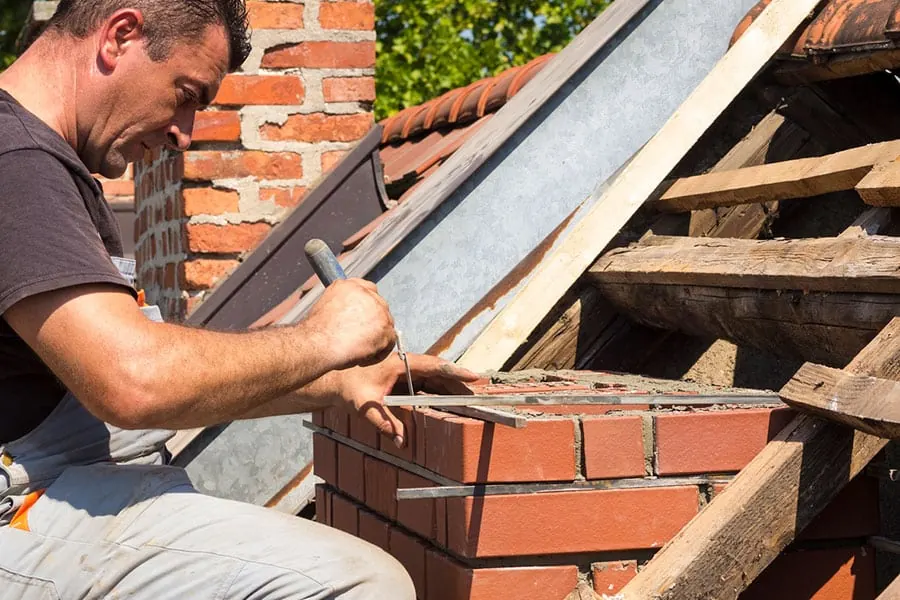
The brick tower itself, held by mortar joints that frost opens a little wider every winter. Loose brick and missing mortar let water into the tower, and the tower is repointed joint by joint.
The work we do
Four jobs cover nearly every chimney in Rochester.
01
Repointing loose mortar, replacing spalled brick, and rebuilding a cracked crown. The tower is made sound again, joint by joint, before the flashing goes back on.
02
Fitting a new clay or stainless liner inside the flue, so smoke and heat travel safely up and out. A cracked liner is a safety matter, not just a leak, and it is fixed before the chimney is used again.
03
Fitting a metal cap over the flue opening, keeping rain, snow, and animals out while the smoke escapes. A cap is a small job that stops a surprising amount of water.
04
Renewing the step flashing and counterflashing where the chimney meets the roof. Reflashing is the most common chimney repair, and it is the fix for most chimney leaks.
Catch it early
A brown ring on the ceiling beside the chimney usually means the flashing has given way. The stain sits near the chimney because the water runs down the tower and into the house there.
Mortar joints that crumble when you touch them, or gaps where mortar has fallen out, let water into the tower. Frost opens the gaps wider every winter.
Brick faces that flake and peel, showing a rough, crumbly surface, have soaked up water and been split by frost. Spalled brick is replaced, not patched over.
A chimney that leans away from the house has a failed base or a rotted support, and it is a safety matter. A leaning chimney is looked at right away, not at the next scheduled visit.
Rust streaks down the chimney or the roof below it mean the flashing is corroding, and corroded flashing will not seal the joint for long. The flashing is renewed before it fails outright.
Water pooling in the firebox after rain means the cap is missing or the crown is cracked, and the rain is running straight down the flue. The cap and the crown are checked first.
Chimney leaks
A chimney leak is often blamed on the roof, and the roof gets repaired while the chimney keeps leaking. The tell is the location: a stain that sits beside the chimney, or a damp patch that grows after rain but not after snow, usually points to the flashing or the crown, not to the shingles. The attic tells the rest: water stains on the rafters beside the chimney tower mark the path the water takes.
The repair runs in order: the crown and the cap first, since a cracked crown lets water into the whole tower, then the mortar and the brick, then the flashing last, so the new flashing seals against a sound tower. Doing it the other way round, flashing first on a crumbling chimney, is work that has to be done twice.
Chimney work often runs alongside other roof work, since the crew is already on the roof with the same ladders and staging. Slate, tile, and specialty roofing in Rochester often pairs with chimney work on historic homes, where the chimney flashing is where the old roof leaks first, and roof maintenance in Rochester includes a chimney look at every visit.
Side by side
Each chimney job fits a different problem. Here is how they stack up.
| Job | Problem it fixes | How long it takes |
|---|---|---|
| Reflashing | Leaks at the roof joint | A day, with the roof crew on site |
| Repointing | Crumbling mortar and loose brick | A day or two, joint by joint |
| Crown rebuild | Cracked crown letting water in | A day, plus curing time |
| Cap fitting | Rain and animals in the flue | An hour, a small job |
| Flue liner | Cracked liner, poor draw | A day, with the flue cleaned first |
People also ask
Short answers to the chimney questions that come up most.
The flashing is the usual source: the metal joint where the chimney meets the roof gives way after years of frost and thaw, and water runs in beside the tower. A cracked crown and crumbling mortar are the next most common sources. The stain beside the chimney is the tell, and the attic shows the path the water takes.
Yes. A cap keeps rain, snow, and animals out of the flue while letting smoke escape, and a missing cap lets water run straight down into the firebox. It is a small job that stops a surprising amount of water, and it also keeps birds and squirrels from nesting in the flue.
Reflashing is renewing the metal flashing where the chimney meets the roof: step flashing up the sides and counterflashing set into the mortar joints. It is the most common chimney repair, and it is the fix for most chimney leaks, since the joint is the hardest one on the roof to keep dry.
A stain beside the chimney, or brick that is starting to flake? Call and get the chimney looked at.
Call (585) 868-0065Frequently asked questions
Look at where the stain sits. A stain beside the chimney, or damp that grows after rain but not after snow, usually points to the chimney flashing or crown. A stain in the middle of a room, away from any chimney, usually points to the roof. The attic shows the path: water stains on the rafters beside the tower mark a chimney leak.
A flue liner is the clay or metal tube inside the chimney that carries smoke and heat up and out. Every working chimney needs a sound liner, since a cracked liner lets heat and gases reach the brick and the house frame. A liner is checked whenever a chimney is repaired, and a cracked one is replaced before the chimney is used again.
Yes, with care. Repointing and crown work need mild days, since mortar and concrete do not set well in a hard frost, so the crew works around the cold snaps. Flashing and cap work can run in most winter weather, and the chimney is checked again in spring when the mortar work can be finished.
Once a year, in fall, before the heating season starts. The check looks at the crown, the cap, the mortar, the brick, and the flashing, and it catches the small cracks before a winter of frost opens them wider. A chimney that is checked every fall rarely surprises its owner with a leak.
Water and frost are the cause. Brick soaks up rain, and when the water inside it turns to ice in a hard frost, it splits the brick face, which flakes away. The damage is called spalling, and it gets worse every winter the brick stays wet. A sound crown and cap keep the brick dry, and spalled brick is replaced.
It depends on the chimney and the roof. An unused chimney that is sound can stay, capped and sealed, and it asks little to keep. A crumbling chimney that is no longer used is often better removed, since every winter it leaks a little more and the repair never ends. A roofer can look at the tower and say which call fits.
Keep going
A chimney never stands alone on a roof. These pages cover the work that runs alongside it.
Roof repair in Rochester on a chimney leak starts with the flashing and the mortar together.
Learn more →Slate, tile, and specialty roofing in Rochester often pairs with chimney work on historic homes.
Learn more →A roof inspection in Rochester on an older home always includes a close look at the chimney.
Learn more →A chimney that leaks every time it rains, no matter how often it is sealed? Call and tell us where the water shows up inside the house.
Call (585) 868-0065The crown
The crown is the concrete cap on top of the chimney, and it is the first thing rain, snow, and frost hit.
A good crown is poured as a single slab with a slope that sheds water outward and a drip edge that throws the water clear of the brick below. The slab overhangs the brick by a small margin on every side, and that overhang is what keeps rain from running straight down the face of the chimney. A crown poured flat, or one that stops flush with the brick, holds water on top and lets it run down the brickwork with every storm.
Frost is what cracks a crown. Water seeps into hairline cracks during a thaw, freezes overnight, and pushes the crack wider, and the cycle repeats all winter until the slab splits or a corner breaks away. A cracked crown lets water into the brick core, and the water that gets in there works down through the chimney and shows up as a stain on the ceiling near the stack, or as damp in the fireplace. Rochester winters run that cycle for months, which is why crowns here crack sooner than crowns in milder places.
A crown that has only just started to crack can be sealed and coated, but a crown that has split or lost a corner needs to be taken off and poured again. The new pour gets the slope and the overhang the old one lacked, and the brick below it gets a look at the same time, since a failed crown usually means the top courses of brick have been wet for a while. Roof repair in Rochester on a chimney leak often starts at the crown, because the crown is where the water got in.
A crown poured with a slope sheds rain outward, while a flat crown holds water on top until it finds a crack.
A small overhang on every side throws water clear of the brick, and a flush edge lets it run down the face.
A groove cut under the overhang stops water from curling back under the slab and onto the brick below.
The flashing layers
Chimney flashing works in two layers, and each layer does a job the other cannot do alone.
Step flashing goes on first, in small L-shaped pieces that run up the side of the chimney one shingle course at a time. Each piece overlaps the one below it, and each piece tucks under one course of shingles and over the course beneath, so water running down the slope steps from piece to piece and off the roof. The pieces are set as the shingles go on, which is why flashing work and shingle work happen together.
Counterflashing goes on second, and it is the metal cap that covers the top edge of the step flashing. It is cut into the mortar joint of the brick, bent down over the step flashing, and sealed into the joint, so water running down the brick face drips onto the counterflashing and out onto the roof instead of behind the step flashing. A chimney with step flashing but no counterflashing leaks at the top edge, and a chimney with counterflashing but tired step flashing leaks at the sides.
| Layer | Where it sits | What it stops |
|---|---|---|
| Step flashing | Up the chimney sides, under the shingles | Water running down the roof slope |
| Counterflashing | Cut into the mortar, over the step flashing | Water running down the brick face |
| Apron flashing | Across the low side of the chimney | Water pooling where the slope meets the stack |
| Cricket flashing | Behind the chimney on wide stacks | Water and snow piling up behind the stack |
Unused chimneys
Many Rochester homes have a chimney that no longer serves a fire, and an unused chimney still needs care, because it still stands in the weather.
An unused chimney still takes rain on its crown, frost in its mortar, and wind on its flashing, and it leaks just as readily as a chimney in daily use. The difference is that no one notices the leak as soon, since no one opens the flue or tends a fire, so the water works quietly for longer before a stain gives it away. A capped flue keeps rain and animals out of the unused stack, and the cap needs the same checks as a working chimney: a sound crown, tight flashing, and mortar without open joints.
Some homeowners ask whether the chimney can come down altogether, and the answer depends on the house. A chimney that runs through the middle of the home carries the roof framing around it, and taking it out means rebuilding the roof deck and the framing where the stack passed through. A chimney on an outside wall comes down more simply, but the roof still needs new decking, new covering, and flashing where the hole was. The work is a roofing job as much as a masonry job, and roof replacement in Rochester is often the moment when a removal makes sense, since the roof is open anyway.
The flue liner matters even on an unused chimney. A cracked liner lets water and damp into the brick core, and the damp shows up as spalled brick on the outside face or as a musty smell in the rooms the chimney passes through. Sealing the top of an unused flue, and checking the liner when the cap comes off, keeps a quiet chimney from becoming a damp one.
A leak beside the chimney, a cracked crown, or brick that is starting to flake. Call or email and tell us about it.
Roofing Rochester, 75 S Clinton Ave Ste 510, Rochester, NY, (585) 868-0065