Deck first
The base goes on
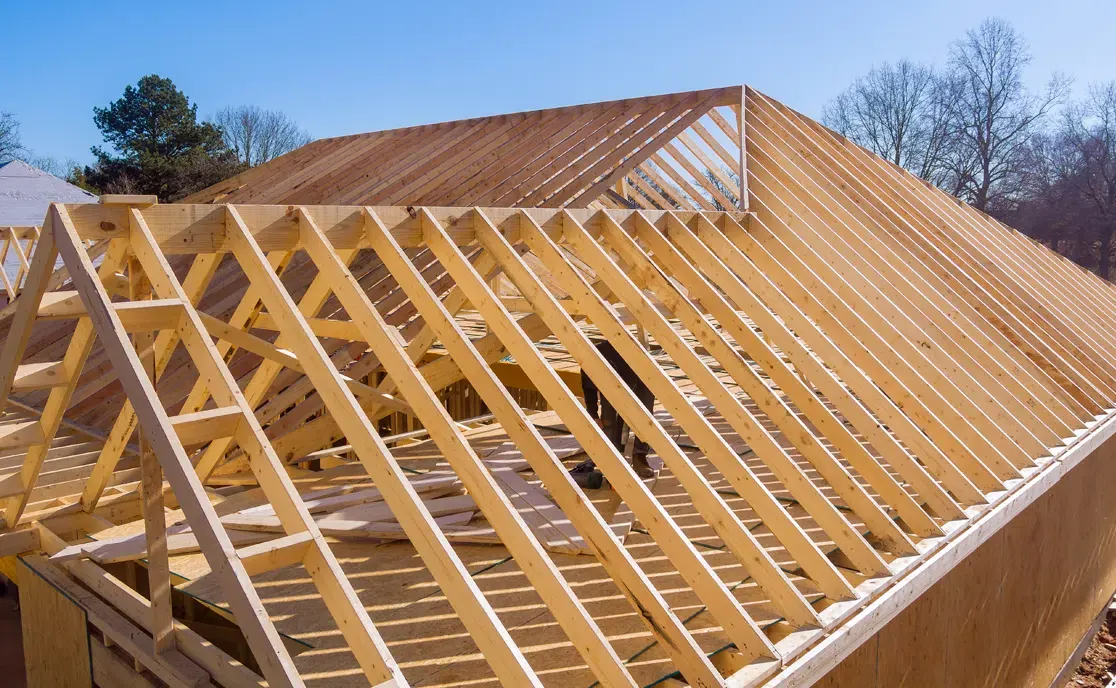
The builder sets the decking, and we check it: firm, flat, and dry, with no soft spots and no gaps. A good roof starts with a good deck.
Roofs for New Builds
A new home gets one chance to get its roof right, and the roof is set before the paint dries and the floors go in. We roof new builds across Rochester, from the decking up, with the ventilation and flashing planned in from day one.
A new roof, done once
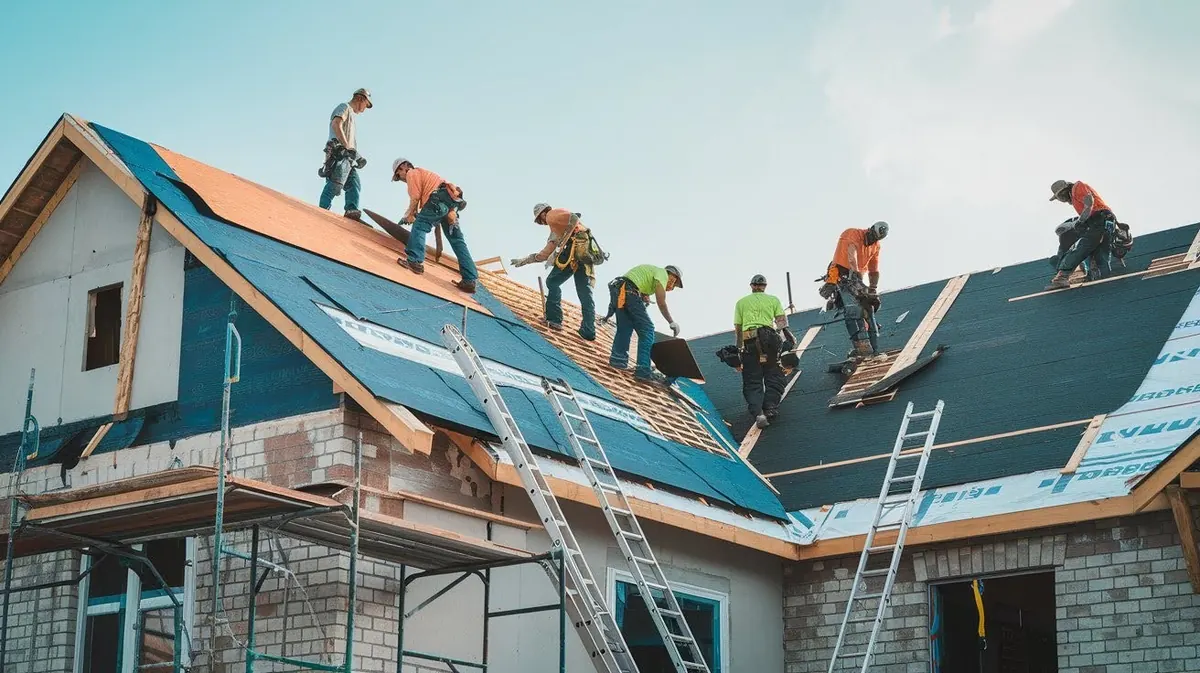
Roofing a new build is different from replacing a roof, because nothing is in the way and everything is still open. The frame is bare, the decking is new, and the roofer works alongside the builder, the plumber, and the electrician, each trade fitting around the next. The roof goes on in sequence, and the sequence matters: decking, underlayment, flashing, then shingles, with ventilation planned before any of it.
The timing is tight. A new build needs its roof dried in before the inside work can run, so the roofing crew works to the builder's schedule, and a delay at the roof holds up every trade after it. We keep the build moving by showing up when the deck is ready and finishing the roof in the window the builder sets. The City of Rochester website posts permit and inspection information for new construction, and the builder usually holds the permit for the home.
The choices made at this stage last for decades. The shingle, the underlayment, the flashing, and the ventilation are all set before the homeowner moves in, and changing any of them later means opening the roof up again. Asphalt shingle roofing in Rochester is the common choice for new builds, and metal roofing in Rochester is the choice when the home is meant to shed snow fast for a long time.
From deck to ridge
A new roof runs in order, and each step sets up the next.
Deck first
The builder sets the decking, and we check it: firm, flat, and dry, with no soft spots and no gaps. A good roof starts with a good deck.
Then the shield
Underlayment rolls over the decking, and ice and water shield goes along the eaves, valleys, and around every opening. This is the layer that matters most in a Rochester winter.
Then the joints
Flashing goes in at the chimney, the walls, and the skylights, and the vents go in at the ridge and the soffits. Joints are sealed before the shingles cover them.
Last the skin
Shingles go on course by course, from the eave to the ridge, with ridge caps to finish the peak. The roof is dried in, and the inside work can run.
Choosing the roof
Three choices shape a new roof more than any others.
The common choice for new builds: thick, layered, and proven in Rochester winters. A wide range of colors, an easy repair later, and a look that suits most homes.
Standing-seam metal sheds snow fast and stands up to wind. The choice for homes with steep pitches and owners who want a roof that asks little of them for a long time.
The slate or shake look in a light, tough piece. The choice for new builds that want a rich roof without the weight of stone or the care of wood.
The system
A new roof is a system of parts, and each one has a job. Here they are.
| Part | What it does | When it goes in |
|---|---|---|
| Decking | Carries the whole roof | First, with the frame |
| Underlayment | Second skin under the shingles | Right after the decking |
| Ice and water shield | Seals eaves, valleys, and openings | With the underlayment |
| Flashing | Seals joints at walls and chimneys | Before the shingles cover the joints |
| Ventilation | Moves air through the attic | Ridge and soffit vents, with the roof |
| Shingles and ridge caps | The weather skin | Last, course by course to the ridge |
Ventilation from day one
Ventilation is the part of a new roof that is hardest to fix later, so it is planned before the shingles go on. Ridge vents at the peak and soffit vents at the eaves move air through the attic, and that moving air keeps the attic dry in summer and cold in winter, which is the real fix for ice dams.
A new home with a sealed, unvented attic traps heat under the decking, and the shingles bake from below while the attic grows damp. The fix later means opening the roof up again, so the vents go in with the roof, not after it. Attic ventilation and insulation in Rochester covers the same ground for existing homes, and the rules are the same: air in at the eaves, air out at the ridge, and insulation that stays dry.
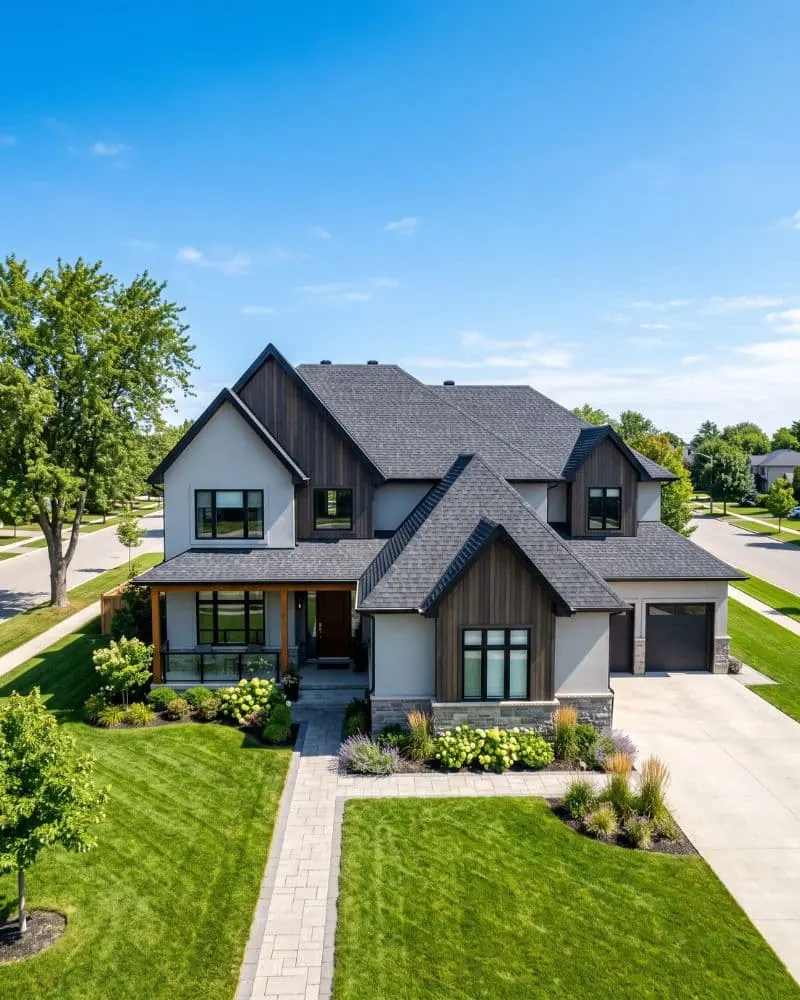
The builder, the roofer, and the homeowner all sign off on the roof before the inside work runs, and that handoff is the moment to check the work. A roof inspection in Rochester at handoff looks at the courses, the flashing, and the vents with fresh eyes, and it catches the small misses while the crew is still on site.
The handoff
People also ask
Short answers to the new-build questions that come up most.
The roof goes on once the frame and decking are set and the house is ready to be dried in, before the inside work runs. The timing follows the builder's schedule, since a delay at the roof holds up every trade after it, and the crew works in the window the builder sets.
Architectural shingles are the common choice: thick, layered, proven in Rochester winters, and easy to repair later. Metal is the choice for steep pitches and fast snow shedding, and composite is the choice for a slate or shake look without the weight. The home's pitch and style narrow it down fast.
Yes. Ridge vents and soffit vents go in with the roof, not after it, because fixing ventilation later means opening the roof up again. Moving air keeps the attic dry in summer and cold in winter, which is the real fix for ice dams, and it keeps the shingles from baking from below.
Building a new home and planning the roof? Call and talk it through before the deck goes on.
Call (585) 868-0065Frequently asked questions
Most new homes take a few days, depending on the size, the pitch, and the weather. A simple roof goes on fast, and a complex roof with valleys, dormers, and skylights takes longer. The crew works to the builder's schedule, since the inside work cannot run until the roof is dried in.
Yes, and the earlier the better. The material shapes the frame in some cases, since slate needs a stronger frame, and it shapes the plan and the schedule in all cases. Choosing early means the builder and the roofer can plan the deck, the flashing, and the vents around the material, not around a late change.
Ice and water shield is a sticky membrane laid along the eaves, valleys, and around openings, and it seals the roof where water tries to get under the shingles. A Rochester roof needs it at the eaves most of all, since ice dams push meltwater back under the shingles there, and the shield is the layer that stops it.
Roofing work on a new build runs under the building permit for the home itself, and the City of Rochester posts permit and inspection information for new construction. The builder usually holds the permit and schedules the inspections, and the roof is checked as part of that process.
Yes, with care. Shingles seal best in mild weather, and cold days slow the sealing, so winter installs take more time and more attention to the details. The crew works around the cold snaps, and the roof is checked again in spring to make sure every course has sealed. A builder's schedule sometimes leaves no choice, and the work adapts.
Walk the roof with the builder and the roofer, and look at the courses, the flashing, the ridge caps, and the vents. Check that the gutters are hung level and the site is clean of nails and offcuts. An inspection at handoff catches the small misses while the crew is still on site, and that is the best time to fix them.
Keep going
A new roof is chosen once, and these pages cover the choices around it.
Asphalt shingle roofing in Rochester is the common choice for new builds.
Learn more →Metal roofing in Rochester sheds snow fast on steep new-build pitches.
Learn more →Attic ventilation and insulation in Rochester keeps a new attic dry from day one.
Learn more →Building a new home and planning the roof before the walls go up? Call and talk through the roof plan with the builder in mind.
Call (585) 868-0065Trades in sequence
A new build runs on a shared schedule, and the roofer slots in between the framer, the plumber, and the crew that closes up the walls.
The framer sets the roof frame and the decking, and the roofer cannot start until that deck is firm and dry. Once the deck is ready, the roofing crew moves fast, because the plumber and the electrician need the house dried in before they run lines through the walls, and the drywall crew needs a dry shell before they start. A day lost at the roof pushes every trade after it, so the roofing dates get set early and held as firmly as the weather allows.
The builder runs that sequence, and the roofer works to the builder's dates rather than setting their own. That means the material choice has to be settled before the framing starts, the flashing details have to be agreed while the walls are still open, and the vent plan has to be drawn before the insulation goes in. When those choices arrive late, the crew adapts, but the adaptation usually means opening finished work, which nobody on a build wants to do twice.
Homeowners rarely meet the roofer before the roof goes on, and the walk-through at handoff is often the first close look they get. Ask the builder to walk the roof with you and the roofer together, and look at the courses, the ridge, and the flashing while the crew is still on site. A roof inspection in Rochester at that moment gives the walk-through a second set of eyes.
The builder sets them, because the roof sits between the frame and the inside trades, and the whole build moves around it.
Before framing starts, since some materials shape the frame itself, and all of them shape the flashing and vent plan.
Shape and slope
The shape of a new roof decides how fast it sheds snow, how much attic it holds, and how the rooms below it feel.
A steep gable sheds lake snow fast, and the snow slides off before it can load the deck for long. That same steep pitch gives the attic tall walls and usable space, and it suits the Colonials and Cape Cods that fill the suburbs around Rochester. A low-slope roof holds its snow longer, and it needs a covering and a membrane plan built for standing water, which is why low slopes show up more on additions and garages than on the main house.
Hips, valleys, and dormers add rooms and light, and each one adds a joint where water can sit. A valley gathers the meltwater from two slopes at once, and a dormer puts a wall right in the middle of a slope, so both need flashing and membrane work that open slopes never need. The plan for a new home balances those features against the winter, and a roof with fewer joints is a roof with fewer places for a leak to start.
| Shape | How it handles snow | What to plan for |
|---|---|---|
| Steep gable | Sheds snow fast off both slopes | Tall attic, ridge vent along the peak |
| Hip roof | Snow slides off all four sides | Four hips to cap and seal |
| Low slope | Holds snow until it melts | Membrane covering, careful drainage |
| Gable with dormers | Dormer valleys gather meltwater | Flashing at every dormer wall |
Records to keep
A new roof leaves a paper trail, and that trail matters the first time the roof needs work years later.
Photos taken while the roof is open are the most useful record of all, because they show the membrane, the flashing, and the deck that no one can see once the covering is on. Ask the builder or the roofer to share those photos, and keep them with the house records. Years later, when a leak shows up near a chimney or a valley, those photos tell the next roofer exactly what sits under the covering, and the repair starts with knowledge instead of guesswork.
The first year is also the year to watch the roof settle. Shingles seal fully once warm weather arrives, and a spring check after the first winter looks for courses that never sealed, nails that backed out, and flashing that moved with the frame as the new lumber dried. Roof maintenance in Rochester covers that first spring look, and catching a loose course in year one keeps it from becoming a lifted slope in year five.
A new home, a builder's schedule, and a roof that has to be right the first time. Call or email and tell us about the build.
Roofing Rochester, 75 S Clinton Ave Ste 510, Rochester, NY, (585) 868-0065