Route 96 Corridor Subdivision roofs
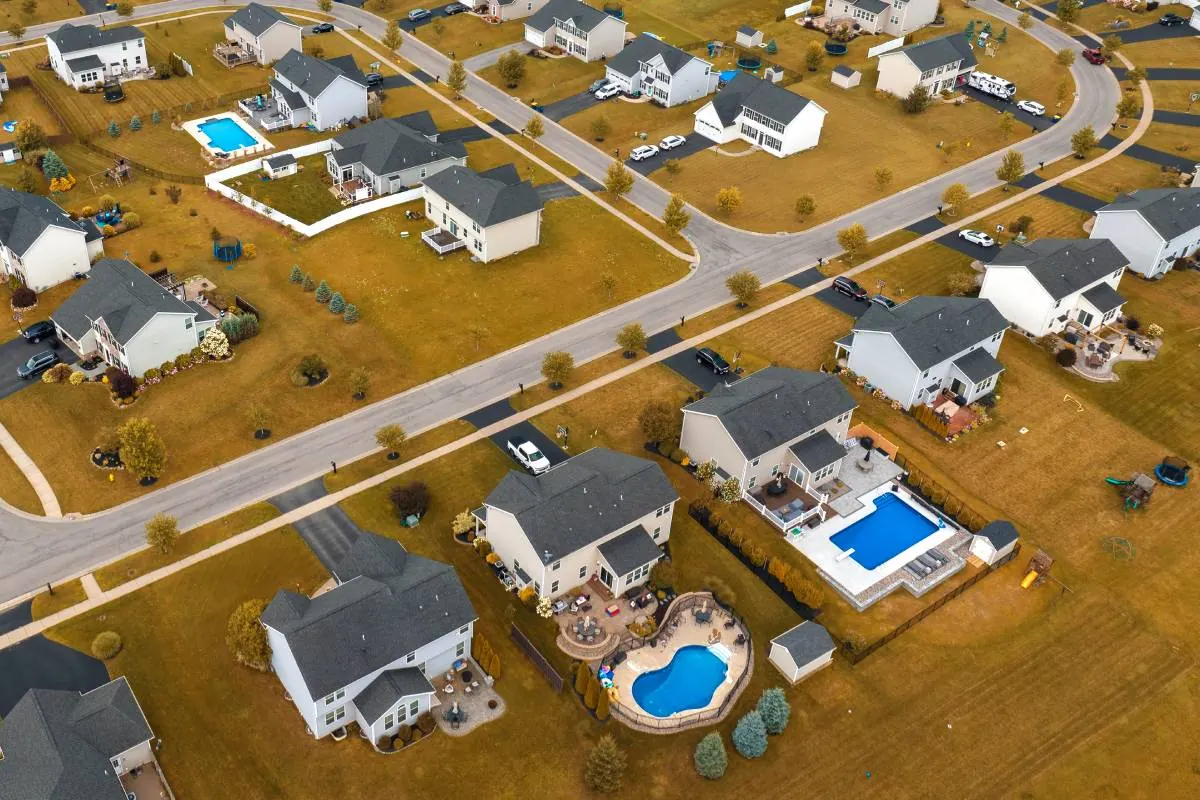
Homes along Route 96 near the racetrack, where young subdivisions spread across open ground.

Racetrack and Thruway Town
Farmington is the town where the Thruway meets the Finger Lakes, a mile south of exit 44, with the racetrack on Route 96 and new subdivisions spreading across the farmland between Victor and Canandaigua. Its roofs are mostly young, wide, and low, built for families who moved out from Rochester, and the lake-effect snow reaches them all the same. A roof here has to handle open-field wind, deep snow, and the fast growth of a town still filling in.
Farmington, NY
Farmington sits in Ontario County, about 25 miles southeast of Rochester, and it has grown fast in recent decades as families moved out along the Thruway. Its best-known landmark is Finger Lakes Gaming and Racetrack on Route 96, a thoroughbred track that opened on May 23, 1962, on a 450-acre property about a mile south of Thruway exit 44. The track has hosted more than 62,000 races since then, and its barns hold more than 1,200 horses. Around it, the town has filled in with subdivisions, schools, and shops, and the farmland that remains still holds older farmhouses along the side roads.
Farmington roofs divide into two kinds, and age draws the line between them. The subdivision homes carry young, wide, low-pitched shingle roofs on open lots, where wind has a clear run and snow sits deep. The older farmhouses carry steeper pitches, taller chimneys, and barns beside them. A young roof is not a safe roof: the first hail season and the first heavy snow test the tabs, the ridge caps, and the flashing just as hard as they test an old one. A roof inspection here looks hardest at the windward slope and the valleys, because that is where a young Farmington roof first shows trouble.
Where people live
Homes along Route 96 near the racetrack, where young subdivisions spread across open ground.
Homes near the Thruway exit, where new builds sit on wide lots with full wind exposure.
The town center crossroads, where older homes and farmhouses mix with newer builds.
Farmhouses on the southern roads toward Canandaigua, with steep pitches and barns beside them.
Homes on the west side toward Victor, where subdivisions meet the older farm roads.
Homes on the east side toward Canandaigua, on rolling ground where the lake-effect snow bands drop.
With little tree cover, wind hits the whole slope at once. It lifts tabs on the windward side, loosens ridge caps, and one lifted tab lets rain slip under the next course. A ridge walk after a storm finds it while the fix stays small.
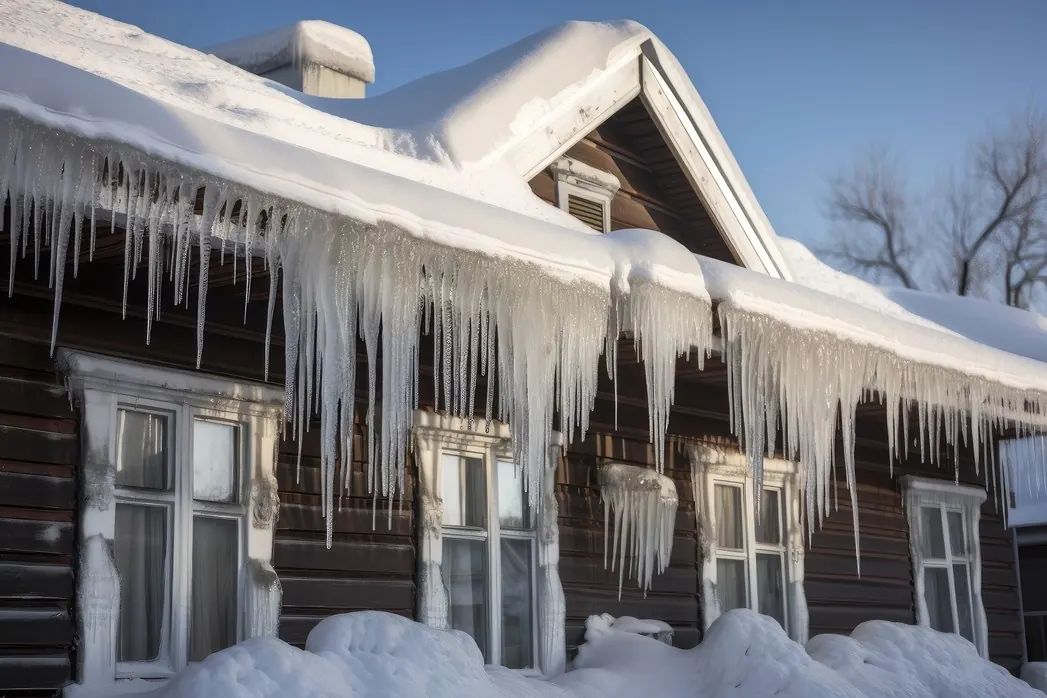
Low-pitched subdivision roofs hold snow instead of shedding it, and lake-effect bands drop deep snow on Farmington. The snow rests, melts, refreezes, and finds weak seams at the eaves. Ice dams form where attic heat melts the snow from below.
A young roof is not hail-proof. Hail bruises the mat beneath the granules, and water seeps through that bruise slowly, sometimes months after the storm. A hail check in the days after a storm finds the bruises before the ceiling stains. The bruises hail leaves under the granules take months to show as leaks, and hail damage to roofs in Rochester explains what a post-storm check looks for on a young subdivision roof.
Young roof or old farmhouse
| Roof detail | Subdivision home | Farmhouse |
|---|---|---|
| Age | Young, often under 20 years | Older, often many decades |
| Pitch | Low to moderate, wide and simple | Steep, often with dormers |
| First trouble spot | Wind-lifted tabs and valleys | Chimney flashing and moss |
| Snow behavior | Sits deep on low slopes | Sheds faster off steep pitches |
| Outbuildings | Usually a small shed only | Barns and sheds share the storms |
Farmington sits in the lake-effect belt, and Ontario County homeowners watch the snow forecasts that the National Weather Service office in Buffalo puts out through the winter.
Roof work
Subdivision homes get the closest look on the windward slope and down in the valleys, where wind and water strike first.
A Farmington repair is usually a small job: a few tabs, a stretch of flashing, a vent boot the cold split. Whole slopes worn through get stripped to the deck and re-shingled in architectural shingles, with fresh shield along the eaves
Coverage
Our Farmington ground runs from the town center out to the subdivisions, and the ZIP below marks where we work most.
One ZIP, 14425, covers Farmington in Ontario County.
A young roof already lifting tabs on an open lot? Call and tell us which subdivision the house sits in.
Call (585) 868-0065Services
Young subdivision roof or old farmhouse roof, we climb up, look close at every slope and joint, and tell you plainly what we found.
Learn more →Hail bruises and wind-lifted tabs found in the days after the storm, before the ceiling stains.
Learn more →Lifted tabs on open lots, cracked vent boots, and flashing that moved with the freeze and thaw.
Learn more →We clear deep snow off the low slopes without harming the roof, and the attic gaps behind the ice dams get a proper look.
Learn more →A subdivision lot or an old farmhouse faces different wind, so message us here with the street and the slope that lifts first.
FAQ
Yes. A young roof is not a safe roof, and the first hail season and the first heavy snow test the tabs, the ridge caps, and the flashing just as hard as they test an old one. A new build can have a valley shingle that never sealed, a vent boot that cracked in its first winter, or a ridge cap that loosened in its first storm.
Wind-lifted tabs on the windward slope, because the subdivisions sit on open ground with little tree cover, so wind hits the whole slope at once. The second most common is valley wear, where water concentrates between two slopes. Both show from the ground through binoculars, and both deserve a closer look on the roof before the next storm season.
Look for granules in the gutters, dents on the metal vents and flashing, and dark spots on the shingles where the granules have gone. A hailstone bruises the mat beneath the granules, and water seeps through that bruise slowly, sometimes months after the storm. The surest check is a walk on the roof in the days after the storm, feeling for soft spots on the shingles.
Low slopes hold snow instead of shedding it, and attic heat leaking through uneven insulation melts the snow from below. The meltwater runs to the cold eave and refreezes, and the dam grows with each melt and freeze. The lasting fix is even insulation and clear airflow from soffit to ridge, so the roof deck stays cold and the snow stays put until it melts from the top.
Usually, yes, when the wear sits in one spot instead of running across whole slopes. Repair fits a few lifted tabs, a length of chimney flashing, or a vent boot cracked by winter. Replacement fits when granule loss leaves bare patches across the slope, when tabs curl across the whole roof, or when the decking feels soft in more than one place.
Watch the eaves for thick icicles and water stains on the ceiling near the outside walls, and listen for creaks or groans from the attic, which can mean the load is heavy. Low slopes hold deep snow, so a heavy fall can sit for days. A snow visit clears the load safely from the ground or the roof edge, and checks the attic ventilation that lets the heat through.
Nearby towns
Geneva lies southeast on the lake, past Canandaigua, so Farmington roof work sometimes reaches toward the Finger Lakes towns.
Thruway, track, and new streets
Farmington roofs sit where Thruway wind, racetrack barns, and new subdivision streets meet, and the open ground between them gives the weather a clear run at every slope.
The Thruway runs along the north edge of town past exit 44, and the subdivisions south of it sit on ground with almost no tree cover. Wind that crosses the highway corridor hits those subdivision slopes at full strength, and the windward side of a young roof lifts its tabs a little with every hard blow. A subdivision roof that faces west takes the worst of it, because the prevailing wind runs across the open fields from that side, and the corner tabs on the west slope go first.
Finger Lakes Gaming and Racetrack on Route 96 anchors the middle of town, and its barns hold horses through the year. The barn roofs around the track are wide and low, and their metal panels and ridge flashing face the same open wind as the subdivision roofs nearby. A barn roof that leaks drips onto stalls and stored feed, and the damage spreads quietly because the barn roof is rarely climbed. The houses nearest the track share the same exposure, with little shelter between the racetrack grounds and their own slopes.
Farmington Center, the crossroads at the town center, holds older homes and farmhouses among the newer builds. Those older houses carry steeper pitches and taller chimneys, and their flashing has moved with the seasons for decades. A Center farmhouse roof shows its age at the chimney first, where the mortar has cracked and the flashing has lifted, while a subdivision roof a mile away shows its age at the windward tabs. The two kinds of roof stand close together in Farmington, and a walk that reads each one by its age, instead of treating them alike, finds the trouble sooner.
The south side of town toward Canandaigua rolls more than the flat ground near the Thruway, and the houses there sit on slopes where water runs fast. Their valleys carry more water during a hard rain than the valleys on flat ground, and the valley shingles wear thin sooner. A south Farmington valley that shows a dark worn line from the street deserves a walk from above, because the granules there go first and the mat beneath them follows.
Hail, wind, and snow
A young Farmington roof meets hail, wind, and snow in its first years, and each kind of weather leaves a mark that reads differently from the ground.
Hail strikes a young shingle and bruises the mat beneath the granules, and the bruise lets water through slowly over the months that follow. Dents on metal vents and flashing after a hailstorm point to the slopes that took the hardest hits.
Wind that crosses the open fields lifts the west-facing tabs first, and one lifted tab lets the wind under the next course. A ridge walk after a storm finds the lifted tabs while the seal can still be pressed back down.
Low subdivision slopes hold snow instead of shedding it, and the snow melts from below where attic warmth reaches the deck. The meltwater runs to the cold eave and freezes into a dam that pushes water under the shingles.
Hail damage hides well on a young roof, because the shingles look sound from the street while the bruises sit beneath the surface. A storm and hail check in Farmington walks the slopes in the days after the storm and feels for soft spots, and a roof inspection in Farmington after the first heavy snow reads the windward slope, the valleys, and the ridge together.
Farm roads, track, and subdivisions
Farmington ground runs from farm roads in the south to the track on Route 96 to subdivisions near the Thruway, and the roof work changes with the ground.
| Roof watch | Thruway subdivisions | Route 96 near the track | South farm roads |
|---|---|---|---|
| First mark of trouble | Wind-lifted tabs on west slopes | Ridge caps loosened by open wind | Valley wear where water runs fast |
| Snow behavior | Deep snow sits on low wide slopes | Snow drifts against low barn walls | Snow sheds faster off steeper pitches |
| Gutter trouble | Granules wash into gutters after hail | Leaves from track trees fill gutters | Farm lane leaves mat in valleys |
| Outbuildings | Small sheds only | Wide barn roofs with metal panels | Barns and sheds share the storms |
New subdivisions keep rising on the open ground between Victor and Canandaigua, and every new street adds roofs that face the same open wind with no mature trees to break it. A new roof on a new street still wants a walk after its first storm season, because a valley shingle that never sealed and a vent boot that split in its first cold season both hide until the rain finds them. Snow and ice dam help in Farmington clears the deep snow off low slopes without tearing shingles, and roof repair in Farmington handles the lifted tabs and cracked boots that the first seasons leave behind.
A new subdivision roof and a farmhouse roof in Farmington face the same Finger Lakes winter from very different starting points. Reach out by phone or email, name the subdivision or the farm road, and tell us what the last storm did to the roof.