Call (585) 868-0065
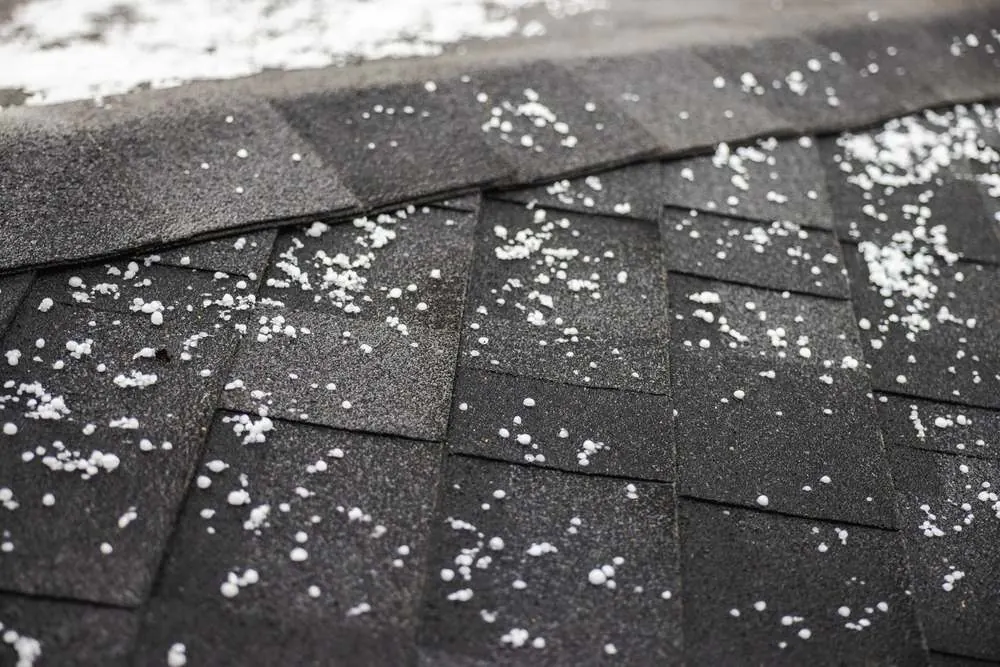
Hailstones scattered across dark asphalt shingles

After the Hailstorm

Hail Damage to Roofs in Rochester

Rochester is not known for hail the way the Plains are, but the summer thunderstorms that roll up from the Great Lakes carry hail often enough, and one good storm can mark every shingle on a roof. The damage is easy to miss from the ground, which is why it goes unnoticed until the leaks start.

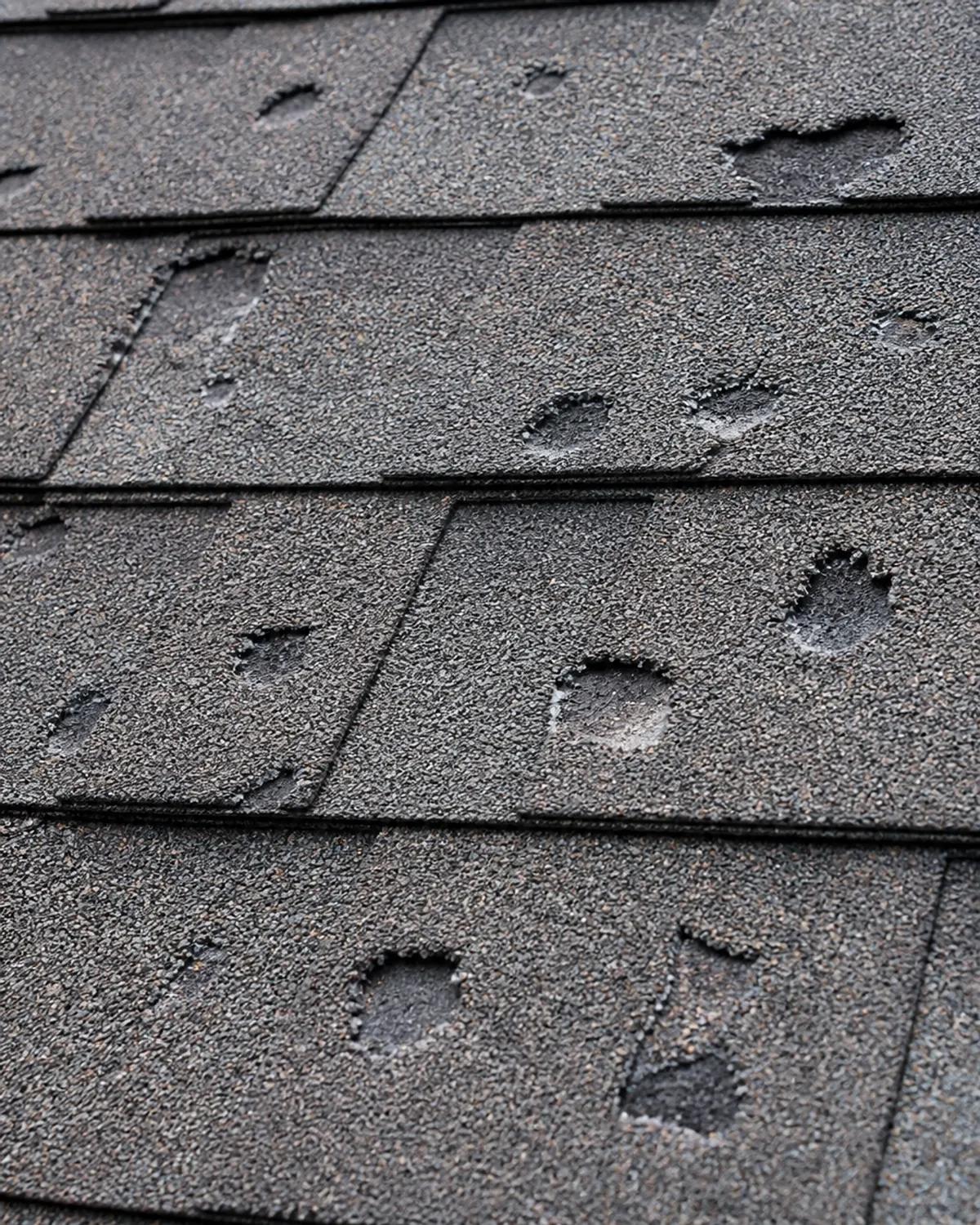
Hail dents and bruised spots across asphalt shingles
Hail bruises look like soft, dark spots where the granules have been knocked away and the mat shows through.

What hail does

Hail bruises a roof, it rarely breaks it open

Hail damage on asphalt shingles is usually bruising, not holes. A hailstone hits the shingle, knocks the granules off in a round spot, and dents the mat underneath. The shingle still sheds water for a while, but the bare spot weathers fast in the sun, and the dent cracks over time. That is why hail damage shows up as leaks months after the storm, not days, and why a roof can look fine from the street while the shingles are already failing.

Metal takes hail differently: it dents, and the dents are visible on vents, gutters, and flashing long before the roof itself is hurt. A dented vent is the clue that the shingles took hits too, and it is the first place a roofer looks after a storm. The National Weather Service Buffalo office issues severe thunderstorm warnings for Monroe County when hail is expected, and the storm reports after a hail event show where the biggest stones fell.

Size is what decides the damage

Pea-size hail barely marks a roof. Marble-size hail starts to bruise shingles. Hail one inch across, which the National Weather Service calls severe, cracks shingles and dents metal. Golf-ball-size hail, which Rochester sees rarely, can break shingles outright and punch through skylights. The stones on the ground after a storm are the best clue to what the roof took.
Size and damage

Hail size and what it does to a roof

The bigger the stone, the deeper the damage. Here is how the sizes line up with what a roofer finds.

Hail size and roof damage in Rochester
Hail sizeWhat it looks likeDamage to shinglesDamage to metal and vents
Pea size, under half an inchSmall white pelletsLittle to noneNone
Marble size, about half an inchRound, hard pelletsLight bruising, granule lossSmall dents on soft vents
One inch, quarter sizeSevere by NWS definitionBruising and cracking, mat exposedDented vents, gutters, flashing
Golf ball size, about 1.75 inchesLarge, heavy stonesCracked and broken shinglesDeep dents, broken skylights

Scroll sideways to see the full table.

Hail just hit your neighborhood? Call and get the roof checked before the leaks start.

Call (585) 868-0065

Spot the damage

Signs of hail damage after a storm

Tap a sign to see what it usually means and where to look for it.

Soft dark spots on shingles

Press a bruised spot gently and it feels soft, like a bruise on fruit. The granules are gone and the mat is dented underneath. A roof full of bruises is a roof whose waterproofing is wearing out fast, even if nothing leaks yet.

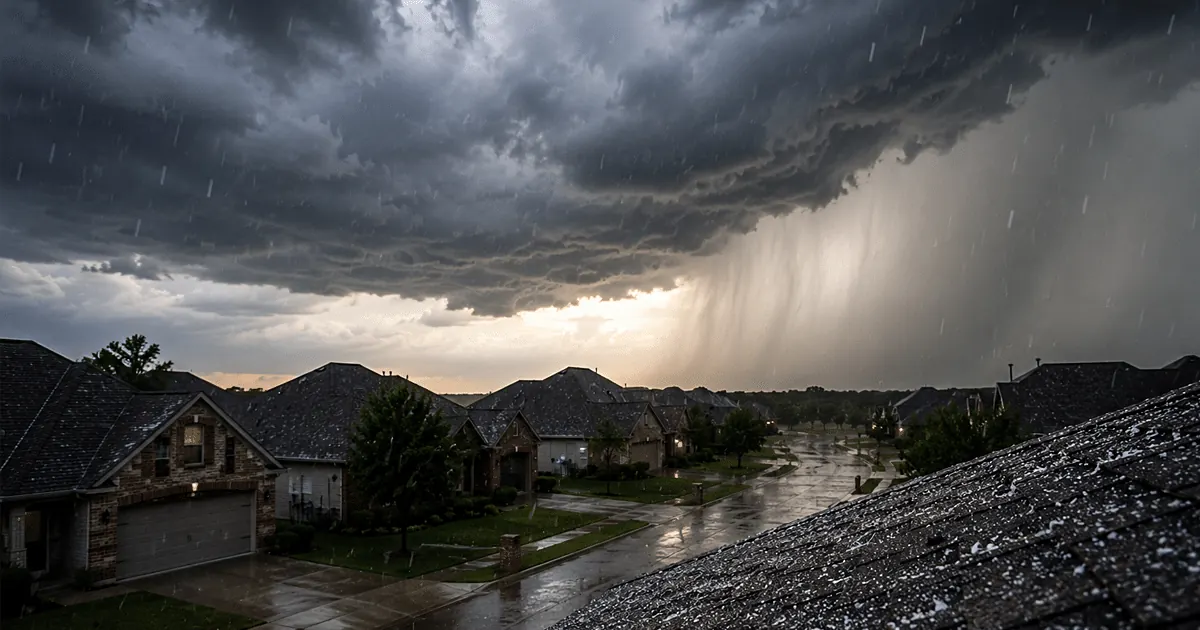
Dark storm clouds and rain falling over a neighborhood
The thunderstorms that carry hail into Rochester usually arrive on hot, humid summer afternoons.

After the storm

What to do in the days after hail

Walk the yard first and pick up the largest hailstones you can find, or photograph them next to a coin for scale. That record matters, since the stone size is what ties the damage to the storm. Then look at the soft metal from the ground: the gutters, the downspouts, the vents, and the mailbox. Dents there mean the roof took hits too.

Then call a roofer for a look. Hail damage is hard to see from the ground, and it is the roofer on the roof who finds the bruises, counts them, and maps which slopes took the worst of it. Our storm and hail damage repair in Rochester covers the inspection and the repair, and insurance claim help in Rochester covers the paperwork that follows a hailstorm. If the roof took a real hit, the repair decision is usually between replacing the damaged slopes and replacing the whole roof, and the inspection is what decides it. If the roof is near the end of its life, read when to replace your roof in Rochester. For the wind half of the same storms, read wind damage to roofs in Rochester.

People also ask

Quick answers on hail damage

Short answers on hail damage, the sizes that hurt, and what to do next.

How do I know if hail damaged my roof?

Look at the soft metal first: dents on the gutters, downspouts, vents, and flashing mean the storm carried stones big enough to hurt the roof. On the shingles, hail leaves soft, dark bruises where the granules are gone. A roofer on the roof can count the bruises and map which slopes took the worst of it.

Can small hail damage a roof in Rochester?

Pea-size hail barely marks a roof, but marble-size hail starts to bruise shingles, and one-inch hail cracks them. The damage is cumulative: each bruise wears faster in the sun, so a roof hit by several small storms can fail sooner than a roof hit by one big one.

Does hail damage show up right away?

Not usually. A bruised shingle still sheds water for a while, and the leak comes months later, when the bare spot has weathered and cracked. That delay is why a roof should be checked in the days after a hailstorm, not when the ceiling stains show up.

Hail damage hard to see? Call and get the bruises counted.

Call (585) 868-0065

Frequently asked questions

What to ask about hail damage

Marble-size hail, about half an inch, starts to bruise asphalt shingles. One-inch hail, which the National Weather Service calls severe, cracks shingles and dents metal vents and gutters. Golf-ball-size hail can break shingles outright and punch through skylights. Stones bigger than that crack shingles and dent metal, and the damage spreads from there.

Within days, while the evidence is fresh. The bruises are easiest to read right after the storm, and the hailstones on the ground give the size. Waiting months lets the bruises weather into cracks, and the link to the storm gets harder to show.

It dents them, and the dents show on vents, gutters, and flashing first. Standing seam panels dent less than exposed fastener panels, but a hard hailstorm marks any metal roof. The dents are usually cosmetic, though deep ones can crack the coating and invite rust.

It depends on how many shingles are bruised and where they sit. A few bruised shingles can be replaced one at a time. When the bruising covers whole slopes, the roof is failing as a system, and replacing the damaged slopes or the whole roof is the honest answer.

Usually not right away. A bruised shingle still sheds water until the bare spot weathers and cracks, which takes months. That delay is the trap: the roof looks fine after the storm, and the leak shows up in the next rainy season, long after the storm is forgotten.

The largest hailstones next to a coin for scale, the dents on the gutters and downspouts, and any cracked shingles you can see from the ground. Note the date and the time of the storm. Those photos are the record that ties the damage to the storm.

Less common than in the Plains, but the summer thunderstorms that roll up from the Great Lakes carry hail often enough, and one good storm can mark every shingle on a roof. The risk is highest on hot, humid afternoons, when the storms build fast and move through quickly.

Keep reading

Related articles

Hail just hit your Rochester roof?

Tell us when the storm came through and what you see from the ground, and we will check the shingles, the vents, and the gutters.