1796
The academy opens
Geneva Academy opens as the first school in the settlement, and the first houses rise near the lake with wood shingles and hand-built frames.

Seneca Lake and the Colleges
A roof here has to handle lake wind, deep snow, and the age of a city settled in the 1790s. The lake wind hits the shore slopes first and hardest, and the snow that follows it piles deep on the flat roofs downtown and the steep pitches south of Main Street.
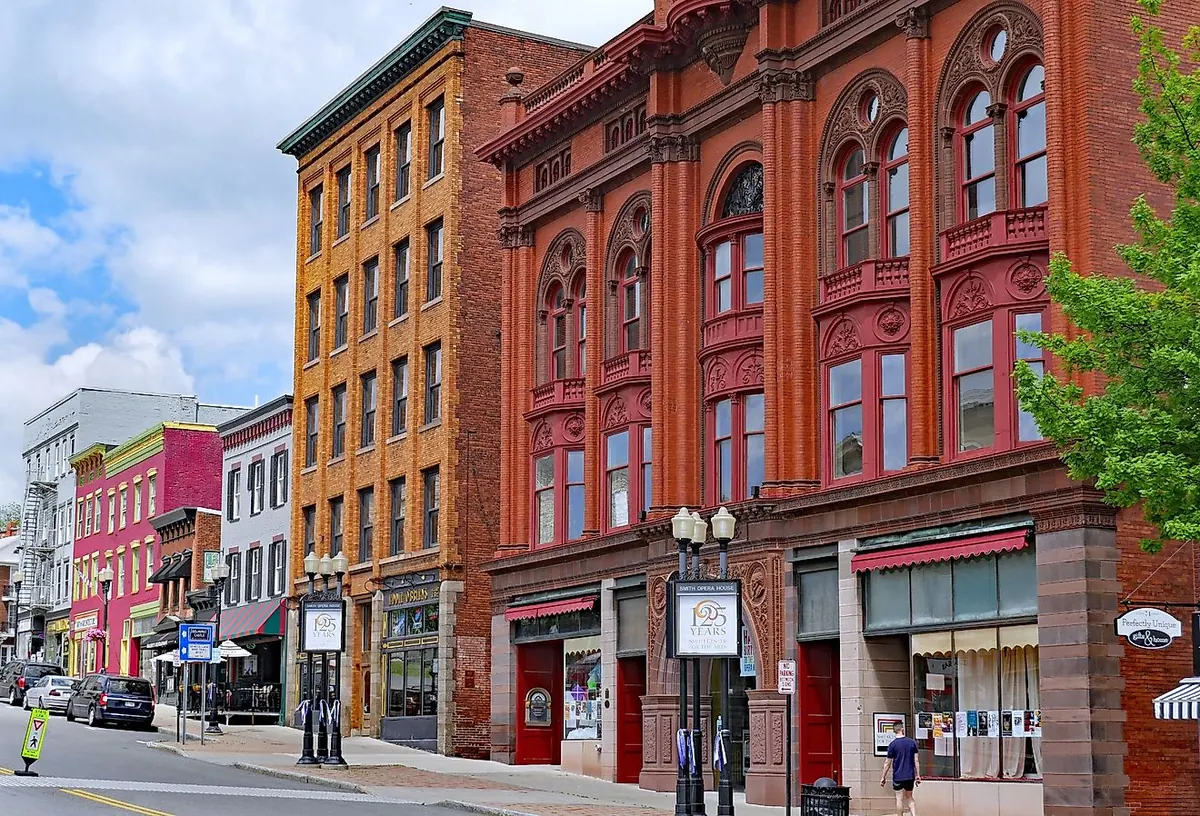
Geneva, NY
Geneva became a village in 1806 and a city in 1898, and by the early 1820s it held 1,700 residents, 250 dwellings, two printing presses, a bank, and a land office. The colleges came early too: Geneva Academy opened in 1796, became Geneva College in 1822, and was renamed Hobart College in 1852 for its founder, Bishop John Henry Hobart. William Smith College followed in 1908, founded by the Geneva nurseryman William Smith, and the two colleges now share one campus of 320 acres on the Seneca Lake shore. The city grew up on nursery stock as well as on the lake trade, and its streets still hold the Victorians, Colonials, and brick houses of a city that has been building for more than two centuries. Newer homes on the hills wear wide shingle slopes on open lots.
A short timeline
1796
Geneva Academy opens as the first school in the settlement, and the first houses rise near the lake with wood shingles and hand-built frames.
1806
Geneva incorporates as a village, and brick houses begin to fill the streets above the lake.
1822
Geneva College opens its doors, and the campus on the lake shore grows into the colleges that still shape the city.
1849
Elizabeth Blackwell graduates from Geneva Medical College, the first woman in America to receive a medical degree, and the city gains a place in history.
Where people live
Homes along the Seneca Lake shore, where a southerly wind crosses the lake's full 38-mile length before it reaches Geneva.
Homes near the Hobart and William Smith campus, where older houses and college buildings mix on the shore.
The brick commercial blocks on Main Street, where flat membrane roofs meet parapets and drains.
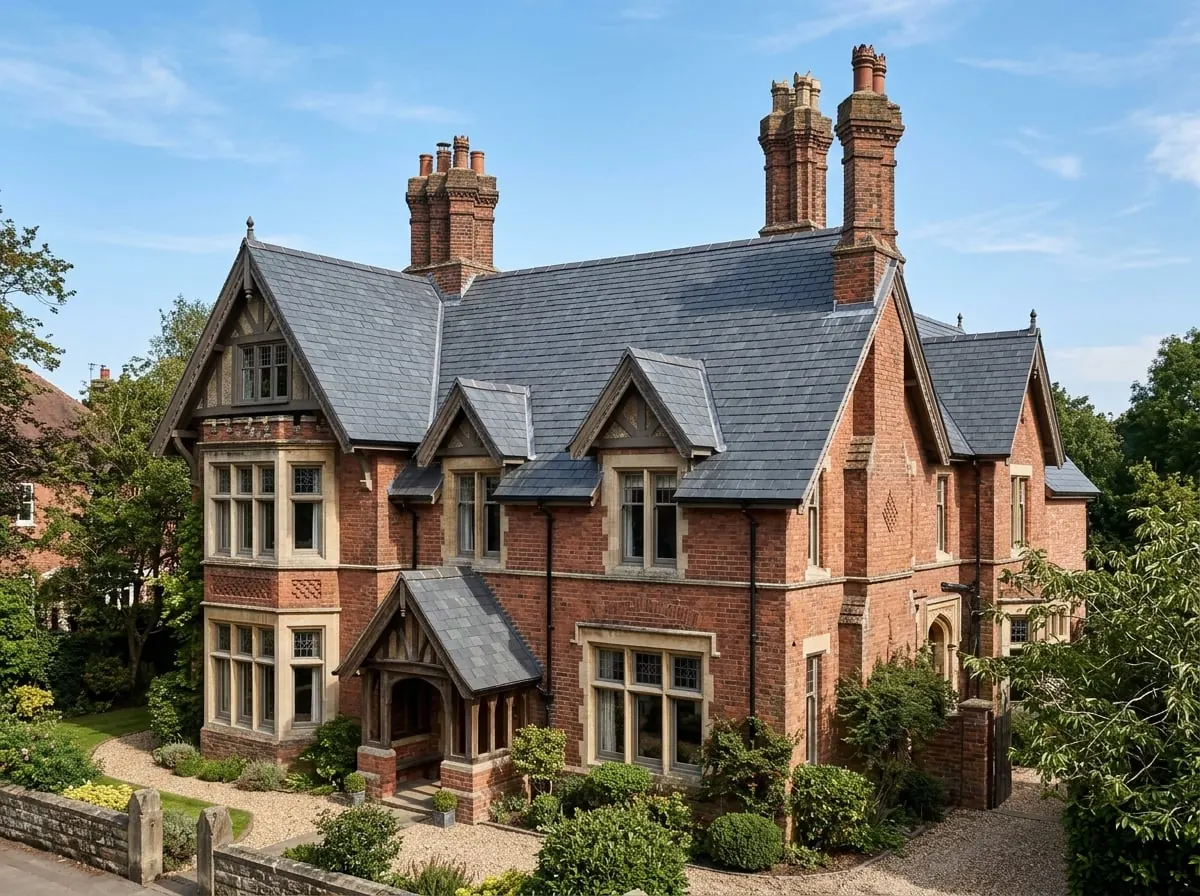
Victorian and Colonial houses south of downtown, with steep pitches, slate, and tall chimneys.
Homes on the hills north of the city, where the ground rises and the wind has a clear run.
Newer builds on the east side, where wide shingle slopes sit on open lots.
Roof trouble
Victorian slate gives way quietly: a tile slips, the flashing beneath it wears thin, and water finds the gap months later. Geneva Victorians carry tall brick chimneys, and the flashing where brick meets roof moves a little with every freeze and thaw. Where two slopes meet, water collects, and old valley flashing lets water in long before the field shingles wear through. A slipped tile on a South Main Victorian is usually a small repair, and slate and tile specialty roofing covers matching the tile and resetting the flashing beneath it.
Slipped tiles get matched and their flashing reset on one visit; the snow load gets cleared and the attic ventilation checked on another. The north-facing slopes above the shore take the snow deepest, and the flat roofs downtown hold it longest. Downtown, the flat brick-block roofs pond water after a thaw, and flat, foam and single-ply roofing in Rochester covers how drains and membrane seams get checked on those roofs.
Victorian, brick block, or new build
| Roof detail | Victorian house | Downtown brick block | Newer build |
|---|---|---|---|
| Pitch | Steep, with dormers and turrets | Flat or low-slope, parapet | Moderate, wide and simple |
| Common covering | Slate or older shingles | Membrane, single-ply | Architectural shingles |
| First trouble spot | Slipped slate and chimney flashing | Ponding at drains | Wind-lifted tabs and valleys |
| Snow behavior | Sheds fast off steep pitches | Drifts against parapets | Sits on lower slopes |
Lake-effect snow reaches Geneva off Seneca Lake, and Ontario County homeowners read the winter forecasts that the National Weather Service office in Buffalo posts. The same lake-effect snow reaches the small villages tucked between the lakes, and Rushville sits in the West River valley between Canandaigua Lake and Seneca Lake, with its own page on how the valley damp wears on the roofs there.
Coverage
We cover Geneva from the lakefront neighborhoods to the town roads, and the ZIP below shows the ground we serve.
Geneva answers to one ZIP, 14456, in Ontario County.
Lake wind at the shore, or a Victorian roof worn thin by winters? Call and tell us which part of Geneva the house stands on.
Call (585) 868-0065FAQ
Many do, mostly on the older houses near the lake and South Main Street. Slate holds up for decades when the tiles and the flashing under them stay sound, and one slipped tile is usually a minor fix. Some Victorians have moved to architectural shingles over the years, which suit the steep pitches well.
Usually, yes. Slate tiles can be matched by size and color, and one slipped tile is a small repair when the flashing beneath it still holds. We check the tiles around it and the flashing at the chimney and the valleys, since decades of seasons work those joints loose, then set the new tile level with the slope.
A southerly wind crosses the lake's full 38-mile length before it reaches Geneva's shore, so it hits the shore homes at full strength. It peels tabs back on the windward side, worries the ridge caps, and eases metal fasteners loose a little at a time. Homes a mile inland feel the same wind, but the trees and the houses in between take some of the force out of it.
Ponding water on the flat brick-block roofs, where drains clog or the roof has settled into a low spot. Standing water wears at membrane seams and hunts out every weak joint, so a pond that lingers for days deserves a look. A flat roof check begins at the drains, clears whatever blocks them, and notes the low spots where water stands. Clearing drains and resealing seams fixes most ponding.
Spring, once the snow has cleared off the slopes and the gutters are visible again. A spring check finds lifted tabs from winter wind, cracked vent boots, flashing that moved with the freeze and thaw, and slate tiles that slipped over the winter. It also reveals whether winter dams pushed water under the shingles at the eaves.
They wear like other older Geneva homes: steep pitches, tall chimneys, and slate or older shingles, with the same chimney flashing and valley wear. The campus area adds tree cover, so shaded slopes grow moss sooner and gutters fill with leaves each fall. A spring inspection starts at the chimney and the shaded north slope, and the gutters get a look on every visit.
Services
Victorian slate gets tiles matched and flashing reset at chimneys and valleys.
Learn more →We read the roof by the age and the setting of the house, checking slopes, ridge, flashing, and decking as we go.
Learn more →Slipped slate, chimney flashing, and valley wear fixed at the source.
Learn more →Downtown brick blocks get drains cleared and membrane seams checked.
Learn more →Victorian, brick block, or lakeshore cottage, write us a line describing the house and the season the trouble showed up.
Nearby towns
Farmington lies northwest past Canandaigua, and Caledonia sits west in the Genesee River valley, so Geneva roof work sometimes reaches toward those towns.
Lake fetch, campus brick, and hills
Geneva roofs face a southerly wind that crosses the full length of Seneca Lake before it reaches the shore, and that long fetch gives the wind its full strength.
Seneca Lake runs north to south for miles below Geneva, and a southerly wind crosses the whole lake before it meets the shore homes. Those homes take the wind at full strength, and it peels tabs back on the windward side, worries the ridge caps, and eases metal fasteners loose a little at a time. Homes a mile inland feel the same wind, but the trees and the houses in between take some of the force out of it, so a shore roof and an inland roof age at different speeds even on the same street.
The Hobart and William Smith campus sits on the lake shore, and the older houses near the campus mix with college buildings on the same ground. Their roofs carry steep pitches and tall chimneys, and the flashing where brick meets roof moves a little with every cold season. A campus-area roof wants its chimney flashing and its valleys read first, because the water concentrates in the valleys during a hard rain and the chimney joint opens a hairline gap that rain finds first.
Downtown Geneva holds brick commercial blocks on Main Street, and their flat roofs pond water after a thaw where the drains clog or the roof has settled into a low spot. Standing water wears at membrane seams and hunts out every weak joint, so a pond that lingers for days deserves a look. A flat roof check begins at the drains, clears whatever blocks them, and notes the low spots where water stands after rain.
South Main Street holds the Victorians and Colonials, with steep pitches, slate, and tall chimneys. On a Victorian roof the slate wears tile by tile, so one tile slips while the rest stay put, and the flashing under that one tile thins out long before the surrounding field shows wear. A replacement tile has to match the original in size and thickness, and the tiles beside it deserve a look too, since slate laid in the same year tends to work loose in the same seasons.
Victorians, blocks, and hillsides
A Geneva Victorian, a downtown brick block, and a hillside home each carry a different roof, and each one fails at a different joint.
Slate suits the South Main Victorians, and a slipped tile is usually a small repair when the flashing beneath it still holds. Slate and tile work in Geneva matches the tile and resets the flashing beneath it, while flat roof work in Geneva handles the downtown blocks, their drains, and their membrane seams.
Lakefront to north hills
Geneva ground rises from the lakefront to the north hills, and the roof work changes with the rise, because the wind and the snow behave differently at each height.
The lakefront homes sit at the foot of the rise, where the wind off Seneca Lake hits first and hardest. Their roofs take the windward lift and the deep snow that follows it, and the north-facing slopes above the shore take the snow deepest. A lakefront roof wants its windward slope and its ridge read after every hard blow, because the tabs there lift first and the ridge caps loosen at the corners.
East Geneva holds newer builds on open lots, where wide shingle slopes sit with little tree cover. Those roofs lift their tabs on the windward side, and their valleys wear where water concentrates between slopes. A newer roof on the east side still wants a walk after its first storm season, because a valley shingle that never sealed and a vent boot that split in its first cold season both hide until the rain finds them.
The north hills rise above the city, and the homes there catch the wind with a clear run across the open ground. Their slopes dry fast after rain, and the sun reaches them sooner than it reaches the lakefront, so moss grows slower there while wind does the wearing instead. A roof inspection in Geneva reads the lakefront, the campus, the downtown blocks, and the hills in one trip, because each part of the city asks for a different look.
A slipped slate tile on a Victorian, a flat roof ponding downtown, and lake wind at the shore are three different Geneva jobs, and each one starts with knowing which kind of house it is. The number below and the email button both reach us: say whether yours is a Victorian, a downtown block, or a shore house, and tell us what the roof has been doing.