Soffit vents blocked with paint or nests
The vents under the eave feed air into the attic, and paint, insulation, or a bird nest can block them without anyone noticing. A blocked soffit starves the ridge vent and turns the attic into a damp oven.
Chili Center Roofing
Chili is the town where Rochester's suburbs thin out into farm fields, and the roofs here take weather that has crossed miles of open ground before it arrives. Chili Avenue runs through Chili Center, Paul Road runs east toward the river, and the streets between them hold ranches, split-levels, and colonials on lots that are bigger than the lots in the inner suburbs. The wind runs unbroken across the fields, the snow piles deep on the low slopes, and the ice dams on the shaded eaves are as stubborn as anywhere in the county. We take Chili roofs one at a time, reading each one up close before we name what it needs.
Chili, NY
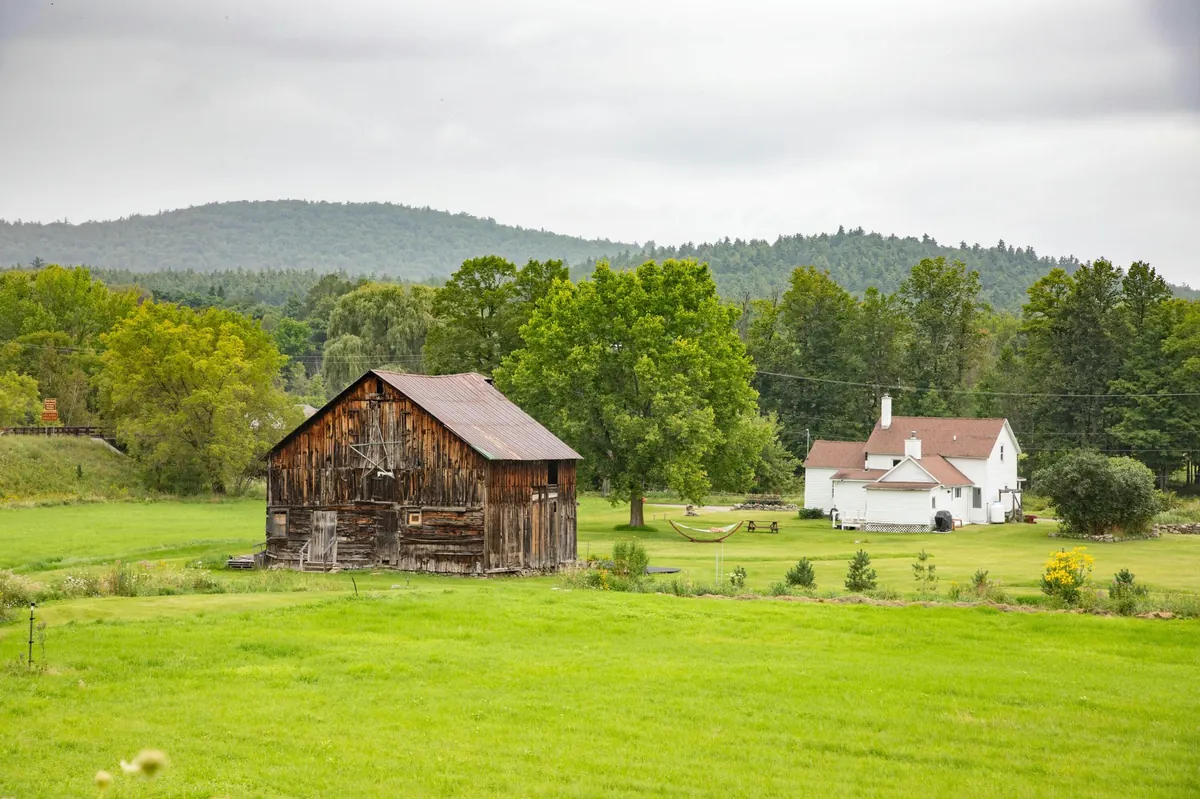
Chili sits southwest of Rochester, and the town still feels like farm country in its western half. The fields along Chili Avenue and the side roads hold barns and farmhouses that date back to the town's early days, and the subdivisions that grew up around Chili Center in the 1960s and 1970s hold the ranches and split-levels that make up most of the town's roofs. Roberts Wesleyan University sits on the eastern edge of town, and the neighborhoods around it hold colonials and Capes on quiet streets.
The open ground is the quiet fact of Chili roofing. The wind that reaches a Chili roof has crossed miles of fields with nothing to break it, so the tabs along the rake lift sooner here than they do on a sheltered city street. The snow piles deep on the low-slope ranches, because there is nothing to stop the bands from dropping their full load on the open town. Fascia and soffit work is a steady job here, because the long eaves on the ranch roofs take the wind and the ice, and the Monroe County highway crews keep the farm roads open through the lake-effect season so the town never quite closes down.
Winter work
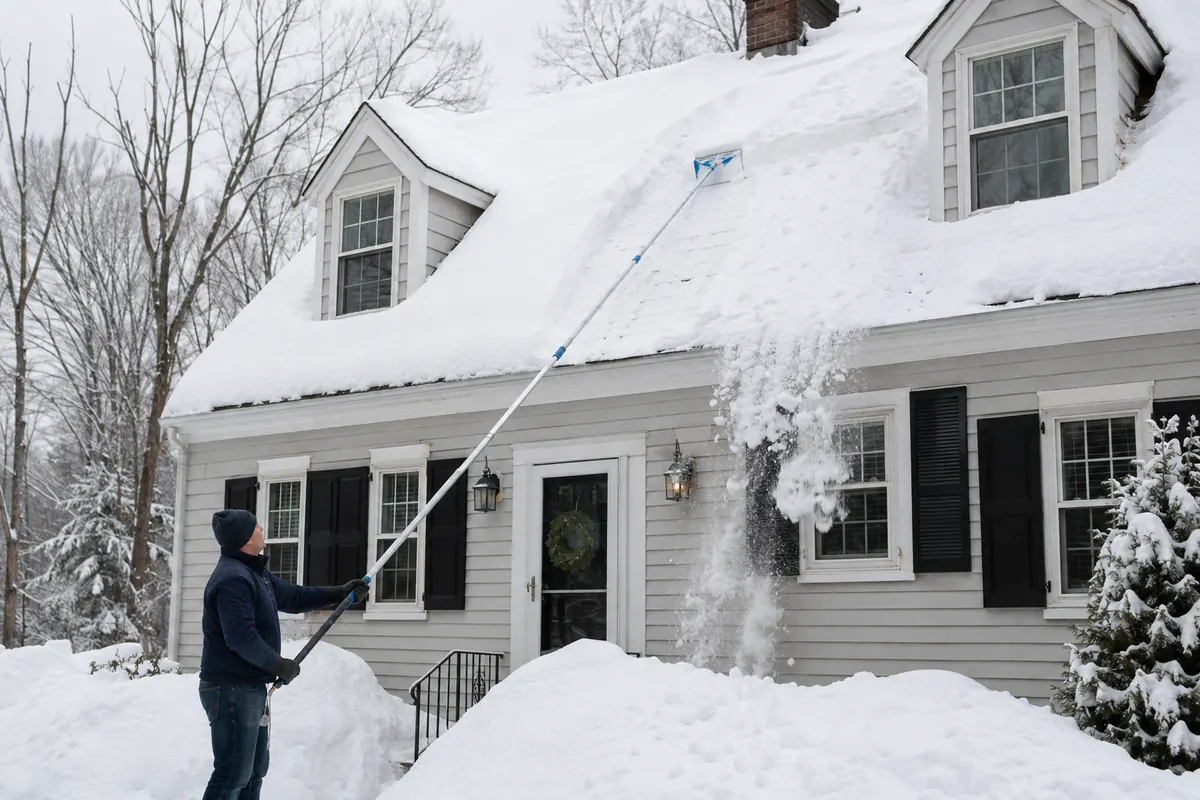
The ranches of Chili Center carry low slopes, and a low slope sheds snow slowly. The lake-effect bands pile snow deep and wet on those slopes, and the meltwater that follows has to get off the roof before the next band arrives, or ice forms at the eave and starts a dam. A roof rake from the ground can take the worst of it off a low eave, but climbing onto a snowy ranch roof is a bad idea, and a metal shovel scrapes granules off the shingles with every pass.
We clear snow with a plastic-edged rake and a light touch, working up from the eave, and we leave a thin layer so the shingles never get scraped bare. Roof snow removal and ice-dam prevention is the work that keeps a Chili ranch dry through February, and the attic check that goes with it matters more than the clearing itself. Warm air leaking into the attic melts the snow over the middle of the roof, and that meltwater runs down to the cold eave and locks up there. Sealing the attic leaks and adding steady ventilation keeps the deck cold and even, so the snow stays put until it melts from the top down.
Snow piled deep on a low slope, or soffit vents blocked with paint? Call and we will start at the eave.
Call (585) 868-0065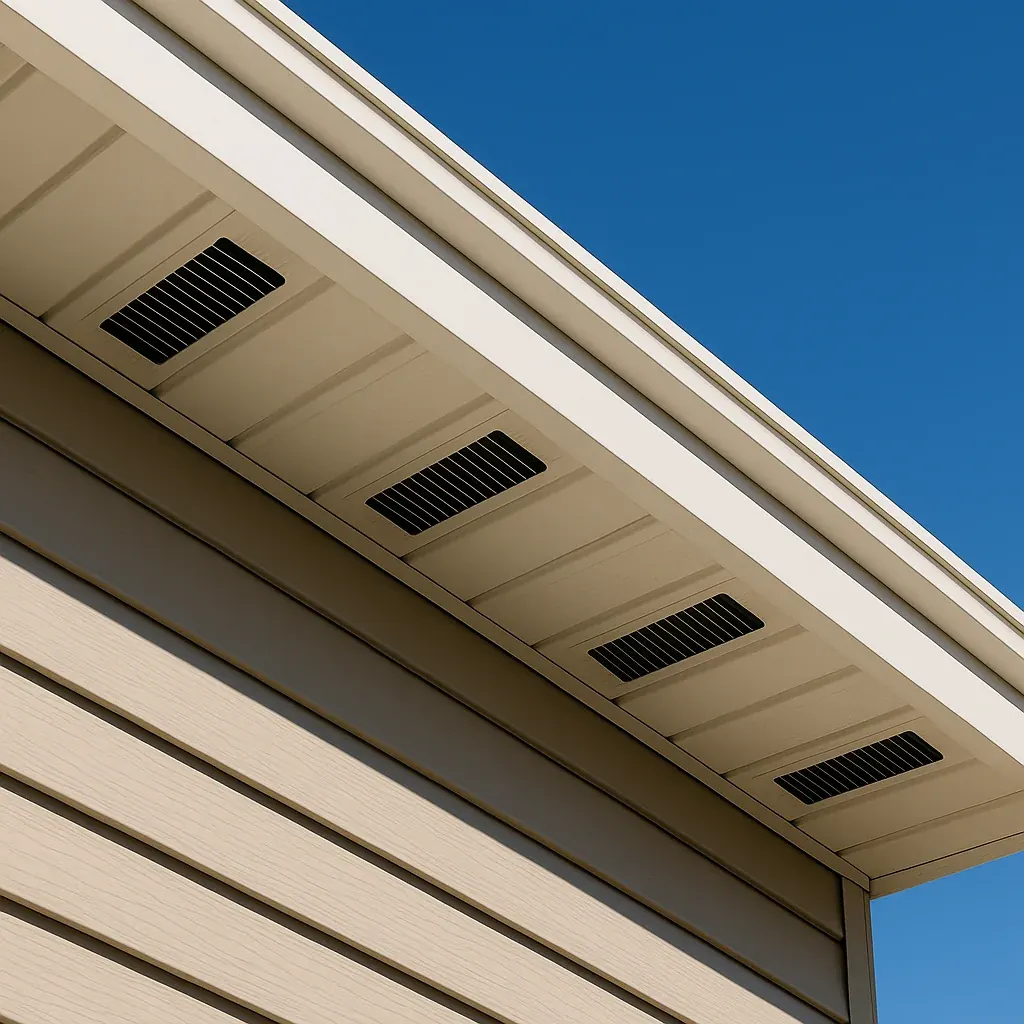
Air under the eave
A Chili ranch breathes through the vents under its eaves, and those small slots are the intake for the whole attic. Cool air comes in through the soffit, rises past the insulation, and leaves through the ridge, and that steady flow keeps the roof deck cold in winter and dry in summer. When the vents are painted shut or blocked with insulation, the attic warms up, the snow on the roof melts from below, and the ice dam starts at the eave.
The vents also keep the shingles honest, because a deck that stays dry holds its shingles longer than a deck that sweats. A look under the eave shows whether the slots are open or closed, and a blocked vent is usually fixed with a brush and a baffle rather than a new roof. On the low slopes of a Chili ranch, where the attic is shallow and the air has little room to move, those vents matter more than on any other roof in town.
Warning signs
The vents under the eave feed air into the attic, and paint, insulation, or a bird nest can block them without anyone noticing. A blocked soffit starves the ridge vent and turns the attic into a damp oven.
The fascia takes the drip from the gutter and the splash from the yard, and the corners rot first. A soft fascia lets the gutter pull away, and the water that follows runs straight down the wall.
Stains by an outside wall usually begin at the eave, where a clogged gutter or an ice dam let water under the shingle edge. The leak rarely starts above the stain, so look at the roof edge first.
Compare
| Roof option | The home it works for | Field wind and snow to watch |
|---|---|---|
| Architectural shingles for ranches and split-levels | Ranches and split-levels around Chili Center | Field wind lifts tabs along the rake on the most open streets |
| Standing seam metal for farm-road homes | Farmhouses and open-lot homes on the field roads | Snow slides off fast, so the shrubs and walkways below need a plan |
| Three-tab shingles for older Capes | Capes from the early build-out still carrying an early roof | Thin tabs curl sooner where the field wind works the edge every winter |
| Algae-resistant shingles for the shaded slopes | North-facing slopes under the mature trees near the river | The shingles resist streaks, but the gutters still need clearing each fall |
Corners of town
Chili runs from the subdivisions of Chili Center to the farm fields in the west, and the roof on each street faces different wear.
Ranches and split-levels around the Chili Avenue corridor, where the low slopes carry the deepest snow in town.
Homes toward the north side of town, where the streets run toward the river and the lots open up.
Colonials and Capes along the road toward the river, where the mature trees drop a heavy leaf load each fall.
Houses strung along the main road through town, where wind runs down the corridor unbroken across the long slopes.
Homes near the creek in the western half of town, where the damp air keeps the north slopes slow to dry.
Neighborhoods around the campus on the eastern edge, where the colonials sit under mature trees.
Services
Careful snow clearing for the low ranch slopes, with the attic checked so the dams never get started again.
Learn more →Fascia boards and soffit vents on the long ranch eaves, where the wind and the ice wear the edge first.
Learn more →Leaks traced to their source on ranches and farmhouses alike, with the flashing and the deck checked too.
Learn more →Tear-offs for ranch and split-level roofs whose shingles have worn thin under field wind and heavy snow.
Learn more →See every service we bring to Chili, from snow removal to gutters and skylights. Or get in touch through the contact page.
Coverage
Chili is a town in Monroe County, southwest of Rochester, with Chili Center on Chili Avenue and farm fields stretching west.
The 14514 ZIP covers Chili Center, North Chili, the Paul Road streets, and the farm roads in the western half of town.
FAQ
A low slope sheds snow slowly, so the bands pile it deep and wet, and the warm air leaking into the attic melts the snow over the middle of the roof. That meltwater runs down to the eave, which sticks out past the warm wall and stays cold, and it locks up there into a dam.
Yes, from the ground, with a plastic-edged rake and a light touch. Work from the eave up, take the worst of it off, and leave a thin layer so the shingles never get scraped bare. Never climb onto a snowy roof, and never use a metal shovel, because the shovel scrapes granules off the shingles with every pass.
The soffit is the underside of the eave, and the vents in it feed cool air into the attic. That air keeps the roof deck cold in winter, which stops ice dams, and it carries damp air out in summer, which stops rot. Paint, insulation, or a bird nest can block the vents without anyone noticing, and a blocked soffit starves the ridge vent above it.
Press the board at the corners with a screwdriver or a fingertip. Sound fascia feels hard and holds the nail, and rotted fascia feels soft and crumbles under pressure. The corners rot first, because the gutter joint drips there and the splash from the yard hits there too.
They do. The wind that reaches a Chili roof has crossed miles of open fields with nothing to break it, so it hits the rake and the ridge at full strength. The tabs along the rake lift sooner here than they do on a sheltered city street, and one lifted tab lets the next gust get underneath.
When the granules thin out, the tabs curl, and the leaks multiply across whole slopes, the field has worn out all at once. A single leak at a valley or a pipe boot points to a repair, not a replacement. The calendar matters less than the condition: a roof that breathes well and stays shaded can outlast a sun-baked one by years.
Creek and fields
Chili roofs answer to two kinds of country at once, and Black Creek damp on one side and farm-road wind on the other write different wear on the same town.
Black Creek runs through the west side of Chili, and the farmhouses and ranches along its banks sit in damp air that rises off the water on cool mornings. The north-facing slopes along the creek grow moss sooner, and the valleys collect leaves from the creek-side trees that stay wet for days. The damp is quiet and slow, and it shows as dark streaks on the shingles and soft fascia at the gutter corners, long before any leak reaches the ceiling inside.
The farm roads in the western half of town run open to the sky, and the wind that reaches a Chili roof there has crossed miles of fields with nothing in its path. The tabs along the rake edges lift first, and the ridge caps work loose a little with each hard blow. Snow piles deep on the low ranch slopes, because the open ground lets the bands settle without a tree line to break them, and the melt runs slowly toward the eaves, so the ice dams on the shaded eaves linger as stubbornly as anywhere in the county.
Chili Center holds the town's subdivisions from the 1960s and 1970s, with ranches and split-levels on lots bigger than the lots in the inner suburbs, and the roofs there are low, wide, and simple. Roberts Wesleyan University sits on the eastern edge of town, and the streets around it hold colonials and Capes on calm streets, with the same open wind and the same deep snow, and a roof inspection in Chili starts by asking which side of town the house sits on, because the creek side and the field side wear their roofs in different places.
Slope by slope
A Chili ranch roof is two long slopes and a ridge, and each slope tells a different story about the wind and the snow that crossed the fields to reach it.
The north slope faces the lake wind, and it takes the snow bands first and holds them longest. The shingles there lose granules sooner, the tabs lift at the rake, and the ice dam forms at the eave in the coldest weeks of winter. The south slope faces the sun, and it dries fast after a rain, so its granules last longer, and its wear shows as cracking and curling from the heat instead of lifting from the wind. A ranch roof that is read slope by slope, north first and south second, gives up its age in a few minutes, because the two slopes age on different clocks.
The north slope holds snow, grows ice dams, and loses tabs to the wind. The ridge caps above it crack first, and the valley at its end collects the leaves that blow across the fields. A look at the north slope after a storm shows the lifted tabs as dark lines against the lighter shingles below.
The south slope dries fast, bakes in the sun, and curls at the edges. The shingles there go brittle sooner, and the pipe boots dry out and crack after years in the sun. A look at the south slope in summer shows the curling as a wavy line along the bottom edge of each course.
The ridge joins the two slopes, and the eaves catch what both slopes shed. The ridge caps work loose in the open wind, and the eaves grow the ice dams where the melt stalls. A look at the ridge and the eaves together shows whether the roof is aging evenly or whether one side is pulling ahead.
Paul Road heads east toward the river, and Chili Avenue cuts through Chili Center, and the ranches along both roads share the same two-slope shape and the same open wind. The lots are bigger here than in the inner suburbs, and the trees are fewer, so the roof has less shade and more sky, and the wear is written by the weather alone. A roof repair on a Chili ranch usually starts on the north slope, because that is where the wind and the snow have been working longest.
Hold or start over
A Chili repair holds when the trouble sits in one place and the field around it is still sound, and it does not hold when the field itself has worn out.
The open wind of Chili makes the test easy to run. A repair that holds is one where the new shingles lie flat beside the old ones, the flashing sits tight at the joint, and the next hard blow moves nothing. A repair that does not hold is one where the shingles around the patch are already lifting, and the wind finds the edge of the patch and peels it back within a season. The difference is not the patch, and it is the field around it.
When a Chili roof sits on the line, we walk it with the owner, look at the field around the patch, and let what we see decide.
The farm-road wind is the judge. A patch that is going to hold will sit flat through the first hard blow after it is laid, and a patch that is going to fail will show its edge lifting before the season is out. The honest way to read a Chili roof is to look at the field first and the leak second, because the field decides whether the repair has anything sound to hold on to.
Out where the suburbs thin into fields, snow sits deep on a low ranch slope and the fascia softens at the corners before anyone notices from the ground. Mention Chili Center or the farm road the house sits on when you write, and the check will begin at the eave that takes the weather.