Village of Spencerport Canal-side roofs
Narrow village lots along the canal, with steep pitches, tall chimneys, and shaded north slopes that hold damp.
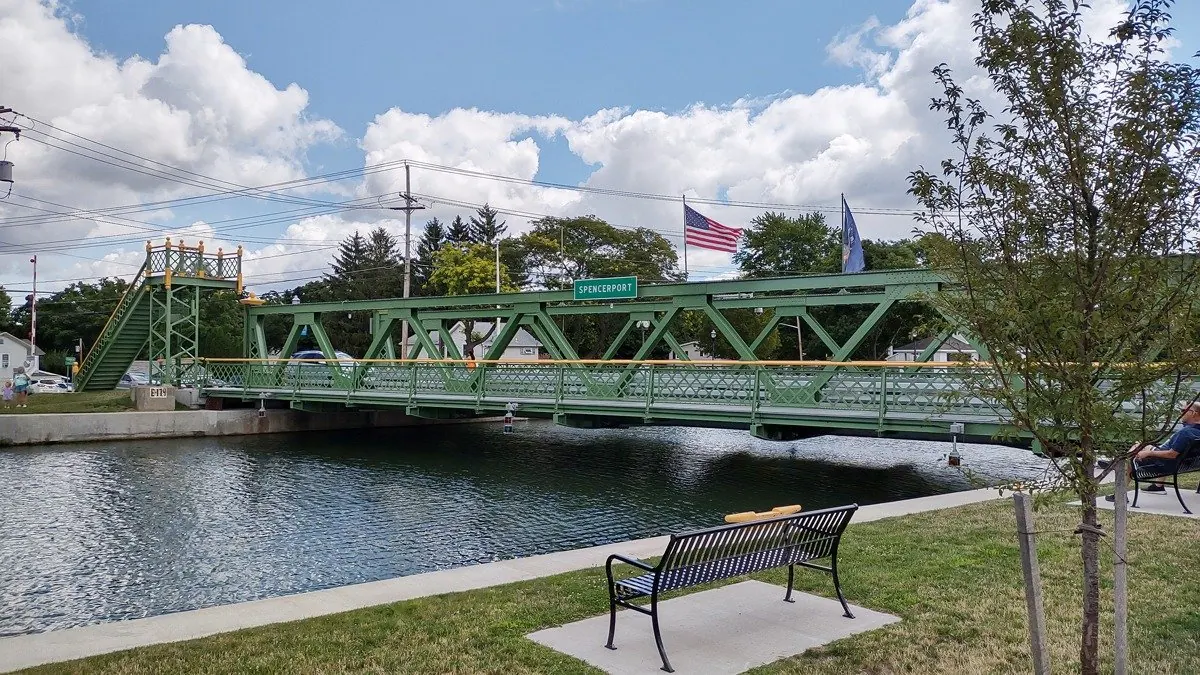
Erie Canal Village
Spencerport grew up where Daniel Spencer sold off canal-side lots in the 1820s, and the village still turns toward the water. Roofs here face canal damp, deep lake-effect snow, and open farmland wind, and each of those leaves a different mark on shingles, flashing, and gutters.
Spencerport and Ogden
The Erie Canal runs straight through Spencerport, and the water sets the tone for every roof in the village. Damp air hangs over the canal in spring and fall, moss and algae take hold on shaded north slopes, and gutters clog with leaves blown in from the towpath trees. A roof inspection in the village starts at the canal side of the house, where the damp works longest.
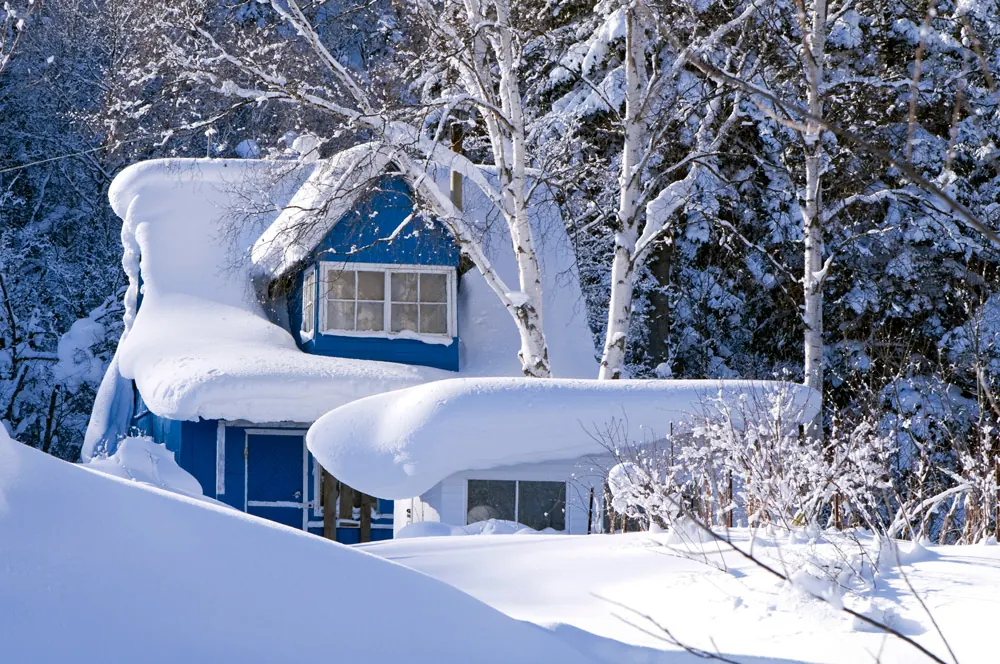
Past the village, Ogden opens into farmland, and the roofs out there meet a different problem. Open fields give lake-effect snow and wind a clear run, so drifts pile deep against one slope while the other stays bare. That uneven load pushes meltwater under the shingles at the eave, and the snow and ice-dam work we do out here usually starts with the drift line, not the leak stain inside.
The village itself dates to Daniel Spencer, who bought a farm here in 1804 and sold the first lots once the canal cut through his land. Spencerport became a village in 1867, and the houses near Union Street still show that history: narrow lots, steep pitches, and tall brick chimneys. The Buffalo weather office tracks the lake-effect bands that bury this side of Monroe County, and its snowfall reports match what we find on the roofs each spring.
Village and town
The village and the town share one ZIP, but the roofs change a lot between the canal bank and the farm roads. Most of our calls come from the canal bank village and the farm roads of Ogden behind it.
Narrow village lots along the canal, with steep pitches, tall chimneys, and shaded north slopes that hold damp.
The old town center south of the village, where farmhouses and mid-century homes sit on open ground.
A small canal hamlet east of the village, with homes close to the water and the towpath trail.
Homes near the ponds north of the village, where trees drop leaves into gutters all autumn.
Houses backing onto the big county park, where shade and falling limbs shape the roof work.
The village main drag, with older storefronts and homes whose flashing has moved with the seasons.
Local weather
Water in the canal keeps the air damp for weeks at a time, and shaded slopes grow moss and algae while sunny slopes stay clean. The damp also softens the granules on older shingles, and a spring walk on the roof shows the wear before the summer storms arrive.
Bands off Lake Ontario can drop deep snow on Spencerport while Rochester stays clear, and the drifts pile against one slope. The uneven load pushes meltwater under the shingles at the eave, where it turns to ice and backs water up under the field.
March thaws arrive with wind that runs straight across the Ogden fields, and it lifts tabs that the winter snow had already loosened. A tab lifted in March lets April rain run under the next course, so the check after the thaw matters more than the check before it.
House ages
The age of the house tells us where to look first. Canal-era homes and new builds fail in different places, and the table below shows the pattern we see on the ground.
| House age | Typical roof | What wears first | What we watch |
|---|---|---|---|
| Canal-era homes | Steep shingles, tall chimneys | Flashing at chimneys and valleys | Mortar joints and step flashing |
| Mid-century ranches | Low-slope shingles | Ridge caps and pipe boots | Granule loss on the south slope |
| 1990s subdivisions | Architectural shingles | Valley shingles and gutters | Ice dams at the north eave |
| New builds | Young architectural shingles | Ridge vent and nail pops | Drift lines after lake-effect snow |
Canal damp on the north slope, or a drift line after lake snow? Call and tell us which side of the house it is on.
Call (585) 868-0065Coverage
Spencerport and Ogden share one ZIP, 14559, and it covers the village, the town center, the canal hamlets, and the farm roads between them.
The 14559 ZIP covers Spencerport village and the Town of Ogden in Monroe County.
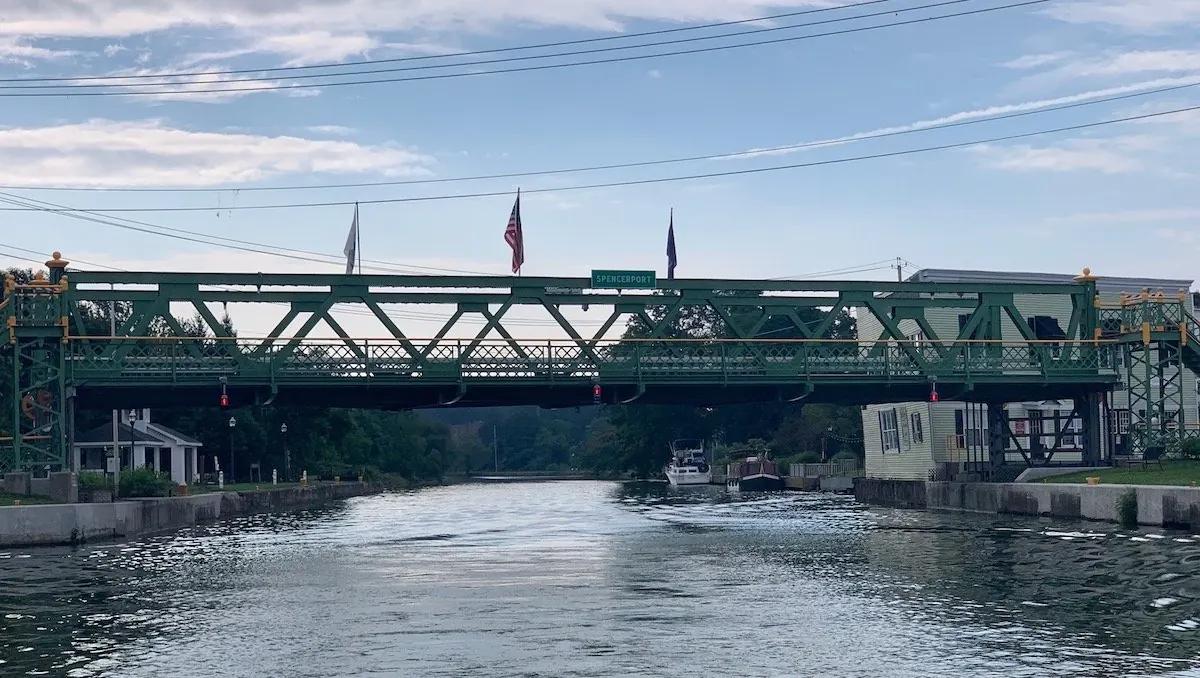
The lift bridge
The green lift bridge carries the main street over the Erie Canal, and the village grew up around the crossing. The houses nearest the canal sit in the damp air off the water, and the towpath trees shade their north slopes through spring and fall.
The canal damp feeds moss on those shaded slopes, and the leaves from the towpath trees fill the gutters twice a year. A roof visit here clears the valleys and reads the shaded slope together, because the damp and the leaves work on the same part of the roof.
Services
March wind lifts the tabs, ice dams leak at the north eave, and tall brick chimneys shift their flashing, and we fix each one where it started.
Learn more →Village colonials and farmhouse roofs worn across whole slopes get torn off and replaced, with shingles picked for canal damp and lake snow.
Learn more →We walk the roof, the attic, and the gutters, and leave a plain-words list of what needs attention now and what can wait.
Learn more →Towpath leaves and pond-side trees clog Spencerport gutters every autumn, and we clear, re-pitch, and guard them before winter.
Learn more →Canal side or field side, tell us through the contact page which slope ages faster and where the damp sits longest.
FAQ
It does, on the north slopes near the water. Damp air from the canal keeps shingles wet for days after rain, and moss and algae take hold where the sun never reaches. Once the growth lifts the shingle edges, more water stays against the roof. We treat the growth, check the flashing beneath it, and look at the attic vents, since damp air inside makes the outside problem worse.
Watch the gutters first, since pond-side trees drop leaves and twigs all autumn and the gutters clog fast. Then watch the north slope for moss, which grows where the pond trees shade the roof. Check the valley where two slopes meet, because leaves gather there and hold water against the shingles. A walk on the roof each fall catches all three before winter locks them in.
Lake-effect bands pile snow deep on one slope while the other stays nearly bare, and that uneven load matters. The heavy side pushes meltwater under the shingles at the eave, where it turns to ice and backs up under the field. The light side dries out and takes the wind instead, so we read the drift line after each storm to see exactly where the water went.
Yes, on the village homes that still carry slate. We match the tile by size and color, reset the flashing at the chimney and walls, and check the tiles around the repair, since slate of that age often has more than one loose piece. A single slipped tile is a small job when the flashing beneath it still holds, and we say so plainly when that is the case.
Architectural asphalt shingles suit most Spencerport homes, since they hold up under snow load and shed wind-driven rain well. Standing seam metal suits farmhouses on open Ogden lots, since snow slides off it instead of piling against the eave. The right pick depends on the pitch, the slope direction, and how much shade the roof gets, so we walk the roof before naming a material.
We do. Ogden farm properties often carry a barn or shed roof beside the house, and those roofs face the same snow and wind. On the outbuildings, metal panels loosen at the fasteners, low slopes hold water at the eaves, and the ridge flashing wears first. The outbuildings get their look on the same visit as the house, so nothing sits unnoticed through winter.
Nearby towns
Brockport sits west on the canal, Churchville lies south past the town line, Hilton is north toward the lake, and Gates runs east toward Rochester, so roof work here often crosses into one of those towns.
Two places, one ZIP
Spencerport village and Ogden town share the 14559 ZIP and the canal, and the roofs on both sides of the water answer to the same damp and the same lake snow.
Union Street runs through the village to the canal, where the green lift bridge carries the road over the water, and the houses near the bridge sit in the damp air off the canal all year. The shaded slopes on those streets stay wet for days after rain, and moss takes hold where the trees block the sun. A canal-side roof wants its valleys cleared and its shaded slopes watched, because the damp works slowly and the first sign is a shingle edge that has started to lift.
Ogden Center sits west of the village on the town roads, where the houses thin out and the fields begin. The town of Ogden spreads around the village with open lots, farmhouses, and newer homes on wide parcels, and the roofs out there take the open-field wind with nothing to break it. The ridge caps and the rake edges earn a closer look on those lots, and the snow bands off the lake pile deep against the windward slope while the far side stays nearly bare.
The canal trail runs along the water past both places, and the trees along the towpath drop leaves into the gutters and the valleys of the houses nearest the corridor. A fall clearing that starts at the canal side of the house keeps the water on its path, and the gutters that run clear through the first snow stay clear through the thaw. See the gutter services page for the clearing and re-pitch that keep the water on its path.
The older homes in the village carry steep pitches, dormers, and tall chimneys, while the newer homes in Ogden carry long ridges and wide valleys, and each shape wears in its own place. A village chimney moves with the freeze and thaw until the flashing opens, and an Ogden valley packs with leaves until the seam wears. The visit that knows which side of the canal the house stands on checks the right spot first.
Both sides of the canal
The village roof and the town roof share the same ZIP, and they share the same weather, but the wear shows up in different places.
Steep pitches, dormers, and tall chimneys mark the older homes near Union Street and the lift bridge. The chimney flashing moves with each freeze and thaw, the step flashing at the dormers works open a little each year, and the canal damp keeps the shaded slopes wet long after rain. A village roof wants the chimney and the dormers checked first, and the shaded slope watched for moss. The chimney work page has the details on the flashing visit.
Long ridges, wide valleys, and open lots mark the homes in Ogden Center and on the town roads. The field wind tests the ridge caps and the rake edges, the lake snow piles deep against the windward slope, and the young trees drop leaves into valleys that run long. An Ogden roof wants the ridge and the valleys checked first, and the gutters cleared before the first snow.
The two sides of the canal also age differently, and the age shows in the flashing. Village flashing was set decades ago and has moved with the seasons ever since, while Ogden flashing on the newer homes is younger and tighter, so the village roof leaks at the joints and the Ogden roof leaks where the leaves pack. The visit that knows the age of the house as well as its side of the canal checks the joint first in the village and the valley first in Ogden.
The big call
A canal-era roof in Spencerport or Ogden usually gives a clear answer on repair or replacement, and the answer sits in how much of the roof has worn at once.
The attic check settles the call. A deck that stays dry and solid under a single leak points to repair, and a deck that has softened in several places points to replacement, and the visit that looks from below as well as from above gets the answer right. The roof inspection page explains what that look from below and above covers.
Canal damp on one side of a Spencerport house and open-field wind on the other mean the two slopes of the same roof can age years apart. The call button below is the fastest way in: say whether the trouble sits canal side or field side, and what season showed it.
Roofing Rochester, 75 S Clinton Ave Ste 510, Rochester, NY 14604, (585) 868-0065