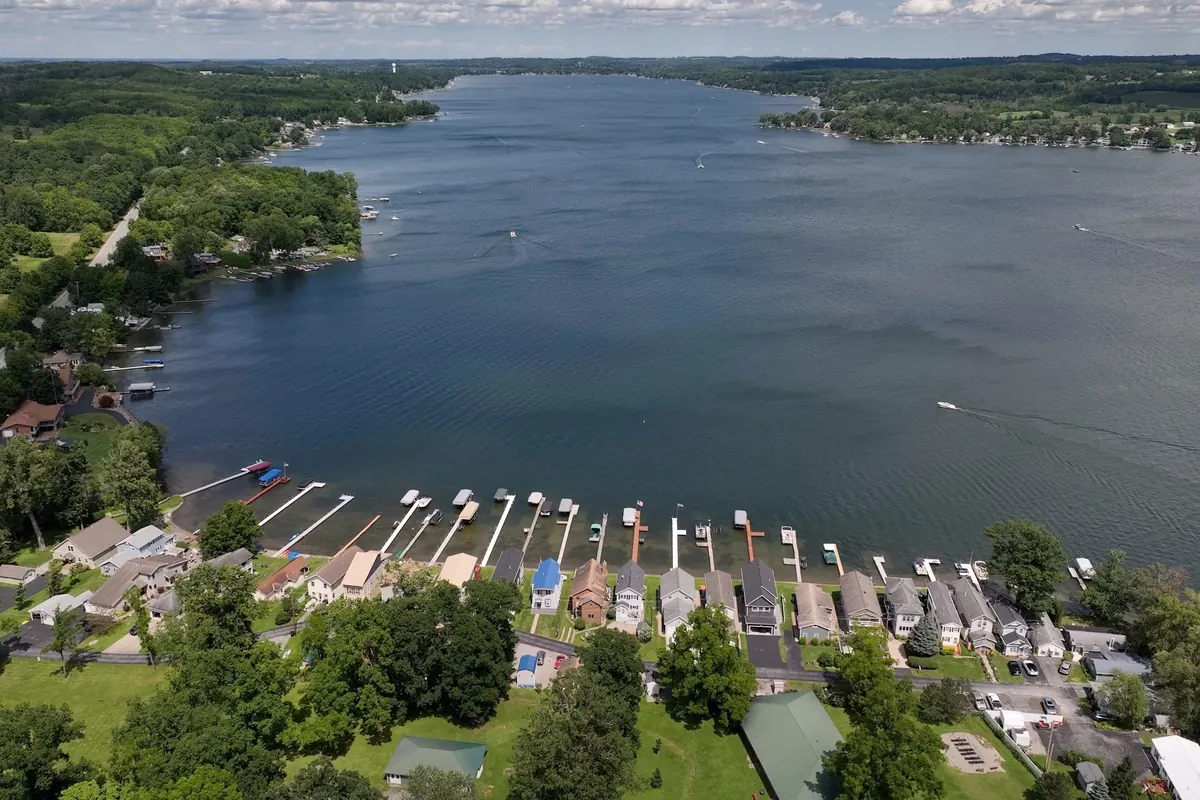
Lakeville North end of Conesus Lake
The hamlet at the north end of the lake, where Conesus Creek drains out and the railroad yard has run since the 1960s.
Between Conesus and Hemlock Lakes
Livonia sits between two Finger Lakes, with Conesus Lake on its west edge and Hemlock Lake to the south, and the village at the crossing of Routes 15 and 20A. Lake houses on the east shore face damp air off the water, village homes face open wind off the fields, and Livonia Center holds the oldest roofs in town.
Livonia, NY
Livonia developed between Conesus Lake and Hemlock Lake, and the town still runs on that geography. Conesus Lake, the westernmost Finger Lake, forms the west edge of town, and its east shore holds a string of lakeside hamlets, from Lakeville at the north end down through Tuxedo Park, Cedarcrest, and McPherson Point. Hemlock Lake sits to the south, and the village of Livonia sits at the center, where US Route 20A crosses Route 15.
The town grew with the railroad in the 1850s, when a line to Lakeville opened the lake to trade and travel, and the Livonia, Avon and Lakeville Railroad still runs from Lakeville today. Interstate 390 passes just west of town, with exits at Route 15 and Route 20A, so the village is a short drive from Rochester. A roof repair in Livonia often starts with the same question: is this a lake house, a village house, or a farmhouse, because each one wears differently.
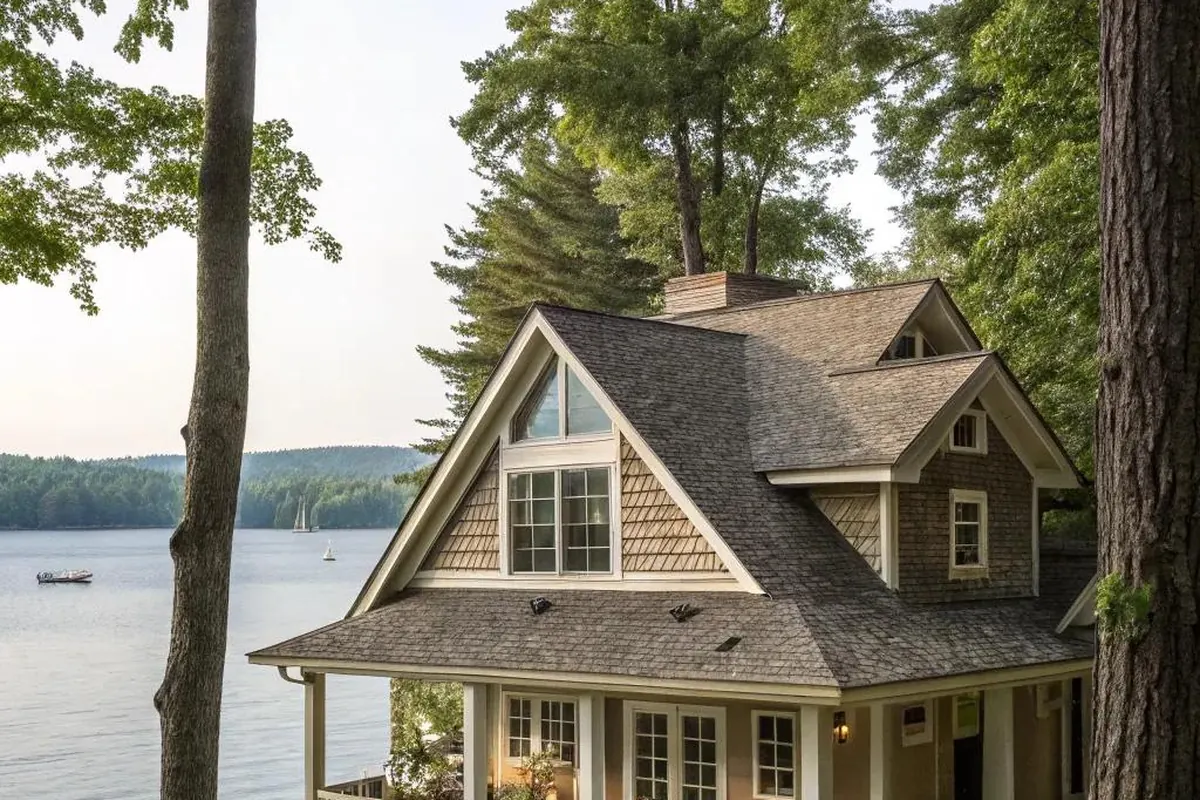
Damp air off Conesus Lake hangs over the lake houses all year, and that dampness feeds moss and algae on shaded slopes. Village homes face open wind across the fields between the lakes. Farmhouses south toward Hemlock carry wide roofs that hold snow. Livonia watches the lake-effect snow forecasts for Livingston County that the National Weather Service office in Buffalo puts out each winter. A replacement here is built to the New York State building code, with ice shield at the eaves and in the valleys.
Roof anatomy
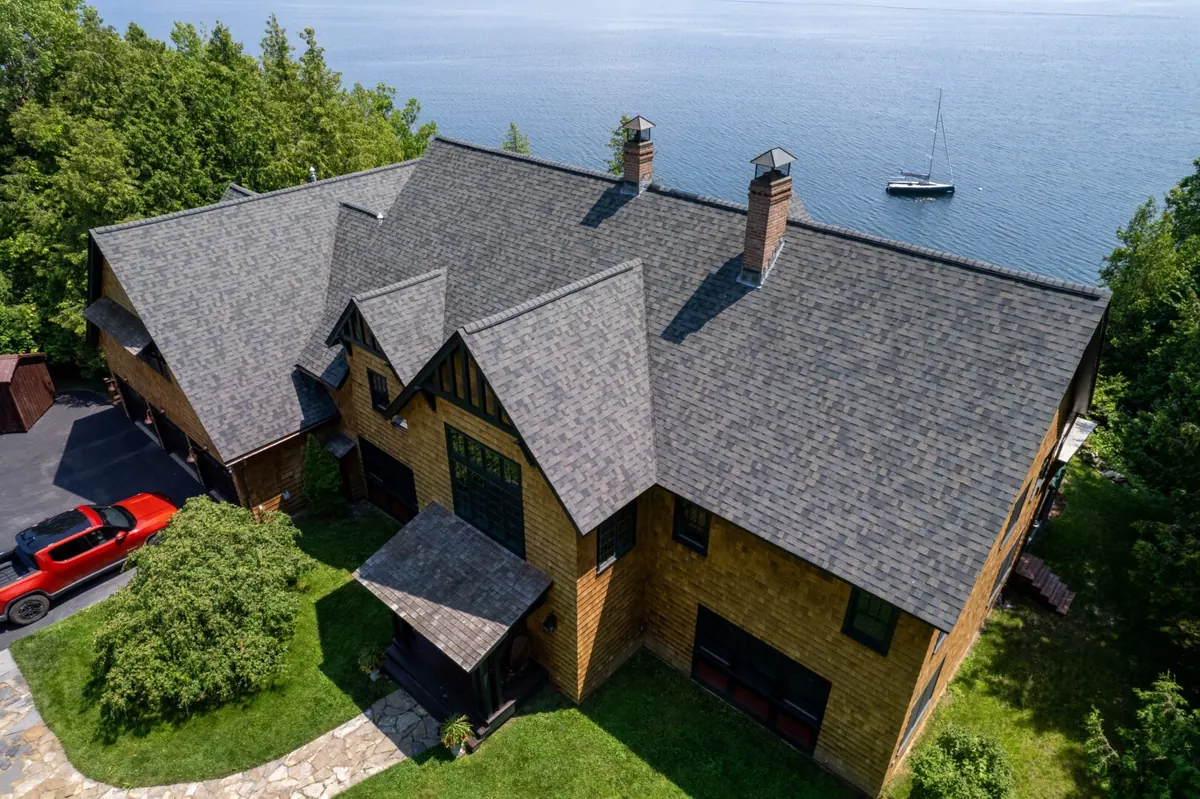
The outer layer takes the rain, the snow, and the damp air off the lake. Architectural shingles suit most village homes, while standing seam metal suits a lake house roof that needs snow to slide clear before it dams at the eave.
Underlayment sits beneath the shingles and seals around every nail hole. At the eaves and in the valleys, an ice and water shield adds a second seal where ice dams and wind-driven rain try to get in.
Flashing is the metal at every joint: chimneys, side walls, skylights, and valleys. On a lake house the joints move with the damp and the cold, and a flashing joint that has opened is where most lake house leaks start.
Ventilation moves cool air through the attic so the roof deck stays near the outside temperature. That matters most on a lake house, where damp air and a warm attic together grow moss and build ice dams.
Hamlets and shores
The hamlet at the north end of the lake, where Conesus Creek drains out and the railroad yard has run since the 1960s.
A hamlet east of the village on US Route 20A, where the first settlers put down roots and the old general store still stands.
A lakeside hamlet on the east shore of Conesus Lake, with cottages and year-round homes facing the water.
A hamlet on Routes 15A and 20A in the southeast part of town, near Hemlock Lake and the creek that drains it.
A lakeside hamlet south of McPherson Cove, where the shore bends and the cottages sit close to the water.
A hamlet on the boundary with Lima, shared between the two towns, with farmhouses on the open ground.
Lake or village
The same storm hits both, but the lake house takes it wet and the village house takes it windy. The table below shows how the two differ.
| Roof point | Lake houses on Conesus Lake | Village and farm homes |
|---|---|---|
| Damp and moss | Damp air off the lake feeds moss and algae on shaded slopes, and the north side of a lake house roof can stay green all summer. | Drier air inland, so moss grows slower, but leaf litter from yard trees still holds damp against the shingles. |
| Wind | Sheltered by the tree line along the shore, but a storm across the open water can drive rain sideways into the eaves. | Open fields between the lakes give the wind a clear run, and the ridge and corners take the worst of it. |
| Snow and ice | Lake-effect snow piles deep on the shore, and the eaves stay cold while the house stays warm, so ice dams form at the edge. | Snow blows across the open ground and drifts against the leeward side, loading one slope more than the other. |
| Gutters | Leaves from shore trees and damp debris clog the runs, and a clogged gutter holds water against the fascia all winter. | Fall leaves from street trees fill the gutters, and a full gutter spills water onto the foundation line. |
Swipe sideways to see lake houses beside village homes.
Through the year
Lake snow arrives in bands and piles deep on the shore roofs. A roof rake keeps the overhang clear, and the eaves are where the ice dams start.
The thaw shows what the snow hid, and spring rain off the lake tests every valley and flashing joint. Spring is the time to walk the roof and read the winter.
Summer on the lake means damp shade under the shore trees, and moss grows fast on a north-facing slope. A shaded lake house roof needs a look before the growth takes hold.
Shore trees drop oak and maple leaves into the gutters and valleys. Clearing them before the first snow keeps water moving off the roof all winter.
Coverage
The village takes 14487 and Livonia Center takes 14488, with the shore hamlets falling under one or the other. The lake shore hamlets, Lakeville, Hemlock, and the farm roads between them all fall under one of those two, and the work we do here runs from the water to the village center.
14487 covers Livonia village, and 14488 covers Livonia Center east of the village on US Route 20A.
Services
A leaking flashing joint, a windy-side tab lifted, or moss that has taken hold on a shaded lake slope.
Learn more →Standing seam metal for a lake house roof that needs snow to slide clear and rain to run fast off the slope.
Learn more →On a Livonia visit we go up over the roof, through the attic, and along every flashing joint, then tell you in plain words what needs work now and what is still sound.
Learn more →Gutters that carry the shore leaves clear, with guards that keep the oak and maple out of the run.
Learn more →Or send a note about your Livonia lake house or village home.
Moss on the shaded slope, or ice at the eaves above the lake? Call and tell us which side of town the house is on.
Call (585) 868-0065FAQ
Yes. Livonia work runs from the lake houses on the east shore of Conesus Lake to the village homes at Routes 15 and 20A and the hamlet of Livonia Center. We start on the roof itself, with the shingles or metal, the flashing, and the deck, and we end with a plain-words plan for the fix.
Yes. Livonia Center is a hamlet east of the village on US Route 20A, where Livonia began, and we cover it the same way we cover the village. Its 14488 ZIP is on our list, and Livonia Center gets the same visits, the same inspections, and the same repair work as any street in the village.
Damp air off Conesus Lake keeps the shaded side of a lake house roof wet long after the rain stops, and moss grows in that damp shade. The north-facing slope takes the worst of it. Cutting the growth away and trimming the branches overhead lets the roof dry between rains, which slows the moss down.
Standing seam metal fits many lake houses, since it sheds snow fast, rain runs off it cleanly, and its smooth surface gives moss less to hold onto. Architectural shingles also fit a lake house with a good pitch. Which material suits your house comes down to the pitch, the trees, and the home itself.
Plenty, in a single storm. Snow comes off Lake Ontario and the Finger Lakes in bands, and Livonia sits between two of them, so the shore roofs take deep snow in one fall. The drift loads the leeward slope heaviest, and the eaves are where the ice dams form. A roof rake and a clear gutter are the two simplest tools against it.
Once the first big snowmelt of spring has passed, and after any summer storm with hail or high wind off the lake. The thaw shows what the snow hid, and a look after a storm catches bruised shingles before the ceiling stains. Lake houses deserve a look every year, since the damp air works on them all year round.
East shore hamlets
The east shore of Conesus Lake holds a string of small hamlets, and each one puts a different roof in front of the water.
Lakeville anchors the north end of the shore, where Conesus Creek drains out of the lake and the railroad yard has run for generations. Cottages and year-round homes line the water from Lakeville south through Tuxedo Park and Cedarcrest to McPherson Point, where the shore bends and the cottages sit close to the water. These are not village houses set back from a street. They sit above the water with the lake on one side and a wooded slope on the other, so the roof takes weather from the open water and shade from the trees behind it in the same storm.
A shore roof faces west across open water, which means a storm crossing the lake arrives with nothing to slow it down before it hits the slope. Rain drives sideways into the eaves, and wind lifts tabs on the lake side first. Behind the house, tall shore trees drop oak and maple leaves into the gutters and valleys every fall, and the same trees shade the north slope through the summer, so moss grows there while the sunny side stays clean. The fix for a shore roof starts with that split: the lake side needs its flashing and ridge checked after wind, and the shaded side needs its growth cut back and its branches trimmed so the slope can dry between rains.
Many shore homes began as seasonal cottages and grew into year-round houses one addition at a time, so a single roof can mix two or three ages of shingles, a low slope over a porch, and a steeper slope over the original cottage. The seam where an addition meets the old house is the joint to watch, because two slopes built years apart move differently through frost and thaw. A roof inspection on the shore reads those seams first, then the valleys, then the flashing where a dormer or a chimney breaks the slope. Inland, Routes 15 and 20A carry the village traffic, but on the shore the work runs along the lake road, house by house, with the water always in view.
Ground-level checks
A Livonia roof shows most of its trouble from the yard, and each mark below points to a different part of the roof.
Damp air off Conesus Lake keeps the shaded side wet, and moss holds water against the shingles and lifts their edges as it spreads.
Granules shed off aging shingles, and a gutter full of grit means the surface is thinning and the mat beneath is closer to the weather.
Wind off the open water lifts tabs on the lake-facing slope first, and one lifted tab lets rain work under the next course.
Water runs fast through a valley, and a stain below it points to the flashing joint, not to the field of shingles around it.
The eave stays cold while the attic stays warm, and thick icicles at one eave mean a dam is forming above them.
A chimney on a lake house works hard through the winter, and a stain running down the brick means the flashing at its base has opened.
South of the village
South of the village, Livonia turns to farm ground, and the farmhouse roofs there are wider, older, and more open to the wind than anything on the lake shore.
The roads south toward Hemlock Lake run through open fields where the wind has a clear run between the lakes, and the farmhouses along them carry wide roofs that hold snow across a broad slope. A farmhouse roof often spans an old house and a newer addition under one ridge, with a low porch roof on one side and a barn standing behind it, and each piece sheds snow and rain at its own pace. The wide slope is the thing to watch in winter: snow settles deep and even, the drift loads the leeward side heaviest, and the eaves stay cold while the house stays warm, so ice forms at the edge while the middle of the slope still holds snow.
Hemlock hamlet sits in the southeast part of town on Routes 15A and 20A, near Hemlock Lake and the creek that drains it, and South Lima straddles the north town line on the boundary with Lima, where farmhouses stand on open ground. Both places share the same roof character: tall chimneys that have worked through many winters, flashing joints that have moved with frost and thaw, and trees planted as windbreaks that now drop leaves into the gutters each fall. A barn roof nearby tells its own story, and a house roof beside it often shows the same wear a season later, because the same wind and snow cross both.
A roof repair on a farmhouse south of the village usually opens at the seam between the old house and the addition, then moves to the valleys and the chimney flashing, and only then to the field of shingles. The long eaves deserve a look too, since a gutter run that long fills with leaves in one fall and holds water against the fascia all winter. Clearing the gutters before the first snow, trimming the windbreak branches back from the slope, and walking the ridge after a windy storm keep a farmhouse roof sound through the season when the fields between the lakes are at their coldest and windiest.
Between Conesus and Hemlock, a lake house roof and a village roof wear in different ways, so tell us the shore or the street, the slope, and the marks the winter left on the shingles, and we will plan the visit around that house.