Lima village Turnpike homes
The village on Route 5 and US 20, with nineteenth-century homes along East Main Street and the old school grounds at its heart.
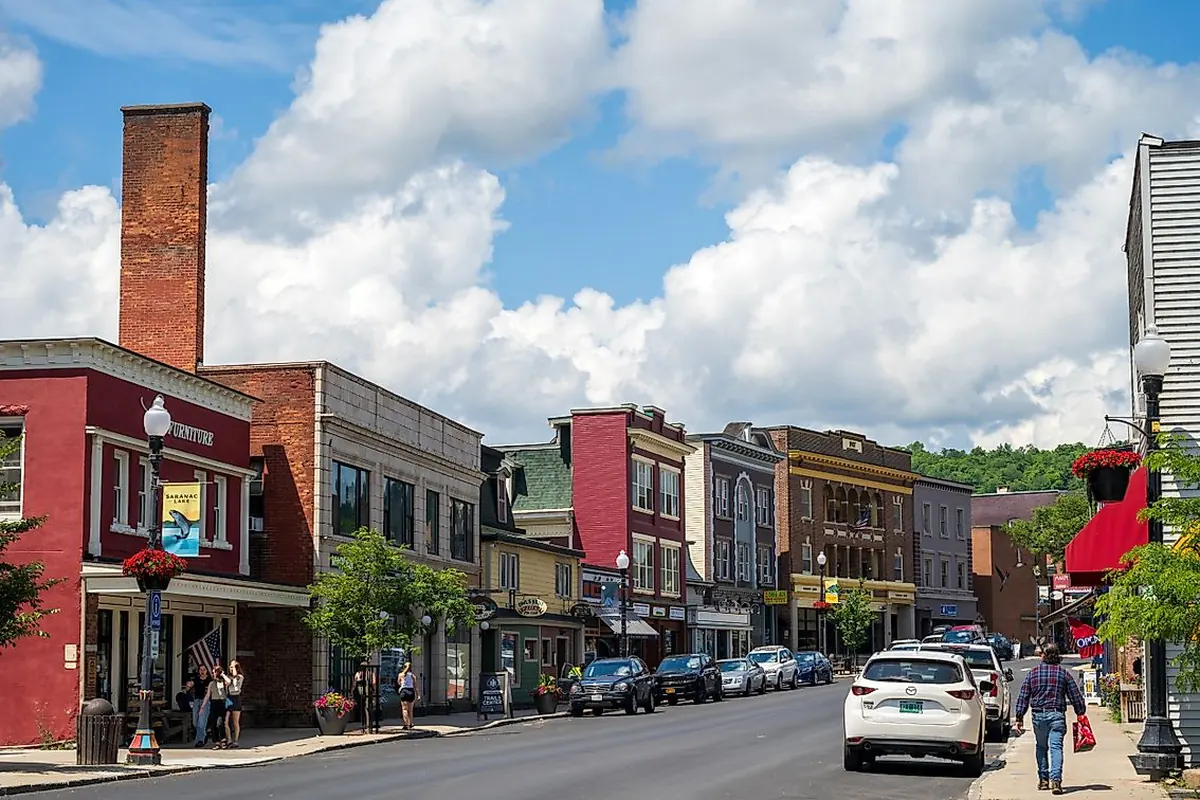
Crossroads of Routes 5 and 20
Lima grew up where the old east-west turnpike crosses Honeoye Creek, and the village still shows it: Federal and Greek Revival homes along the main road, farmhouses on the rolling ground around them, and South Lima holding the southwest corner. The roofs here are old, pitched, and built to shed a western New York winter.
Symptoms
Tap a sign you have spotted on your own roof. Every sign points to a different part of the roof, and every part has its own fix.
As shingles age, granules wash off and collect in the gutters and at the downspouts. A few granules are normal wear, but a gutter full of them means the shingle surface is thinning and the mat beneath is closer to the weather. We check the slope for bare patches and thin spots.
Call (585) 868-0065In Lima the stain usually starts at a joint: a chimney, a valley, or a vent pipe. Water runs along the deck before it shows inside, so the stain can sit well away from the hole. We trace it from the attic side, then open the joint from above.
Call (585) 868-0065Route 5 and US 20 run straight through Lima, and the wind follows that open corridor. Tabs lift at the corners on the windward side, and once one lifts, the next one takes more wind. A lifted tab is a small fix when it is caught early.
Call (585) 868-0065Lima winters run cold, with the eaves cold and the attic warm. Meltwater freezes again at the edge and backs up under the shingles. Clearing the dam helps today, but the lasting fix is attic air sealing and ventilation so the roof deck stays cold.
Call (585) 868-0065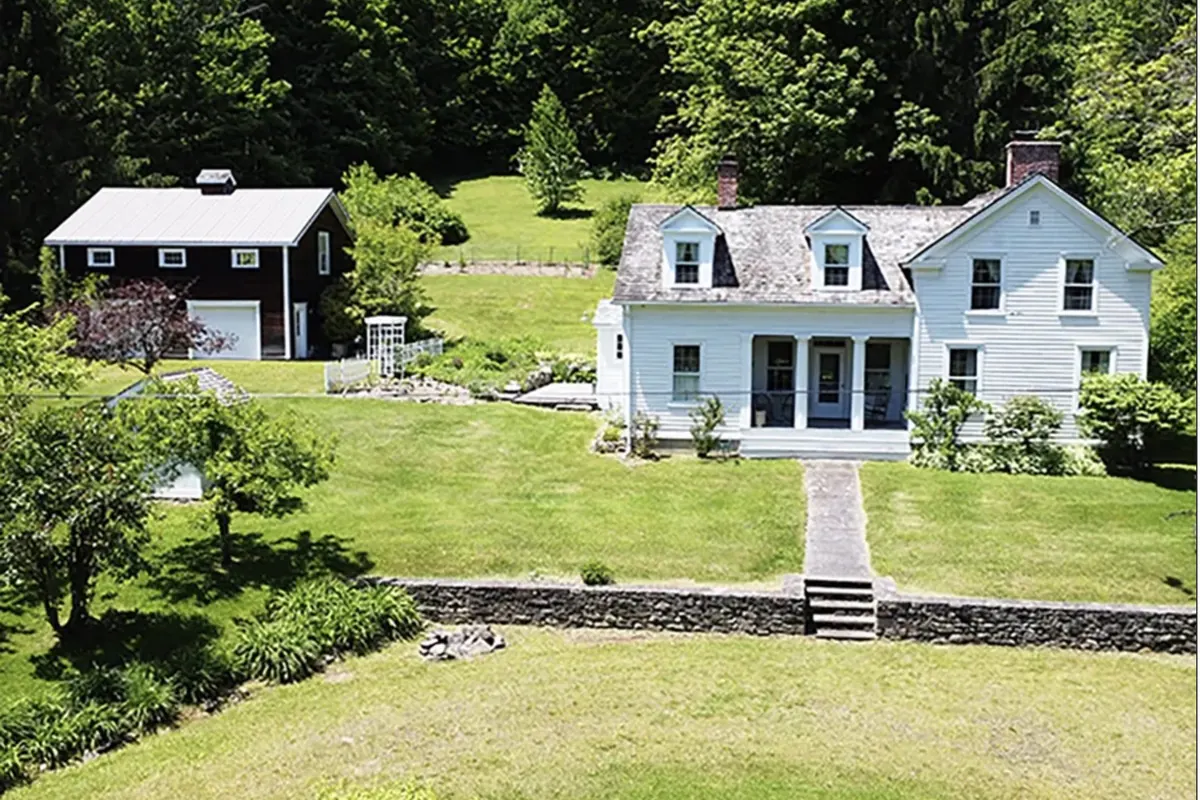
Lima, NY
Lima sits about 15 miles south of Rochester in the northeast corner of Livingston County, where New York State Route 5 runs together with US Route 20 along East Main Street and Route 15A crosses it from the north. Honeoye Creek marks the east edge of the town, and Spring Brook once powered the mills that gave the village its early industry. Genesee Wesleyan Seminary opened here in 1832, and Genesee College followed in 1850, and the village grew around those schools and the turnpike traffic.
The housing shows that history. Federal, Greek Revival, Italianate, and Queen Anne homes line the village streets, and 31 properties and districts across the village and town are listed on the National Register for their architecture. Farmhouses and farmsteads spread across the rolling ground beyond the village, and South Lima holds the southwest corner of the town, spilling across the line into Livonia. A roof replacement in Lima has to suit the house it sits on, because a Queen Anne and a farmhouse ask for different things.
Gently rolling farmland makes up the ground here, open to the wind from the west. That openness shapes the roof work: wind finds the corners and the ridge, and snow settles deep on the wide farmhouse slopes. The National Weather Service office in Buffalo puts out the winter storm warnings for Livingston County, and a Lima roof sees the full run of them.
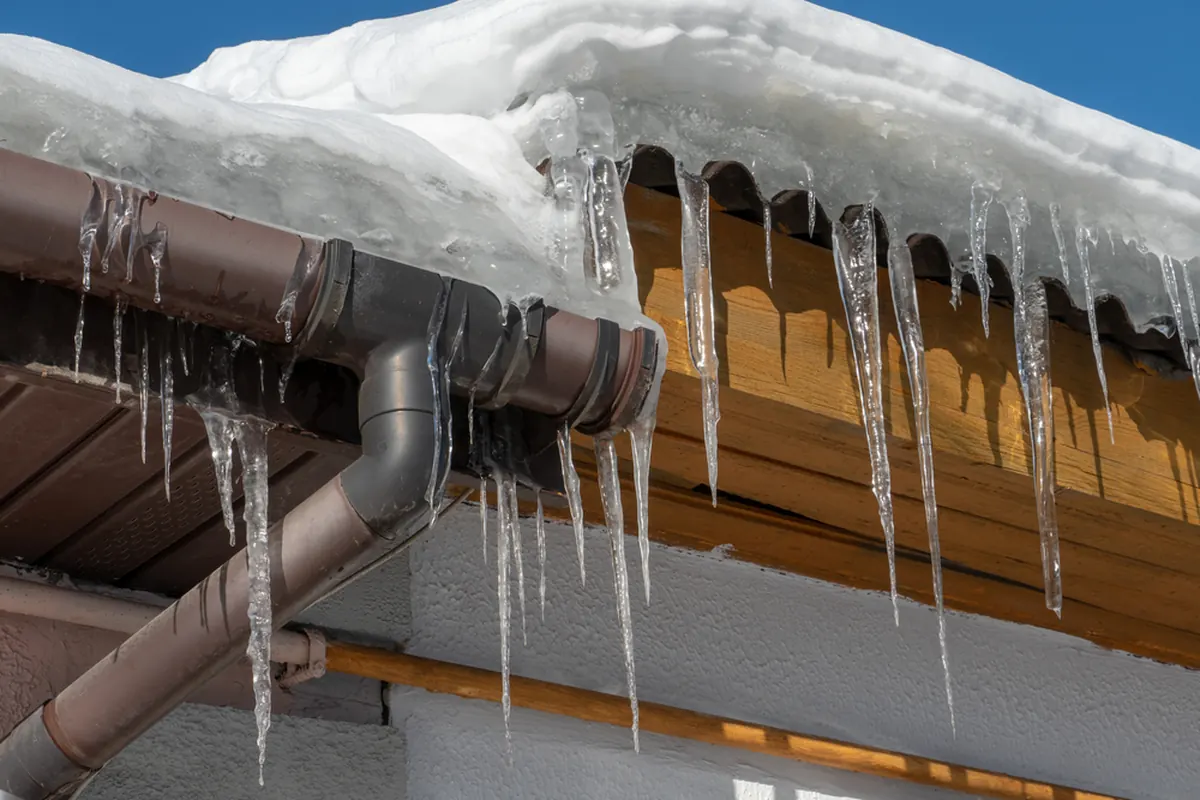
What the icicles mean
Thick icicles on a Lima eave are a warning, not a decoration. They mean meltwater is running down from the warm middle of the roof and turning back to ice where the eave stays cold, and the dam behind them is backing water under the shingles. A roof snow removal and ice dam prevention visit opens with the attic, because the dam is the symptom and the attic floor is the cause.
The fix is air sealing and ventilation, which hold the roof deck near the outside temperature so the melt pattern changes. Sealing the attic floor stops warm house air from reaching the deck, and venting carries the rest out through the ridge. A roof rake clears the snow off the overhang while that work is lined up, and the eaves stay clear through the cold months.
South Lima gets the same treatment. The hamlet sits at the southwest corner on the line with Livonia, and its farmhouses carry the same wide roofs and the same cold eaves. A roof inspection there looks at the attic first, then the eaves, then the valleys where the farmhouse additions meet the original roof.
Roof words
Corners of town
The village on Route 5 and US 20, with nineteenth-century homes along East Main Street and the old school grounds at its heart.
A hamlet and census-designated place at the southwest corner of the town, on the line with Livonia, with its own 14558 ZIP.
A hamlet at the east town line where the town meets West Bloomfield, with farmhouses on the rolling ground.
Homes along the creek that marks the east edge of town, where damp air off the water keeps moss growing on shaded slopes.
Village or farm
A roof on East Main Street and a roof on a farm road outside the village face different wind, different trees, and different snow. The table below sets out the split.
| Roof point | Village homes | Farmhouses and South Lima |
|---|---|---|
| Wind | Sheltered by neighboring houses and street trees, but the open Route 5 corridor still funnels gusts down the main road. | Open ground on all sides, so the wind hits the whole roof and the ridge takes the worst of it. |
| Snow | Snow sheds off steep village pitches, but ice dams form where a warm attic meets a cold eave. | Wide, lower slopes hold snow longer, and the load sits heavier on the overhangs. |
| Trees | Mature street trees drop limbs and leaves into valleys and gutters each fall. | Windbreak rows and field trees shed branches onto the roof in a storm. |
| Age | Many homes date to the 1800s, with flashing and chimneys that have moved for generations. | Farmhouses mix old timber frames with newer additions, so the roof often has two ages in one slope. |
Swipe sideways to see village homes beside farmhouses.
Coverage
Two ZIPs cover this town: 14485 for the village and 14558 for the hamlet at the southwest corner. The work we do here runs from the historic homes on the turnpike to the hamlet at the southwest corner, and the same crew looks at both. Lima is a place where the village and the farms belong on one page, because the same wind and the same snow reach both.
14485 covers Lima village, and 14558 covers South Lima at the southwest corner of the town.
Services
A windward tab lifted, a chimney joint leaking, or a valley worn through: Lima fixes each one where it started.
Learn more →A full tear-off for a Lima roof worn across whole slopes, with shingles chosen to suit the house and its pitch.
Learn more →Sealing the attic air leaks and venting the roof keep the deck cold, so the ice dams Lima winters build stop coming back.
Learn more →Lima gutters move fall leaves clear of the fascia, and guards keep the maple and oak out of the run.
Learn more →Or send a note about the roof on your Lima house.
Granules in the gutter, or a stain on an upstairs ceiling? Call and tell us what you have seen.
Call (585) 868-0065FAQ
Yes. Lima work covers the nineteenth-century homes on East Main Street, the farmhouses on the town roads, and the hamlet of South Lima. A repair visit begins up on the roof, with the shingles, the flashing, and the deck, and it ends with a plain-words plan for the fix. Call and describe what you see: the slope, the stain, or the lifted tab.
Architectural shingles suit most older Lima homes, since they layer well on a steep pitch and match the look of the street. Standing seam metal also fits a steep farmhouse roof and sheds snow fast. Which material fits your house comes down to the pitch, the structure, and the home itself, so we walk the roof before we name one.
Yes. South Lima is part of the town of Lima, at the southwest corner on the line with Livonia, and we cover it the same way we cover the village. The hamlet's 14558 ZIP is on our list, so South Lima gets the same visits, the same inspections, and the same repair work as any street in the village.
A warm attic and cold eaves. Lima winters run cold, and the attic stays warm while the eaves stay cold. Snow melts higher on the roof, runs down, and turns back to ice at the cold edge, and the dam backs water under the shingles. Sealing the attic floor and venting it so the deck stays cold is what stops the cycle.
When wear shows across whole slopes rather than in one spot: granules filling the gutters, shingles curling across the windward side, and leaks in more than one room. One lifted tab, or one leak at a chimney, is a repair. We walk the roof and show you which one it is before any work starts.
They can. Mature maples and oaks drop limbs in a storm, and their leaves fill valleys and gutters each fall. A clogged valley holds water against the shingles, and a limb can crack a shingle or dent a vent. Keeping the valleys and gutters clear each fall is the simplest defense a Lima homeowner has.
Nearby towns
Livonia sits south on Route 15A toward Conesus Lake, Honeoye Falls sits east across the creek, and Avon sits west on Route 5, so Lima roof work often crosses into one of those towns.
Creek, turnpike, and old homes
Lima roofs grow out of the turnpike and the creek, because Route 5 and US 20 run straight through the village while Honeoye Creek marks its east edge.
Route 5 runs together with US Route 20 along East Main Street, and the wind follows that open corridor straight through Lima. Tabs lift at the corners on the windward side, and once one lifts, the next one takes more wind. A lifted tab on a turnpike home is a small repair when it is caught early, and a ridge walk after a storm finds it before the rain gets under the next course.
Honeoye Creek marks the east edge of the town, and the homes along the creek sit in damp air off the water. Their shaded slopes stay wet through spring and fall, and moss grows on those slopes sooner than it grows on a sunny slope on open ground. A creek-side roof wants a soft wash each spring, while the moss is still a green film and the shingles beneath it are still sound, and the branches nearest the roof want trimming so the sun can reach the slope.
Spring Brook once powered the mills that gave the village its early industry, and the ground near the brook still holds the damp that fed those mills. Homes near Spring Brook carry the same creek damp as the Honeoye Creek homes, with shaded slopes that stay wet and valleys that hold damp leaves through fall. A valley that holds a mat of wet leaves through October holds damp against the flashing all winter, and the decking beneath it softens first.
Genesee Wesleyan Seminary opened in Lima in 1832, and Genesee College followed in 1850, and the village grew around those schools and the turnpike traffic. Federal, Greek Revival, Italianate, and Queen Anne homes line the village streets, and their roofs carry the steep pitches and tall chimneys of nineteenth-century building. A Queen Anne on the turnpike asks for different work from a farmhouse on the rolling ground, because the Queen Anne carries dormers and turrets with valleys between them, while the farmhouse carries wide, simple slopes that hold snow.
School grounds, South Lima, and farmhouses
Lima roofs spread from the old school grounds on East Main to the South Lima lanes on the Livonia line, and each corner of town wears its roof differently.
The old school grounds sit at the heart of the village on East Main, where nineteenth-century homes line the turnpike with steep pitches and tall chimneys. Their valleys gather water where dormers meet the main slope, and the chimney flashing moves a little with every cold season. A walk that starts at the chimney and runs down the valleys finds most East Main leaks before they reach the rooms below.
South Lima holds the southwest corner of the town, spilling across the line into Livonia, with farmhouses on the rolling ground. Their wide roofs hold snow deep, and the eaves stay cold while the attic stays warm, so ice dams form at the edge. A South Lima inspection looks at the attic first, then the eaves, then the valleys where farmhouse additions meet the original roof.
North Bloomfield sits at the east town line where Lima meets West Bloomfield, and its farmhouses stand on rolling ground open to the wind from the west. Their roofs take the wind at the corners and the ridge first, and the snow settles deep on the wide farmhouse slopes. A roof inspection in Lima reads the turnpike homes, the creek-side homes, and the South Lima farmhouses in one trip, because each corner of town asks for a different look.
East Main to the creek edge
A Lima roof on East Main faces turnpike wind, a roof on the rolling ground faces open-field wind, and a roof at the creek edge faces damp, so the address decides the walk.
Icicles on a Lima eave mean a dam above them, and the dam starts in the attic, where warm house air reaches the deck and melts the snow from below. Attic airflow work in Lima seals the attic floor and vents the rest out through the ridge, and roof repair in Lima handles the lifted tabs, the chimney flashing, and the valley wear that the turnpike wind and the creek damp leave behind.
Between the village and South Lima, a Queen Anne on the turnpike and a farmhouse on the rolling ground face different weather, and the eave icicles say which one is damming above. Write with the turnpike address or the farm road, and the dam above the eave will be the first thing looked at.