Main Street Historic storefronts and homes
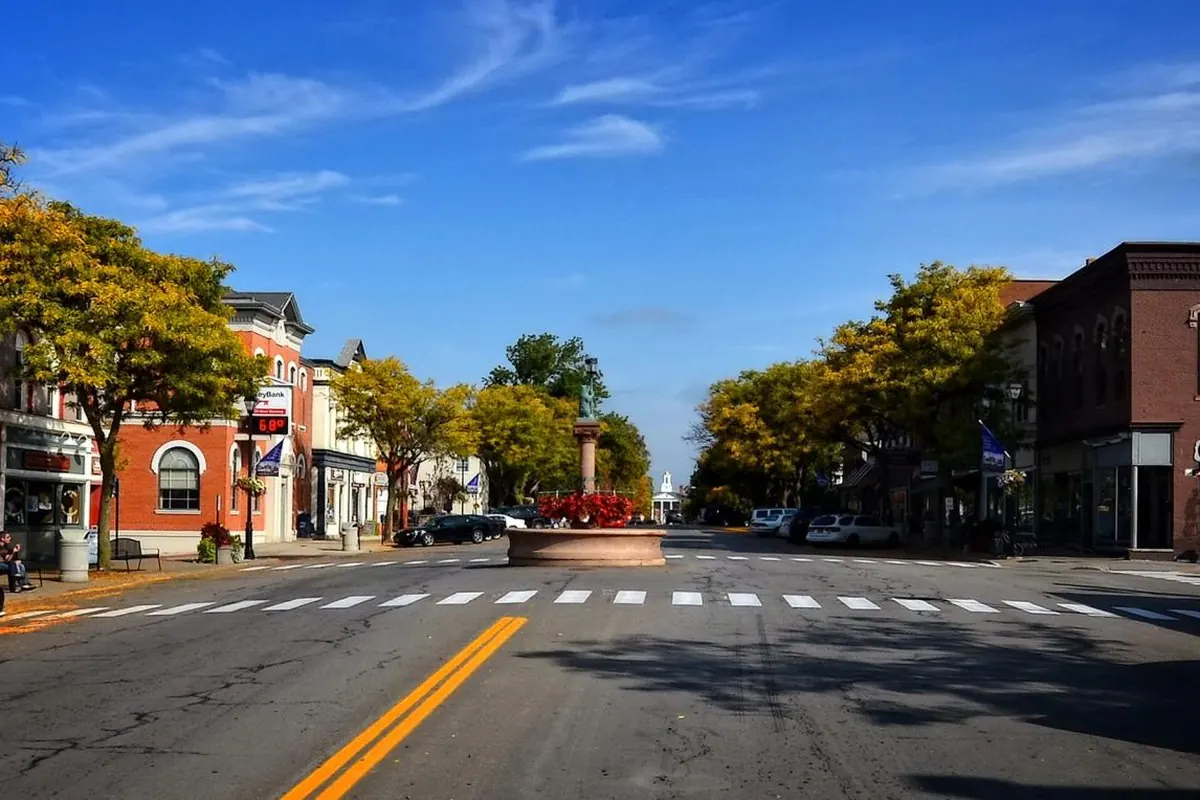
The spine of the village, with the Bear Fountain circle at its center and the courthouse at its north end. Roofs here are steep, old, and close to the street.
Livingston County Seat
Geneseo sits on the rim of the Genesee River Valley, a county seat with a college on one side and farm country on the other. The wind that rolls up the valley meets steep historic roofs on Main Street and wide farmhouse roofs past the village line, and each one ages in its own way.
Geneseo, NY
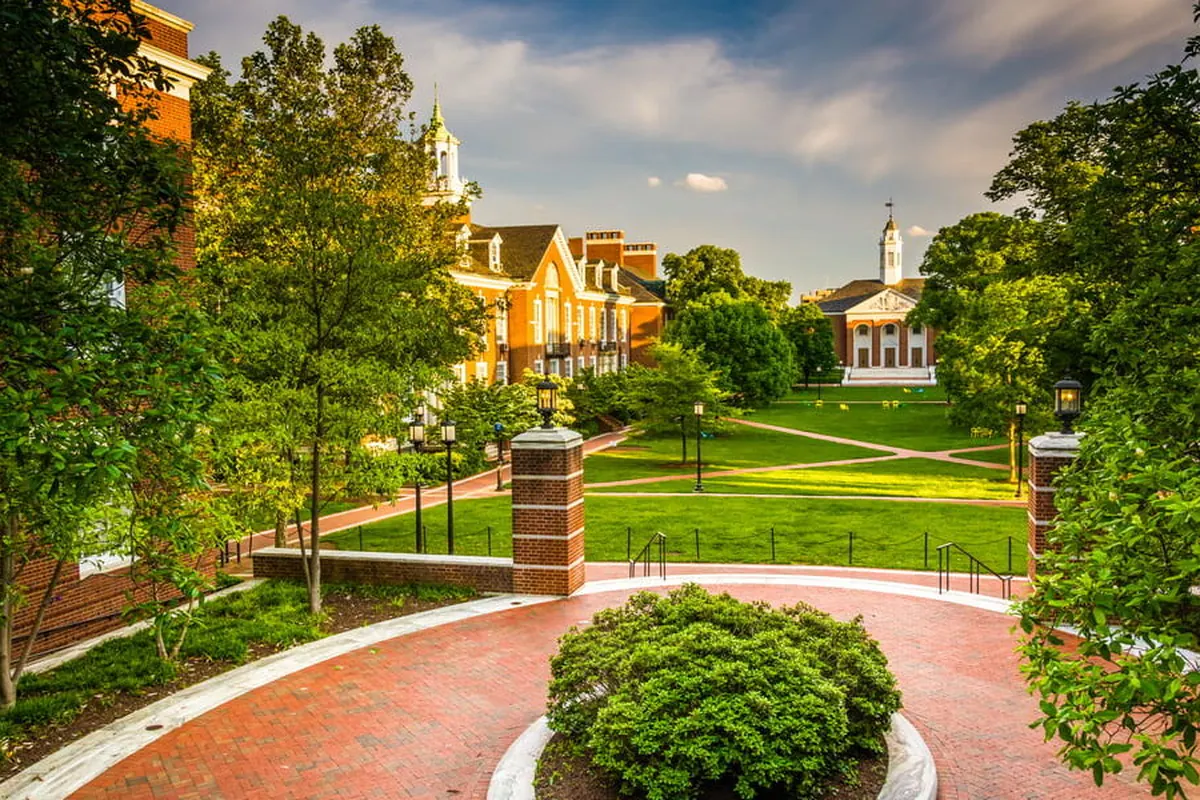
Geneseo became the seat of Livingston County in 1821 and was incorporated as a village in 1832. The courthouse and county offices stand at the end of Main Street, and the village grew around that civic core, with the State Normal School, now SUNY Geneseo, opening in 1871 and pulling the west side of town toward the campus. Main Street runs the length of the village, with the Bear Fountain in a circle at its center, and the Wadsworth Homestead anchors the south end.
The village sits about 30 miles south of Rochester, five miles east of Interstate 390, at the junction of Routes 39 and 63 with US Route 20A. That spot on the valley rim shapes the weather a roof sees. Wind comes up the Genesee River Valley with little to slow it, and winter cold settles into the valley floor while the village sits above it. A roof inspection here starts with the windward slope and the ridge, because that is where the valley wind works first.
Housing in the village runs from nineteenth-century homes on Main, Center, and Oak Streets to newer houses toward the north end, and farmhouses and barns spread across the town beyond the village line. The historic district, designated a National Historic Landmark in 1991, holds many of the oldest roofs. Those roofs carry steep pitches, tall brick chimneys, and slate or older shingles, and their flashing has moved with the seasons for well over a century.
Streets and corners
The spine of the village, with the Bear Fountain circle at its center and the courthouse at its north end. Roofs here are steep, old, and close to the street.
One of the original streets from the 1830s, lined with older homes whose chimneys and valleys have seen a century of valley winters.
Opened in the late 1880s as the Normal School grew, with houses that sit between the campus and Main Street and catch the wind off the valley.
The road toward the village border, where older homes meet newer builds and the ground opens toward the town line.
The hill where the village school stood before the Normal School moved, with homes that look down toward Main Street.
The historic homestead at the south end of Main Street, where the village meets open farmland and the valley view opens wide.
Valley weather
Valley wind
Wind rolls up the Genesee River Valley and hits the village from below with nothing to break it. Tabs lift on the windward slope first, and a ridge cap that looks fine from the street can be loose at the corners.
Valley cold
Cold air settles in the valley while the village sits above it, so frost and thaw cycles run hard on the eaves. Ice builds where the roof edge stays cold and the attic stays warm, and that is where ice dams start.
Old flashing
On Geneseo's oldest homes, the flashing dates to the build, and a century of summers and winters has worked those joints loose. The chimney and the valleys give out long before the field of shingles does.
Materials
The right material in Geneseo depends on the age of the house and the pitch of its roof. A historic home on Main Street asks for something different than a farmhouse past the village line.
| Material | Where it fits in Geneseo | What to watch |
|---|---|---|
| Natural slate | Historic Main Street and Center Street homes, where the original roof was slate and the pitch is steep. | Tiles slip and crack with the seasons, and matching a slipped tile takes a roofer who knows slate. |
| Architectural shingles | Most village homes and newer builds, where a layered shingle suits the pitch and the neighborhood look. | Granule loss shows first on the windward slope, and valley wind can lift tabs on an exposed edge. |
| Standing seam metal | Farmhouses and barns past the village line, and steep roofs that need snow to slide clear. | Fasteners and seams need a look after a hard winter, and snow guards matter where a walkway sits below the eave. |
Swipe sideways to compare the three materials.
A street-level look
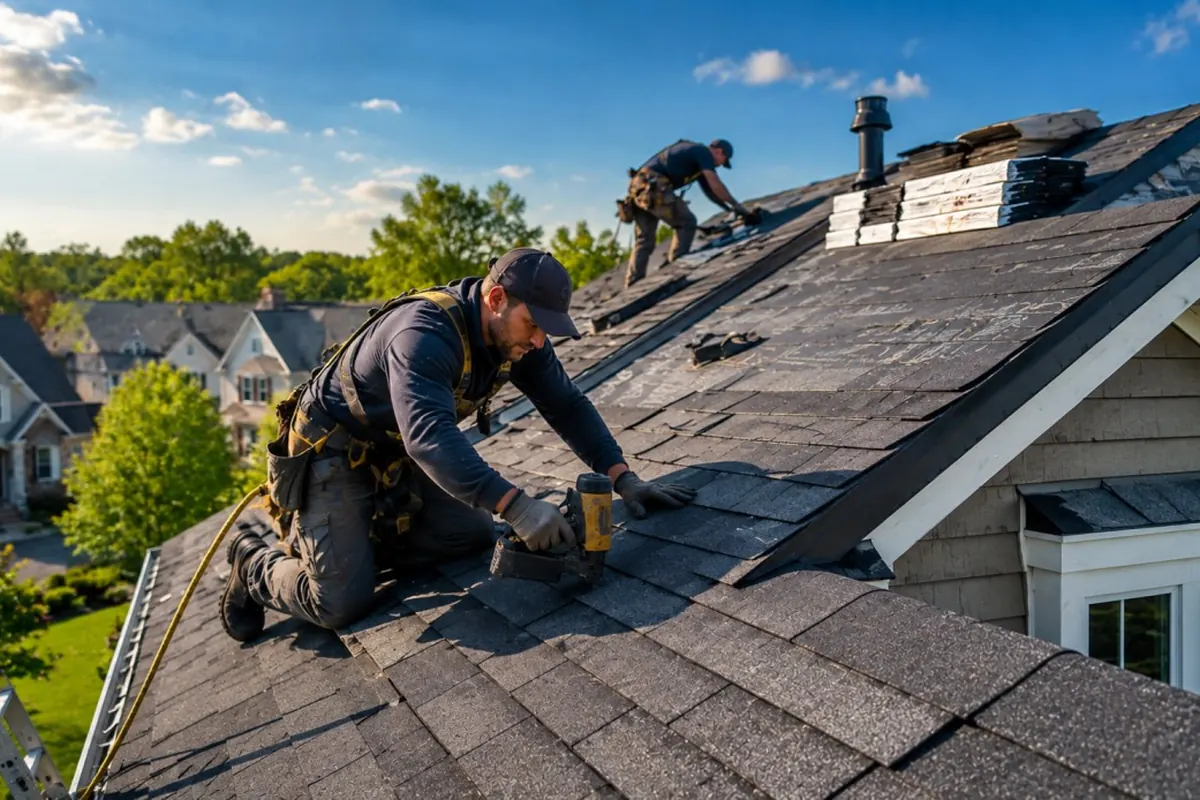
A repair visit on Main Street starts with the staging: a steep historic roof above a narrow sidewalk leaves no room for a dumpster at the curb, so the crew works from the driveway and the side yard. The first walk covers the ridge, the valleys, and the flashing at every chimney, and the plan is agreed with the homeowner before anything is torn off.
Slate work is the slow part. A slipped tile on a Main Street roof is matched by size and thickness, and the nail that held it is checked before the new tile goes in. On the farmhouses past the village line, the work is different: wide slopes, barn roofs, and snow that sits deep until the spring thaw.
Valley wind shapes the schedule. A storm and hail damage repair after a valley storm starts with the windward slope, where tabs lift at the corners first, and a roof inspection in spring reads the winter: lifted tabs, a slipped slate, flashing that opened at a chimney.
Through the year
Valley roofs hold deep snow, the eaves staying cold while the attic stays warm, so ice dams form at the edge. A roof rake keeps the load off the overhang.
The thaw shows what the snow hid: lifted tabs, a slipped slate, flashing that opened at a chimney. Spring is the season to walk the roof and read the winter.
Summer storms roll up the valley with wind and hail, and the big trees on the old streets drop limbs and leaves into the valleys and gutters.
On the old streets, maple and oak leaves fill the gutters, and a clogged gutter holds water against the fascia all winter. Clearing them before the first snow keeps the fascia dry.
Coverage
Geneseo village and the town of Geneseo share a single ZIP, and the work we do here runs from the historic district to the farmhouses on the town roads. The National Weather Service office in Buffalo covers Livingston County, and its winter storm warnings are the ones that matter for a Geneseo roof.
Geneseo village and the town around it sit under the 14454 ZIP in Livingston County.
Services
Lifted tabs on the windward slope, a slipped slate on Center Street, or flashing that opened at a chimney, each fixed at the source.
Learn more →Historic slate gets tiles matched by size and tone, with the flashing at chimneys and walls reset to match.
Learn more →Roof, attic, and flashing get a full walk on a Geneseo visit, with the findings told in plain words: what needs work now, and what can wait for later.
Learn more →Snow comes off the Geneseo overhang with a rake, the ice dams get steamed clear, and we check the attic ventilation so the dams stop coming back.
Learn more →Or write to us about the roof over your Geneseo home.
A slate slipped on Main Street, or ice at the eaves above the valley? Call and tell us which street the house is on.
Call (585) 868-0065FAQ
We do. We repair roofs across Geneseo, from the historic homes on Main and Center Streets to the farmhouses on the town roads past the village line. We start on the roof itself, reading the slate or shingles, the flashing, and the deck, and we finish with a plain-words plan for the fix. Call and describe what you see: the slope, the tile, or the stain.
Natural slate suits most historic Geneseo homes, since it matches the original character and holds up for a long time when it is cared for. Standing seam metal also fits steep historic roofs and sheds snow fast. The right one for your house comes down to the pitch, the structure, and the home itself, so we walk the roof before we name a material.
Cold air pools in the Genesee River Valley while the village sits on the rim, so the eaves stay cold and the attic stays warm. Snow melts higher on the roof, runs down, and turns back to ice at the cold edge, where the rim keeps the eave cold. The fix is a mix of attic air sealing, ventilation, and insulation, plus clearing any dam that has already formed.
Yes. The town of Geneseo past the village line holds farmhouses and barns, and those roofs face the same valley wind with even less shelter. Farmhouse roofs are often wider and lower pitched, so they hold snow longer, and barn roofs need their own fastener and flashing checks. We look at the house and the outbuildings on the same visit.
Wind rolls up the Genesee River Valley with little to slow it, and it hits the windward slope at full strength. Tabs lift at the corners first, and once a tab lifts, rain works under the next one. A walk along the ridge after a windy storm catches a lifted tab while the fix is still small.
Spring, after the first big snowmelt, and after any summer storm with hail or high wind. The spring thaw shows what the snow hid, and a look after a storm catches bruised shingles while the fix is still small. Older homes in the historic district deserve a look every year, since their flashing has been moving with the seasons for decades.
Fountain circle, courthouse, and valley rim
Geneseo roofs center on Main Street, where the Bear Fountain circle, the courthouse, and the college shape a village that sits above the Genesee River Valley.
Main Street runs the length of the village, with the Bear Fountain in a circle at its center and the courthouse and county offices at its north end. The roofs along Main Street are steep, old, and close to the street, and a repair visit there starts with the staging, because a steep historic roof above a narrow sidewalk leaves no room for a dumpster at the curb. The crew works from the driveway and the side yard, and the first walk covers the ridge, the valleys, and the flashing at every chimney before anything is torn off.
Center Street, one of the original streets from the 1830s, lines up older homes whose chimneys and valleys have seen a century of valley winters. Their flashing dates to the build, and a century of summers and winters has worked those joints loose. The chimney and the valleys give out long before the field of shingles does, and a Center Street roof wants its joints read first, because the field can look sound while the joints have already opened.
Oak Street opened in the late 1880s as the Normal School grew, and its houses sit between the campus and Main Street, catching the wind off the valley. Their slopes lift their tabs on the windward side, and a ridge cap that looks fine from the street can be loose at the corners. An Oak Street roof ages from the windward edge inward, and a ridge walk after a storm tells the story before any water reaches the rooms below.
The Wadsworth Homestead anchors the south end of Main Street, where the village meets open farmland and the valley view opens wide. Homes near the homestead sit where the village gives way to farm country, and their roofs catch the valley wind with little shelter. A south-end roof takes the wind from below, because the wind climbs the valley rim and hits the village from underneath, and the tabs on the lower slopes lift first.
Valley wind, campus, and barns
Valley wind shapes every Geneseo roof, because it rolls up the Genesee River Valley with nothing to slow it and meets the village from below.
Wind rolls up the Genesee River Valley and hits the village from below with nothing to break it. Tabs lift on the windward slope first, and the corners of the ridge caps loosen before the middle shows any wear.
Cold air settles in the valley while the village sits above it, so frost and thaw cycles run hard on the eaves. Ice builds where the roof edge stays cold and the attic stays warm, and that is where ice dams start.
Farmhouses and barns spread across the town beyond the village line, and their wide slopes hold snow deep until the spring thaw. Barn roofs wear metal panels, and the fasteners and the ridge flashing wear out first.
SUNY Geneseo pulls the west side of town toward the campus, and the houses near it mix older homes with newer builds. A campus-side roof wants its windward slope and its ridge read first, because the valley wind works there before it works anywhere else. A roof inspection in Geneseo starts with the windward slope and the ridge, and a metal roof check in Geneseo looks at the fasteners and the seams on farmhouse and barn roofs past the village line.
A valley year
A Geneseo roof meets a different valley test in each season, because winter snow, spring thaw, summer storms, and fall leaves each press on a different joint.
| Season | Main Street historic homes | Campus-side homes | Farmhouses past the line |
|---|---|---|---|
| Winter | Ice dams at cold eaves | Wind-lifted tabs on valley slopes | Deep snow sitting on wide slopes |
| Spring | Slipped slate and opened chimney flashing | Ridge caps loosened by winter wind | Barn fasteners eased by snow load |
| Summer | Vent boots dried by sun | Tree cover rubbing shingles on shaded slopes | Storm wind across open fields |
| Fall | Leaves in valleys between steep slopes | Gutters filling with campus tree leaves | Leaves matting in wide valleys |
The historic district holds many of the oldest roofs in the village, and those roofs carry steep pitches, tall brick chimneys, and slate or older shingles. A historic roof wants a roofer who has worked slate before, because a slipped tile matched by size and thickness keeps the slope true. Slate work in Geneseo matches the tile and checks the nail that held it, and snow and ice dam help in Geneseo clears the deep valley snow off the eaves before the dams form.
Slate slipped on Main Street, snow piled on a farmhouse past the village line, or ice at the eaves above the valley, call or email and say which kind of house it is.