Marion Village Village roofs
The crossroads village at the town center, where older homes and newer builds mix along the main roads.
Quiet Orchard Town
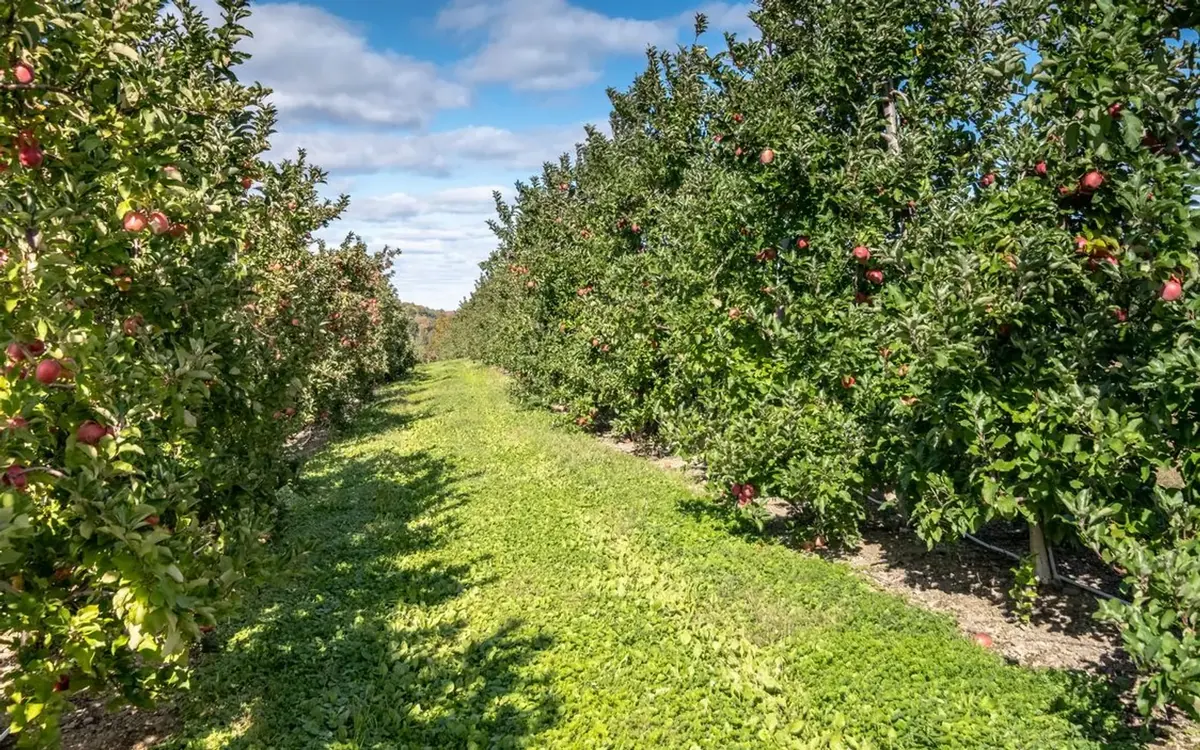
Marion is the quiet one among Wayne County towns, a farming community of orchard rows, farmhouses, and a small village center, with no highway and no crowds, just the roads between the apple trees. Its roofs are mostly farmhouse slopes and village houses, shaded by orchard trees and set on rolling ground, and the lake-effect snow reaches them all the same. A roof here has to stand up to orchard shade, wind across open fields, and long winters.
Marion, NY
Marion began in 1825 as the town of Winchester, formed from Williamson, and took the name Marion a year later, in 1826. It has stayed a farming town ever since, orchards and farmland across the rolling ground between Williamson and the lake shore. The village sits at the crossroads in the middle of town, the Marion Central schools nearby, and the rest of the town spreads out along the farm roads in every direction. No county in New York grows more apples than Wayne County, and Marion sits in the middle of that fruit belt, apple rows running to the edge of most properties.
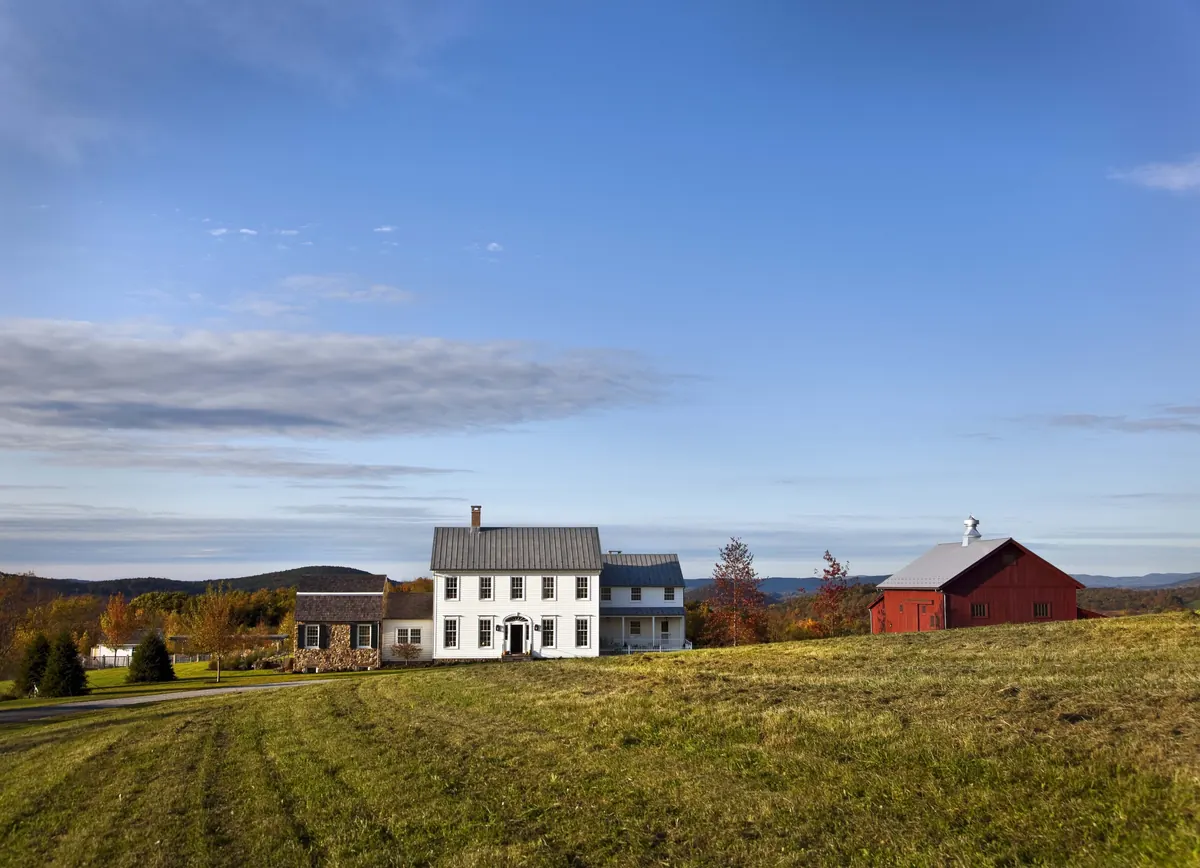
Roofs in Marion are mostly two kinds: farmhouse slopes among the orchard rows, and village houses near the crossroads. The farmhouses carry steep pitches, tall chimneys, and barns beside them, and their north sides sit in orchard shade for much of the day. The village houses carry the wider slopes of older homes and newer builds mixed together. Here an inspection starts on the shaded side, then moves to the windward side, the two faces of a Marion roof aging at different speeds.
Where people live
The crossroads village at the town center, where older homes and newer builds mix along the main roads.
Farmhouses among the apple rows, with steep pitches, barns close by, and north slopes in orchard shade.
Homes on the north side toward the lake, where the ground rises and the lake-effect snow bands drop first.
Houses on the southern farm roads toward Palmyra, where trees shade the roof and gutters fill with leaves each fall.
Homes on the east side toward Williamson, where the orchard rows run to the edge of the properties.
Homes on the west side toward Wolcott, where open fields give wind a clear run.
Orchard shade covers the north slopes of Marion farmhouses for much of the day, and shaded shingles hold damp from spring through fall. Moss moves in there first, lifting shingle edges and letting water sit against the roof. A shaded slope wants soft cleaning and a harder look than a sunny one gets. Our post on roof moss and algae in Rochester's damp climate walks through the gentle wash that clears it and the shade work that keeps it from coming back.
West and north of Marion the fields lie open, and wind crosses them without slowing. The south and west slopes take it first: tabs lift, ridge caps loosen, and a single lifted tab lets rain work under the next course. A ridge walk in the days after a storm spots the lift before the rain gets under the next course. After a storm, storm and hail damage repair in Rochester covers the lifted tabs and loosened caps the wind leaves behind.
Where a farmhouse attic has uneven insulation, heat escapes and melts snow from below. The meltwater refreezes at the eaves into a dam that backs up under the shingles.

Roof work
Our first step is always the roof, not a chat in the driveway. Farmhouse chimneys get a long look, since decades of freezing and thawing loosen that joint, and the shaded north slope gets read first, since moss pries shingle edges up there. Village houses get the closest look on the windward slope and in the valleys. We press the decking where damp has lingered for soft spots, and lift a few tabs to check the ridge caps from above.
A roof worn across whole slopes gets stripped right down and re-shingled in architectural shingles, a new beginning for the house.
Farmhouse or village house
| Roof detail | Orchard farmhouse | Village house |
|---|---|---|
| Pitch | Steep, often with dormers | Moderate, wide and simple |
| Shade | Orchard trees shade north slopes | Yard trees shade part of the roof |
| First trouble spot | Moss and chimney flashing | Wind-lifted tabs and valleys |
| Outbuildings | Barns and sheds share the storms | Usually a small shed only |
| Gutters | Fill with orchard leaves each fall | Fill with leaves from yard trees |
Marion sits square in the lake-effect belt, and Wayne County homeowners follow the snow forecasts that National Weather Service office in Buffalo posts all winter.
Services
Wind lifts the open-field tabs, moss lifts the orchard edges, and the chimney flashing works loose.
Learn more →A full walk of the slopes, ridge, flashing, and decking, with plain-words findings.
Learn more →Skylight flashing reset where the frame meets the roof, the most common farmhouse leak.
Learn more →Guards keep orchard leaves out of Marion gutters, so the water keeps flowing off the roof each fall.
Learn more →Orchard rows shade one slope and leave the other bare, so write in through the contact page naming the road and the shaded side.
A farmhouse roof shaded by orchard trees, or a village roof worn thin by winters? Call and tell us where in Marion the house is located.
Call (585) 868-0065Coverage
We work across Marion, village streets and orchard roads alike, and the ZIP below draws the line around that ground.
Marion answers to one ZIP, 14505, in Wayne County.
FAQ
The north side never sees sun. Orchard trees throw shade over the north slopes through much of the day, and shaded shingles stay wet through spring and fall. Moss loves that moisture, starting as a green film, then prying shingle edges up and trapping more water against the roof. A shaded farmhouse slope grows moss sooner than a sunny village slope. Soft cleaning and trimmed branches hold it down.
Ice dams at the eaves, fed by attic heat leaking through uneven insulation, and wind-lifted tabs on the open fields. An ice dam announces itself with thick icicles and stains on the ceiling by the outside walls. Wind lift shows as a tab lifted clear of the slope after a storm.
Usually, yes, when the shingles around the skylight are still in good shape. A skylight leak comes from flashing that has lifted or cracked where the frame meets the roof, and the flashing can be reset in place. We check the shingles around the skylight for soft spots, set new flashing, and test the seal. A full replacement only makes sense when the wear runs across whole slopes.
An annual check works well, and spring is the season for it. A spring check catches the winter damage while it is still small: lifted tabs, split vent boots, flashing that shifted at the chimney, and moss that spread on the shaded slopes over the winter.
Yes. Marion farmhouses usually have a barn or a shed close by, and those roofs face the same wind, snow, and ice. Barn roofs most often wear metal panels, and the fasteners and ridge flashing wear out first. We walk the barn roof during the same visit as the house, and we sort the findings the same way: what wants doing now, and what can hold until next season.
When wear runs across whole slopes instead of one spot. Repair suits a few lifted tabs, a run of flashing, or a vent boot split by the cold. Replacement fits when granule loss leaves bare patches across the slope, when tabs curl across the whole roof, or when the decking gives underfoot in more than one place.
Nearby towns
Newark lies south as the county hub, and Wolcott sits east past the orchards, so Marion roof work often reaches into one of those two towns.
Crossroads, school roads, and orchards
Marion roofs center on the village crossroads and spread out along the school roads and the orchard farm roads, and the orchard shade follows every one of them.
The village sits at the crossroads in the middle of town, where older homes and newer builds mix along the main roads. Those village houses carry wider slopes than the farmhouses, and their valleys gather water during a hard rain. A village valley that has lost its granules shows as a dark line from the ground, and it deserves a walk from above, because valley shingles wear through long before the field shingles around them do.
Marion Central schools stand near the village, and the houses along the school roads carry roofs that face the same orchard shade as the farmhouses. Yard trees shade part of those roofs, and the shaded sections grow moss while the sunny sections stay clean. A school-road roof can show two kinds of wear at once, with moss on the shaded face and wind lift on the open face, and a walk that reads both faces separately catches both before either one lets water through.
North Marion runs toward the lake shore, where the ground rises and the lake-effect snow bands drop first. Homes on the north side take the snow deepest, and their low slopes hold it for days after a band passes. The snow melts from below where attic warmth reaches the deck, and the meltwater runs to the cold eave and turns back to ice. A north Marion roof wants its attic airflow checked before winter, so the deck stays cold and the snow stays where it fell until it melts from the top.
South Marion runs toward Palmyra, where the farm roads wind between orchard rows and the trees shade the roofs and fill the gutters with leaves each fall. A south Marion farmhouse gutter that holds a mat of wet leaves through October sends rain back under the shingles at the eave, and the decking beneath it softens first. A fall clearing before the snow arrives keeps the water moving away from the roof, and the skylight flashing on a south Marion farmhouse wants a look at the same time, because the frame meets the roof at the most common farmhouse leak point.
Quiet lanes and tall chimneys
Marion winters test a roof at its chimney, its shaded slope, and its eaves, and each of those three spots shows trouble in a different way.
Decades of cold seasons loosen the flashing where brick meets roof, and the gap lets rain run along the deck before it shows inside. A stain well away from the chimney often traces back to that joint.
Orchard shade keeps the north slope wet from spring through fall, and moss lifts the shingle edges a little each season. A soft wash in spring clears the growth while the shingles beneath it are still sound.
Thick icicles at the eaves mean meltwater is turning back to ice where the eave stays cold, and the dam behind them pushes water under the shingles. The attic floor, not the eave, is where that trouble starts.
A skylight on a Marion farmhouse leaks at the frame more often than at the glass, because the flashing where the frame meets the roof moves with the seasons. Skylight work in Marion resets that flashing, and a roof inspection in Marion reads the chimney, the shaded slope, and the skylight in one visit.
Orchard shade and open wind
West and north Marion open onto fields where the wind has a clear run, while east Marion stays among the orchard rows, and the two sides wear their roofs differently.
| Roof watch | Village and school roads | North Marion toward the lake | West Marion open fields |
|---|---|---|---|
| First mark of trouble | Valley wear where water concentrates | Deep snow sitting on low slopes | Wind-lifted tabs on open slopes |
| Shade | Yard trees shade part of the roof | Orchard trees shade north slopes | Little shade, wind does the wearing |
| Gutter trouble | Leaves from yard trees each fall | Orchard leaves mat in gutters | Granules wash into gutters after storms |
| Outbuildings | Small sheds only | Barns beside farmhouses | Barns and sheds share the storms |
Marion has no highway and no crowds, and its roofs age quietly, with the orchard shade doing slow work on one slope while the open-field wind does faster work on the other. A spring walk that reads the shaded slope, the windward slope, and the chimney together shows what the winter left behind, and gutter work in Marion keeps the orchard leaves from damming the water at the eave before the snow arrives.
Orchard shade, a skylight that drips each spring, and snow sitting heavy on a farmhouse slope are the three signs we hear most from Marion. A short note by email or a call both work: say whether yours is the farmhouse or the village house, and which of those three signs you are seeing.