Black algae streaks
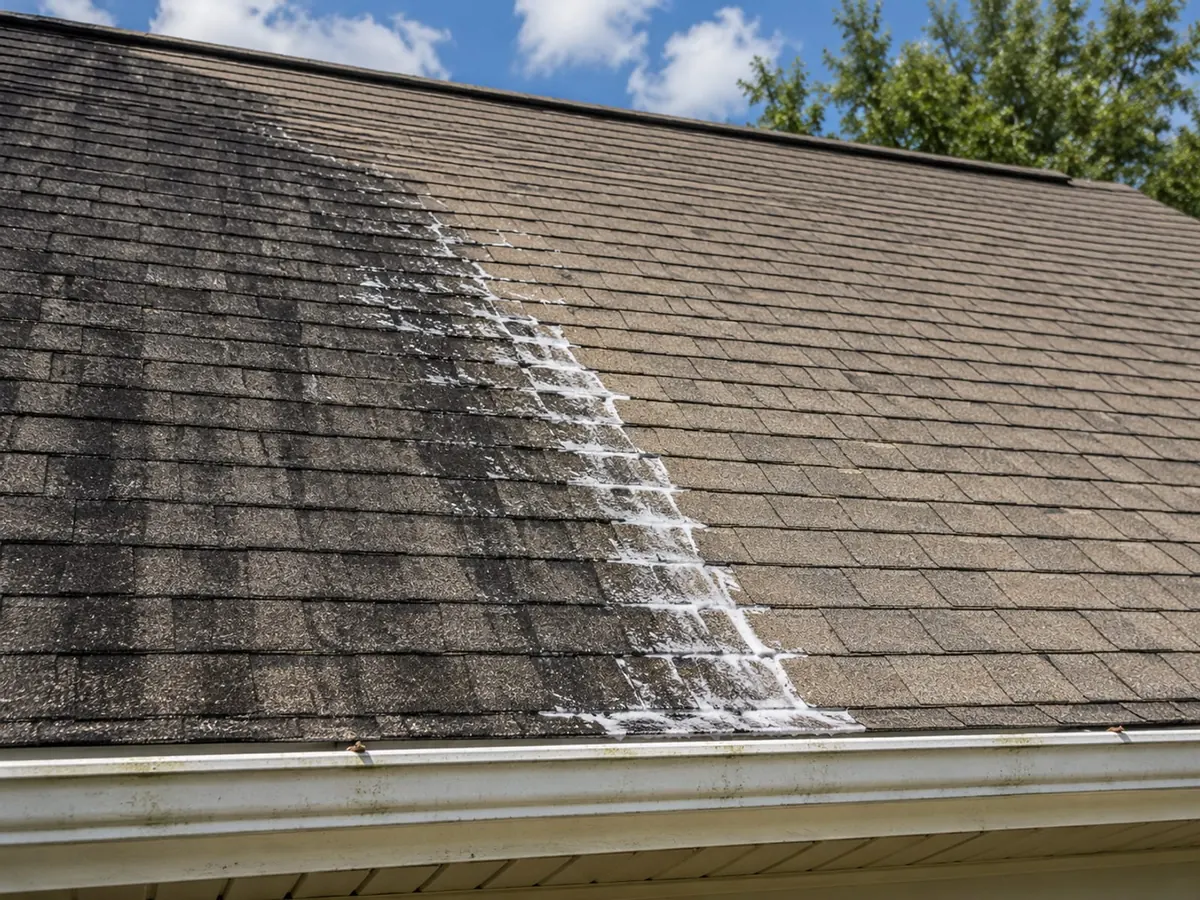
Dark streaks running down the slope, worst on the north side. Algae feeds on the limestone in the shingles. It stains and holds moisture, but it rarely lifts a shingle on its own.
Damp Climate Roof Care
Lake Ontario keeps Rochester damp, and damp roofs grow moss and algae. The north slope and the shaded valleys go first, and the growth does real damage if it is left alone.
Rochester's damp climate
Rochester is a damp city. Lake Ontario keeps the air moist, the summers are humid, and the winters hold snow on the roof for months. That dampness is ideal for moss and algae, and the north-facing slopes and shaded valleys of a Rochester roof are where they take hold first. A roof under trees, or one that stays shaded most of the day, can grow a green carpet in a few seasons.
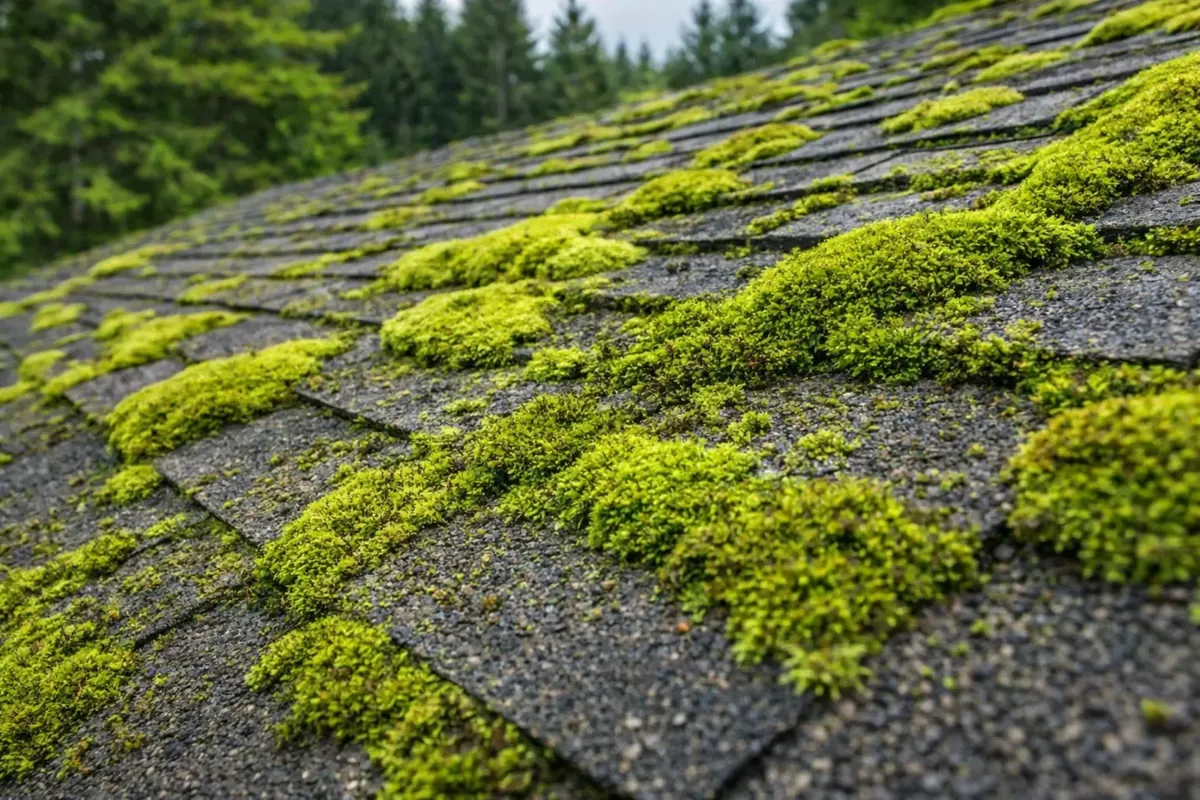
Moss and algae are not the same thing, and they do different damage. Algae shows as black streaks running down the slope, and it feeds on the limestone filler in asphalt shingles. It stains the roof and holds moisture, but it rarely lifts a shingle on its own. Moss is the bigger problem: it grows in thick mats, holds water against the surface, and lifts shingle edges as it spreads, opening the roof to wind and rain.
The shade matters more than the age. A young roof in deep shade can grow moss faster than an old roof in full sun, and a roof that holds snow late into spring stays damp long enough for moss to root. The first sign is usually a green tint along the lower edge of a slope, or dark streaks that do not wash off in the rain.
Know what you are looking at
Each one needs a different response. Cleaning the wrong growth the wrong way can do more harm than the growth itself.
Dark streaks running down the slope, worst on the north side. Algae feeds on the limestone in the shingles. It stains and holds moisture, but it rarely lifts a shingle on its own.
Thick green mats, usually near the eaves and in shaded valleys. Moss holds water against the surface and lifts shingle edges as it grows, opening the roof to wind and rain.
Crusty, pale green or gray patches that cling to the shingle face. Lichen grows slowly and anchors into the granules, so scraping it off takes granules with it.
Cleaning it right
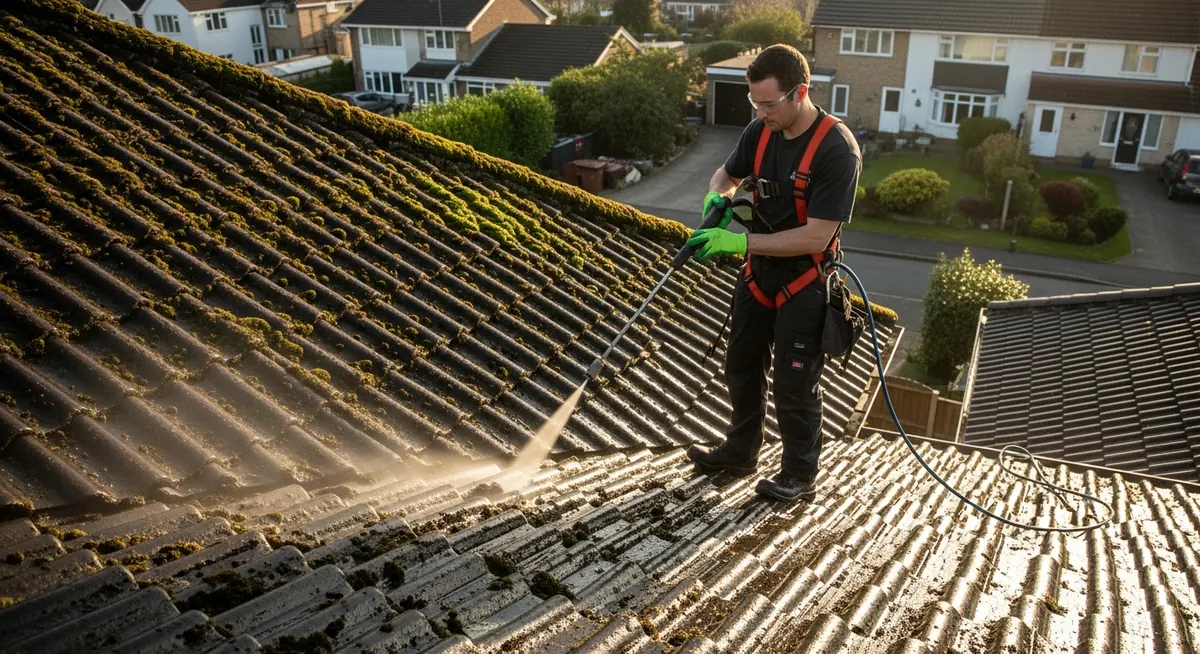
The safe way to clean a roof is a low pressure wash with a treatment made for roofing, applied from the ridge down and left to work, then rinsed gently. High pressure water strips granules off the shingles and drives water under the courses, and it can do more damage in an afternoon than years of moss. A crew that cleans roofs uses low pressure, the right treatment, and a soft rinse, and it never aims the spray uphill under the shingle edges. When the growth is heavy, a roof maintenance visit in Rochester reads the shingles first, so the cleaning never strips a roof that is already worn thin.
Zinc and copper strips near the ridge help keep algae from coming back. Rain washes a small amount of metal down the slope with each storm, and the metal slows new growth. The strips are fitted under the ridge cap during a replacement or a repair, and they work quietly for years. They are not a cure for heavy moss, which has to be cleaned first, but they slow the return.
Trimming back the branches that shade the roof helps just as much. More sun dries the slope faster after rain, and a dry slope grows moss far more slowly. A roof maintenance visit in Rochester can read the growth, the shade, and the shingle condition together, and say whether the roof needs cleaning, treatment, or a closer look at the shingles underneath.
Clean it or leave it
Not every green roof needs cleaning. The shingle underneath decides.
The rule is simple: cleaning helps a sound roof and harms a worn one. If the shingles under the moss are already thin, curled, or lifting, cleaning strips what is left. Read the shingles first, then decide.
Prevention
Cleaning is the reset. Prevention is what keeps the roof clear for years after.
Sun is the best prevention. Trim branches that hang over the roof, so the slope dries after rain and snow. Clear leaves and debris from the valleys and gutters, since a mat of wet leaves holds moisture against the shingles all winter. And keep the roofline clear of overhanging limbs, which drop debris and shade the slope at the same time.
A yearly look from the ground catches new growth while it is still light. If you see green along the eaves or streaks on the north slope, that is the time to act, while a low pressure treatment can still clear it. Our post on how to extend your roof's life in Rochester covers the full maintenance rhythm, and signs your Rochester roof needs replacing helps you read whether the shingles underneath are still sound.
People also ask
Short answers on black streaks, moss mats, and cleaning a Rochester roof safely.
Black streaks are algae feeding on the limestone filler in asphalt shingles, and they thrive in Rochester's damp air. They show worst on the north-facing slope and in shade, where the roof stays damp longest. The streaks stain the roof and hold moisture, but they rarely lift a shingle on their own.
It is a real problem. Moss grows in thick mats that hold water against the shingle surface, and it lifts shingle edges as it spreads, opening the roof to wind and rain. Light moss on a young roof can be cleaned, but heavy moss across a whole slope usually goes with shingles that are already worn thin.
No. High pressure water strips granules off the shingles and drives water under the courses, and it can do more damage in an afternoon than years of moss. The safe method is a low pressure wash with a treatment made for roofing, applied from the ridge down and rinsed gently.
Moss spreading across your roof? Call and ask for a roof read before you clean it.
Call (585) 868-0065Frequently asked questions
Trim branches that shade the roof, so the slope dries after rain, and clear leaves from the valleys and gutters. Zinc or copper strips near the ridge help too, since rain washes a small amount of metal down the slope and slows new growth. Cleaning is the reset, and sun and airflow keep it clear.
Algae itself does little structural harm, but it holds moisture against the shingle surface and it feeds on the limestone filler, which thins the shingle over time. The bigger harm is the dampness it keeps on the roof, which lets moss take hold. A low pressure treatment clears it without hurting the shingles.
Moss grows in thick green mats that hold water and lift shingle edges. Lichen grows as crusty, pale patches that anchor into the granules, so scraping it off takes granules with it. Both grow in damp shade, but moss does more harm, and lichen needs a gentler touch.
No. A yearly look from the ground is enough, and cleaning only when growth appears. Over-cleaning wears the shingles, especially with pressure. Treat the growth when you see it, trim the shade, and let the roof dry between rains, and watch the north slope for new streaks.
Yes, they slow new growth. Rain washes a small amount of zinc down the slope with each storm, and the metal discourages algae and moss. The strips work best after the roof has been cleaned, and they need rain to carry the metal down the slope, so they help most on roofs that get regular rain.
Yes, when it lifts shingle edges and holds water against the surface. A lifted edge lets wind-driven rain under the course, and the damp mat keeps the shingle wet long after the rain stops. Heavy moss across a slope, with shingles lifting under it, is a leak risk, not just a look.
Keep reading
Call and we will read the growth and the shingles under it, and tell you plainly what the roof needs.