Downtown Newark Commercial flat roofs
The brick commercial blocks along the canal and Main Street, where flat membrane roofs meet parapets and drains.
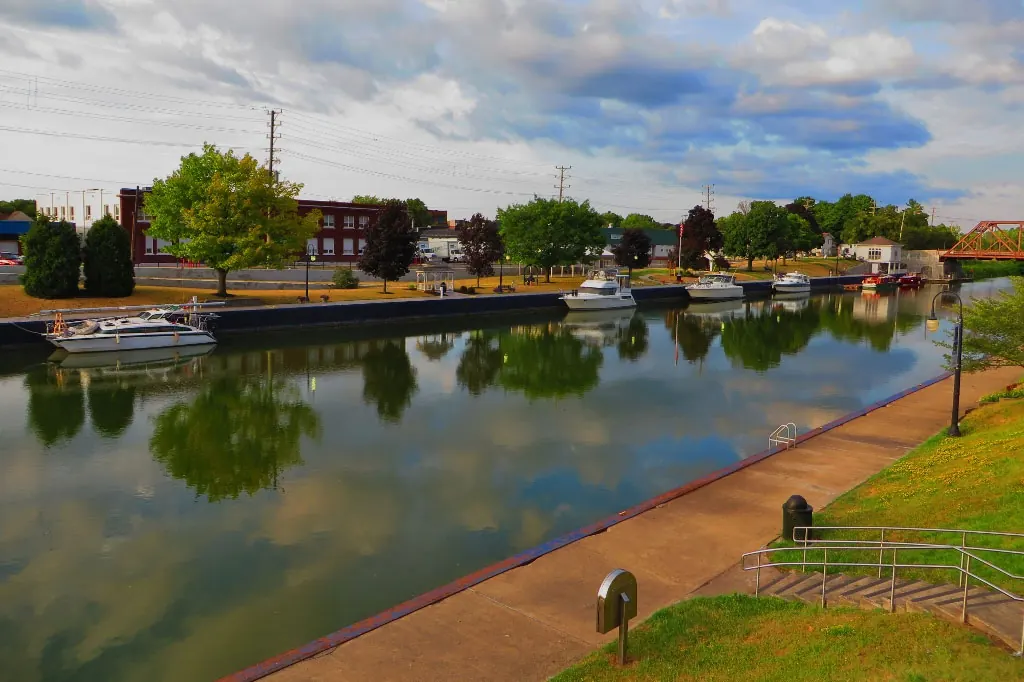
Wayne County Commercial Hub
Newark is the commercial hub of Wayne County, a canal village where the Erie Canal runs through the center of town and Route 88 carries the traffic north to the lake. Its roofs range from brick commercial blocks and older homes in the village to farmhouses out in the town of Arcadia, and the lake-effect snow reaches all of them. A roof here has to handle canal damp, village age, and long winters.
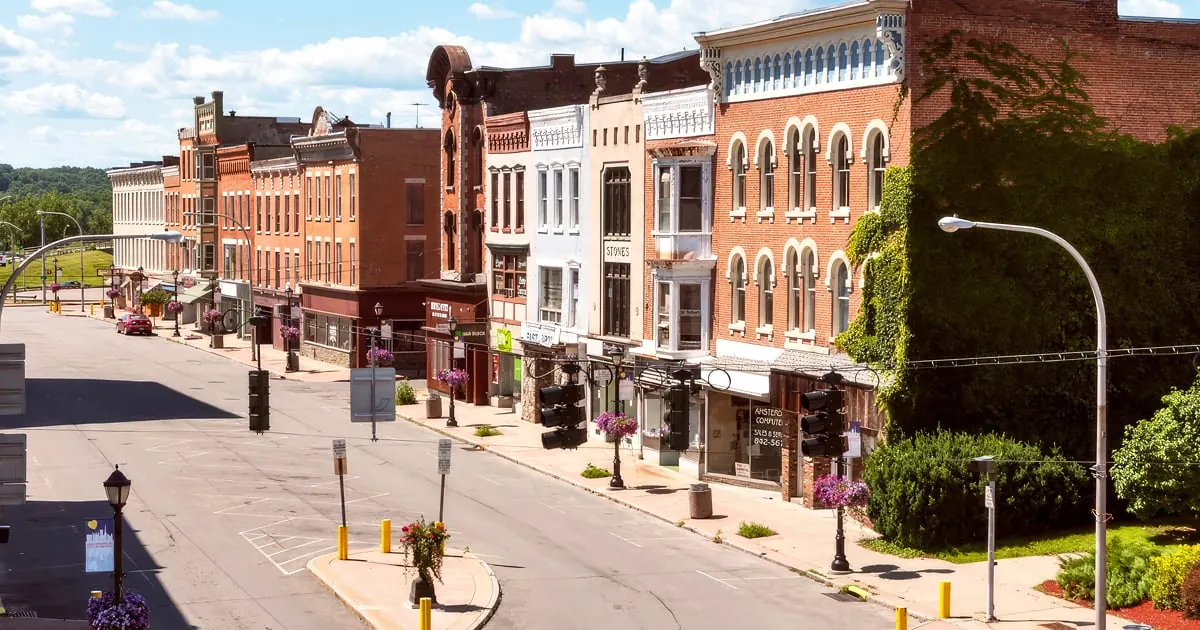
Newark, NY
Newark began as Miller's Basin, named for Captain Joseph Miller, who contracted to build a section of the Erie Canal through the region. The canal still runs through the village, with dockage at T. Spencer Knight Park, and the village grew around it into the commercial center of Wayne County, with shops, restaurants, a movie theater, and the Newark-Arcadia Museum. The village sits in the town of Arcadia, which was formed from Lyons in 1825, and the hamlet of Fairville just outside the village holds farm markets and Christmas tree growers. Newark is a large village for the county, and its roofs show that scale: brick commercial blocks downtown, older homes on the village streets, and farmhouses out in the town.
Newark roofs come in three kinds, and the building decides which one you have. The downtown commercial blocks carry flat and low-slope roofs with membrane, drains, and parapets, and ponding water is their first enemy. The village homes carry steep pitches with older shingles and tall brick chimneys. The farmhouses out in Arcadia carry lower slopes with barns beside them. A roof inspection here reads the building first: flat roof, village house, or farmhouse, and each one gets a different walk.
Village and town
The brick commercial blocks along the canal and Main Street, where flat membrane roofs meet parapets and drains.
Older homes east of downtown, with steep pitches, tall chimneys, and shingles worn by many winters.
Homes west toward the town line, where village houses mix with newer builds on open lots.
The hamlet outside the village, where farm markets, farmhouses, and Christmas tree growers share the roads.
Houses and shops along Route 88 north toward the lake, where the road carries the traffic and the wind.
Farmhouses on the town roads around the village, with steep pitches, barns, and open-field wind.
Moisture off the canal keeps the downtown air damp, and shaded slopes on the village streets stay wet through spring and fall. Moss and algae take hold on north-facing shingles first, and flat roof seams face more standing water after rain. Canal damp feeds moss on the shaded village slopes, and a spring roof inspection after a Rochester winter catches the moss and the flat-roof seams before the summer storms.
Flat commercial roofs in Newark pond water where the drains clog or the slope has settled. Standing water wears membrane seams and finds every weak joint. A flat roof check starts at the drains and works across the field, looking for the low spots where water sits after rain.
Village homes with uneven attic insulation feed ice dams at the eaves, where meltwater runs down and refreezes under the shingles.
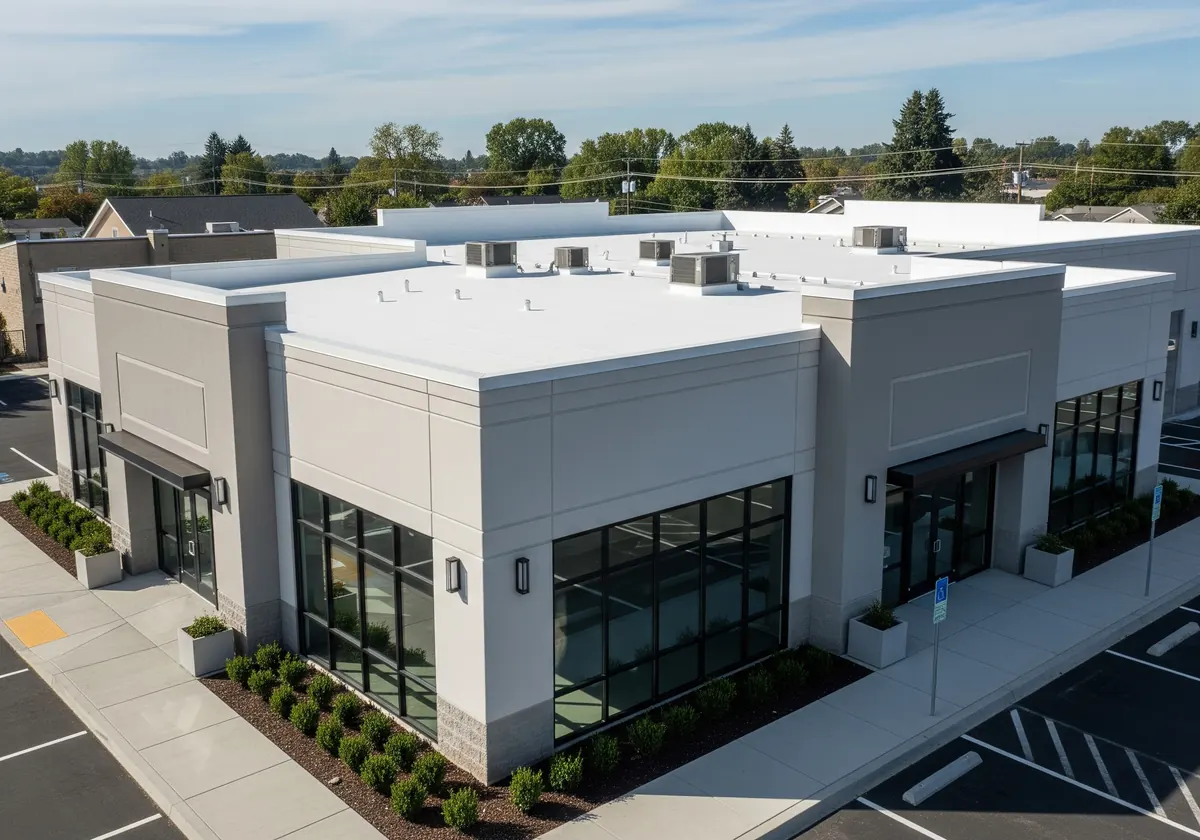
Roof work
We start on the roof, walking the slopes and the membrane, before we talk through anything in the driveway. On a downtown flat roof we walk the membrane, check the seams and the flashing at the parapet, and look for the low spots where water ponds after rain. On a village house we walk the slopes, check the ridge caps, and look at the chimney flashing where brick meets roof. On a farmhouse we check the shaded north slope for moss and the barn roof on the same visit.
A roof worn across whole slopes gets torn off to the deck and re-laid in architectural shingles for a new start.
Three building types, three roofs
| Roof detail | Downtown commercial block | Village house | Arcadia farmhouse |
|---|---|---|---|
| Shape | Flat or low-slope, parapet | Steep pitch, dormers | Lower pitch, wide eaves |
| Common covering | Membrane, single-ply | Older shingles | Architectural shingles |
| First trouble spot | Ponding at drains | Chimney flashing | Moss and eave ice |
| Snow behavior | Drifts against parapets | Sheds off steep pitches | Sits on lower slopes |
Lake-effect snow hits Newark hard, and the snow forecasts from National Weather Service office in Buffalo are the ones Wayne County homeowners watch through the winter.
Coverage
Our Newark ground covers the downtown streets and the town roads beyond, and the ZIP below marks where we work.
One ZIP, 14513, covers Newark in Wayne County.
A flat roof ponding after rain, or shingles worn thin on a village street? Call and tell us which part of Newark the building sits in.
Call (585) 868-0065FAQ
Flat roofs drain slowly by design, and water ponds where a drain clogs or the roof has settled into a low spot. Standing water wears at membrane seams and hunts out every weak joint, so a pond that stays for days deserves a look. A flat roof check begins at the drains, clears whatever blocks them, and maps the low spots where water stands.
Some do, mostly on the older brick houses near downtown. Slate holds up for decades when the tiles and the flashing under them stay sound, and one slipped tile is usually a fast fix. Over the years, plenty of village houses have switched to architectural shingles, which sit nicely on the steep pitches. We walk the roof and examine the tile, the flashing, and the decking before naming a material.
Chimney flashing and valley wear, because village houses are older and taller, with more brick chimneys and more valleys than the farmhouses. Decades of freezing and thawing loosen the flashing where brick meets roof, while water collects in the valleys. A spring check begins at the chimney and runs down the valleys, and most village leaks trace to one of those two spots.
Twice a year is a good rhythm: once in spring, after the snow leaves, and once in fall, before it comes back. A spring check finds seam wear, flashing that moved with the freeze and thaw, and drains that clogged over the winter. A fall check clears the drains and makes sure the roof is ready to sit under snow for months.
Usually, yes, when the wear stays in one place rather than spreading across whole slopes. Repair suits a few lifted tabs, a run of chimney flashing, or a vent boot split by the cold. Replacement fits when granule loss leaves bare patches across the slope, when tabs curl across the whole roof, or when soft spots show in the decking in more than one place.
It adds moisture to the air downtown, and shaded slopes near the water stay wet longer in spring and fall. That moisture feeds moss and algae on the north-facing shingles, and the moss lifts shingle edges a bit more each season. Sunny slopes dry quickly and stay cleaner. A shaded canal-side slope deserves a closer look each spring, and gentle cleaning keeps the growth from taking hold.
Services
Downtown membrane roofs get drains cleared, seams checked, and parapet flashing reset.
Learn more →A full walk of the roof, read by the building type: flat block, village house, or farmhouse.
Learn more →Lifted tabs, chimney flashing, and cracked vent boots fixed at the source.
Learn more →Brick commercial blocks get flat roof care that keeps the shops below dry.
Learn more →A downtown block or a Fairville street, leave us a note describing the building and the leak that keeps coming back.
Nearby towns
Palmyra lies west on Route 31 past the canal, and Marion sits north among the orchards, and Newark roof work often crosses into one of those two towns.
Towpath, highway, and flat roofs
Newark roofs split three ways at the canal, because the downtown blocks carry flat membrane, the village streets carry steep shingles, and the farm roads carry wide farmhouse slopes.
The Erie Canal runs through the center of Newark, and the towpath beside it carries walkers past the brick commercial blocks downtown. Those blocks carry flat roofs with membrane, drains, and parapets, and the canal damp keeps the downtown air moist through spring and fall. A flat roof downtown ponds water where a drain clogs or the membrane has settled into a low spot, and standing water wears at the seams a little with every rain. A flat roof check starts at the drains, clears whatever blocks them, and maps the low spots where water stands after a storm.
Route 88 runs north from the village toward the lake, and the houses and shops along it face wind that follows the road corridor. Their slopes take the wind head-on, and the windward tabs lift a little with every hard blow. A Route 88 roof that faces the road shows its wear on the road side first, with the ridge caps loosening at the corners and the tabs standing proud of the slope after a storm.
T. Spencer Knight Park holds the canal dockage in the village, and the houses near the park sit close to the water. Their shaded slopes stay wet longer in spring and fall, and moss and algae take hold on the north-facing shingles first. A canal-side slope wants a closer look each spring, when the green film is thin and a soft wash clears it without stripping granules from the shingles beneath.
The Newark-Arcadia Museum keeps the village history on show, and the older homes around it carry the same steep pitches and tall brick chimneys as the rest of the village streets. Their flashing has moved with the seasons for decades, and the valleys where two slopes meet gather water during a hard rain. A village house roof ages at the chimney and the valleys first, and a spring walk that starts at the chimney and runs down the valleys finds most village leaks before they reach the rooms below.
Rain and snow in the hub
Rain tests a Newark commercial block at its drains, and snow tests a village house at its eaves, so the two kinds of roof want two different walks.
Rain pools on a flat Newark roof where the drains clog, and the pond wears at membrane seams while it stands. A post-rain walk maps the ponds, checks the seams around them, and looks at the parapet flashing where the membrane meets the brick. Commercial roof work in Newark covers the drains, the seams, and the parapet in one visit.
Snow sits deep on village roofs, and attic warmth melts it from below, so the meltwater runs to the cold eave and turns back to ice. The dam behind the icicles pushes water under the shingles, and the stain shows on the ceiling by the outside wall. A attic airflow check in Newark looks at the insulation gaps that feed the dam.
A flat roof that ponds for days after rain deserves a look before the next storm, because standing water finds every weak joint in the membrane, and a seam that opens under water lets the rain straight through to the shops below. Flat roof work in Newark resets the flashing at the parapet and reseals the seams where the water has been standing.
Fairville, Arcadia, and the town roads
Fairville and the Arcadia farm roads hold the farmhouses and barns around Newark village, and their roofs face open-field wind with little shelter.
| Roof watch | Downtown blocks | Village streets | Fairville and Arcadia |
|---|---|---|---|
| First mark of trouble | Ponding at drains after rain | Chimney flashing loosened by cold seasons | Moss on shaded north slopes |
| Snow behavior | Drifts pile against parapets | Snow sheds off steep pitches | Snow sits on wide lower slopes |
| Gutter trouble | Drains clog with leaves and debris | Gutters fill with yard tree leaves | Farm lane leaves mat in gutters |
| Outbuildings | None, shared walls instead | Small sheds only | Barns and sheds share the storms |
Fairville holds farm markets and Christmas tree growers, and the farmhouses there carry barns beside them. A barn roof in Arcadia wears metal panels, and its fasteners and ridge flashing wear out first, so a barn check belongs on the same visit as the house roof. A roof inspection in Newark can cover the village house, the Fairville farmhouse, and the barn roof in one trip, and a roof repair visit in Newark handles the lifted tabs, the chimney flashing, and the cracked vent boots that the cold seasons leave behind.
Downtown Newark holds flat roofs, village streets hold chimneys that drip, and the farmhouses past the village line hold snow, so the building type decides the visit. Write to us and name the building: a downtown block, a village house, or a farmhouse, and say what it has been doing this season.