Step 1
From the ground
Read the roofline for sagging, scan the slopes for missing or lifted shingles, and look for granules washed down the walls or piled in the gutters.
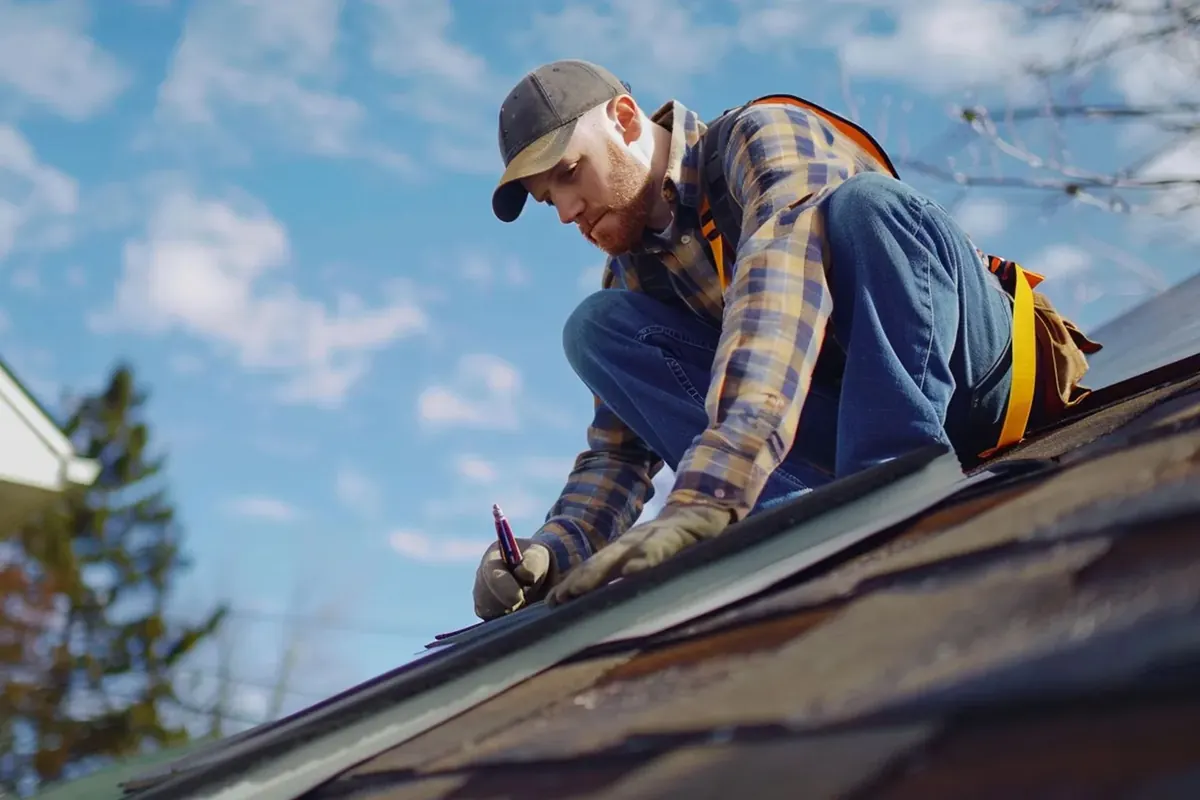
Spring Inspection
Rochester winters are long, and by April every roof in town has a story to tell: 102 inches of snow, months of freeze and thaw, and ice dams working the eaves. A spring inspection reads that story while the damage is still small and the repair season is just opening.
Why spring
Under snow, a roof looks fine. In April, with the snow gone and the light back, the truth shows: shingles lifted by wind, granules washed into the gutters, flashing pulled loose by ice, and the eaves worn thin where the dams sat all winter. A spring inspection catches all of it while the repair season is wide open and the next storm is months away.
The inspection runs from the ground up. From the street, the roofer reads the roofline for sagging and the slopes for missing shingles. On the roof, the shingles, flashing, valleys, and vents get a close look. In the attic, the deck and the insulation tell the winter story: damp spots mark where the dams leaked, and daylight through the deck marks where the roof has opened up. Our roof inspection in Rochester covers all three, and it is the step that turns a winter of worry into a plan.
A flashing gap that survived the winter as a small leak becomes a steady drip in the first spring rain. The same gap found in April is a quick repair, while the same gap found in July, after months of rain, is a rotted deck and a stained ceiling. Spring is the moment to catch it.
The walk-through
A thorough spring inspection works through the roof in order, from the ground to the attic.
Step 1
Read the roofline for sagging, scan the slopes for missing or lifted shingles, and look for granules washed down the walls or piled in the gutters.
Step 2
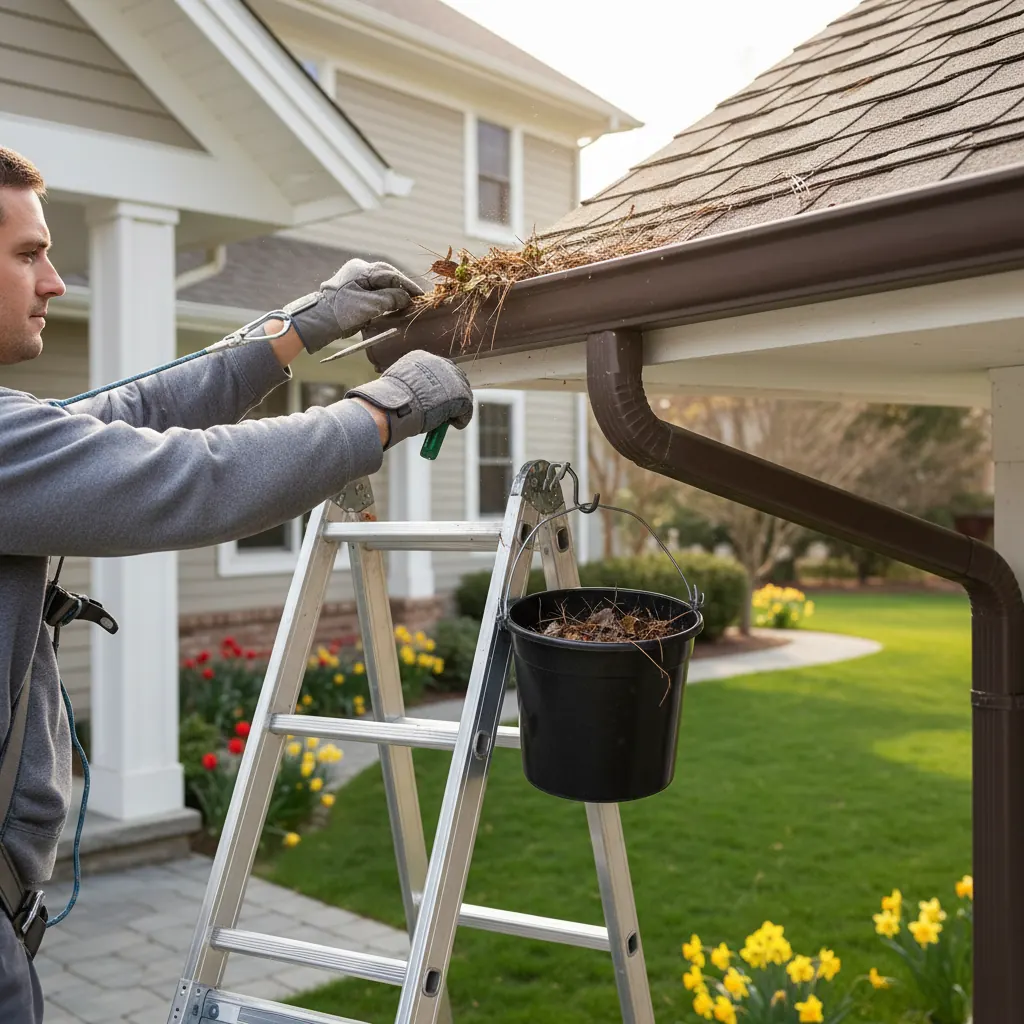
Clear the winter debris, check the seams and the brackets, and run water through to make sure the downspouts drain clear to the ground.
Step 3
Walk the slopes looking for cracked, curled, or missing shingles, and check the valleys for packed debris and lifted flashing.
Step 4
Check the metal around chimneys, skylights, and walls, and look at the ridge vent and the pipe boots for cracks and gaps.
Step 5
Look for damp insulation, stained decking, and daylight through the roof. The attic tells the truth about the winter, even when the roof looks fine from outside.
Winter is over, and your roof has a story to tell. Call and get the spring look.
Call (585) 868-0065What winter leaves behind
The same problems show up every spring. Here is what they look like and what they mean.
| Finding | What caused it | What it needs |
|---|---|---|
| Lifted shingles | Wind and freeze-thaw cycles | Reseal or replace the lifted shingles |
| Granules in the gutters | Normal wear, worse with age | A look at the shingle surface, watch the bald spots |
| Worn eaves | Ice dams sitting at the edge all winter | Attic work, and ice and water shield at the next reroof |
| Cracked pipe boots | Rubber shrinking in the deep cold | New boots, a quick repair |
| Damp attic insulation | Meltwater leaking past the eaves | Dry the attic, fix the dam source, replace wet insulation |
| Loose flashing | Ice and freeze-thaw working the joints | Reseal or replace the flashing |
Scroll sideways to see the full table.

After the inspection
Not every spring finding needs a repair the same week. Active leaks, missing shingles, and cracked pipe boots come first, since the spring rain will find them. Worn eaves and thin insulation come next, since they decide how the next winter goes. Cosmetic wear on an older roof can wait for the replacement decision, as long as the roof is still keeping water out. Small repairs like these are covered by roof repair in Rochester.
If the inspection finds wear across whole slopes, or the roof is past 20 years old with the same problems coming back, the honest answer may be a replacement rather than another round of repairs. Read when to replace your roof in Rochester for the signs, and how long a roof lasts in Rochester for the ranges by material. Either way, the spring inspection is what turns a guess into a plan, and it is the simplest roof care a Rochester homeowner can get.
People also ask
Short answers on what a spring inspection finds after a Rochester winter.
In the spring, after the snow is gone and before the summer rain arrives. The inspection reads the winter damage while it is still small: lifted shingles, worn flashing, and ice dam wear at the eaves. A fall inspection is the other good moment, before the snow returns.
The roofline and slopes from the ground, the gutters and downspouts, the shingles and valleys up close, the flashing around chimneys and skylights, and the attic deck and insulation. The attic half matters most, since it shows where the winter water actually went.
You can do the ground-level part: scan the slopes for missing shingles, look for granules in the gutters, and check the attic for damp insulation and daylight through the deck. The on-roof part belongs to a roofer, since the slopes are steep and the flashing details need a trained eye.
Spring damage still unassessed? Call and get the full spring read.
Call (585) 868-0065Frequently asked questions
Most roofs show something after a Rochester winter: a few lifted shingles, granules in the gutters, a cracked pipe boot, or worn eaves where the dams sat. Most of it is small and simple to fix in spring, which is the whole point of looking now instead of waiting for the summer rain to find it.
Yes. The gutters collect winter debris, granules, and ice-dam grit, and the downspouts clog at the elbows. Clearing them in spring and running water through to check the flow sets the drainage right for the rainy season ahead. A flush with a hose shows whether the flow is right.
Pipe boots are the rubber collars that seal around vent pipes where they pass through the roof. The rubber shrinks and cracks in deep cold, and the crack lets water in around the pipe. They are a quick repair, and they are one of the most common spring findings.
It should. The attic shows damp insulation, stained decking, and daylight through the roof, which are the marks of where the winter water went. A roof that looks fine from the street can hide a wet attic, and the attic is where the ice dam damage shows first.
Every year or two, and always in the spring after a hard winter. A roof past 15 years old, or one that leaked last winter, deserves a look every spring. The inspection is the simplest roof care there is, and it is what keeps small problems small.
Then the spring timing works in your favor: the repair season is wide open, the shingles seal well in the mild weather, and the roof is ready long before the next snow. Read our guide on when to replace for the signs that point to replacement over repair.
Yes, if the winter opened a gap. A flashing joint loosened by ice, or a shingle lifted by wind, lets spring rain in even though the snow never did. That is why the spring inspection matters: the winter damage is the setup, and the spring rain is the test.
Keep reading
Tell us what you see from the ground, and we will walk the slopes, the flashing, and the attic, and give you the full spring read.