Step 1
Catch the water
Put a bucket under the drip and move furniture, rugs, and electronics out of the way. A towel on the floor stops the spread.
Snow Leaks
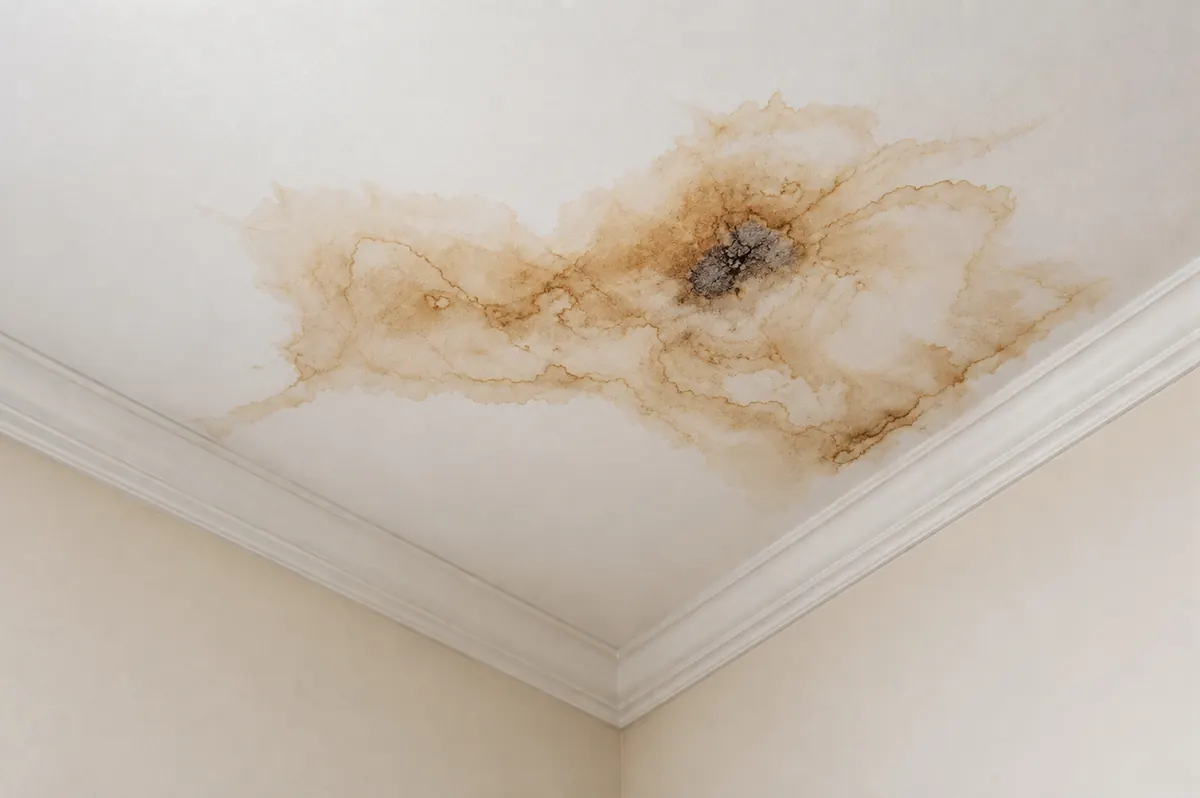
A stain on the ceiling after a big snow is one of the most unsettling things a homeowner can find, and the first instinct is to blame the roof. In Rochester, the cause is usually meltwater trapped behind ice at the eaves, not a hole in the shingles. Here is what to do first, and what to avoid.
First, find the cause
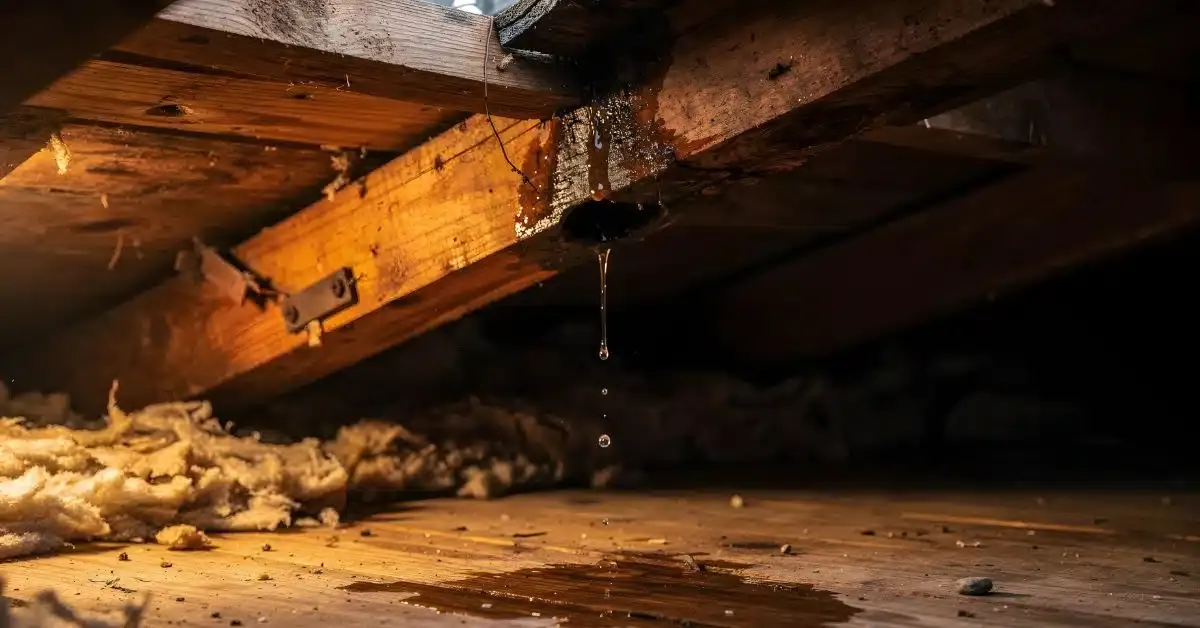
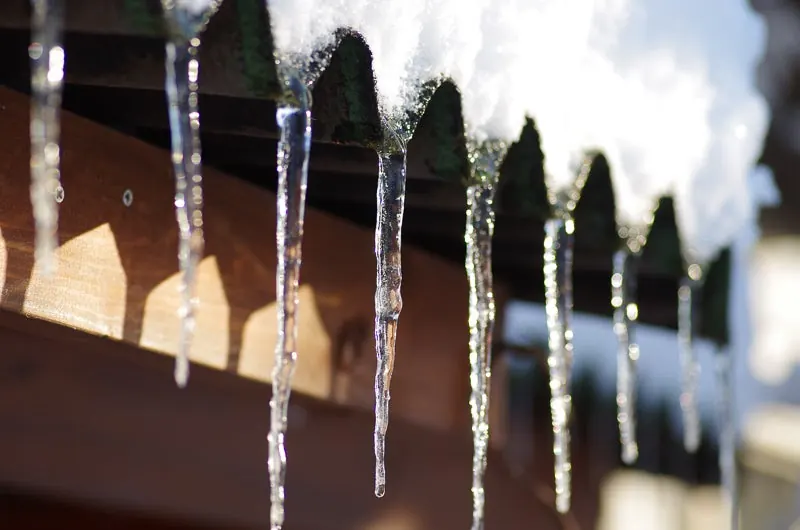
When snow melts from below, the water runs down to the cold eaves and freezes into a dam. More meltwater pools behind the dam and backs up under the shingles, where it soaks the deck and drips into the house. The shingles themselves are fine, which is why the leak seems to come from nowhere. The stain usually shows up near an outside wall, a day or two after a thaw, and it grows with each melt cycle.
The other causes are rarer but real: a flashing that opened up under the snow load, a valley packed with ice, or a skylight whose seal gave way in the cold. Telling them apart matters, because the fix is different for each one. Our ice dam guide explains the dam cycle in full, and roof repair in Rochester covers the flashing and valley problems that snow can expose.
A stain near an outside wall points to an ice dam at the eave. A stain in the middle of a room points to a valley or a flashing higher up the roof. A stain under a skylight points to the skylight seal or its flashing. The stain is rarely directly below the entry point, since water runs along the deck and the beams before it drips.
Find the source
Tap a sign to see what it usually points to after heavy snow.
The classic ice dam leak. Meltwater pools behind the dam at the eave and backs up under the shingles, then drips down the wall cavity. The fix is steam removal for the dam now, and attic air sealing, insulation, and ventilation so it does not come back.
Water that appears a day or two after a thaw, then stops when the cold returns, is meltwater, not rain. It means the snow on the roof is melting from below, which points to a warm attic and an ice dam at the eaves.
The skylight seal or its flashing is the likely source. Cold makes old seals shrink and crack, and snow piled against the skylight curb melts and finds the gap. Read our skylight leak guide for the full breakdown.
Wet insulation or dripping beams in the attic mean water is getting in but has not reached the ceiling yet. Catching it here saves the ceiling and the drywall below. Get a look before the next thaw, since each cycle soaks the insulation a little more.
A leak that starts while the snow is still falling points to wind-driven snow getting under lifted shingles or flashing, or to a roof opening like a vent or a ridge gap. This one needs a roofer on the roof as soon as the storm passes.
Water coming in after the snow? Call and get the source found before the next thaw.
Call (585) 868-0065Right now
Do these in order. They protect the house first, and they leave the roof to the roofer.
Step 1
Put a bucket under the drip and move furniture, rugs, and electronics out of the way. A towel on the floor stops the spread.
Step 2
If the ceiling bulges, the water is pooling above the drywall. Poke a small hole in the lowest point of the bulge with a screwdriver and let it drain into the bucket.
Step 3
With a flashlight, look for the wet spot on the deck and the beams. Note where it is, and take a photo. Do not step on the insulation or the drywall ceiling.
Step 4
From the ground, rake the snow off the lower few feet of the roof. That takes weight off the eaves and cuts the water feeding the dam.
Step 5
An active leak after snow needs a roofer, not a wait. Steam removal opens the dam, and the attic work that follows keeps it from coming back.
What not to do matters as much as what to do. Do not chip the ice with a hammer or an ice pick, since the tool cracks the shingles along with the ice. Do not climb onto a snowy roof, and do not pour hot water on the dam, which refreezes into a thicker sheet lower down. And do not assume the leak will dry out on its own: wet insulation stays wet, and the mold that follows is a bigger job than the leak was. The EPA guidance on dealing with damaged buildings covers how to handle water-damaged materials safely after a leak.
After the leak
Repainting the stain without fixing the cause just gives the next thaw a fresh canvas. The real fix depends on what the roofer finds: steam removal and attic work for an ice dam, new flashing for a gap at a chimney or valley, or a new seal for a skylight. In each case the roof work comes first and the ceiling repair comes second, once the attic is dry.
If the leak keeps coming back in the same place, the roof system there is worn out, and a roof replacement may be the honest answer. A reroof adds ice and water shield at the eaves, which is the layer that stops backed-up meltwater from reaching the deck, and it is the right moment to fix the attic ventilation that feeds the dams in the first place. A roof inspection in Rochester after a leak maps the full extent of the water damage.
People also ask
Short answers on leaks after heavy snow, and what to do first.
Because the water comes from meltwater trapped behind ice, not from rain falling on the roof. Snow melts from below when the attic is warm, pools behind the dam at the eaves, and backs up under the shingles. Rain runs off the roof before it can pool, which is why the same roof stays dry in a storm.
A bucket under the drip inside the house is the right move, and a bucket in the attic under the wet spot helps too, as long as you can reach it safely on the joists. Do not step on the insulation or the drywall ceiling, and get a roofer out before the next thaw.
Yes, through weight and melt. Deep snow loads the roof and pushes meltwater into gaps, and the freeze and thaw cycle opens flashing and seams a little more each time. A roof in good shape handles the load, but a worn flashing or a warm attic turns heavy snow into a leak.
Leak after the snow? Call and stop the water before the next thaw.
Call (585) 868-0065Frequently asked questions
Catch the water with a bucket, move furniture and electronics out of the way, and look in the attic with a flashlight to find the wet spot. Rake the snow off the lower few feet of the roof from the ground, then call a roofer. Do not chip the ice or climb on the roof.
If water is actively dripping inside, yes. Each thaw adds more water to the insulation and the ceiling, and wet insulation stays wet. A roofer can open the dam with steam and stop the inflow the same day, which is far less trouble than drying out a soaked attic later.
The dripping stops, but the damage does not. Wet insulation loses its insulating value, the deck stays damp, and mold can follow in the dark attic. The leak needs a fix even after the snow is gone, or the next storm brings it straight back.
An ice dam leak shows up near an outside wall a day or two after a thaw, and it stops when the cold returns. A hole or bad flashing leaks during rain too, and often in the middle of a room or under a skylight. A roofer in the attic can tell them apart in minutes.
It helps. Raking the snow off the lower few feet takes weight off the eaves and removes the snow feeding the dam. It will not open a dam that is already frozen solid, though. Steam removal by a roofer is what drains the water trapped behind the ice.
Wet insulation should be checked and often replaced, since it loses its insulating value when soaked and it holds moisture against the framing. Fiberglass dries out better than cellulose, but either one needs a look after a leak, and the attic needs to dry fully before new insulation goes in.
Call when water is dripping inside, when the stain is growing, when the ceiling bulges, or when the leak comes back with every thaw. Waiting turns a steam removal and an attic fix into wet insulation, stained ceilings, and a bigger repair bill.
Keep reading
Tell us where the stain is and when it started, and we will find the source, stop the inflow, and fix the cause.