When the Wind Lifts Shingles
Wind Damage to Roofs in Rochester
The wind that comes off Lake Ontario and the storms that roll up from the south do not need a hurricane name to hurt a roof. A strong gust lifts a shingle edge, the next gust peels it back, and the rain that follows finds its way in. Here is how wind damages Rochester roofs, and what to do after it.
How wind hurts a roof
Wind lifts, then peels, then lets the rain in
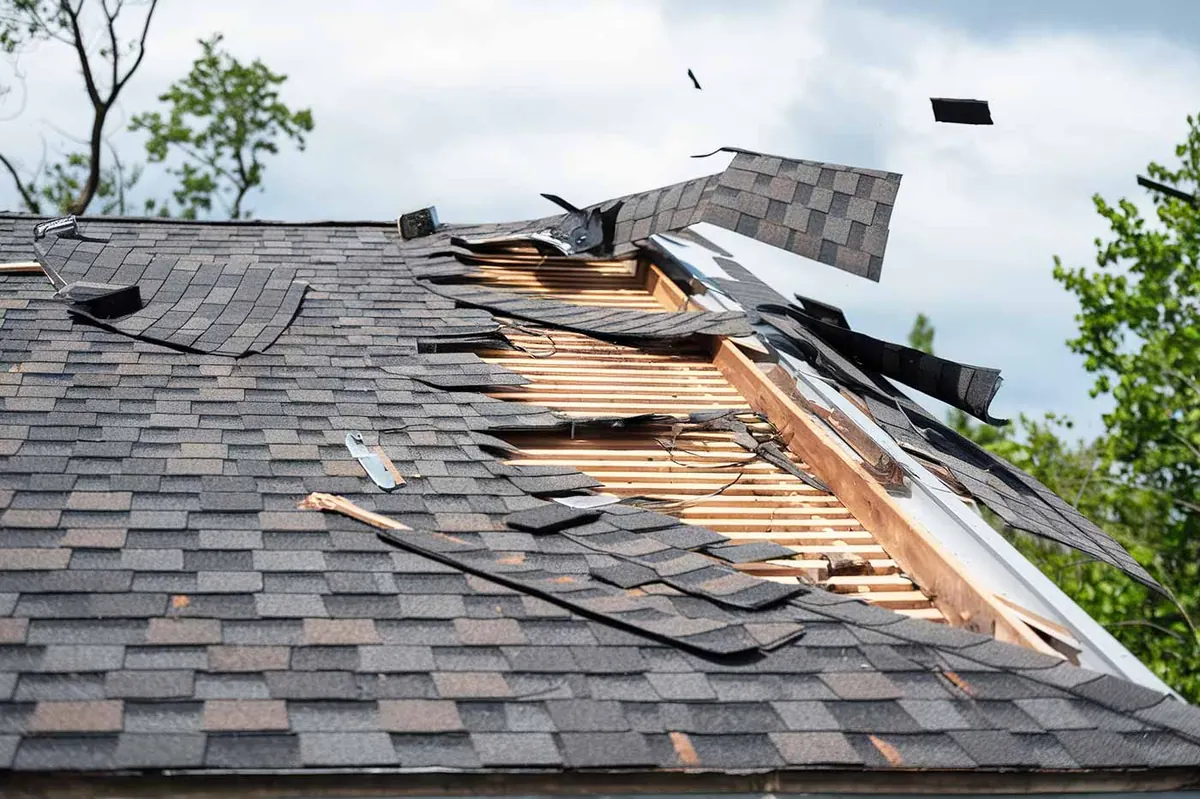
Wind damage starts at the edges. A gust gets under a shingle tab, lifts it, and breaks the seal that holds it down. The next gust lifts it further, and the shingle creases, cracks, or tears off entirely. The damage spreads from the edges inward: the eaves and the ridge go first, then the field shingles, then the flashing at the valleys and the walls. An older roof with worn seals goes fastest, since the adhesive has already aged out.
The rain that follows is the second half of the damage. Wind-driven rain blows up under the lifted shingles and soaks the underlayment and the deck, even where no shingle is missing. That is why a roof can leak after a windstorm with no shingles on the ground: the water got in through the lifted edges, not through a hole. Our storm and hail damage repair in Rochester covers both halves, the lifted shingles and the water that got underneath.
The ridge and the eaves take the worst of it
The ridge cap sits at the peak, where the wind is strongest, and the eave shingles sit at the edge, where the wind gets underneath. After a storm, those are the first two places to look from the ground, and they are where most wind repairs happen.
Wind speed and damage
How strong does the wind have to be
A sound roof handles ordinary wind. The damage starts when the gusts pass the speeds below, and it grows fast from there.
| Wind speed | What it is | What it does to a roof |
|---|---|---|
| 40 to 50 mph gusts | A strong lake breeze, common | Lifts worn shingles, rattles loose flashing |
| 58 mph and up | Severe thunderstorm threshold | Peels shingles, tears ridge caps, drives rain under edges |
| 60 to 70 mph gusts | A hard thunderstorm or lake storm | Strips shingles from slopes, bends gutters, lifts flashing |
| 75 mph and up | Hurricane-force gusts | Tears off large sections, damages the deck, downs trees onto roofs |
Scroll sideways to see the full table.
The National Weather Service calls a thunderstorm severe at 58 mph, and that is the line where roof damage becomes common. Rochester sees gusts past that line most often in summer thunderstorms and in the strong lake storms of late fall. The National Weather Service Buffalo office posts wind warnings for Monroe County, and the storm reports after a wind event show the peak gusts by town, which is useful when the damage needs a record.
Wind just tore at your roof? Call and get the damage covered before the next rain.
Call (585) 868-0065Know the terms
Wind damage words, in plain language
The terms roofers use after a windstorm, and what each one means for your roof.
After the storm
What to do when the wind has been through
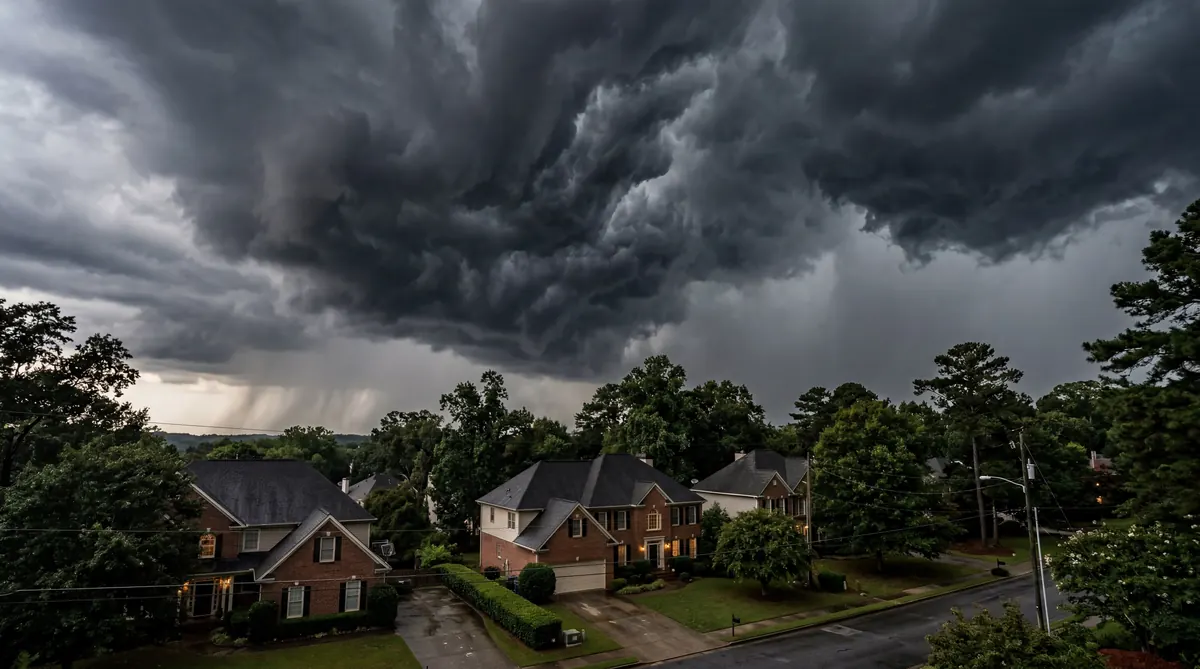
Wait until the storm has fully passed, then walk the yard and the street looking for shingles on the ground. Shingles on the lawn are the clearest sign of wind damage, and the slope they came from is the slope that needs a look. Then scan the roof from the ground with binoculars if you have them: lifted tabs, missing ridge caps, and bent flashing all show from the street.
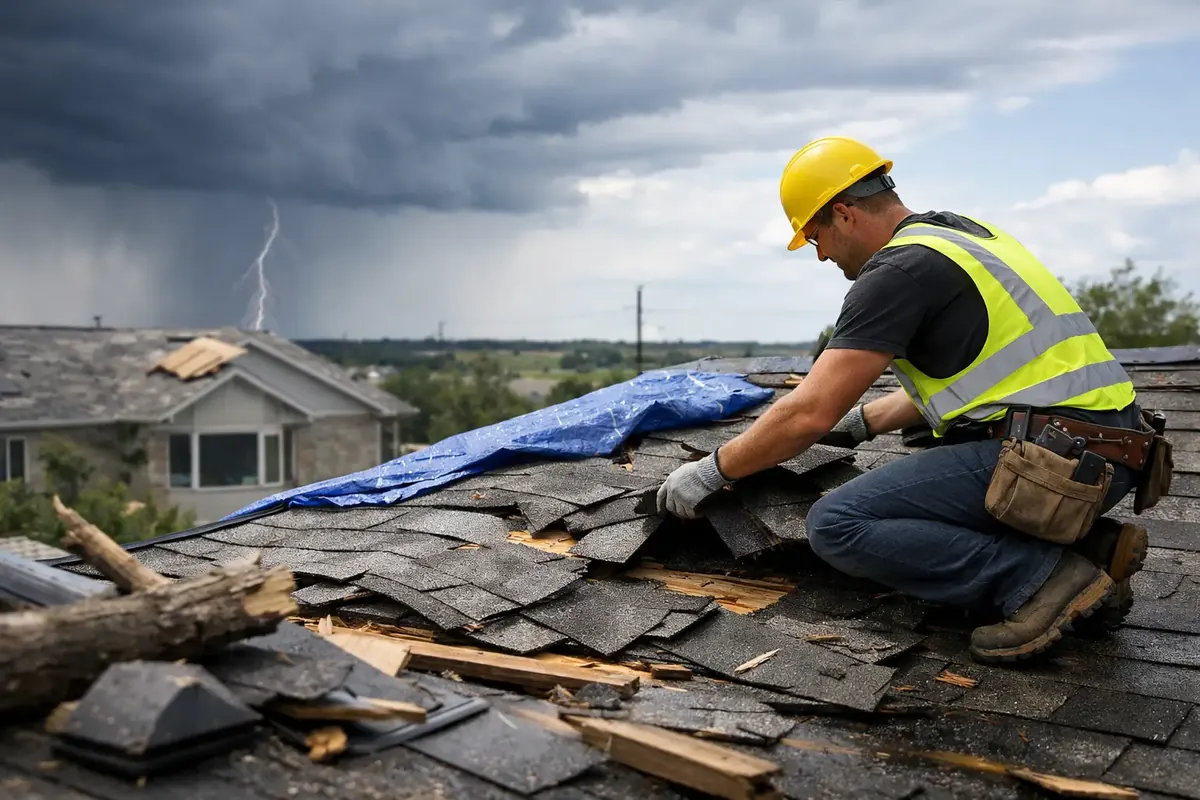
If shingles are missing or the roof is leaking, the roof needs a temporary cover fast, before the next rain. Our emergency roof repair in Rochester covers tarping and the repair that follows. Photograph everything before the tarp goes on, note the date and the time of the storm, and keep the shingles you find in the yard. For the hail half of the same storms, read hail damage to roofs in Rochester, and for the longer view, how long a roof lasts in Rochester explains why older roofs go first in the wind.
People also ask
Quick answers on wind damage
Short answers on wind damage, the speeds that hurt, and what to do after a storm.
How much wind does it take to damage a roof in Rochester?
A sound roof handles ordinary wind, but gusts past 50 mph start lifting worn shingles, and the National Weather Service calls a thunderstorm severe at 58 mph, where peeling and torn ridge caps become common. Older roofs with aged seals go first, since the adhesive has already worn out.
Can wind damage a roof without removing any shingles?
Yes. Wind lifts shingle tabs and breaks their seal, then drives rain up underneath, soaking the underlayment and the deck even where no shingle is missing. A roof can leak after a windstorm with nothing on the ground, which is why a look on the roof matters after every big blow.
Should I tarp my roof after wind damage?
If shingles are missing or water is coming in, yes, and fast. A tarp keeps the next rain out until the proper repair happens. A roofer should lay the tarp, since the roof is slick and the edges need to be secured so the tarp itself does not become a sail in the next gust.
Wind damage after the storm? Call and get the slope covered.
Call (585) 868-0065Frequently asked questions
What to ask about wind damage
Lifted or missing shingles, creased tabs that fold back, missing ridge caps at the peak, and bent or torn flashing. From the ground, look for shingles on the lawn and for tabs that stick up instead of lying flat. The eaves and the ridge show the damage first.
Look for tabs that sit raised instead of flat, for a line of shingles that looks wavy from the street, and for shingles on the ground after a storm. On the roof, a lifted shingle pulls up easily by hand, since the seal underneath has broken.
Age matters a lot. Shingles seal with adhesive that wears out over the years, so a 20-year-old roof lifts in wind that a 5-year-old roof shrugs off. That is one reason older roofs are the first to lose shingles in a storm, and why a roof near the end of its life is the one to watch.
Yes, though it takes more wind. Metal panels can lift at the edges if the clips fail, and the flashing can peel. Standing seam metal handles wind well when the clips and the seams are installed right, which is why the install quality matters as much as the material.
The National Weather Service calls a thunderstorm severe at 58 mph. At that speed, shingles peel, ridge caps tear, and wind-driven rain gets under the edges. Rochester sees gusts past that line most often in summer thunderstorms and strong lake storms in late fall.
No. A wind-damaged roof is slick, the lifted shingles are loose underfoot, and the next gust can catch you off balance. Check from the ground with binoculars, photograph what you see, and let a roofer do the on-roof look. A fall from a roof can be serious, and it is not worth the risk for a look.
Fast, if shingles are missing or water is coming in. A missing shingle is an open path for the next rain, and each storm widens the damage. A tarp covers the slope until the repair happens, and the repair should follow within days, not weeks.
Keep reading
Related articles
Wind just hit your Rochester roof?
Tell us what the storm did and what you see from the ground, and we will cover the damage and lay out the repair.