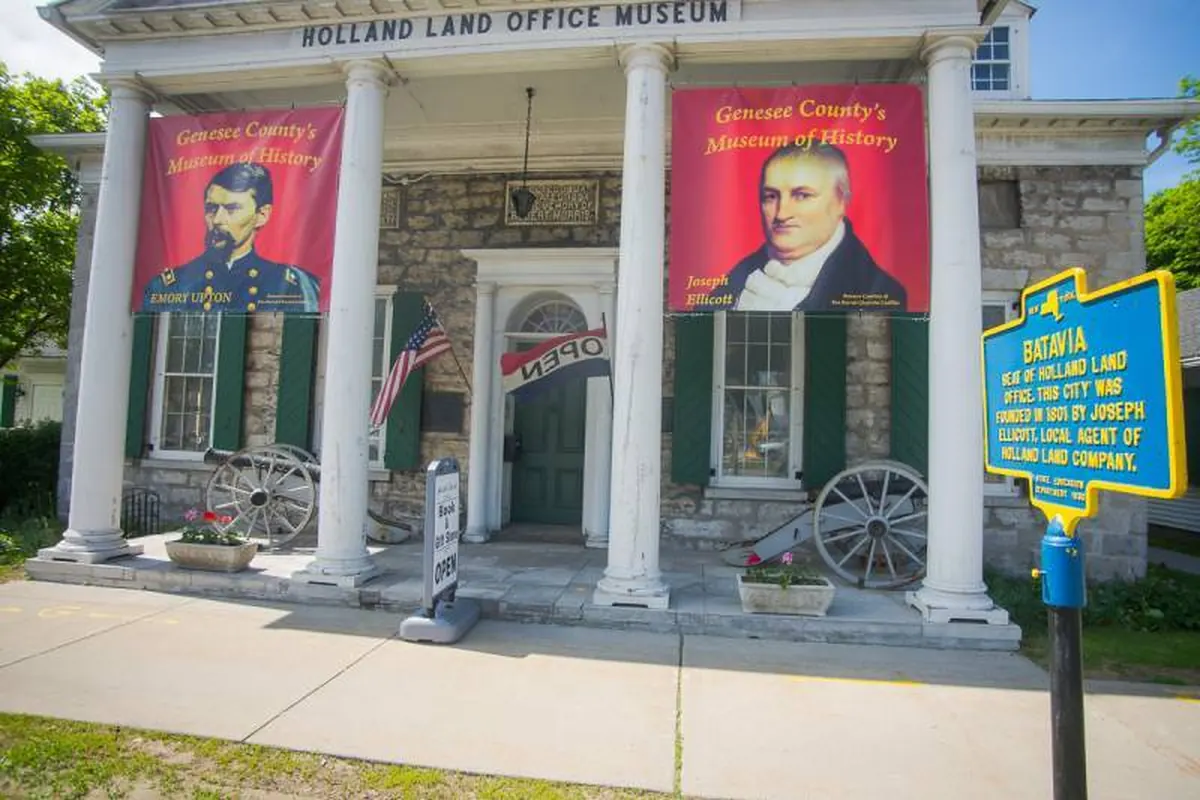
Main Street Route 5 corridor
The east-west spine of the city, with historic storefronts, the Holland Land Office Museum, and the homes that line it.
Genesee County Seat
Batavia is the county seat of Genesee County and the oldest population center in this part of the state, sitting almost exactly halfway between Buffalo and Rochester. Four state routes meet at Main and Oak Streets, the Thruway passes just north of town, and Tonawanda Creek runs through it all.
Batavia, NY
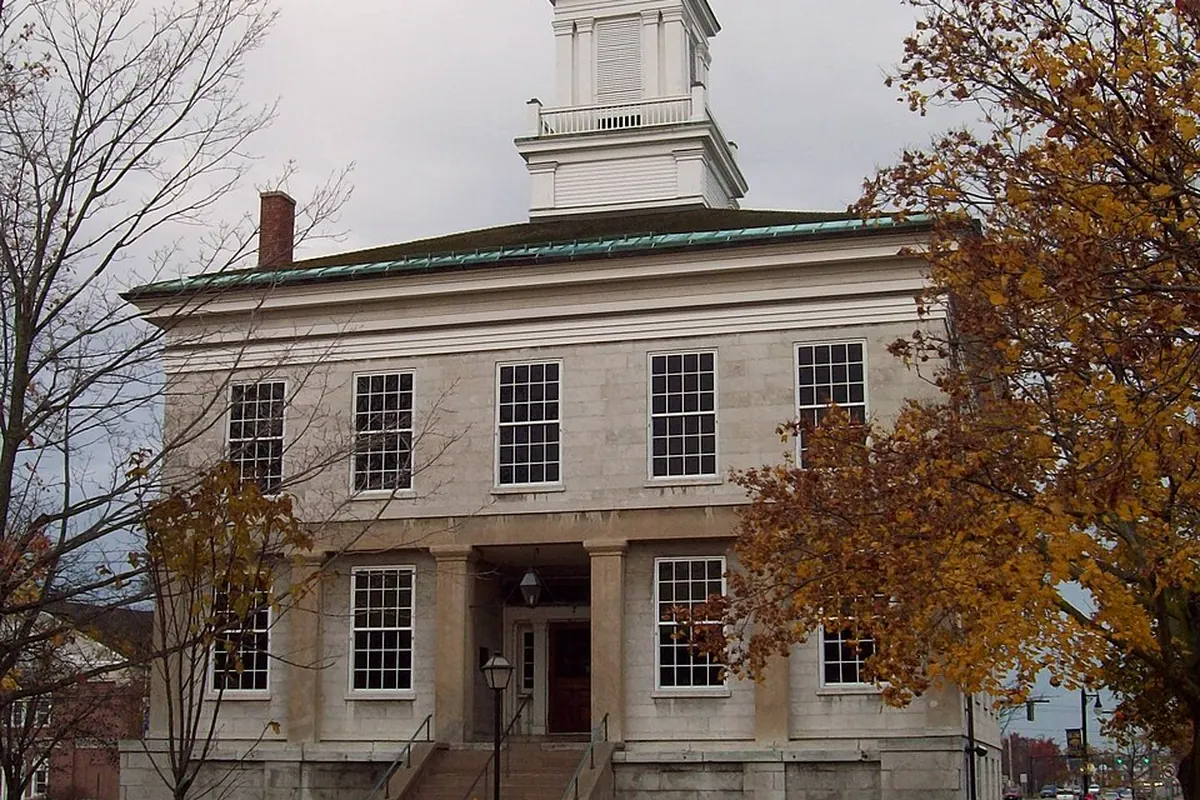
Batavia is a city in and the county seat of Genesee County, surrounded by the town of Batavia. The city was named for the Batavian Republic, home of the investors of the Holland Land Company, and the whole purchase was named Genesee County in 1802, with Batavia as the county seat. The Holland Land Office Museum at 131 West Main Street still stands as the landmark of that era, and the Genesee County Courthouse anchors the civic center.
Four state routes meet in the city: Route 5 runs east and west as Main Street, Route 33 runs between Buffalo and Rochester, Route 63 runs southeast to Geneseo and Dansville, and Route 98 runs north to Lake Ontario and south to the Southern Tier. The New York State Thruway passes just north of the city, with Exit 48 for Route 98, and Genesee County Airport sits north of the Thruway. A roof inspection in Batavia starts with the crossroads, because the wind follows those open corridors straight into town.
City housing runs from nineteenth-century homes near the center to newer houses toward the edges, with Tonawanda Creek running through on its northwest to southeast line and the Ellicott Trail following it. Genesee Community College sits on Clinton Street Road east of the city, and the Batavia Muckdogs play at Dwyer Stadium on Bank Street. The National Weather Service office in Buffalo issues the winter storm warnings for Genesee County, and Batavia reads them first. Replacement work in the city follows the New York State building code, ice shield at the eaves and in the valleys included.
Streets and corners
The east-west spine of the city, with historic storefronts, the Holland Land Office Museum, and the homes that line it.
The street where Routes 33, 63, and 98 meet Main Street, with homes and businesses on both sides of the junction.
The road that follows Tonawanda Creek through the city, with the Ellicott Trail alongside it for walkers and cyclists.
The street that holds Dwyer Stadium, home of the Batavia Muckdogs, and the homes around it.
Route 33 as it leaves the city center toward the east, with homes and the road toward Genesee Community College.
The road east out of the city past Genesee Community College, with newer houses and open ground toward the Thruway.
City roofs
Batavia holds more kinds of roofs than any town around it: pitched house roofs, storefront roofs on Main Street, and flat roofs on the commercial buildings along the corridors. Each one fails differently.
| Roof type | Where it sits in Batavia | What fails first |
|---|---|---|
| Pitched house roof | Homes on Main, Oak, Ellicott, and the side streets, with shingles or metal on a moderate to steep pitch. | Wind lift at the ridge and corners, and ice dams where a warm attic meets a cold eave. |
| Storefront roof | Main Street storefronts and the older commercial blocks, often low slope behind a parapet. | Ponding water where the slope is nearly flat, and flashing where the parapet meets the roof deck. |
| Flat commercial roof | Warehouses and shops along the corridors and near the Thruway, with membrane, EPDM, or TPO. | Seams that open with frost and thaw, drains that clog with leaves, and ponding after a heavy rain. |
Swipe sideways to see the three roof types side by side.
Around town
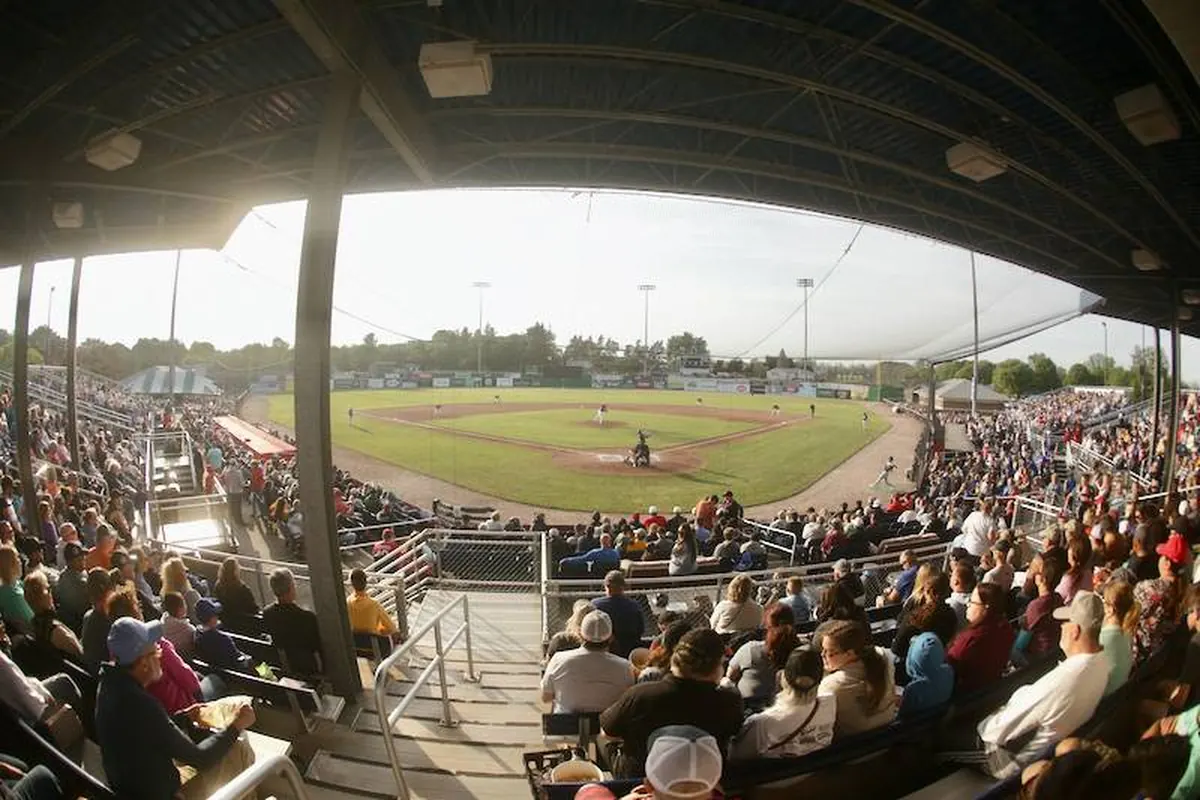
Batavia is a city that still gathers in one place. Summer evenings at Dwyer Stadium bring the town to Bank Street, and the Ellicott Trail brings walkers and cyclists along Tonawanda Creek through the middle of the city. The creek itself bends through downtown at the Big Bend, where the old mill dam once stood, and the trail follows the water past homes whose roofs have watched the creek for generations.
A city roof here sees more than weather. The Thruway corridor brings traffic and grit, the creek brings damp air, and the old housing stock brings chimneys and valleys that have moved for a century. A commercial roofing visit in Batavia looks at the flat roofs along the corridors the same way a house visit looks at a pitched roof: the seams, the drains, and the flashing, each in turn.
Through the year
Snow comes off Lake Ontario and piles deep in the city, and damp air off Tonawanda Creek keeps the shaded slopes wet. Ice dams form at the eaves above a warm attic. A roof rake keeps the overhang clear after a deep snow.
The thaw shows what the snow hid, and spring rain tests every valley and flashing joint. Spring is the season to walk the roof, flat roofs included.
Summer storms run the corridors with wind and hail, and the heat bakes the flat roofs along the commercial strips. A look after hail catches bruised shingles early.
Maple and oak leaves from the creek-side trees fill the gutters and the flat roof drains. Clearing them before the first snow keeps water moving off every roof in town.
Coverage
Batavia carries 14020, and our work here runs from Main Street to the Thruway corridor, the college road, and the town roads beyond the city line. The city sits about halfway between Buffalo and Rochester, at the far west end of our service area, and the same crew makes the trip.
The 14020 ZIP covers Batavia city and the town of Batavia in Genesee County, on the New York State Thruway corridor.
Services
Flat and low-slope roofs on the shops and warehouses along the corridors, with seams, drains, and ponding checked in turn.
Learn more →A windy-side tab lifted, a chimney joint leaking, or a storefront roof ponding after rain: Batavia fixes each one where it started.
Learn more →A full tear-off for a Batavia roof worn across whole slopes, with shingles picked to suit the house and its pitch.
Learn more →Batavia inspections start up on the roof and finish in the attic, flashing checked along the way, with findings told in plain words, what needs work now and what can wait a season.
Learn more →Or send a note about the roof on your Batavia house or shop.
A storefront roof ponding after rain, or a house roof lifting at the ridge? Call and tell us which kind of roof it is.
Call (585) 868-0065FAQ
Yes. Batavia work covers the storefronts on the commercial strips, the nineteenth-century homes near Main Street, and the newer houses toward the edges and the town roads beyond the city line. A repair visit starts on the roof itself, reading the shingles or membrane, the flashing, and the deck, and it ends with a plain-words plan for the fix.
Yes. Batavia holds more flat and low-slope roofs than any town around it, on shops and warehouses along the corridors and near the Thruway. Flat roofs fail at the seams, the drains, and the flashing, and a visit checks each one in turn. Ponding water after a heavy rain is the sign to call about first.
Architectural shingles fit most older Batavia homes, since they layer well on a steep pitch and suit the look of the street. Standing seam metal also fits a steep roof and sheds snow fast. Which one fits your house comes down to the pitch, the structure, and the home itself, so we walk the roof before naming a material.
Four state routes meet in Batavia, and the wind follows those open corridors straight into town. The ridge and the corners take the worst of every storm, and a tab that lifts at a corner lets rain work under the next one. A walk along the ridge after a windy storm catches the damage while it is still small.
Most winters, yes. Batavia winters run cold, and damp air off Tonawanda Creek keeps the shaded slopes wet while the attic stays warm. Meltwater runs down from the warm deck and turns back to ice at the cold edge. Attic air sealing and ventilation hold the deck near the outside air, and that is the durable answer.
Spring, once the first big snowmelt has passed, and again after any summer storm with hail or high wind down the corridors. The thaw shows what the snow hid, and a look after a storm catches bruised shingles before the next rain. Older homes near Main Street deserve a look every year, since their flashing has been moving with the seasons for decades.
North of the city
North of Batavia, the Thruway and the airport road hold warehouses, shops, and newer homes, and their roofs face highway wind and open ground.
The New York State Thruway passes just north of the city, with Exit 48 for Route 98, and Genesee County Airport sits north of the Thruway on the same road. Route 98 runs north from Main Street to Lake Ontario and south to the Southern Tier, Route 33 runs between Buffalo and Rochester, Route 63 runs southeast to Geneseo and Dansville, and Route 5 runs east and west as Main Street, so four state routes meet at Main and Oak Streets and the corridors out of town carry traffic and grit in every direction. The warehouses and shops along those corridors carry flat and low-slope roofs, and the homes north toward the Thruway sit on open ground with little to break the wind.
A corridor roof takes a different beating than a house roof on a side street. Traffic throws grit onto the low slopes, and the grit wears the surface and clogs the drains, so a flat roof near the highway needs its drains cleared more often than one tucked behind the houses. Wind runs down the open corridors straight into town, and the ridge and corners of the pitched houses along the routes take the worst of it. The airport road adds its own exposure: open fields on both sides, no tree line, and a clear run for every storm that crosses the county from the lake.
The city took its name from the Batavian Republic, whose investors backed the Holland Land Company, and the Holland Land Office Museum at 131 West Main Street still stands as the landmark of that era. The city was the county seat when Genesee County was named in 1802, and the Genesee County Courthouse anchors the civic center today. On a corridor roof, the walk starts at the seams, moves to the drains, and ends at the parapet flashing, since frost and thaw open the seams, grit and leaves clog the drains, and the parapet joint moves with the seasons.
Creek, grit, and drains
Tonawanda Creek brings damp air through the middle of Batavia, and the highway corridors bring grit, and the two wear a roof from opposite sides.
Tonawanda Creek bends through downtown at the Big Bend, and the homes along Ellicott Street sit in its damp air, so the shaded slopes stay wet and moss grows there.
Traffic along Routes 5, 33, 63, and 98 throws grit onto the low slopes, and the grit wears the surface and clogs the drains after a dry spell.
A flat roof near the Thruway ponds after a heavy rain, and a drain clogged with leaves and grit turns the pond into a leak at the seams.
Nineteenth-century homes near the center carry tall brick chimneys, and their flashing shifts with frost and thaw a little more each winter.
The trail follows the creek past homes whose roofs sit under the trees, and the shaded slopes under those trees stay damp through the summer.
Snow comes off Lake Ontario and piles deep in the city, and the eaves stay cold while the attic stays warm, so ice forms at the edge.
City and town
The town of Batavia surrounds the city on every side, and the barns, the college, and the farmhouses out there carry roofs the city never sees.
Genesee Community College sits on Clinton Street Road east of the city, and the road past it holds newer houses and open ground toward the Thruway. The college buildings carry broad low-slope roofs, and the houses along the road carry pitched roofs that face the open wind coming off the fields. Further out, the town holds farms and barns, and a barn roof is broad and low, so snow sits on it longer than on a house roof and the drift loads one side. The farmhouses beside those barns carry steep pitches and tall chimneys, and their flashing joints have moved with frost and thaw for generations.
Back in the city, summer evenings at Dwyer Stadium bring the town to Bank Street, where the Batavia Muckdogs play, and the Ellicott Trail brings walkers and cyclists along Tonawanda Creek through the middle of the city. The creek bends through downtown at the Big Bend, where the old mill dam once stood, and the trail follows the water past homes whose roofs have watched the creek for generations. A city roof here sees more than weather: the Thruway corridor brings traffic and grit, the creek brings damp air, and the old housing stock brings chimneys and valleys that have moved for a century.
A roof inspection in Batavia opens at the junction of the four routes, since the wind runs down those open corridors straight into town, and then it changes with the building: the ridge and the windward slope on a house, the seams and the drains on a shop, the parapet flashing on a storefront. A Le Roy roof ten miles east takes the same lake snow from the same direction, and the two towns read the same winter storm warnings. City or town, house or shop, the walk that reads a Batavia roof has to match the roof it is standing on.
At the center of Genesee County, a Batavia house roof, a storefront, and a flat commercial roof each fail in their own way, and Main Street to the Thruway covers all three. Write with the building type and the street it stands on, and the walk will be shaped by that roof alone.