Call (585) 868-0065
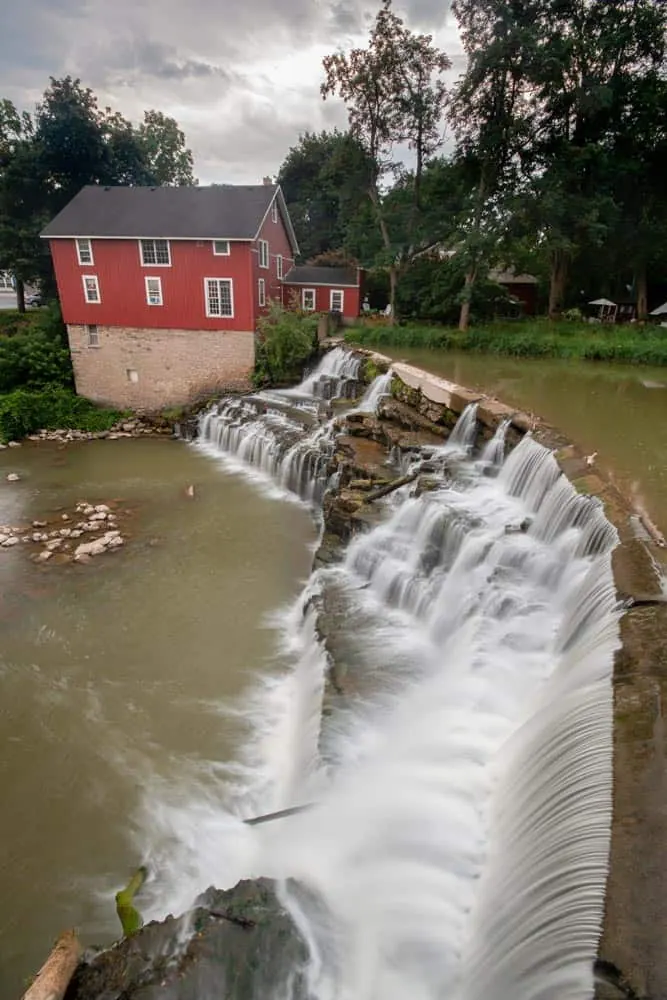
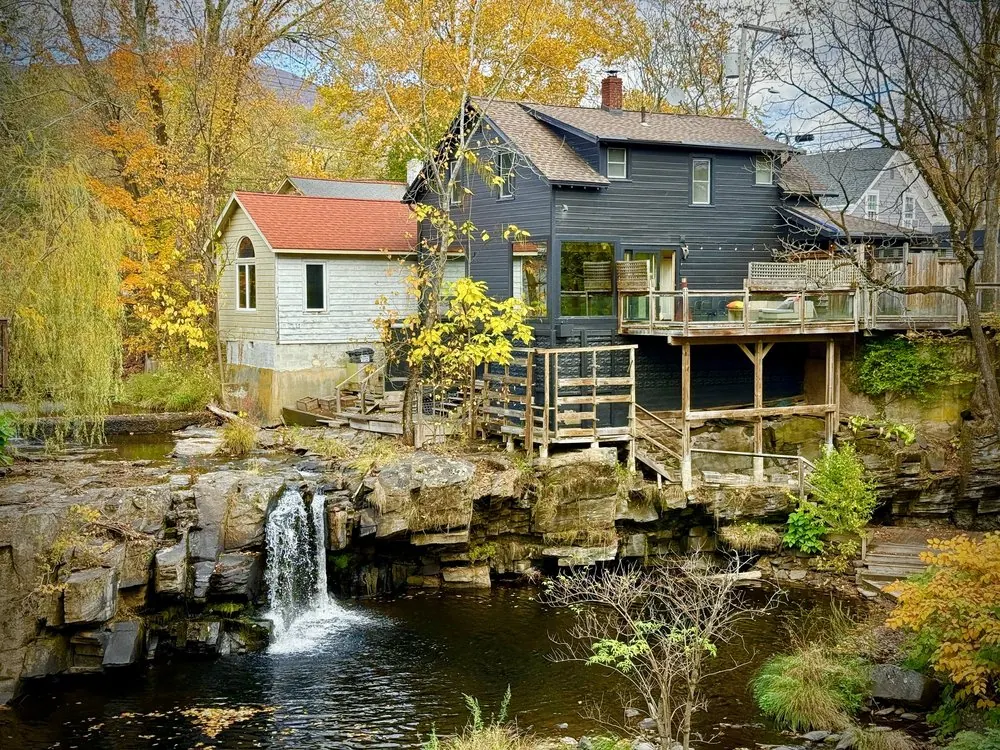
A small waterfall flowing past houses beside a rocky creek in Honeoye Falls

Mill Village on the Falls

Honeoye Falls Roofing Where the Creek Drops Thirty Feet

Honeoye Creek drops about thirty feet through the middle of Honeoye Falls, and the village grew around that water. Zebulon Norton built his gristmill at the top of the falls in 1791, the mills that followed shaped the streets, and the houses that stand here now carry steep pitches, tall chimneys, and roofs that have watched the creek for generations.

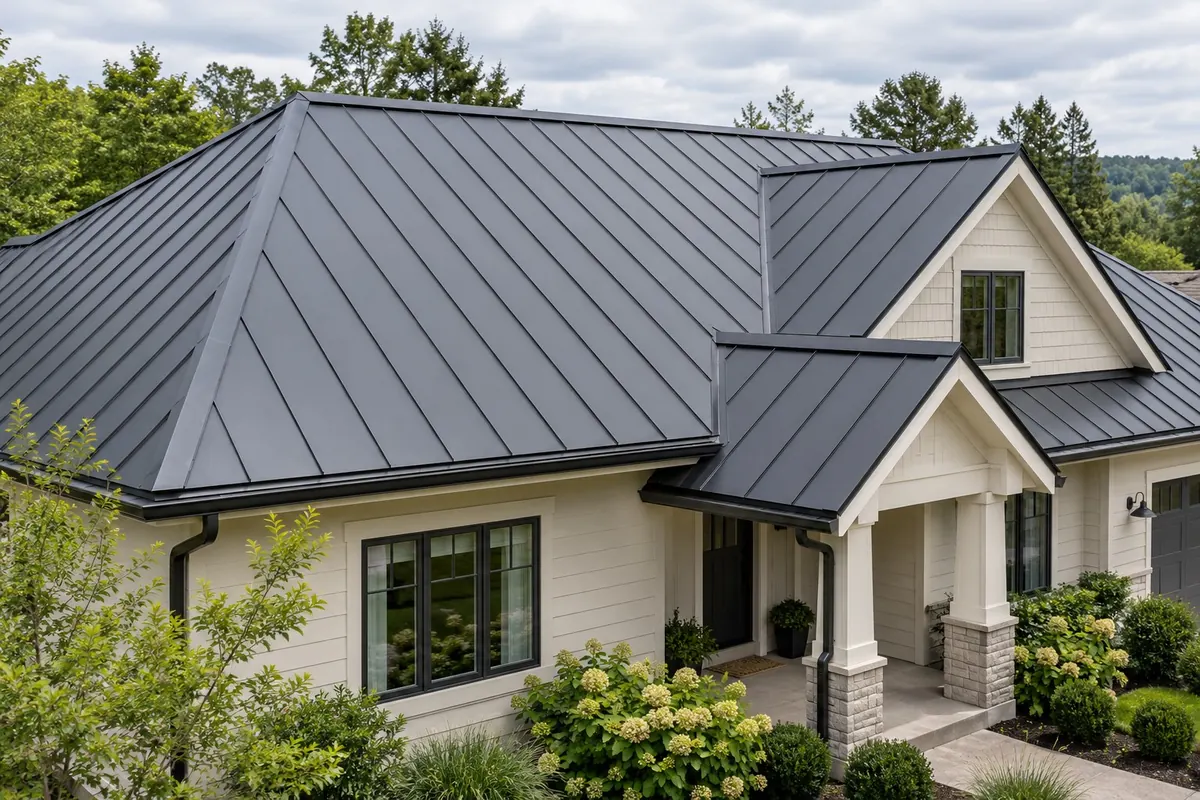
A house with a dark standing seam metal roof and cream siding
A dark standing seam metal roof shedding snow on a Honeoye Falls home

Honeoye Falls and Mendon

Mill water, steep pitches, and Mendon hills

The falls powered the mills, and the mills built the village. Norton put up his gristmill in 1791 and a sawmill across the creek soon after, and the settlement that grew around them was first called Norton Mills, then West Mendon. The village incorporated in 1838, and the historic district placed on the National Register in 1993 still holds the mill-era streetscape: steep roofs, brick chimneys, and the red mill building beside the water.

Mendon spreads out around the village into glacial hills, and Mendon Ponds Park holds the largest park in Monroe County at more than 2,500 acres. The park's kettle ponds, eskers, and the Devil's Bathtub draw walkers year-round, and the houses near it sit on rolling ground where snow drifts deep against one slope. A metal roof suits those hillside homes, since snow slides off it instead of piling at the eave.

The creek itself shapes the roof work in the village. Damp air rises off the water and keeps the shaded slopes wet, moss grows where the mill buildings shade the roofs, and the roof repair we do beside the falls often starts at the valley where two steep pitches meet above the creek. The Buffalo weather office tracks the snow bands that bury this southeast corner of the county.
Local trouble

What the falls and the hills do to a roof

Honeoye Falls roofs

Creek damp on shaded slopes

Damp air off Honeoye Creek keeps the shaded slopes wet for days after rain, and moss takes hold where the mill buildings block the sun. As it grows, it lifts shingle edges and holds water against the roof, and a spring walk catches the wear before summer storms arrive.

Honeoye Falls roofs

Snow drifting on Mendon hills

Around Mendon, the glacial hills catch the wind and load one slope deep with snow while the other stays bare. Meltwater under that uneven load runs under the shingles at the eave, and the ice that forms there backs water up under the field.

Honeoye Falls roofs

Steep pitches and tall chimneys

Mill-era homes carry steep pitches and tall brick chimneys, and the flashing where the chimney meets the roof has moved with the seasons for decades. The slate and shingles on those pitches last well, but the flashing gives out first and lets water in beside the chimney.

Village and town

Honeoye Falls streets and Mendon corners

The village sits on the falls, and the town of Mendon stretches north and west into the glacial hills. The falls village and the Mendon hills around it are where most of our calls in this town come from.

Village of Honeoye Falls Mill village roofs

The historic district around the falls, with steep pitches, brick chimneys, and the red mill beside the water.

Mendon Center Town center roofs

The town center north of the village, where farmhouses and newer homes sit on rolling glacial ground.

Mendon hamlet Hamlet roofs

The small hamlet in the town, with homes that take hill wind and deep snow drifts.

Sibleyville Hamlet roofs

The hamlet on the town's west side, where farmhouse roofs face open fields and long winters.

Mendon Ponds edge Park-side roofs

Homes near the big county park, where kettle ponds and eskers shape the wind and the snow drifts.

Honeoye Creek side Creek-side roofs

Homes along the creek above and below the falls, where damp air keeps the shaded slopes wet.

After a storm

After a storm hits the falls

Step 1

Look from the ground first

Walk around the house and look for shingles on the ground, a lifted ridge cap, and gutters pulled away from the fascia. The damage sits on the slope that faces the wind.

Step 2

Check the attic for water

In the attic, damp lines along the ridge and around the chimney show where water has been, and daylight through the flashing shows where it opened up. Water shows in the attic first, before it stains the ceiling below.

Step 3

Cover what is open

A tarp goes over any bare patch where shingles have gone missing, keeping the next rain outside while the repair is planned, and it is set tight so the wind cannot lift it.

Step 4

Walk the roof and list the damage

The whole roof gets walked and the storm damage listed: ridge caps, valley shingles, flashing, and gutters. We write the list in plain words, one slope at a time.

Step 5

Fix the worst slope first

We fix the windward slope first, since it takes the next storm too, and reset the chimney and valley flashing with the repair so it holds through the season.

Snow drifted deep on one slope, or moss on the creek side? Call and tell us which side of the falls the house sits on.

Call (585) 868-0065

Coverage

The 14472 and 14506 ZIPs, falls to ponds

Honeoye Falls carries the 14472 ZIP, and Mendon carries 14506. Together they cover the village, the town center, the hamlets, and the park edge.

1447214506

The 14472 ZIP covers Honeoye Falls village, and 14506 covers the Town of Mendon in Monroe County.

The red mill building beside the falls on Honeoye Creek
The red mill above the falls on Honeoye Creek

Mill water

The red mill on Honeoye Creek

The red mill still stands above the falls on Honeoye Creek, where the water that powered the village drops past the stone. The houses nearest the creek sit in the damp air the falls throw up, and their shaded north slopes stay wet long after a rain.

The creek damp feeds moss on the shaded slopes, and the steep pitches of the village houses shed snow fast but hold ice at the eaves. A spring check of the shaded slope and the chimney flashing catches the winter wear while the fixes are still small.

Services

Roof work we do in Honeoye Falls and Mendon

Metal Roofing

Hillside homes above the creek suit standing seam metal, since snow slides off it instead of piling against the eave and straining the deck.

Learn more →

Roof Repair

Steep pitches meet and leak at the valley, decades of thaw shift the chimney flashing, and hill wind lifts the ridge caps, and each gets fixed where it started.

Learn more →

Roof Replacement

Mill-era homes whose roofs have worn across whole slopes get a full tear-off, with shingles picked for creek damp and hillside snow.

Learn more →

Roof Inspection

We walk the roof, look in the attic, and check the eave by Honeoye Creek, then leave a plain-words list of what to fix now and what can wait.

Learn more →
See All 22 Roofing Services

Falls damp or Mendon hill snow, contact us in writing and name the street where the roof shows it.

FAQ

Honeoye Falls and Mendon roof questions

Yes, damp air off Honeoye Creek keeps the shaded slopes wet for days after rain, and moss takes hold where the mill buildings and trees block the sun. Moss lifts the shingle edges and holds water against the roof long after the rain stops. We clear the growth and look at the flashing under it, then check the attic vents, since damp air inside makes the outside problem worse.

For hillside homes near Mendon Ponds, standing seam metal suits best, since snow slides off it instead of piling against the eave. Architectural shingles also do well when the ridge caps are sealed and the valleys are flashed with care. The choice comes down to pitch, the wind-facing slope, and how deep the drifts run, so we walk the roof and name the material from what we see.

Yes. The mill-era homes carry steep pitches and tall brick chimneys, and the flashing where the chimney meets the roof has moved with the seasons for decades. We reset the step flashing, check the mortar joints, and match the shingles or slate by size and color. The repair has to fit the house, so we show you what we see before any work starts.

The glacial hills catch the wind and pile snow deep against one slope while the other stays nearly bare. That uneven load pushes meltwater under the shingles at the eave, where it turns to ice and backs up under the field. The light side dries out and takes the wind instead, and we read the drift line after each storm, since it shows exactly where the water went.

Look from the ground first for shingles on the lawn, a lifted ridge cap, and gutters pulled away from the fascia. Then check the attic for damp lines along the ridge and around the chimney. Cover any bare patch with a tarp so the next rain stays outside, and call for a walk on the roof. The list of damage gets written slope by slope, in plain words.

We do. The homes near the park sit on rolling glacial ground, and their roofs take hill wind and deep drifts. The kettle ponds and eskers shape the wind, so one slope can drift deep while the next stays clear. We check the drift line after each storm and look at the ridge and the valleys, since those are the places where the snow and wind meet.

Nearby towns

Towns around Honeoye Falls and Mendon

Pittsford sits north past the park, Rush lies west along the creek, Victor runs east toward the lake towns, and Henrietta sits northwest toward the city.

Falls and hills

Mendon Ponds, Route 65, and the glacial hills

Honeoye Falls sits on the creek at the foot of the Mendon hills, and the town of Mendon rises around it with glacial ridges, kettle ponds, and open fields, so a falls roof and a hill roof meet the same winter in different ways.

Mendon Ponds Park spreads across the glacial ground north of the village, with kettle ponds, eskers, and rolling hills that shape the wind. The houses near the park sit on that same rolling ground, and the wind runs over the ridges and piles snow deep against one slope while the other stays nearly bare. That uneven load pushes meltwater toward the low eave, and the gutters on the drift side carry more water than the ones on the sheltered side.

Route 65 runs through the village and south into Mendon, and the houses along it climb from the creek to the hills. The falls village holds the mill-era homes with steep pitches and tall brick chimneys, and the flashing where a chimney meets the roof has moved with the seasons for decades. A village chimney wants its flashing checked on the same visit as the roof, and the mortar joints checked while the ladder is still up. The chimney work page describes the flashing check from the ground up.

The hills of Mendon hold the newer homes on wide lots, with long ridges, wide valleys, and big trees that shed a thick drift of leaves every autumn. The hill wind tests the ridge caps and the rake edges, and the valleys pack with leaves until the seam wears. A hill roof wants its ridge checked after the first hard storm and its valleys cleared before the snow comes.

The red mill on Honeoye Creek stands at the center of the village, and the houses near the falls sit in the damp air off the water all year. The shaded slopes on those streets stay wet for days after rain, and moss takes hold where the mill buildings and the trees block the sun. A falls-side slope wants its shaded planes watched for moss, and the moss dealt with before it spreads across the whole plane.

Three kinds of roof

Falls village, Mendon hill, and pondside roofs compared

The ground changes fast in Honeoye Falls and Mendon, so the falls village, the Mendon hill, and the pondside lot each wear out in their own place.

First checks for a Honeoye Falls and Mendon roof by place
PlaceRoof shapeFirst weak pointWhat to watch
Falls village homes near the creekSteep pitches, tall brick chimneysChimney flashing moved by decades of freeze and thawCeiling stains under the chimney, and mortar joints that break apart at the touch
Mendon hill homes on wide lotsLong ridges, wide valleys, big treesRidge caps under hill wind and valleys packed with leavesCaps lifted by the first hard storm, and damp lines under the valley
Pondside lots near Mendon Ponds ParkMixed pitches on rolling glacial groundUneven snow load that piles against one slopeMeltwater at the low eave and gutters that sag on the drift side

Through the year

Hill snow, creek damp, and tree shade in Honeoye Falls and Mendon

The hills, the creek, and the trees each leave their mark on a Honeoye Falls and Mendon roof, and each one shows up in a different season.

Hill snow loads one slope

The glacial hills catch the wind and pile snow deep against one slope while the other stays nearly bare. The uneven load pushes meltwater under the shingles at the low eave, and the ice that forms there backs the water up further. A snow check that starts at the drift side finds the dam while it is still small. The snow removal and ice dam page shows how the check and the clearing run.

Creek damp feeds the moss

Damp air off Honeoye Creek keeps the shaded slopes wet for days after rain, and moss takes hold where the mill buildings and the trees block the sun. The moss lifts the shingle edges a little at a time, and the wind catches the lifted edge. A shaded slope with green across the lower courses wants a cleaning and a look at the deck below it.

Tree shade hides the valley leaves

Big trees on the Mendon lots shed a deep drift of leaves every autumn, and the leaves settle in the valleys where the shade hides them from view. The matted leaves trap water against the metal, and the seam wears from the edge in. A fall clearing that walks every valley, shaded or not, keeps the seams dry through the thaw. The gutter services page sets out the clearing that keeps the gutters draining.

The pondside lots sit close to the park woods, and the trees there drop leaves and small branches onto the roofs below them through the fall. A branch left on a slope traps leaves behind it, and the trapped leaves hold water against the shingles until the seam below them wears. A fall walk that clears the branches as well as the leaves keeps the pondside slopes dry through the thaw.

Falls water, mill chimneys, and hillside snow

A house beside the falls, a place on a Mendon hill, and a roof near the park each meet the snow and the creek damp in their own way. Drop us a note and say which of the three describes yours, along with the spot that has been giving trouble.

Roofing Rochester, 75 S Clinton Ave Ste 510, Rochester, NY 14604, (585) 868-0065