Macedon Hamlet Canal-era roofs
The old village center on Route 31 and Route 31F, where canal-era houses stand close to Lock 30 and carry steep pitches and tall chimneys.
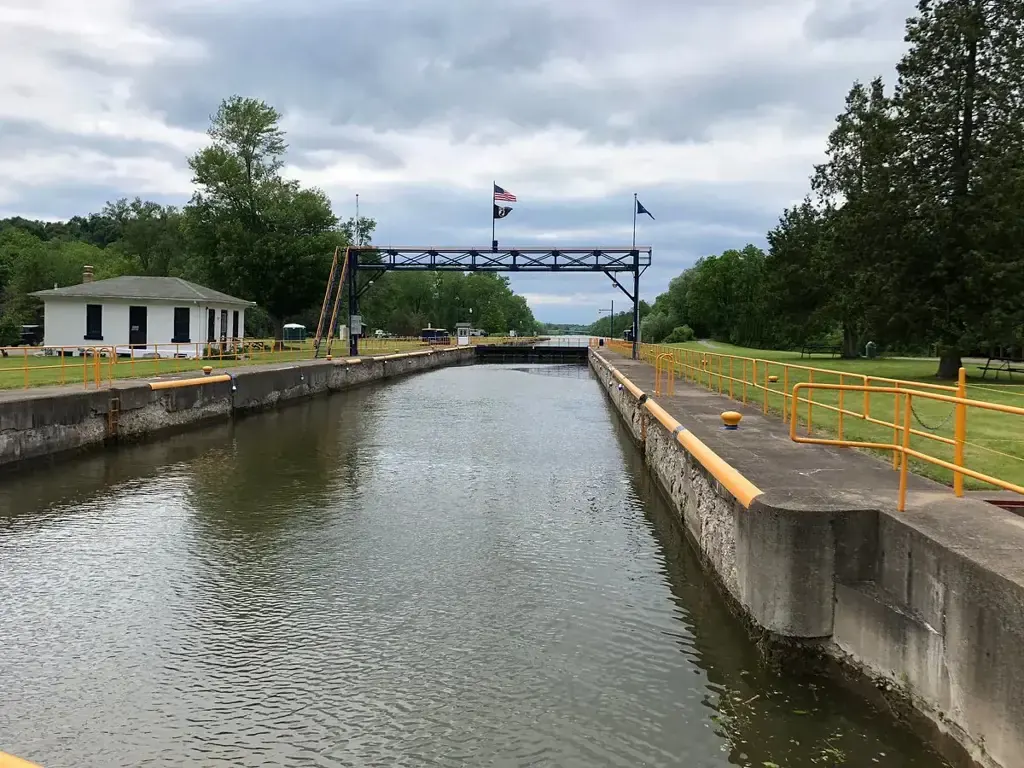
Erie Canal Lock 30 Country
Macedon grew up beside the Erie Canal, and its roofs still tell that story. Canal-era houses stand a short walk from Lock 30, newer homes spread along Route 31 and Route 350, and lake-effect snow settles on all of them the same way. A roof here has to handle canal damp, long winters, and wind off open fields.
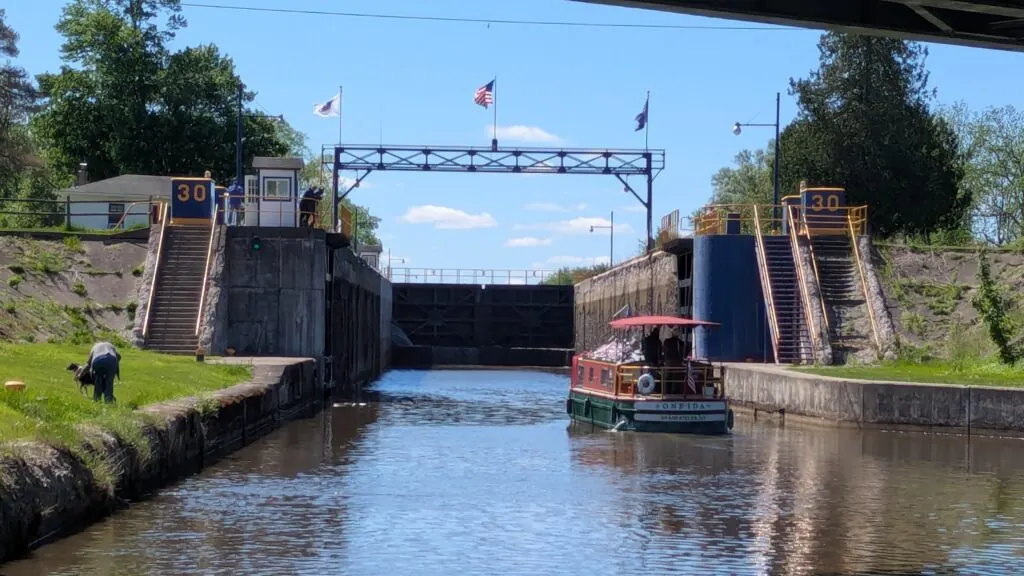
Macedon, NY
Macedon became an inland port when the Erie Canal opened in 1825, and the town still keeps that history close. Lock 30 of the present canal works just off Route 350, behind the fire department, and visitors can walk up to Canal Park and watch it lift boats. The stone ruins of the old enlarged-canal locks, Lock 60 off Quaker Road and Lock 61 near Route 31F, sit a short distance away, and the Erie Canalway Trail runs past them. The town itself was formed in 1823 from the western half of Palmyra, and the hamlet at its center was once an incorporated village until it dissolved in 2017.
Macedon roofs fall into two camps, and the canal draws the line between them. The canal-era houses near the hamlet carry steep pitches, tall brick chimneys, and older shingle or slate, with flashing that has been patched and re-patched across many winters. The newer homes along Route 31, Route 31F, and Route 350 carry architectural shingles on wider, lower slopes, and many sit on open lots where wind has a clear run. Canal damp hangs in the air through spring and fall, so moss and algae take hold on shaded north slopes here sooner than they do farther inland. A roof inspection that starts at the ridge and works down to the eaves catches the lifted tabs and soft decking before a leak shows on the ceiling.
Where people live
Macedon is a town of small clusters rather than one dense center, and each cluster roofs a little differently.
The old village center on Route 31 and Route 31F, where canal-era houses stand close to Lock 30 and carry steep pitches and tall chimneys.
The second canal port, west of the hamlet, where older homes sit near the water and shaded slopes grow moss fast.
Homes along Route 350 toward Walworth, many built in recent decades, with wide shingle slopes and open-lot wind exposure.
Quaker Road runs past the Lock 60 ruins, where farmhouses and newer homes share tree-shaded lots, and the gutters under those trees fill with leaves each fall.
Homes along Route 31F toward Palmyra, mixing older farmhouses with newer builds on rolling ground.
Houses on the open ground south of the canal, where wind crosses the fields and hits the roof with nothing to slow it down.
What wears roofs out here
Moisture off the canal keeps shaded north slopes damp through spring and fall. Algae streaks and moss take hold there first, and moss lifts shingle edges a little more each season. A shaded slope needs a closer look than a sunny one. Our post on roof moss and algae in Rochester's damp climate covers how that growth takes hold and how to clear it without stripping the shingles.
Lake Ontario snow arrives in bands and stays put on a Macedon roof, pressing down on the rafters of the older canal-era houses and hunting for weak seams at the eaves. When attic heat melts that snow from underneath, the water runs down, refreezes at the cold edge, and backs up beneath the shingles as an ice dam.
South and east of the canal the land opens out, and wind crosses it without anything to slow it down. On the windward slope the tabs lift, the ridge caps loosen, and one lifted tab is enough to let rain work its way under the next course. Checking the ridge in the days after a storm catches that lift while the fix is still a small one.
Two kinds of Macedon roof
| Roof detail | Canal-era house | Newer build |
|---|---|---|
| Pitch | Steep, often with dormers | Moderate, wide and simple |
| Common covering | Older shingles, sometimes slate | Architectural asphalt shingles |
| First trouble spot | Chimney flashing and valleys | Ridge caps and windward tabs |
| Snow behavior | Snow slides off steep slopes fast | Snow sits longer on lower slopes |
| Ventilation | Often added later, uneven airflow | Ridge and soffit vents from the start |
Wayne County homeowners read the lake-effect bands on the forecasts from the National Weather Service office in Buffalo, and those forecasts are the best guide for deciding when to clear a Macedon roof and when to leave the snow where it lies.
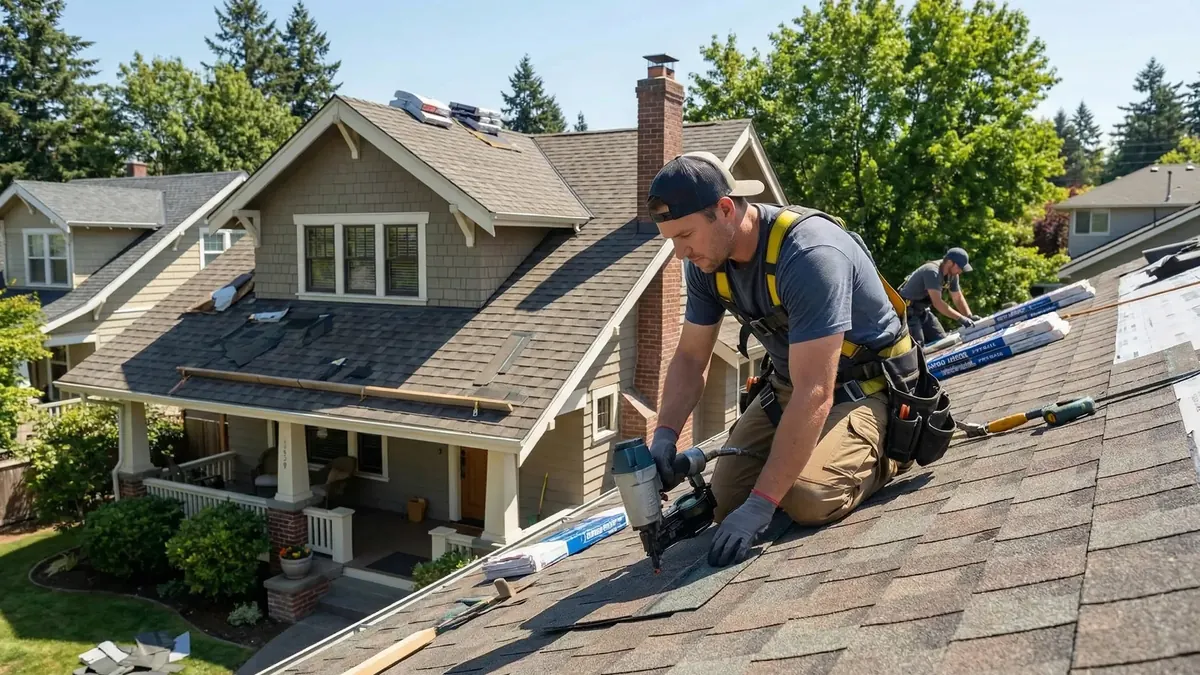
Roof work
The visit starts up on the roof, not down in the driveway with a clipboard. From the ground we read the roof lines first, then we climb up: the chimney gets the long look on canal-era houses, since decades of freeze and thaw work that joint loose, and the windward slope and the valleys get it on newer builds, where wind and water strike first. We lift a few tabs to see whether the decking under them is still solid, and we press along the ridge caps for any that have worked loose.
Most Macedon repairs stay small, a few tabs, a run of flashing, a vent boot the cold split. Whole slopes worn through get stripped down and re-laid in architectural shingles over fresh shield at the eaves
Coverage
Macedon work runs along the canal and out to the farm roads, and the ZIP below marks the ground we cover.
Macedon answers to one ZIP, 14502, in the southwest corner of Wayne County.
A slipped slate near the canal, or shingles worn thin on Route 31? Call and tell us what your roof is doing.
Call (585) 868-0065Services
A slow walk over the slopes, ridge, flashing, and decking, with findings in plain words for canal-era houses and newer builds alike.
Learn more →Lifted tabs, cracked vent boots, and chimney flashing that has worked loose across decades of freeze and thaw.
Learn more →Whole-slope wear gets a full tear-off, architectural shingles, and fresh shield at the eaves for lake snow and ice dams.
Learn more →Gutters along Quaker Road and the canal fill with leaves each fall, and guards keep the water moving off the roof.
Learn more →Lock 30 damp or open-field wind, send a note our way saying which side of the canal the house stands on.
FAQ
Ceiling stains close to the outside walls, paint peeling at the eaves, and icicles hanging in heavy sheets instead of thin spikes. A dam builds when attic warmth melts snow from underneath, the water runs to the cold eave, freezes, and then backs up beneath the shingles. A roof walk traces the entry point and the vent gap that lets the warmth through.
Most canal-era houses in Macedon wear shingles today, and architectural shingles suit them well when the pitch is sound and the decking is solid. A few older homes still carry slate, and slate can stay when the tiles and the flashing beneath them are in good shape. The choice comes down to the structure, the pitch, and the house itself, so we walk the roof before naming a material.
Lake-effect damp and tree shade keep the north-facing slopes wet through spring and fall, and moss loves that damp. It starts as a green film, then lifts shingle edges and holds more water against the roof. A shaded slope near the canal or along Quaker Road grows moss sooner than a sunny slope on open ground. Gentle cleaning and better sunlight on the slope slow it down.
Spring, after the snow has cleared off the slopes and the gutters are visible again. A spring check finds lifted tabs from winter wind, cracked vent boots, and flashing that moved with the freeze and thaw. It also reveals whether winter dams pushed water beneath the shingles at the eaves. Catching those in spring keeps a small repair from becoming a ceiling stain by summer.
Yes. Houses near the canal get the same roof work as anywhere else in Macedon, with extra attention to the damp that comes off the water. We check the shaded slopes for moss, the chimney flashing for freeze and thaw movement, and the decking for soft spots where moisture has lingered. Access is usually simple, since the hamlet streets are short and the houses sit close to the road.
Wind-lifted tabs on the windward slope, because the open fields south of Route 31 give storms a clear run. The second most common is granule loss on older shingles, which shows up as bare patches and grit in the gutters. Both show from the ground through binoculars, and both deserve a closer look on the roof before storm season returns.
Nearby towns
Palmyra sits east on Route 31 past the canal, and Walworth lies north past Route 350, so roof work in Macedon often reaches into one of those two towns.
Canal and trail
Lock 30 and the Erie Canalway Trail keep the air beside the canal damp through spring and fall, and the roofs nearest the water grow moss on their shaded slopes sooner than the roofs farther inland.
Macedon became an inland port when the Erie Canal opened in 1825, and the town still keeps that history close. Lock 30 of the present canal works just off Route 350, behind the fire department, and visitors can walk up to Canal Park and watch it lift boats. The stone ruins of the old enlarged-canal locks, Lock 60 off Quaker Road and Lock 61 near Route 31F, sit a short distance away, and the Erie Canalway Trail runs past them. The water in the canal and the locks keeps the air beside it damp, and that damp hangs over the hamlet through spring and fall.
Houses near the hamlet take that damp on their north slopes. Moss and algae take hold there sooner than they do farther inland, and moss lifts shingle edges a little more each season. A shaded slope near the canal needs a closer look than a sunny one, and a gentle cleaning that clears the growth without stripping granules is the reset that keeps the slope sound. Our guide to roof moss and algae in Rochester's damp climate covers how that growth takes hold beside water like this.
The trail brings walkers and cyclists past the canal-side houses, and the trees along the trail shade the roofs beside it. Those trees drop leaves into the gutters and valleys each autumn, and a valley packed with leaves holds water against the metal through the cold months. Clearing the valleys after the leaves finish falling is the autumn job that matters most on a canal-side roof, and it matters more here than on the open lots south of the canal.
| Roof place | What it faces | What shows first | What to watch |
|---|---|---|---|
| Hamlet near Lock 30 | Canal damp and trail shade | Moss on north slopes | Valleys packed with leaves |
| Wayneport | Second canal port, shaded lots | Algae streaks in the shade | Flashing at the chimney |
| South Macedon | Open fields and wind | Lifted tabs on the windward slope | Ridge caps after a blow |
| Route 350 corridor | Newer homes, open lots | Granule loss on wide slopes | Deck softness underfoot |
Wayneport and open fields
Wayneport sits at the second canal port west of the hamlet, and the open lots south of the canal let wind run clear across the roofs there.
Wayneport is the second canal port in Macedon, west of the hamlet, where older homes sit near the water and shaded slopes grow moss fast. The houses there mix canal-era pitches with newer builds, and the two sit side by side on the same streets. The older homes carry steep pitches, tall brick chimneys, and older shingle or slate, with flashing that has been patched and re-patched across many winters. The newer homes carry architectural shingles on wider, lower slopes, and many sit on open lots where wind has a clear run.
South of the canal, the ground opens out into fields, and the wind crosses those fields with nothing to slow it. Houses on the open ground south of the canal take that wind at full strength, and their ridge caps lift first, then the tabs on the windward slope. A check on a south Macedon roof starts at the ridge and works down the windward side, looking for the lift that the canal-side houses rarely see. The same wind that lifts tabs also clears the leaves from the valleys, so a south Macedon roof often has cleaner valleys and more wind wear than a canal-side roof.
Quaker Road runs past the Lock 60 ruins, where farmhouses and newer homes share tree-shaded lots, and the gutters under those trees fill with leaves each fall. Route 31F runs east toward Palmyra, mixing older farmhouses with newer builds on rolling ground. Each of those roads has its own mix of shade and wind, and a roof visit that names the road first reads the roof better than a visit that treats every Macedon roof the same.
Older homes near the water carry steep pitches and tall chimneys, and their shaded slopes grow moss fast in the canal damp.
Houses on the open ground south of the canal take wind across the fields, and their ridge caps and windward tabs wear first.
Chimneys and flashing
Canal-era chimneys in Macedon rise tall above steep pitches, and the flashing where brick meets roof is the joint that lets water in most often.
The canal-era houses near the hamlet carry tall brick chimneys that have stood through many winters, and those stacks move a little with each season. Brick and mortar expand in summer warmth and contract in winter cold, while the roof around them moves at a different pace. The flashing set into the mortar joints absorbs that difference, and once a joint gaps, water runs in beside the chimney and first shows as a damp line on the attic boards. A roof inspection that starts at the chimney and the valleys catches that leak before it stains a ceiling, because that is where Macedon roofs most often let water in.
The town was formed in 1823 from the western half of Palmyra, and the hamlet at its center was once an incorporated village until it dissolved in 2017. The houses from that long history carry chimneys of many ages, and each age shows its own wear. An old chimney with soft mortar needs its joints watched, while a newer chimney on a newer home needs its flashing watched where it meets the shingles. Both need the same attic check: a look at the boards beside the stack on a bright day, checking for daylight and for damp.
Our chimney work in Macedon starts at that flashing joint, and our roof inspection visits start at the ridge and work down to the eaves, catching the lifted tabs and soft decking before a leak shows inside. For the wider picture of how a roof ages in this climate, see our guide to how long a roof lasts in Rochester. The canal draws the line between the two camps of Macedon roofs, and the chimney is where that line shows most clearly.
Three locks and a canal running through town keep Macedon damp in a way the open fields never are, and a lifted tab near Lock 30 tells a different story from moss on a shaded slope. Give us a call and mention the lock, the street, or the slope, so the visit starts at the right place.