Four Corners Village brick roofs
The heart of the village, where brick houses and churches carry steep pitches and tall chimneys around Main and Church streets.
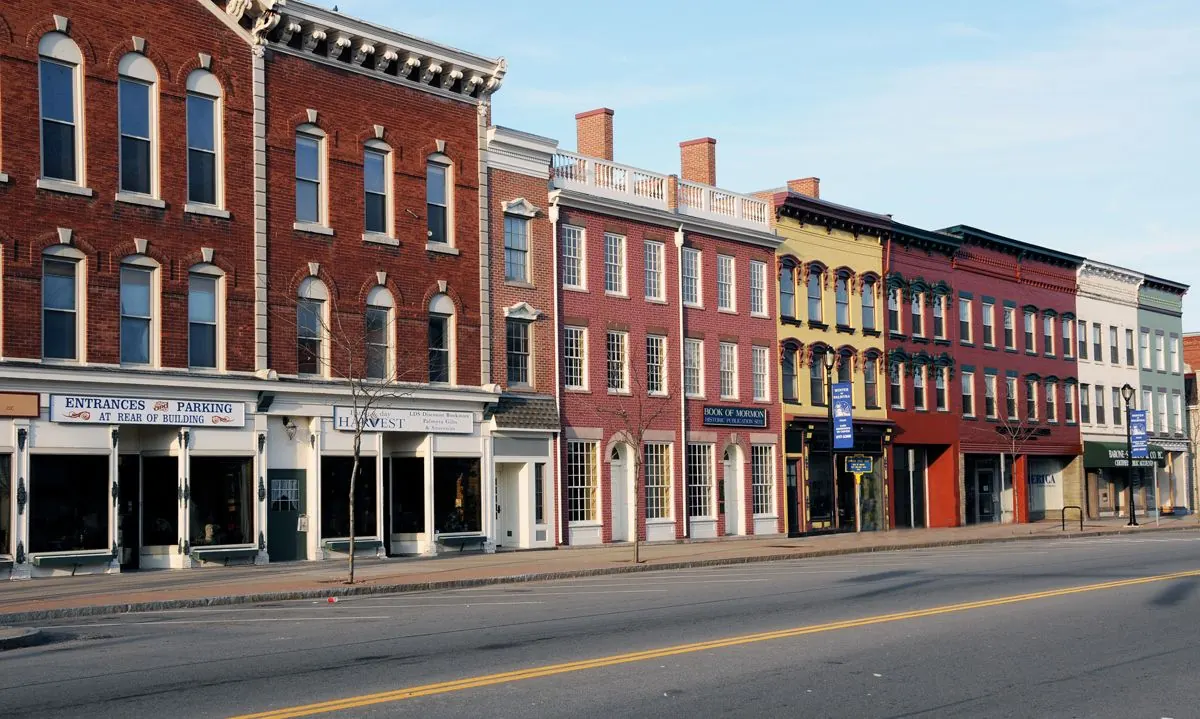
Queen of the Canal Towns
Palmyra is the village with a church on each corner of Main and Church, a canal running through its center, and brick storefronts that have stood since the 1820s. Its roofs range from steep brick-house pitches in the village to farmhouse slopes out in the town, and each one meets the same lake-effect winters. A roof here has to suit the house it sits on.
Palmyra, NY
Palmyra claims the only four-corner intersection in the country with a church on each corner, and the claim still holds at Main Street and Church Street, where four steeples rise over the village. The town was settled in 1789 by John Swift, first called Swift's Landing, and it grew fast once the Erie Canal cut through in the 1820s. The canal needed an aqueduct over Ganargua Creek, and the ruins of the 1857 aqueduct still stand where the creek passes under the village. The Book of Mormon was first printed here in 1830, in the Grandin print shop, and Hill Cumorah rises just south of the village line.
The village holds one of the best collections of nineteenth-century brick in Wayne County, and brick houses bring their own roof habits. Steep pitches shed snow well, but tall brick chimneys move with the seasons, and the flashing where brick meets roof is the first joint to open. Out in the town, farmhouses on Route 31 and the side roads carry lower slopes and wider eaves, and their roofs meet the same snow and wind with less pitch to help them. A roof inspection here starts at the chimney and the valleys, because that is where Palmyra roofs most often let water in.
Village and town
The heart of the village, where brick houses and churches carry steep pitches and tall chimneys around Main and Church streets.
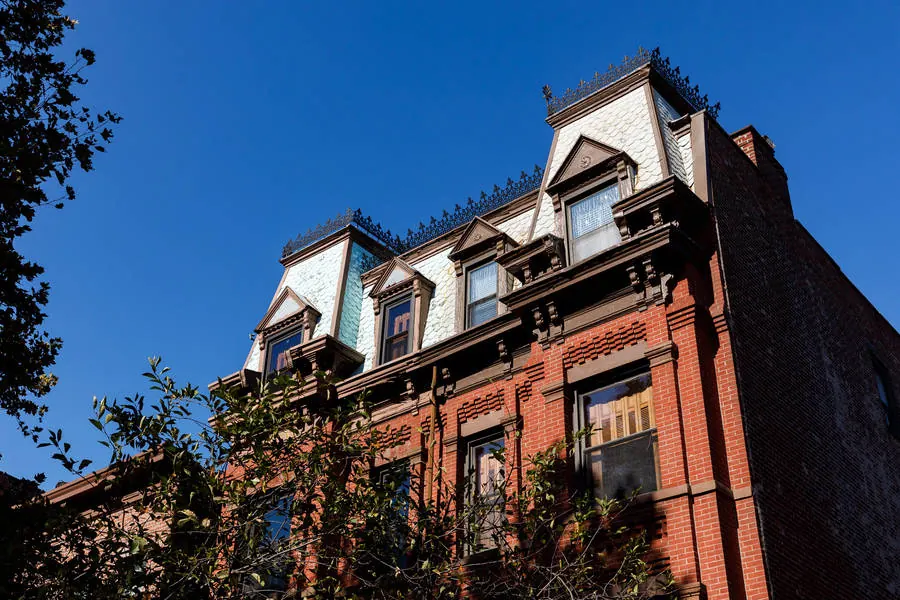
Stylish nineteenth-century homes east of the Four Corners, many with slate or older shingles and dormers that need flashing care.
Big brick houses west of the fairgrounds, with wide slopes and long ridges that take the full run of winter wind.
Homes on the north side of the canal, where damp hangs in the air and shaded slopes grow moss and algae sooner.
Farmhouses toward Hill Cumorah and the town line, with lower slopes, wide eaves, and barns that share the same storms.
Route 31 cuts through the town, and the houses along it mix older farmhouses with newer builds on open lots.
A short timeline
1789
John Swift becomes the first permanent settler, and the first houses rise near Ganargua Creek with wood shingles and hand-built frames.
1825
The Erie Canal opens through Palmyra, brick storefronts and stylish homes follow, and steep brick-house roofs become the village look.
1830
The Book of Mormon is printed in the Grandin shop on Main Street, and the village grows into a busy canal port with roofs to match.
Today
Palmyra roofs now mix brick-house slate, older shingles, and newer architectural shingles, all facing the same lake-effect winters.

Roof trouble
Chimney flashing gives out first in Palmyra. The village has more tall brick chimneys than most Wayne County villages, and the joint where brick meets roof shifts a little with every freeze and thaw. Mortar cracks, flashing lifts, and rain finds the gap. Valleys are the second trouble spot, where two slopes meet and water gathers. Older roofs carry valley flashing worn thin, and newer roofs see valley shingles lift at the edges when wind gets under them.
Snow is the third problem. Steep village pitches throw snow off fast, which is good for the roof and hard on the gutters below, where sliding snow tears at the hangers. Lower farmhouse slopes hold snow longer, and ice dams grow at their eaves when attic heat melts snow from below. A snow and ice-dam visit takes the load off safely and checks the attic ventilation that lets heat through, and a chimney visit resets the flashing where brick meets roof.
Village brick or town farmhouse
| Roof detail | Village brick house | Town farmhouse |
|---|---|---|
| Pitch | Steep, often with dormers | Lower, wide and simple |
| Chimneys | Tall brick, often two or more | Usually one, sometimes none |
| First trouble spot | Chimney flashing | Eave ice dams |
| Snow behavior | Slides off fast, strains gutters | Sits longer, melts from below |
| Outbuildings | Rare, small sheds | Barns and sheds share the storms |
Wayne County homeowners in the lake-effect belt read the snow forecasts the National Weather Service office in Buffalo posts through the winter, and Palmyra homeowners read them before every big band.
Services
The tall brick chimneys get their flashing reset and the mortar checked where brick meets the roof slope.
Learn more →Heavy snow comes off safely, and the attic ventilation behind the ice dams gets a proper look.
Learn more →Valley flashing, lifted tabs, and cracked vent boots fixed at the source, with the slopes around them checked.
Learn more →Older slate on village brick houses gets tiles matched and set level with the slope.
Learn more →Four Corners brick or a farmhouse out past the canal, message the crew with the street and the chimney that needs the closest look.
Brick dust in the gutters, or a valley that drips every spring? Call and describe the house, and we will take it from there.
Call (585) 868-0065Coverage
We serve Palmyra from Main Street out to the canal-side neighborhoods, and the ZIP below shows the ground we cover.
One ZIP, 14522, covers Palmyra in the southwest of Wayne County.
FAQ
Brick moves with the seasons, and the flashing where the chimney meets the roof moves with it. After many winters of freeze and thaw, the mortar cracks and the flashing lifts just enough for rain to slip in. Spring rain finds that gap first, so the stain shows up in March or April.
Some do, mostly on the older brick houses near the Four Corners and East Main Street. Slate holds up for decades when the tiles and the flashing under them stay sound, and one slipped tile is usually a quick fix. Over the years, plenty of village houses have switched to architectural shingles, which sit well on the steep pitches.
Begin by clearing heavy snow after a big fall, and watch the eaves for thick icicles and stains on the ceiling by the outside walls. A dam forms when attic warmth melts snow from underneath, so the durable fix sits in the attic: level insulation and open airflow from soffit to ridge. A visit takes the snow off safely and looks at the venting that lets the warmth through.
A yearly rhythm works well, and spring is the season to do it. A spring inspection finds the winter damage while it is still small: lifted tabs, cracked vent boots, flashing that moved at the chimney, and granule loss on older shingles.
Usually, yes, when the shingles around the valley are still in good shape. A valley leak comes from worn valley flashing or shingles that have lifted at the valley edge, and both can be fixed in place. We open the valley, check the decking beneath it for soft spots, set new flashing, and weave the shingles back in.
It adds moisture to the air on the north side of the village, and shaded slopes near the water stay wet longer in spring and fall. That moisture feeds moss and algae on the north-facing shingles, and the moss pries shingle edges up a bit more each season. Sunny slopes dry quickly and stay much cleaner.
Nearby towns
Roof work in Palmyra often crosses the town line: Macedon sits west on Route 31 past the canal locks, and Newark, the county commercial hub, sits east.
Creek and brick
Ganargua Creek passes under Palmyra beside the old aqueduct ruins, and damp air off the creek keeps the shaded slopes of the brick houses near it wet long after rain.
Palmyra grew fast once the Erie Canal cut through in the 1820s, and the canal needed an aqueduct over Ganargua Creek, whose ruins from 1857 still stand where the creek passes under the village. The creek runs through the heart of the village, and the brick houses near it take damp air off the water in the morning and shade from the creek trees through the day. Their north slopes grow moss and algae sooner than the slopes farther from the creek, and their valleys collect leaves washed down from the trees along the water.
Brick houses bring their own roof habits. Steep pitches shed snow well, yet tall brick chimneys move with the seasons, and the flashing where brick meets roof is the first joint to open. Out in the town, farmhouses on Route 31 and the side roads carry lower slopes and wider eaves, and their roofs meet the same snow and wind with less pitch to help them. A roof inspection here starts at the chimney and the valleys, because that is where Palmyra roofs most often let water in.
The canal-side houses on the north side of the canal take the damp at full strength. Their shaded slopes stay wet into the afternoon, and their gutters fill with leaves from the canal trees each autumn. A check on a canal-side house looks at the north slope for moss, the valleys for packed leaves, and the chimney for mortar that the thaw cycles have loosened, in that order, since each of those three shows the creek damp in its own way.
Brick houses around Main and Church carry steep pitches and tall chimneys, and their flashing opens a little more with each thaw cycle.
Homes on the north side of the canal take damp from the water and shade from the trees, and their north slopes grow moss first.
Farmhouses along Route 31 carry lower slopes and wider eaves, and their roofs hold snow longer than the steep village pitches.
South of the village
Hill Cumorah rises just south of the village line, and the farmhouse roofs on the slopes below it take wind across open ground and snow that drifts deep against their eaves.
Hill Cumorah rises just south of the village line, and the ground around it rolls away in farm fields and woodlots. The farmhouses toward the hill and the town line carry lower slopes and wide eaves, and their roofs meet the winter with less pitch to help them shed snow. Snow drifts deep against their eaves, and the melt runs to the cold eave, where it turns to ice and backs water under the shingles. A farmhouse check south of the village starts at the eave, looking for that ice, and moves to the attic, looking for the warm air that melted the snow from below.
The barns beside those farmhouses share the same weather. A barn roof often carries the same low slope and the same wide eave, and its ridge caps take the wind that runs across the open fields. A barn that leaks at the ridge can go unnoticed for a season, since nobody sleeps under it, yet the damp spreads through stored timber and hay. Checking the barn once the house is done keeps a small ridge fault from growing into a larger one over the season.
West Jackson Street, west of the fairgrounds, holds large brick houses with wide slopes and long ridges that take the full run of winter wind. East Main Street holds stylish nineteenth-century homes east of the Four Corners, many with slate or older shingles and dormers that need flashing care. The two streets show the range of Palmyra roofs within a short walk: brick and slate on one side, farmhouse shingle on the other, and the same lake-effect winters over both.
| Place | Roof character | What wears first | What to watch |
|---|---|---|---|
| Four Corners | Steep brick pitches, tall chimneys | Chimney flashing | Mortar joints after thaw |
| East Main Street | Slate and older shingles, dormers | Dormer valleys | Flashing at each dormer |
| West Jackson Street | Wide slopes, long ridges | Ridge caps in winter wind | Granule loss after a blow |
| South Palmyra | Farmhouse slopes, wide eaves | Ice at the eave | Attic warmth melting snow |
Slate and dormers
East Main Street mixes slate, older shingles, and newer architectural shingles on the same street, and each material wears in its own way.
East Main Street holds stylish nineteenth-century homes east of the Four Corners, many with slate or older shingles and dormers that need flashing care. Slate lasts a long time, yet its flashing gives out long before the tiles do, and a slate roof that leaks usually leaks at the flashing, not through the stone. Older shingles on the same street wear differently: they curl at the edges, lose granules, and go soft underfoot where damp has worked through the decking. Newer architectural shingles hold their shape better, yet their ridge caps still lift in the winter wind that runs along the street.
Dormers are the shared weak point on East Main Street. Each dormer carries its own valley where it meets the main slope, and each valley collects leaves and holds water after rain. The flashing at the dormer cheek, where the dormer wall meets the roof, opens as the house moves through the seasons, and water slips in beside the dormer before it shows on the ceiling below. A check on a dormered house looks at each dormer valley in turn, since one valley can be sound while the next has opened.
The Book of Mormon was first printed here in 1830, in the Grandin print shop on Main Street, and the village grew into a busy canal port with roofs to match. The brick storefronts and stylish homes from that era still stand, and their roofs still need the same care: chimney flashing watched, dormer valleys cleared, and slate flashing checked before the tiles themselves. Our slate, tile, and specialty roofing visits cover the slate on East Main Street, and our guide to roofing for Rochester historic homes sets out how old roofs in this region behave. A Palmyra roof has to suit the house it sits on, and on East Main Street no two houses wear the same way.
Four steeples and one canal give Palmyra roofs a long history to live up to, and a chimney that drips, a valley that wears thin, and snow on a farmhouse slope each point to a different corner of town. Reach out, say which corner yours stands on, and tell us which of those three you are seeing.