Gananda Planned community roofs
The planned community around the Wayne Central schools, where split-levels and ranches carry wide shingle slopes on open lots.
Orchard Rows and Open Fields
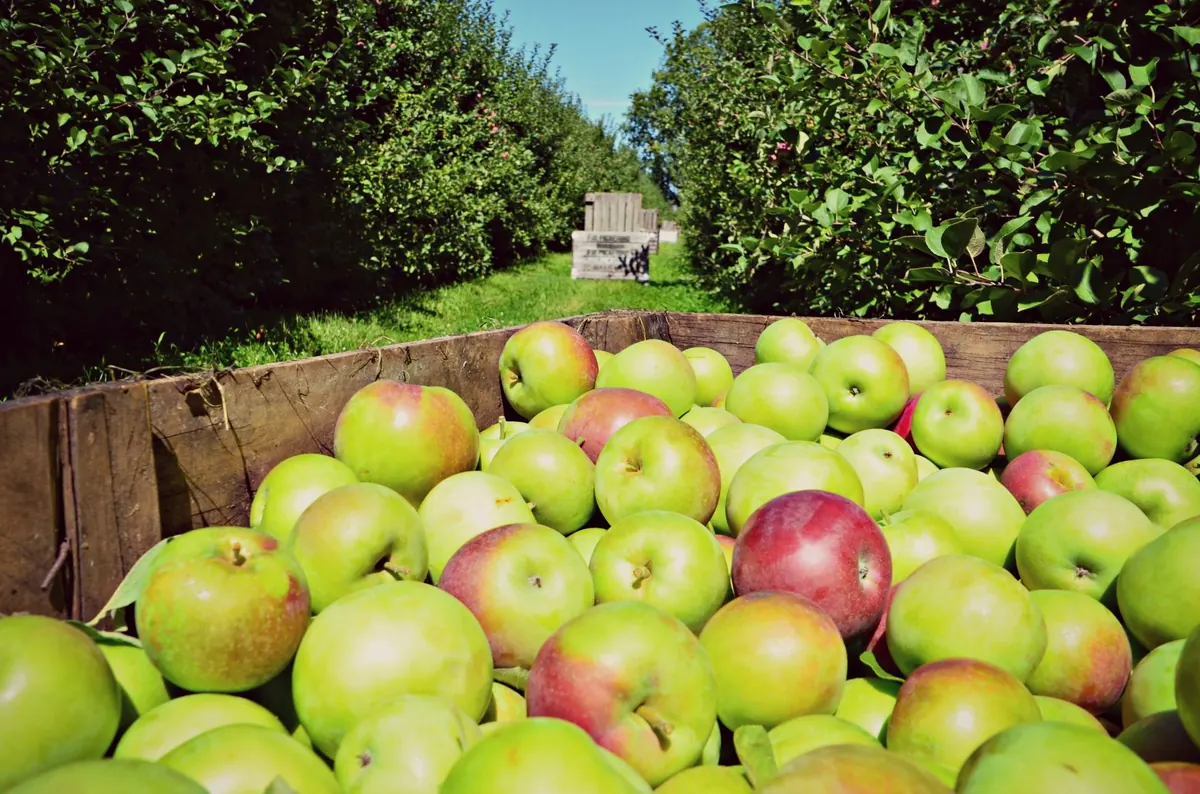
A roof here has to stand up to orchard shade, wind off open fields, and long winters. The apple rows themselves shape the work: orchard shade keeps the north slopes damp into late spring, and the open ground between the rows lets the wind run clear across the Gananda lots.
Walworth, NY
Wayne County grows more apples than any other county in New York, and Walworth sits at the center of that fruit belt: orchard rows cross the rolling ground, and farm stands open along the roads when harvest comes.
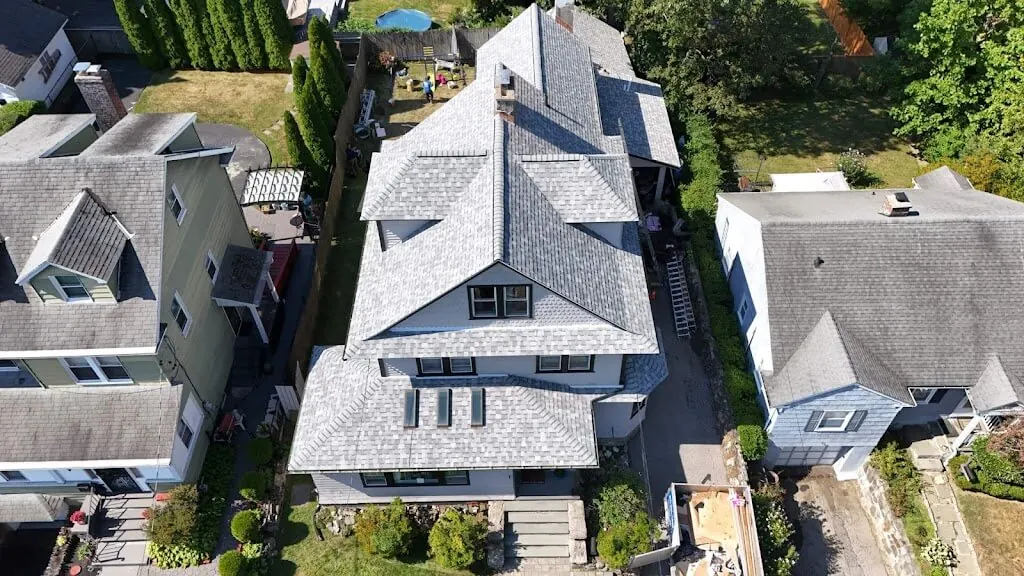
Two kinds of roof cover Walworth, and the orchard rows draw the line. The farmhouses wear older, steeper slopes, often with a barn beside them, and orchard trees shade their north sides for much of the day. The Gananda homes wear the lower, wider slopes of split-levels and ranches from recent decades, on open lots where wind runs clear. Moss feeds on the shaded north slopes; wind lift feeds on the open south slopes. So an inspection here reads the shaded side first and the windward side second, the two faces of a Walworth roof wearing at different speeds.
Where people live
The planned community around the Wayne Central schools, where split-levels and ranches carry wide shingle slopes on open lots.
The crossroads hamlet at the town center, where older homes and farmhouses mix along the main roads.
Apple-row farmhouses, steep pitches, barns close by, north slopes shaded by the trees.
Homes along Route 441 toward Penfield, where newer builds sit on open ground with full wind exposure.
Homes along the rural roads south of the orchards, under trees that shade the roof and drop leaves into the gutters each fall.
Homes on the west side toward Ontario, on rolling ground where the lake-effect bands drop their snow first.
North slopes under the orchard trees stay damp from spring into fall, because the trees block the sun for much of the day. Moss settles into that damp first, lifting shingle edges and holding water against the roof. A shaded slope wants gentle cleaning and a closer look than a sunny one. Gentle cleaning is the reset, and our guide to roof moss and algae in Rochester's damp climate explains the soft wash that clears it without stripping granules.
Gananda's open lots leave the south and west slopes exposed, and wind hits them first. When the wind gets under a tab it lifts it, and a lifted tab lets rain slip under the next course. A walk along the ridge after a storm catches the lift while the repair is still small. After a storm, a roof inspection in Rochester reads the ridge and the windward slope for lift while the fix is still small.
Deep lake-effect snow settles on Walworth roofs and stays put. Where a farmhouse attic has patchy insulation, heat escapes and melts the snow from below, and the water refreezes at the eaves into a dam that backs up beneath the shingles.
Farmhouse or Gananda home
| Roof detail | Orchard farmhouse | Gananda home |
|---|---|---|
| Pitch | Steep, often with dormers | Lower, wide and simple |
| Shade | Orchard trees shade north slopes | Open lots, full sun most of the day |
| First trouble spot | Moss and chimney flashing | Wind-lifted tabs and ridge caps |
| Outbuildings | Barns and sheds share the storms | Usually a small shed only |
| Gutters | Fill with orchard leaves each fall | Fill with leaves from yard trees |
Wayne County homeowners in the lake-effect belt check the winter snow forecasts from the National Weather Service office in Buffalo first, and Walworth is in that belt.
Roof work
A Walworth visit starts with a walk across the roof, reading the slopes and the flashing before any tools come out. The orchard farmhouses get their shaded north slopes checked first, where moss holds damp against the shingles, and the Gananda homes get their open windward slopes checked for lifted tabs, and the chimney gets one too, since decades of freeze and thaw have loosened that joint.
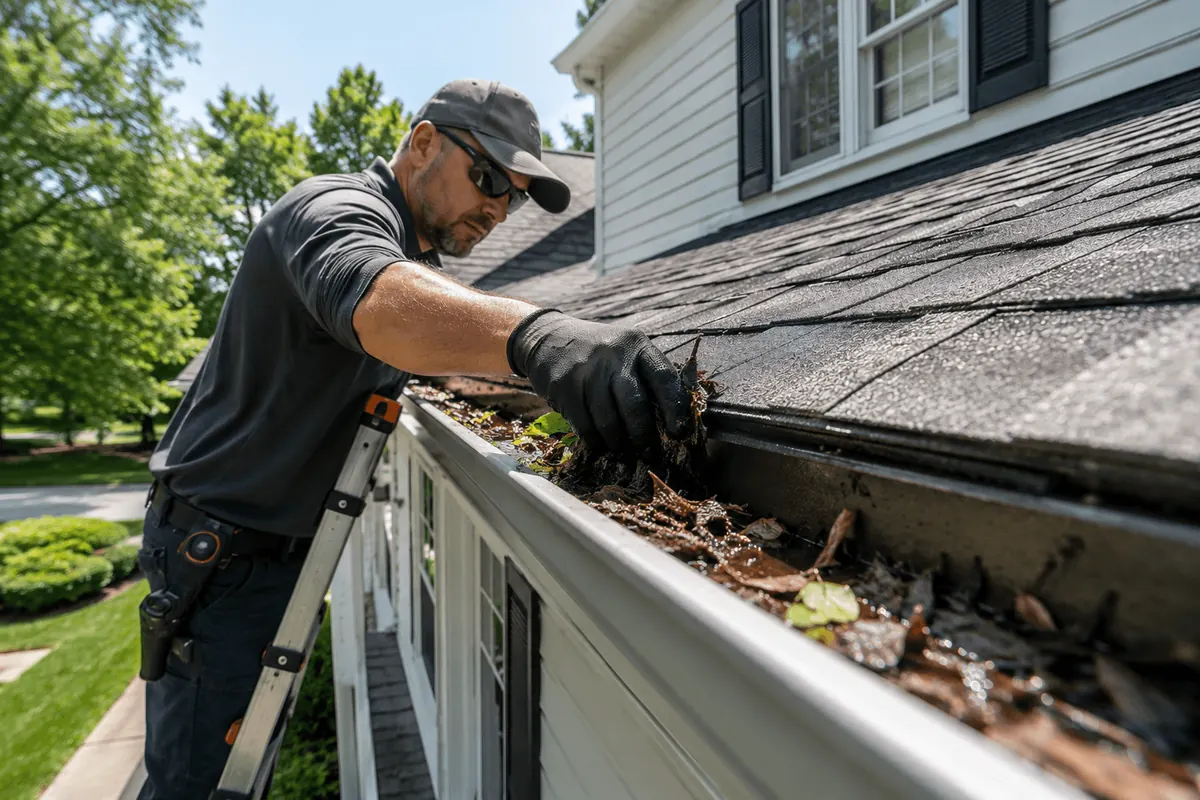
The report comes in plain talk, not roofing jargon, and it splits into two piles, this season's work and next season's work. Most Walworth jobs stay small, a lifted tab or two, a length of flashing, a vent boot cracked by winter. A roof worn across whole slopes gets stripped down and re-laid in architectural shingles. And the gutters get checked on every visit, because orchard leaves pack them each fall and a packed gutter sends water back under the eaves.
Coverage
Walworth work runs from the hamlet center to the orchard roads, and the ZIP below marks the ground we serve.
One ZIP, 14568, covers Walworth in the south of Wayne County.
Orchard shade growing moss on the north slope, or wind lifting tabs on open ground? Call and tell us where in Walworth the house is.
Call (585) 868-0065Services
Lifted tabs on open lots, moss-lifted edges on shaded slopes, and chimney flashing that has worked loose.
Learn more →Each fall, orchard leaves pack Walworth gutters, and guards keep the water flowing off the roof.
Learn more →A worn-out Walworth slope gets stripped to the deck and re-laid in architectural shingles, with new shield along the eaves.
Learn more →Level insulation and open soffit-to-ridge airflow cut the attic warmth that feeds ice dams.
Learn more →Gananda wind runs open across the lots, so send a short note naming the road and the slope that lifts in a storm.
FAQ
The north side stays shaded all day. Orchard trees throw shade over the north slopes for much of the day, and shaded shingles hold damp through spring and fall. Moss thrives in that damp, starting as a green film, then prying shingle edges up and trapping more water against the roof. A shaded farmhouse slope grows moss sooner than a sunny Gananda slope.
They take wind differently. Gananda homes sit on open lots with wide, lower slopes, so wind hits the whole slope at once and lifts tabs on the windward side. Farmhouses sit among orchard trees that break the wind, but their steeper pitches and taller chimneys catch gusts at the ridge.
Watch for water spilling over the gutter edge during rain, stains on the siding below the eaves, and icicles that form in thick sheets at the gutter line in winter. Each fall the orchard leaves fill the gutters here, and once one clogs, water backs up under the shingles at the eave.
When wear covers whole slopes instead of one spot. Repair fits a few lifted tabs, a length of flashing, or a vent boot cracked by winter. Replacement fits when granule loss leaves bare patches across the slope, when tabs curl across the whole roof, or when soft decking shows in more than one place.
Ice dams at the eaves, fed by attic heat leaking through uneven insulation, and wind-lifted tabs on the open lots. An ice dam announces itself with heavy icicles and stains on the ceiling by the outside walls. Wind lift shows as a tab standing off the slope after a storm.
Yes. Most Walworth farmhouses have a barn or a shed standing beside them, and those roofs face the same wind, snow, and ice. Barn roofs usually wear metal panels, and the fasteners and ridge flashing give out first. We walk the barn roof during the same visit as the house, and we rank the findings the same way: what wants doing now, and what can hold until next season.
Nearby towns
Walworth roof work often reaches into the next town: Macedon lies south past the canal, and Ontario sits north toward the lake.
Gananda and open wind
Gananda is a planned community around the Wayne Central schools, and its open lots let wind run clear across the wide shingle slopes of its split-levels and ranches.
Walworth sits at the center of the fruit belt, where Wayne County grows more apples than any other county in New York, and the orchard rows cross the rolling ground. Gananda stands apart from the orchards: a planned community around the Wayne Central schools, where split-levels and ranches from recent decades carry wide shingle slopes on open lots. Those lots have little tree cover, so the wind hits the south and west slopes first, and when the wind gets under a tab it lifts it, and a lifted tab lets rain slip under the next course.
The wide slopes of a Gananda home change how snow behaves too. A wide, low slope holds snow longer than a steep farmhouse pitch, and the snow sits through the cold days until a thaw melts it from below. Warm air from the rooms below rises into the attic and melts the snow from underneath, while the cold eave stays frozen, and the meltwater refreezes at the eave into a dam that backs up beneath the shingles. A Gananda check therefore looks at the ridge for wind lift, the eave for ice, and the attic for the warm air that fed the melt, in that order.
A walk along the ridge after a storm catches the lift while the repair is still small. The ridge caps on a Gananda roof take the wind first, and a cap that has lifted a little is easy to spot from the ground if you know to look along the ridge line. Our guide to wind damage to roofs in Rochester describes that ground-level look, and our roof inspection visits in Gananda start with the ridge and the windward slope for the same reason.
Split-levels in Gananda carry wide shingle slopes on open lots, and their south and west sides take the wind first after a storm.
Ranches carry long, low ridges that take the full run of winter wind, and their ridge caps lift before the field shingles show wear.
Open lots let snow drift against the eaves, and the melt from a drift runs to the cold eave, where it turns to ice.
Orchards and leaves
Apple rows around Walworth Center shade the north slopes and drop their leaves into the gutters each autumn, and a gutter packed with leaves holds water against the fascia all winter.
Walworth Center is the crossroads hamlet at the town center, where older homes and farmhouses mix along the main roads. The orchard rows around it shade the north slopes of those farmhouses for much of the day, and moss feeds on the shaded north slopes while wind lift feeds on the open south slopes. An inspection here reads the shaded side first and the windward side second, since the two faces of a Walworth roof wear at different speeds.
Lincoln Road runs south of the orchards, where homes sit under trees that shade the roof and drop leaves into the gutters each fall. A gutter packed with orchard leaves holds water against the fascia, and when that water turns to ice it lifts the gutter away from the roof edge and backs meltwater under the shingles at the eave. Clearing the gutters in late autumn, after the leaves finish falling, is the autumn job that matters most on a Walworth farmhouse, and it matters on Lincoln Road as much as it does in Walworth Center.
The orchard farmhouses carry steep pitches, often with a barn beside them, and the barn roofs share the same storms. A barn roof often carries the same steep pitch and the same ridge caps, and its flashing and ridge caps face the same orchard shade and the same open wind. A walk around the barn after the house check keeps a small ridge problem from becoming a large one, since a barn that leaks at the ridge can go unnoticed for a season.
| Place | Roof character | What wears first | What to watch |
|---|---|---|---|
| Gananda | Wide slopes on open lots | Ridge caps in the wind | Lifted tabs after a storm |
| Walworth Center | Older homes, farmhouse pitches | Moss on north slopes | Gutters packed with leaves |
| Orchard farmhouses | Steep pitches, barns beside them | Shade damp and moss | Valleys full of orchard leaves |
| Route 441 corridor | Newer builds on open ground | Wind lift on wide slopes | Deck softness underfoot |
Route 441 and lake snow
Route 441 runs toward Penfield through West Walworth, and the houses along it sit where the lake-effect bands drop their snow first.
Route 441 runs from Walworth toward Penfield, and the houses along it mix newer builds with older farmhouses on open ground with full wind exposure. West Walworth, on the west side toward Ontario, sits on rolling ground where the lake-effect bands drop their snow first, before the bands move inland. A roof in West Walworth therefore carries deeper snow than a roof in Walworth Center, and the snow stays longer, since the north slopes stay shaded through the cold days.
Deep snow changes the roof in two ways. Its weight presses on the decking, and its melt runs to the eave, where it refreezes into a dam. Where a farmhouse attic has patchy insulation, heat escapes and melts the snow from below, and the water refreezes at the eaves into a dam that backs up beneath the shingles. A check on a West Walworth roof looks at the eave for ice, the attic for patchy warmth, and the ridge for caps lifted by the wind that arrived with the snow, since all three arrive together in a lake band.
Our guide to how much snow a Rochester roof can hold sets out how that weight works, and our roof snow removal and ice dam prevention visits cover the eave work that follows a deep snow. The orchard shade on one side and the open wind on the other give Walworth its split character, and a roof here is best read with both in mind: the shaded north slope that grows moss, and the open south slope that takes the wind, with the lake snow arriving first on the west side of town.
Apple rows shade one side of a Walworth roof while open wind works the other, and Gananda homes wear differently again from the old farmhouses. Get in touch by phone or email, name the farmhouse, the crossroads, or the Gananda street, and say whether moss in the shade, tabs lifted in Gananda, or gutters full of orchard leaves brought you here.