Ontario Center Hamlet roofs
The old hamlet on Ontario Center Road, where farmhouses and older homes sit near the Heritage Square Museum.
From Apples to Atoms
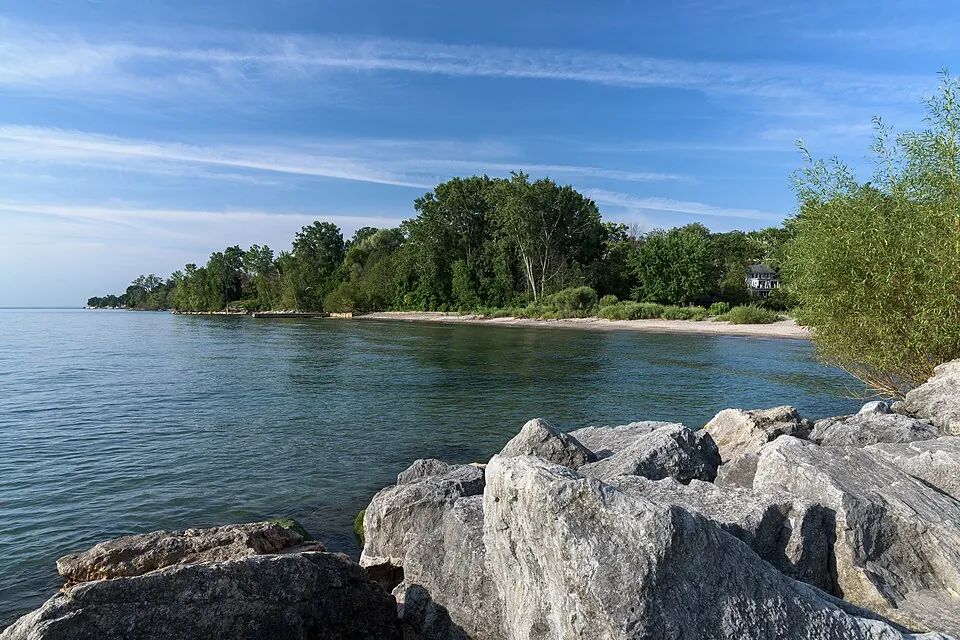
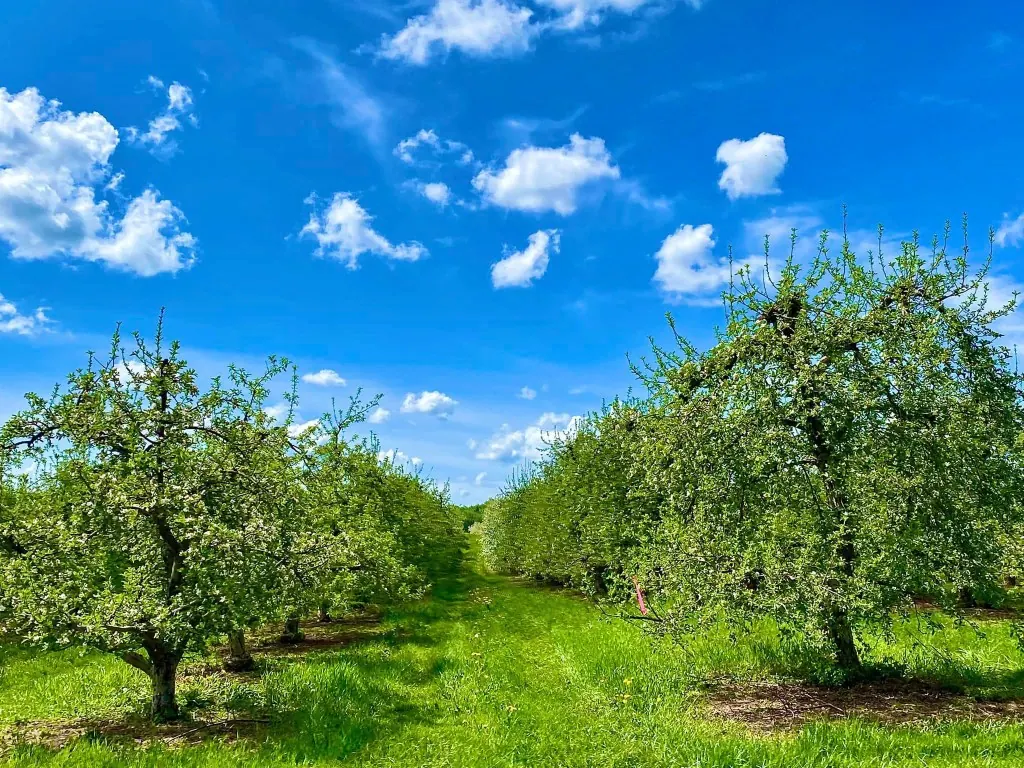
Ontario runs from apple orchards to the Lake Ontario shore, with the Ginna nuclear plant on the lake at one end and the hamlet of Ontario Center at the other. Its roofs range from farmhouse slopes among the orchard rows to newer homes near the lake, and the lake wind reaches all of them. A roof here has to handle orchard shade, lake snow, and wind off open water.
Ontario, NY
Ontario has lived three lives on the same ground. It began with iron ore and salt springs, then became apple country, and in 1970 the R.E. Ginna Nuclear Power Plant opened on the Lake Ontario shore at the old Smokey Point Farm, bringing the town its third identity. The plant still runs on the lake at the end of Lake Road, and the orchards still run across the rolling ground behind it. Ontario Center, the hamlet a mile west of the village, once held three general stores, a hardware store, a drug store, a hotel, a church, and a school, and the Heritage Square Museum on Ontario Center Road keeps that history on show. Fruitland, a mile and a half west of Ontario Center, grew up around a grist mill and a saw mill built in 1835.
Homes near the lake face the wind head-on, low simple slopes taking the weather straight off the water.
Hamlets and shore
The old hamlet on Ontario Center Road, where farmhouses and older homes sit near the Heritage Square Museum.
The small hamlet west of Ontario Center, where homes near the old mill site carry older shingles and steep pitches.
The crossroads hamlet on the town's west side, where houses sit on open ground with full wind exposure.
Lake Road homes toward the Ginna plant, where lake wind hits the roof straight off the water.
The village center on Route 104, where older homes and newer builds stand side by side along the main road.
Homes near the harbor and marina, where boats, damp air, and lake wind shape the roof work.

Roof work
Lake wind is the first force. Homes along Lake Road and near Bear Creek Harbor take wind straight off the water, and it lifts tabs on the windward slope and works at ridge caps a little more each season. Lake-effect snow is the second force: the bands drop hardest near the shore, so lake road roofs carry deep snow while Ontario Center roofs carry less. The third force is orchard shade, which keeps the north slopes of farmhouse roofs damp and feeds moss. After a hard lake blow, storm and hail damage repair in Rochester covers the ridge and fastener check that follows on a Lake Road roof.
Every visit opens on the roof, not in a driveway conversation. The lake road homes get the windward side and the fasteners checked first, since lake wind works at both. Farmhouses get the shaded north slope and the chimney checked first, since moss and decades of freeze and thaw work at both. We press the decking for soft spots and lift a few tabs to see what lies under them. Ontario repairs tend to be small jobs: a few tabs here, a stretch of flashing there, a vent boot the cold cracked. When shingles have worn across whole slopes, a metal roof suits the lakefront homes, since it sheds snow and stands up to wind, while architectural shingles suit most inland homes.
Lake Road, farm roads, and the hamlet
| Roof detail | Orchard farmhouse | Lake road home | Ontario Center build |
|---|---|---|---|
| Pitch | Steep, often with dormers | Low to moderate | Moderate, wide and simple |
| First trouble spot | Moss on shaded slopes | Wind-lifted tabs | Valley wear |
| Snow load | Moderate, sheds off steep pitch | Heaviest, sits on low slopes | Moderate, melts from below |
| Common covering | Older shingles | Metal or architectural shingles | Architectural shingles |
Ontario sits in the lake-effect belt off the lake, and Wayne County homeowners keep an eye on the snow forecasts from the National Weather Service office in Buffalo, posted all winter.
Wind comes off Lake Ontario and hits the Lake Road homes at full strength, with open water behind it. The windward slope gives first, tabs lifting, ridge caps loosening, and metal fasteners backing out a little at a time. After a hard blow, a ridge check finds the trouble early, while the fix is still small.
Farmhouse roofs in the orchards keep their north slopes in shade, so shaded shingles stay wet from spring into fall. Moss settles there first, prying shingle edges up and holding water against the roof. Gentle cleaning keeps the growth from taking hold.
Attic heat melts snow from below, and the meltwater runs to the cold eave and refreezes, so the dam grows with each melt and freeze. Even insulation and a clear path for air from soffit to ridge hold the deck cold and the snow where it fell.
Services
Lake Road homes do well with standing seam metal, which throws snow off and stands up to wind.
Learn more →We check slopes, ridge, flashing, and decking with the setting in mind, lake, orchard, or open lot.
Learn more →Lake wind lifts the tabs, orchard moss lifts the edges, and the chimney flashing works loose.
Learn more →Steady insulation and clear soffit-to-ridge airflow hold back the attic warmth behind ice dams.
Learn more →Between the orchards and the lake road, send a word naming the house and the slope the lake wind works on.
Lake wind at the shore, or moss in the orchard shade? Call and tell us which part of Ontario the house sits in.
Call (585) 868-0065Coverage
We work across Ontario, from the lake road to Ontario Center, and the ZIP codes below draw the boundary of that ground.
Ontario answers to 14519, and Ontario Center answers to 14520, both in Wayne County.
FAQ
Wind comes in off open water with nothing in its way, then meets the lakefront slopes head-on. It peels tabs back on the windward side, worries the ridge caps, and loosens metal fasteners a little at a time. After a hard blow, a walk on the windward slope spots the lifted tabs while the repair is still small.
Each kind ages its own way, so the work is never the same twice. Farmhouses among the orchard rows face moss on shaded north slopes and chimney flashing that has worked loose across decades. Lake homes face wind lift and deep snow on low slopes. Architectural shingles suit most farmhouses and Ontario Center homes, while metal suits many lake road homes because it sheds snow and stands up to wind.
Spring, after the snow has cleared off the slopes and the gutters show again. A spring check finds lifted tabs from winter wind, cracked vent boots, flashing that moved with the freeze and thaw, and moss that grew on the shaded slopes over the winter. It also shows whether winter dams pushed water beneath the shingles at the eaves.
Orchard trees keep the north slopes shaded for much of the day, and shaded shingles hold moisture through spring and fall. Moss thrives in that moisture, starting as a green film, then prying shingle edges up and trapping more water against the roof. A shaded farmhouse slope greens over with moss sooner than a sunny slope on open ground. Soft cleaning and cutting back the nearest branches hold it back.
Yes. Ontario Center homes get the same roof work as anywhere else in the town, with attention to the age of the house and the shade around it. Many Ontario Center homes are older, with steep pitches and tall chimneys, so we spend extra time at the chimney flashing and the valleys. Access is simple, since the hamlet streets are short and the houses sit close to the road.
Ice dams at the eaves on inland homes, and wind-lifted tabs on the lake road homes. An ice dam shows itself in heavy icicles and stains on the ceiling by the outside walls. Wind lift shows as a tab standing proud of the slope after a storm.
Nearby towns
Ontario roof work often reaches into the next town: Walworth lies south past the orchards, and Williamson sits east along the lake shore.
Lake shore, harbor, and orchard rows
Ontario packs three different roof climates into one small town, because the Ginna shoreline, Bear Creek Harbor, and the orchard rows behind Ontario Center each push a roof in a different direction.
Lake Road runs along the water past the Ginna plant toward Bear Creek Harbor, and the houses on that road meet wind that has crossed open water with no trees or hills to slow it down. Their windward slopes take the full blow, and the ridge caps on those slopes loosen a little with every hard storm. A Lake Road roof that looks sound from the driveway can still carry lifted tabs on the side that faces the water, and those tabs only show when someone walks the slope and presses along the edges.
Bear Creek Harbor adds damp to the wind. Boats, marsh ground, and still water keep the air around the harbor moist through spring and fall, and the shaded sides of harbor homes stay wet long after a sunny slope has dried. Algae darkens those shaded slopes first, then moss follows where the shade is deepest, and both hold water against the shingles through the damp months. Harbor roofs want a close look at the north and east faces each spring, when the green film is thin and the shingles beneath it are still sound.
Inland, the orchard rows around Ontario Center and Fruitland change the picture again. Apple trees shade the farmhouse slopes for much of the day, and fallen leaves gather in the valleys and the gutters each fall. A farmhouse valley that holds a mat of wet leaves through October will hold damp against the flashing all winter, and the decking beneath it softens first. Clearing those valleys before the snow arrives matters more on an Ontario farmhouse than on a bare lot, because the trees keep feeding the gutters until the last leaves drop.
Union Hill, on the west side of town, sits on open ground where the wind has a clear run across the fields. Houses there carry wide slopes with little shelter, and the windward side takes the same lift that Lake Road roofs take, without the lake damp beside it. A Union Hill roof ages from the windward edge inward, with the ridge caps and the corner tabs going first, and a walk along the ridge after a storm tells the story before any water reaches the rooms below.
After a lake storm
A lake storm leaves different marks on each Ontario slope, so the walk after the wind drops follows the house around, slope by slope, instead of stopping at the front.
Tabs that stand proud of the slope on the lake side show wind lift, and a lifted tab lets rain run under the course above it. Pressing the tab edges along the windward slope finds the ones that have lost their seal.
Ridge caps on an Ontario roof take the wind from both sides, and the corner caps crack first. A cracked cap opens a straight path for rain into the peak, and it shows as a pale line along the ridge from the ground.
Granules in the gutters after a storm mean the shingle surface has worn thin on the slope above. A gutter full of granules on a Lake Road home points to the windward slope, where wind and rain wear the surface fastest.
The chimney deserves its own look on an Ontario farmhouse, because the tall brick stacks on the older homes move a little with every cold season, and the flashing where brick meets shingle opens a hairline gap that rain finds first. A chimney check in Ontario resets that flashing and repoints the mortar where it has cracked, and it pairs well with a roof inspection that reads the whole house in one visit.
Through the seasons
Ontario roofs ask for a different watch in each season, because the lake, the orchards, and the harbor each set their own calendar.
| Season | Lake Road homes | Ontario Center farmhouses | Harbor homes |
|---|---|---|---|
| Spring | Lifted tabs and ridge caps after winter wind | Moss on shaded slopes and leaf mats in valleys | Algae on damp shaded faces |
| Summer | Vent boots dried and cracked by sun | Overhanging orchard branches rubbing shingles | Gutters holding damp leaves from harbor trees |
| Fall | Gutters cleared before lake snow arrives | Orchard leaves cleared from valleys and gutters | Downspouts checked before the first cold snap |
| Winter | Deep snow sitting on low lake slopes | Ice dams at eaves where attic warmth escapes | Icicles where meltwater meets the cold eave |
Winter snow behaves differently on each Ontario slope. Low lake slopes hold deep snow for days after a band passes, and that snow melts from below where attic warmth reaches the deck, then refreezes at the cold eave into a dam that pushes water under the shingles. A snow and ice dam visit in Ontario clears the load from the edge and looks at the attic airflow that feeds the dam, while gutter work in Ontario keeps the fall leaves from damming the water at the eave before winter even starts.
Lake Road takes the wind straight off the water, the orchards hold the shade, and Ontario Center sits between the two, so an Ontario roof is hard to read without the address. When you write, name the road or the hamlet and say whether the wind, the moss, or the snow is what brought you to us.