Call (585) 868-0065
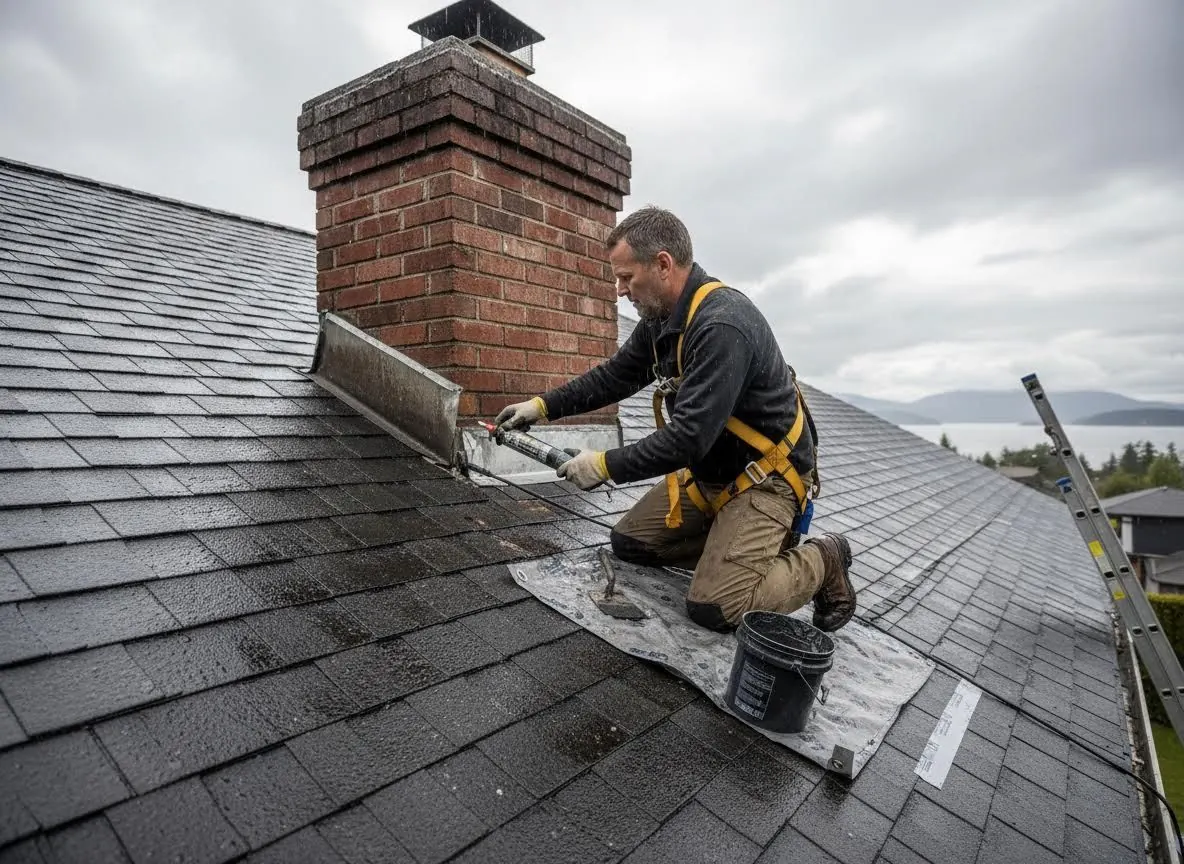
Brick chimney on a house roof with metal flashing at its base

Hidden Leak Sources

Chimney flashing leaks in Rochester

A stain near the fireplace is easy to blame on the roof above it, and the real cause is usually the joint where the chimney meets the roof. It is the most missed leak on a Rochester roof.

Brick chimney on a house roof with metal flashing at its base
Step flashing and counterflashing wrap the chimney in layers, so water runs past the joint.

Why it is missed

The leak hides where the roof meets the brick

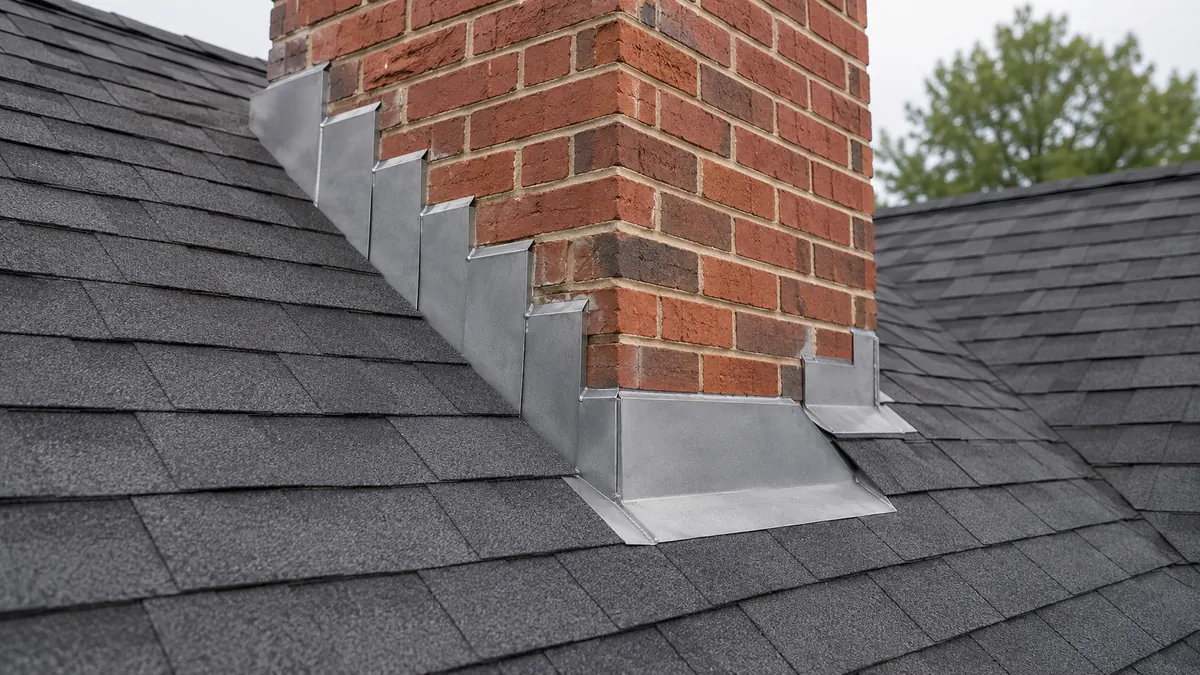
A chimney cuts a hole through the roof, and the joint around it is sealed by two layers of metal: step flashing, which runs up the sides of the chimney in small overlapping pieces, and counterflashing, which folds into the brick and over the top of the step flashing. Water running down the roof meets the chimney, splits around it, and runs past the joint on the flashing. When either layer cracks, lifts, or was never sealed right, the water runs behind the metal and down the chimney into the house.

The leak is missed because the stain shows up far from the joint. Water runs down the chimney brick and the rafters before it drops, so a stain on the ceiling in the living room can start at a flashing joint two rooms away. A roofer who fixes the roof above the stain misses the chimney entirely, and the leak comes back with the next rain. The chimney is the first place to look when a leak keeps returning after a repair.

The mortar is the other half of the story. Brick chimneys in Rochester take freeze and thaw all winter, and the mortar joints crack and open. Water enters the cracked mortar above the flashing line and runs down inside the chimney, showing up as a leak that looks like a roof problem. A chimney that needs repointing will leak no matter how good the flashing is. Chimney work in Rochester covers the flashing and the brick together.
The parts

Step flashing, counterflashing, and the cricket

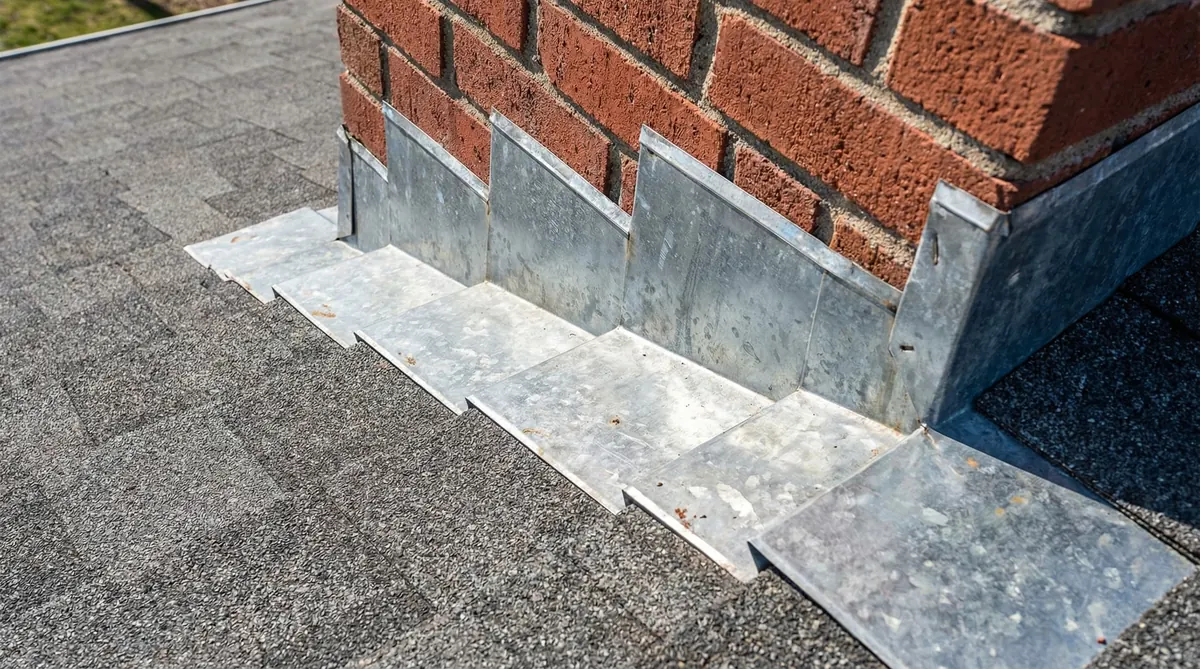
Tap a part to read what it does. The joint works because the pieces overlap in layers, not because of sealant alone.

Step flashing

Step flashing is the workhorse. Small L-shaped pieces of metal are woven into the shingles up the sides of the chimney, each one overlapping the shingle below it, so water runs down the roof and off each piece in turn. When one piece cracks or lifts, water gets behind the layer.

Roofer repairing chimney flashing on a house roof
A cricket, the small peaked saddle behind the chimney, splits the water around it.

Tell them apart

Chimney leak or roof leak: how to tell

The stain looks the same either way, but the pattern around the chimney tells them apart. A stain near the fireplace, damp brick in the attic, and a leak that returns after a roof repair all point to the chimney. A leak that only appears in wind-driven rain points to a joint that has opened a little, and the joint is usually at the chimney.

Look at the metal from the ground with binoculars, or ask a roofer to read it up close. Rust on the flashing, gaps where the metal meets the brick, and sealant that has cracked and pulled away are all signs the joint has failed. Inside, damp brick in the attic is the clearest sign of all: water runs down the brick, not through the field.

The fix is metalwork, not sealant alone. The roofer lifts the shingles around the chimney, removes the old flashing, and lays new metal in layers, woven into the shingles and set into the brick. A cricket goes in when the chimney is wide and water pools at its back. Read more in our post on roofing for Rochester's historic homes, where chimney flashing on older homes gets a full treatment, and see roof repair in Rochester for the wider picture.

The table below lines the signs up side by side, so the pattern is easy to read at a glance.

Chimney flashing leak signs vs roof field leak signs
SignPoints to chimney flashingPoints to roof field
Stain near the fireplaceYes, water runs down the chimneyRarely, unless the valley is near
Leak returns after a roof repairYes, the joint was never fixedNo, the repair usually holds
Stain grows in wind-driven rainYes, wind pushes water behind the flashingSometimes, at lifted shingles
Damp brick in the atticYes, water runs down the brickNo, the brick stays dry
Rust on the flashingYes, the metal has lost its sealNo, unless the valley flashing rusts

Scroll sideways to see the full table.

How the fix works

How a chimney flashing leak is fixed

The fix is metalwork, not sealant alone. A tube of sealant over cracked flashing holds for a season, and the leak comes back with the next freeze.

The roofer lifts the shingles around the chimney, removes the old step flashing and counterflashing, and lays new metal in layers, woven into the shingles and set into the brick. The counterflashing is cut into the mortar joint and sealed, so water running down the brick face drips onto the step flashing and away from the joint. The shingles are laid back over the flashing, and the joint is sealed where the metal meets the brick.

A cricket is added when the chimney is wide and the water pools at its back. The cricket is framed, covered in membrane, and flashed like a small roof of its own, splitting the water around the chimney. The whole job is a day of metalwork, and it is the fix that lasts, because it rebuilds the joint instead of covering it. For the wider story of winter leaks, read why roofs leak in Rochester winters.

People also ask

What people ask next about chimney flashing leaks

Short answers on chimney flashing, the leak source most owners miss.

Why does my chimney leak when it rains?

The flashing around the chimney has usually cracked, lifted, or was never sealed right, so water runs behind the metal and down the brick into the house. Cracked mortar above the flashing line lets water in the same way. A chimney leak is a joint problem, and the joint is where the roof meets the brick.

How do I know if my chimney flashing is bad?

Look for rust on the metal, gaps where the flashing meets the brick, and sealant that has cracked and pulled away. Inside, look for damp brick in the attic and a stain on the ceiling near the fireplace. A leak that returns after a roof repair is the clearest sign the flashing was never fixed.

What is a chimney cricket on a roof?

It is a small peaked saddle built on the uphill side of a wide chimney, and it splits the water around the chimney instead of letting it pool against the brick. A chimney wider than a few feet needs one, and many older Rochester chimneys were built without one, which is why they pool water at the back.

Leak near the fireplace that keeps coming back? Call and get the chimney flashing checked.

Call (585) 868-0065

Frequently asked questions

Before you decide: chimney flashing leak answers

The step flashing cracks or lifts as the roof moves with the seasons, the counterflashing pulls out of the brick, or the sealant between them dries and cracks. Freeze and thaw widens the gaps each winter, and cracked mortar above the flashing line lets water in the same way. All of them are joint failures, not roof field failures.

It can often be repaired when the metal is sound and the trouble is a cracked seal or a lifted piece. A full replacement is needed when the flashing is rusted through, the counterflashing has pulled out of the brick, or the joint has been patched twice already. The roofer reads the metal to decide it.

Heavy rain drives water sideways behind the flashing, where light rain runs straight down the slope. A small gap that holds in light rain lets wind-driven rain through. The leak points to a joint that has opened a little, and it is a repair while the gap is small.

Sealant alone is a short fix. A tube of sealant over cracked flashing holds for a season, and the leak comes back with the next freeze. The lasting fix rebuilds the joint with new metal, and the sealant is only the final layer where the metal meets the brick, not the seal itself.

Yes, when the chimney is wide and water pools at its back. A cricket is a small peaked saddle that splits the water around the chimney instead of letting it sit against the brick. A narrow chimney sheds water on its own, but a wide one without a cricket holds a pond at its back, and the pond finds every gap.

Every few years, and after any winter with heavy freeze and thaw. A roof inspection that includes the chimney catches rust, lifted metal, and cracked mortar early, while the fix is still small. Older brick chimneys deserve a closer look, since the mortar ages with the flashing.

Keep reading

Read next: leaks, skylights, and historic homes

Chimney flashing leaking in Rochester?

Call and we will check the step flashing, the counterflashing, and the brick, and tell you plainly what the joint needs.