Widespread curling and cracking
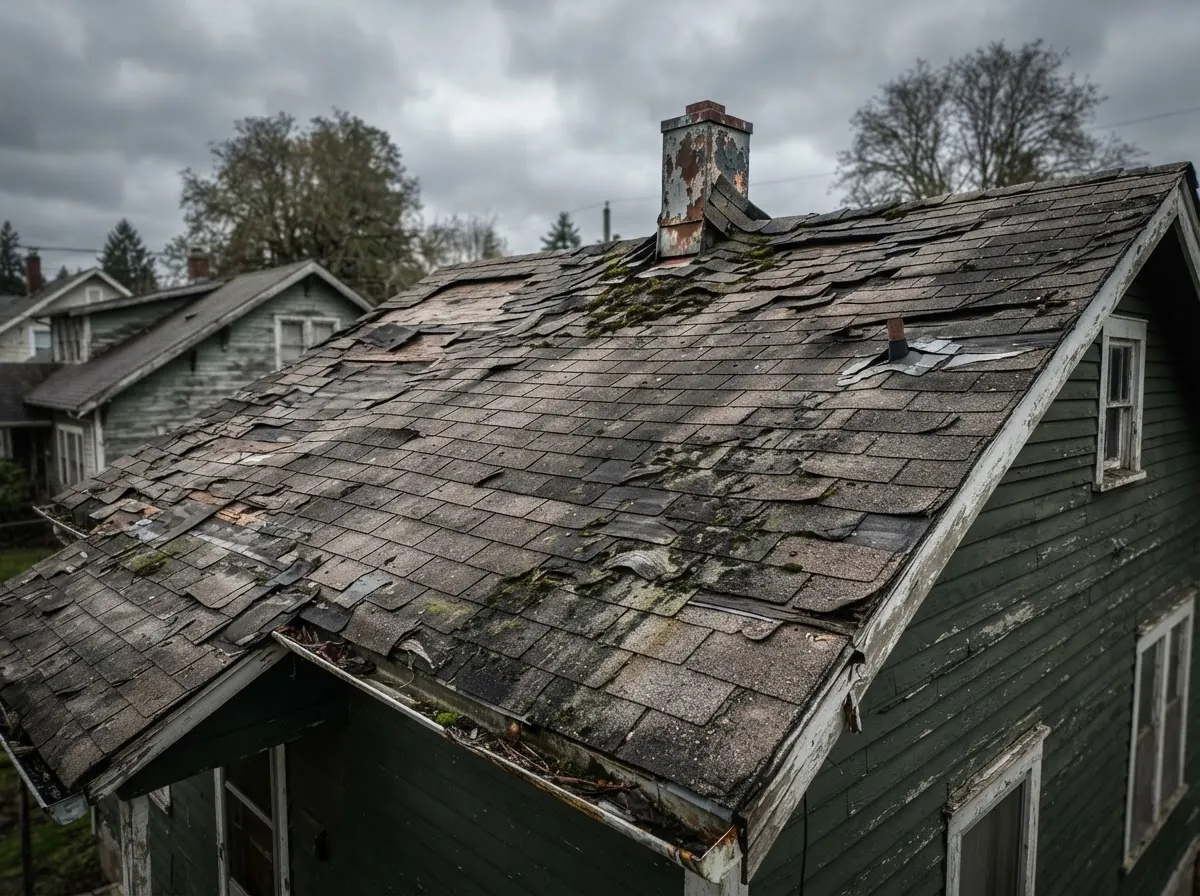
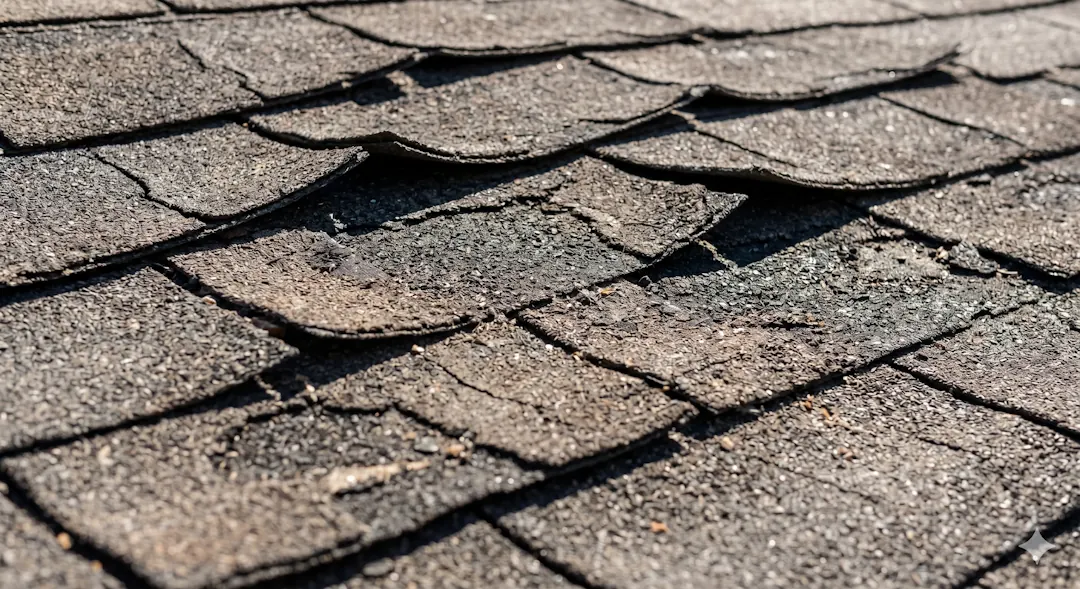
Shingles curl at the corners and crack down the middle when the asphalt dries out. A few curled shingles can be swapped, but curling across a whole slope means the field has aged out.
Replacement Warning Signs
A roof rarely fails all at once. It wears down a little each winter, and the signs show up on the shingles, in the gutters, and in the attic long before water reaches the ceiling.
Start with the shingles
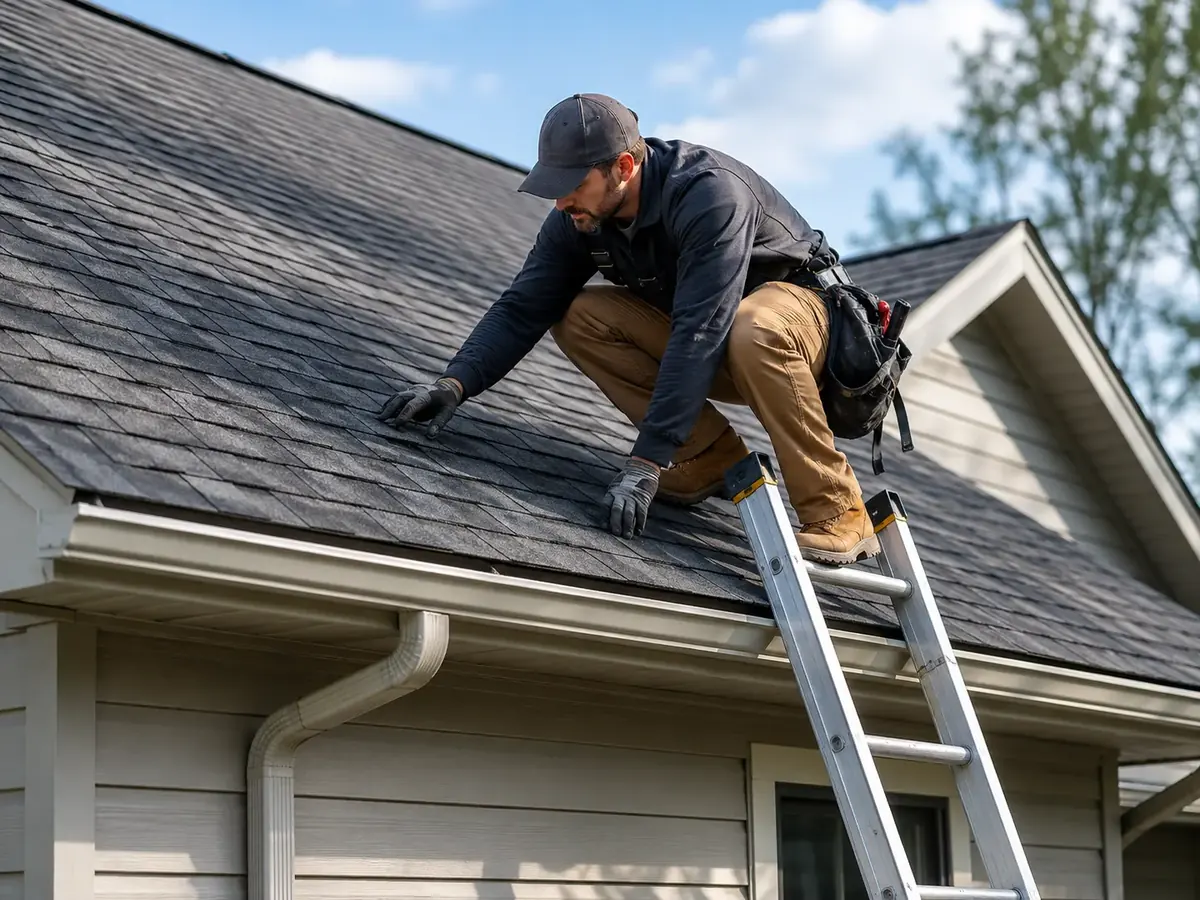
Asphalt shingles in Rochester take about 102 inches of snow a season, plus freeze and thaw from November to April. That cycle dries the asphalt, lifts the edges, and breaks the seal between courses. Walk the sidewalk and look up: shingles that curl at the corners, crack down the middle, or sit missing in patches have stopped shedding water the way they should.
Granules tell the same story from the ground. Shingle granules wash into the gutters and downspouts as the surface wears, and bare patches on the shingle face mean the weather layer is thin. A few granules after a new roof is normal. A steady pile of them year after year, with shingles that look smooth and bald, is not. A roof inspection in Rochester can confirm whether the wear is even across the slope or only in one spot.
Age sets the context. Most architectural shingle roofs in Rochester give long service, but one that has seen many winters, many freeze and thaw cycles, and two or three rounds of patching is near the end of its working life. When the signs below show up together, on more than one slope, the roof is talking about replacement rather than another patch.
Six signs to watch
One sign alone can mean a repair. Several together, across whole slopes, point to a roof that has reached the end of its working life.
Shingles curl at the corners and crack down the middle when the asphalt dries out. A few curled shingles can be swapped, but curling across a whole slope means the field has aged out.
Granules pile up in the gutters and at the base of the downspouts. When the shingle face looks smooth and bare, the layer that sheds sun and rain is gone.
Light coming through the deck boards, or dark stains on the underside of the deck, means water has found a path. Stains near the ridge often trace back to worn shingles above.
A dip between rafters or a sag along the ridge points to deck or framing trouble, often from years of slow leaks. A sag is a structural sign, and it needs a roofer on site soon.
One leak, fixed once, is a repair. Leaks that come back in new spots each season mean the whole field is failing, and patching chases the problem around the roof.
Moss holds moisture against the shingle surface, and it lifts edges as it grows. Heavy moss across a whole slope, with shingles lifting under it, usually goes with a roof that is already worn thin.
Look inside
Step into the attic on a bright day and look at the underside of the roof deck. Daylight through the boards, dark water stains, and damp insulation all point to water getting past the shingles. Stains that run down the rafters tell you the water entered higher up the slope and traveled before it dropped, so the stain rarely sits under the failed shingle.
The deck itself matters as much as the shingles. Press a hand against the deck boards near a stain: soft, spongy wood means rot has set in, and a replacement will need new deck boards in that area. A sound deck with a stain and no softness may only need the shingles above it. Read our guide to why roofs leak in Rochester winters to see how ice dams and freeze and thaw open the same paths.
While you are up there, look at the ventilation. Blocked soffit vents and a ridge vent choked with insulation trap warm, moist air under the deck, and that moisture rots the deck from below while the shingles bake from above. Our post on roof ventilation in cold climates explains how airflow keeps both sides of the deck dry.
Read the signs
Use this table on your next walk around the house, then match what you see to the next step.
| What you see | What it usually means | Next step |
|---|---|---|
| Curling across a slope | Shingles have dried out and lost their seal | Ask a roofer to read the whole field |
| Granules in the gutters | The weather surface is wearing thin | Check the shingle face for bare patches |
| Daylight in the attic | Gaps in the deck or missing shingles above | Get the roof read from outside and inside |
| A sagging ridge or dip | Deck or framing trouble, often from slow leaks | Have a roofer on site soon, before it spreads |
| Leaks in new spots | The field is failing, not one joint | Talk about replacement, not another patch |
Scroll sideways to see the full table.
Replacement or repair
The call is never about one shingle. It is about how much of the roof has aged out, and whether a patch would hold.
A repair fits when the trouble stays in one area: a few shingles lifted by wind, a flashing joint that opened, a small patch of wear around a vent. The rest of the field is flat, sealed, and sound, and the deck below is solid. A roofer swaps the failed pieces, reseals the joint, and the roof goes back to work.
Replacement fits when wear covers whole slopes, when leaks return in new spots, or when the deck is soft in several places. Patching a field that has aged out means returning to the same roof again and again, and each return opens more shingles. Roof replacement in Rochester starts with a full read of the deck, the ventilation, and the flashing, so the new roof fixes the causes, not just the shingles. If you are weighing materials, our post on metal roofing vs asphalt shingles in Rochester lays out how each one handles snow and cold.
People also ask
Short answers on the signs that mean a Rochester roof is near the end of its working life.
A repair fits when the trouble stays in one small area, the shingles around it are still flat and flexible, and the deck below is solid. Replacement fits when wear shows across whole slopes, leaks keep returning in new spots, or the roof is past the age where shingles hold their seal.
Look for edges that curl upward, cracks down the face, and patches where the surface looks smooth and bare. Missing shingles leave dark rectangles on the slope. Granules piling up in the gutters and at the downspouts point to the same wear, and the pattern usually covers a whole slope, not one spot.
Light moss on a young roof can be cleaned and the shingles can carry on. Heavy moss across a whole slope, with shingles lifting under it and granules gone, usually goes with a roof that is already worn thin. Cleaning helps the look, but it does not put the weather surface back.
Seeing several of these signs on your roof? Call and ask for a full roof read.
Call (585) 868-0065Frequently asked questions
Most architectural shingle roofs in Rochester give long service, often two decades or more, but winters here are hard on them. Snow load, ice dams, and freeze and thaw wear the seal between courses. A roof that has seen many winters and several rounds of patching is near the end of its working life.
Not always. A few curled shingles on one slope can be swapped while the rest of the field stays sound. Curling across a whole slope, with cracking and granule loss beside it, means the field has aged out. The pattern across the roof matters more than any single shingle.
Look for daylight through the deck boards, dark stains on the wood, damp insulation, and soft or spongy deck boards near a stain. Stains often sit below where the water entered, since water runs down the rafters first. Soft wood means rot, and that area will need new deck boards.
A sag points to deck or framing trouble, often from years of slow leaks, and it should be read by a roofer soon. Keep clear of the area below the sag, watch for new cracks inside, and call for a visit rather than waiting for the next season to make it worse.
When the whole shingle field has aged out, each patch only fixes one weak point while the next one opens. Water finds the next lifted edge or cracked course. Leaks that move around the roof from season to season point to a field that is failing, not to one joint.
It is often the right time to look at them together, since the crew is already working along the eaves. Gutters that sag, pull away, or overflow may need work of their own. Read our guide to gutter cleaning and maintenance in Rochester to see how gutters and roofs wear together.
Keep reading
Call and we will read the shingles, the deck, and the attic, and tell you plainly whether a repair or a replacement fits.