New cracks in the ceiling
Cracks that open across a ceiling, or around a door frame that used to close cleanly, can mean the framing below the roof is bending under the load. A door that suddenly sticks is worth a look from below.
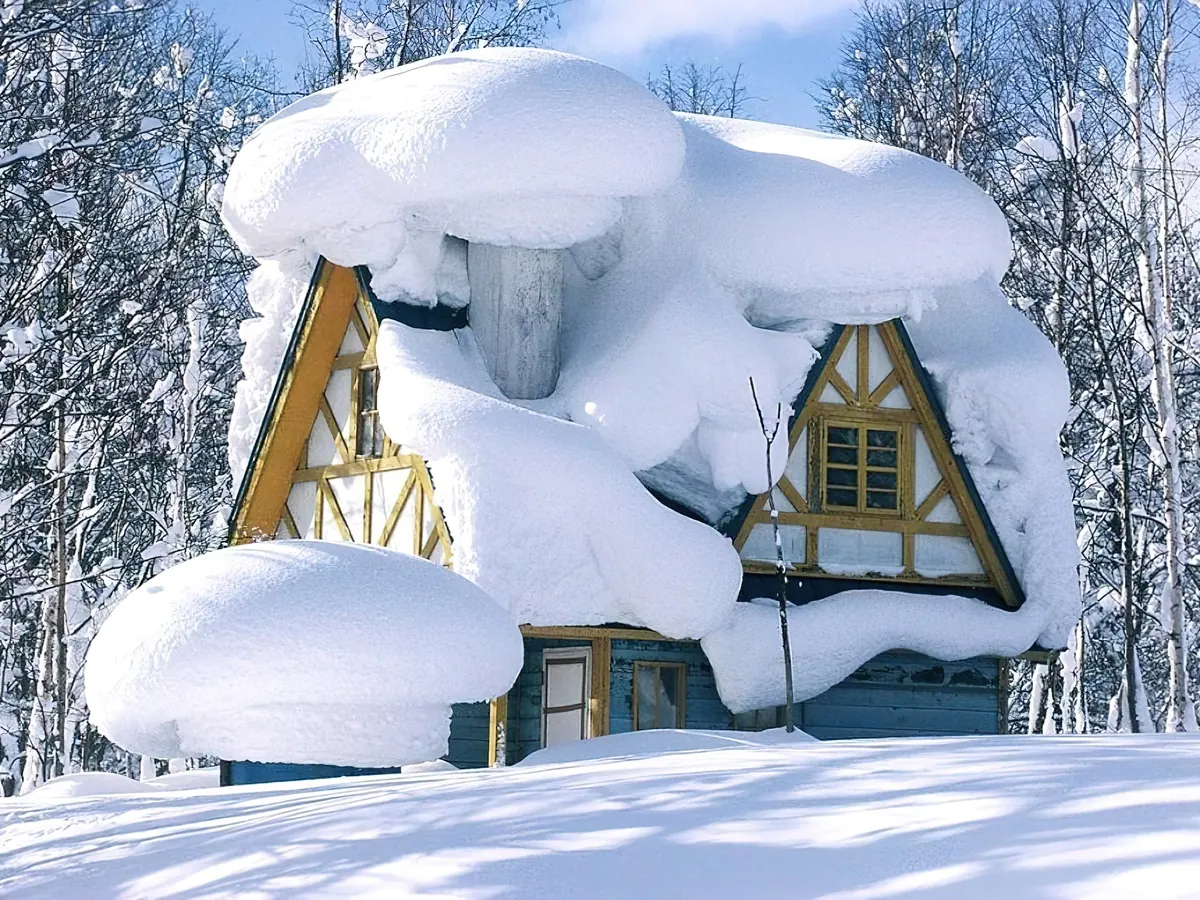
Snow Load In Rochester
Rochester gets about 102 inches of snow in a typical season, and most of it lands on the roof before anyone touches it. A sound roof handles that load with room to spare, but deep drifts, wet spring snow, and older framing change the math. Here is how to read what your roof is carrying.
The short answer
A well built Rochester roof is designed for heavy snow. Local building rules set the design load for this area far above what a roof in a mild climate carries, and a roof in good shape handles a normal season without trouble. The risk comes from the exceptions: wet snow, deep drifts against a dormer or a wall, and a roof whose framing or deck has already weakened with age or past leaks.
The weight of snow depends on what kind of snow it is. A foot of light, fresh lake-effect snow adds around 5 pounds to each square foot of roof. A foot of wet, heavy spring snow can add three times that. So two roofs with the same depth of snow can carry very different loads, and the depth alone never tells the whole story. A roof inspection in Rochester looks at the framing and the deck, not just the snow on top, because the structure underneath decides how much the roof can hold.
Lake-effect snow off Lake Ontario falls cold and light at first, then sits through freeze and thaw cycles that pack it down. Each thaw adds meltwater that refreezes inside the pack, and each new storm adds another layer on top. By late winter the snow on a north facing slope can be a dense, layered slab, far heavier than the fluffy powder that fell in December.
Weight by type
Snow weight is about density, not depth. Light powder barely registers, while wet snow and packed drifts add up fast.
| Snow type | Weight per foot of depth | When Rochester sees it |
|---|---|---|
| Light lake-effect powder | About 5 pounds per square foot | Cold snaps off Lake Ontario, early season |
| Average settled snow | About 10 to 12 pounds per square foot | Midwinter, after a few freeze and thaw cycles |
| Wet spring snow | About 15 to 20 pounds per square foot | Late winter and spring storms, near the thaw |
| Packed drift | Up to 25 pounds per square foot | Against dormers, walls, and in valleys |
| Ice layer under snow | Adds weight with almost no depth | After rain on snow or a midwinter thaw |
Scroll sideways to see the full table.
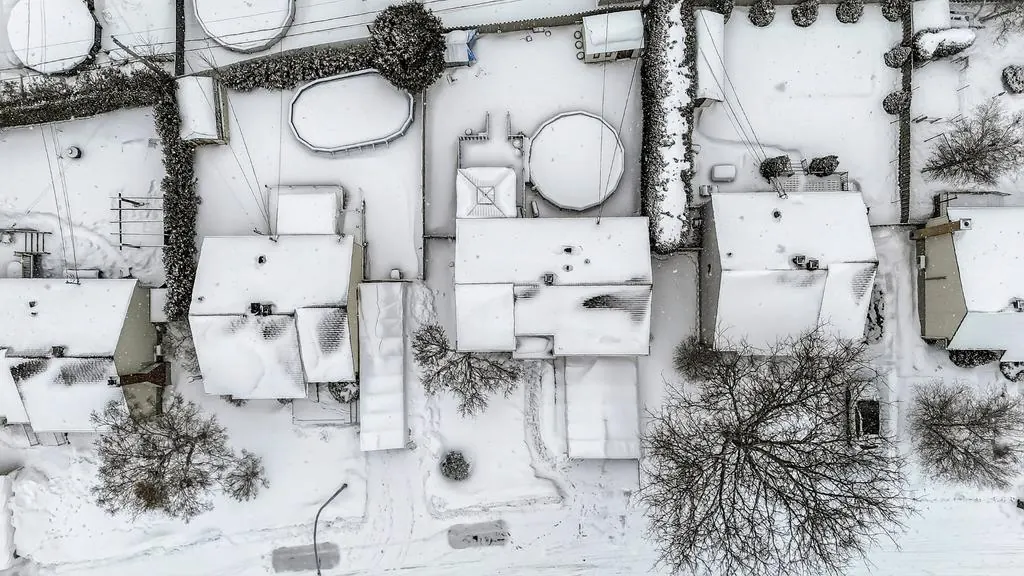
The numbers above are standard building approximations, and they explain why a roof can look fine at two feet of powder and struggle at one foot of wet snow. A roof with a low pitch holds snow longer, and a roof with valleys, dormers, and chimneys collects drifts that pile several feet deep in one spot while the open slopes stay thin. That uneven loading is what stresses framing, and it is why a drift against a wall deserves more attention than an even blanket across the whole roof. The National Weather Service Buffalo office posts snowfall totals and lake-effect warnings for Monroe County, which is the best way to know how much has actually fallen on your side of town.
Deep snow sitting on your roof right now? Call and talk through what to do next.
Call (585) 868-0065Warning signs
Roofs rarely fail without warning. These are the signs that the load is past what the structure wants to carry.
Cracks that open across a ceiling, or around a door frame that used to close cleanly, can mean the framing below the roof is bending under the load. A door that suddenly sticks is worth a look from below.
A ridge line that dips or a roof plane that looks wavy from the street shows the deck or the rafters moving. Compare it with the neighbor's roofline if you are unsure what straight looks like.
Occasional creaks in deep cold are normal, but loud pops, groans, or a sharp crack during or after a storm mean the framing is shifting. Step out of the room below and get a look from outside.
Water showing up at the ceiling during heavy snow often points to meltwater trapped behind ice at the eaves, which is a different problem from load. Either way, it means the roof needs attention before the next storm.
Snow banked three or four feet deep against a dormer, a chimney, or a second-story wall loads one small area far harder than the rest of the roof. That is the spot to clear first.
A door that will not close or latch after a heavy snowfall can mean the framing above it has moved under the load. If the change came with the snow, have the framing read before the next storm adds to it.
What to do
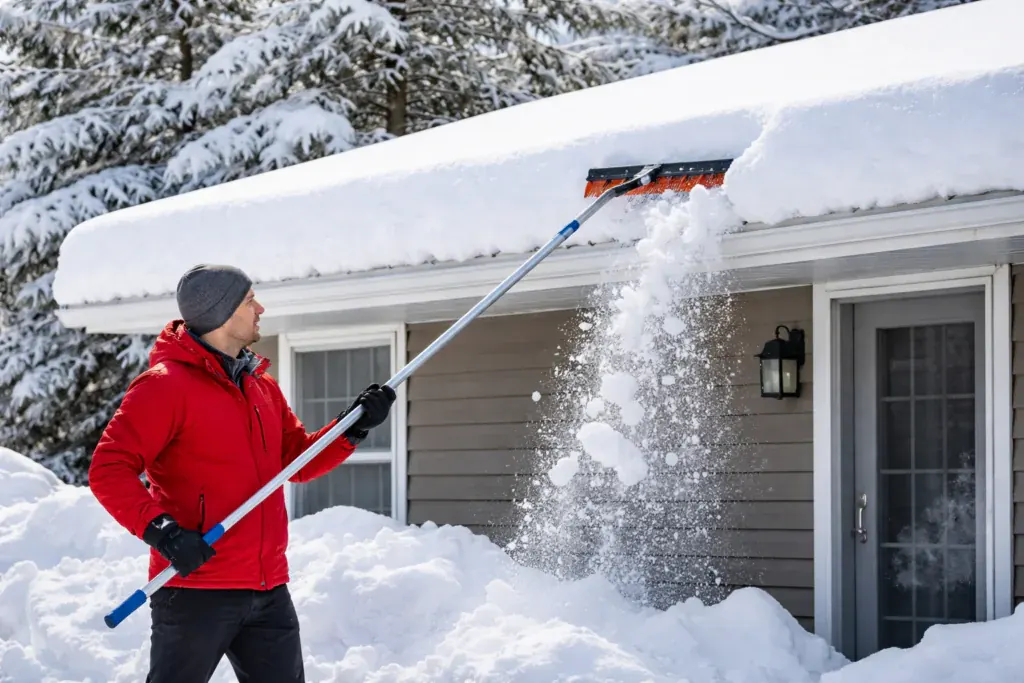
When the snow gets deep, a roof rake with a long handle clears the lower few feet from the ground, and that is where it matters most. The lower roof carries the drifts, feeds the ice dams, and sheds water onto the walls, so clearing it takes weight off the worst spot and cuts the dam risk at the same time. Never climb onto a snowy roof, and never use a metal shovel or an axe on the shingles, since the damage from the tool is worse than the snow it removes.
If the roof already shows a sag, a crack, or a leak, stay off it and call a roofer. Our snow removal and ice dam prevention in Rochester covers safe clearing and steam removal for the ice underneath. A roofer with a steamer can open drainage channels through the ice without touching the shingles, and the attic work that follows keeps the next storm from building the same load again. For homes in the older parts of town, a look at the framing during a roof replacement in Rochester is the right moment to fix any weak rafters or soft decking before the next winter. A seasonal roof maintenance visit in Rochester catches that wear before winter does.
People also ask
Short answers on how much snow a Rochester roof can hold, and when the load needs a look.
Depth alone does not decide it. Two feet of light powder is usually fine on a sound roof, while a foot of wet spring snow weighs far more. The warning signs matter more than the ruler: new ceiling cracks, a sagging ridge, doors that stick, and loud pops from the framing all mean the load needs a look.
Yes. A steep slope sheds snow on its own, often in slides after a thaw, while a low-slope roof holds the snow until it melts or is cleared. Low-slope sections over porches and additions are the ones that pile up deepest, and they deserve the first look after every storm.
Not the whole roof. Clear the lower few feet with a roof rake from the ground, and clear any drift banked against a dormer or wall. Raking the whole slope scrapes granules off the shingles and is not needed, since the upper roof sheds and melts on its own.
Snow load on your mind? Call and ask what the roof is carrying.
Call (585) 868-0065Frequently asked questions
A sound roof built to local rules handles a normal Rochester season, which runs about 102 inches of snow, without trouble. The design load for this area is set high on purpose. Trouble starts with wet snow, deep drifts in one spot, or framing and decking that have already weakened from age or past leaks.
It depends on the snow. A foot of light, fresh lake-effect snow adds around 5 pounds per square foot. A foot of average settled snow adds about 10 to 12 pounds. A foot of wet spring snow can add 15 to 20 pounds, and a packed drift can reach 25 pounds per square foot.
Older homes can be, for two reasons. The framing may have weakened over decades, and past leaks may have softened the deck. Victorian and Craftsman homes around Park Avenue and Corn Hill often have steep roofs that shed snow well, but their valleys and dormers still collect drifts worth clearing.
It is rare on a roof in good shape, but it happens on roofs with weakened framing, flat sections, or very deep drifts in one spot. The warning signs come first: ceiling cracks, a sagging ridge, sticking doors, and loud pops from the framing. Any of those means the roof needs a look right away.
Yes, more than on a pitched roof. A flat roof holds every inch until it melts or drains, and a clogged drain can turn a snow load into standing water on top of it. Keep drains and scuppers clear through winter, and clear deep snow from the flat section after big storms.
Yes. Clearing the lower few feet takes weight off the eaves and removes the snow that feeds the dam. It is a short-term fix, though. The lasting fix is attic air sealing, insulation, and ventilation, which keep the roof cold so the snow stays still instead of melting and refreezing.
Call when you see a sag, a new ceiling crack, a leak during snow, or a drift several feet deep against a wall or dormer. Call sooner if the house is older or the roof has leaked before. A roofer can clear the snow safely and check the framing and deck underneath.
Keep reading
Tell us what you see from the ground, and we will check the load, the framing, and the eaves, and lay out the safest next step.