Cracked or split panels
Cold makes vinyl brittle, and ice sliding off the roof can crack a panel outright. A crack lets wind-driven rain behind the siding, where it soaks the sheathing.
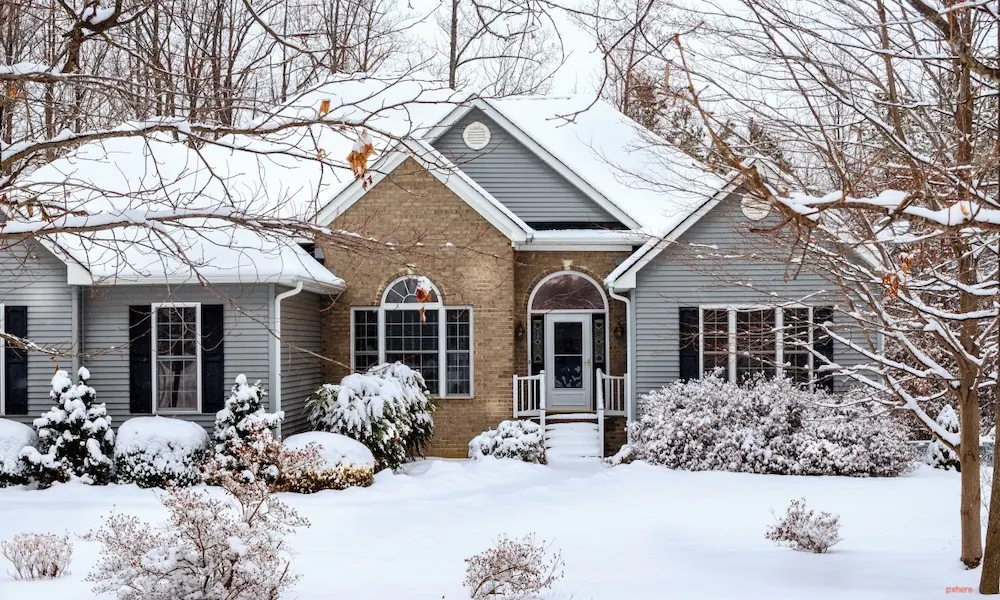
Winter Siding Damage
Winter does not stop at the roofline. Freeze and thaw, wind-driven snow, and ice sliding off the roof all work on the siding, and the damage shows up in spring.
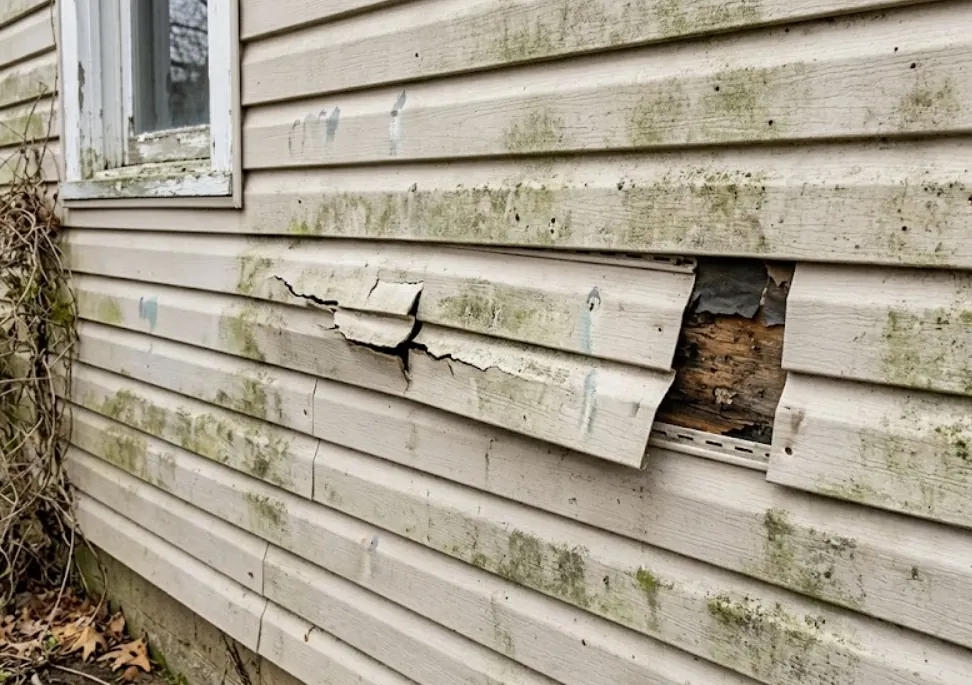
Winter hits the walls too
Winter in Rochester does not stop at the roofline. The siding takes the same freeze and thaw, the same wind-driven snow, and the same ice that works on the roof, and the damage shows up in spring: cracked panels, loose courses, and boards that have pulled away from the wall. The sunny south and west sides usually show it first, where the daily thaw and freeze cycle is strongest.
Vinyl siding is the most common siding in Rochester, and cold makes it brittle. A panel that flexes in summer can crack in January when a ladder leans on it or a chunk of ice slides off the roof and hits it. Fiber cement holds up better in the cold, but it can crack at the fasteners when the wall moves with the seasons. Wood siding swells with damp, then shrinks as it dries, opening gaps that let water behind the boards.
The water behind the siding is the real problem. A cracked panel lets wind-driven rain and meltwater behind the siding, where it soaks the sheathing and the framing. The stain may not show inside for months, but the sheathing softens while it waits. A siding repair visit in Rochester reads the panels and the wall behind them together.
What to look for
Walk the house in spring and look for these signs. The worst damage hides behind the panels, so the surface signs matter.
Cold makes vinyl brittle, and ice sliding off the roof can crack a panel outright. A crack lets wind-driven rain behind the siding, where it soaks the sheathing.
A course that has pulled away from the wall, or that waves along its length, means the fasteners have let go or the wall behind it has moved. Wind can lift a loose course clean off.
Dark streaks under a joint or a window head point to water running behind the siding. The stain on the outside often marks a leak that has been going on for a while.
Wood siding that feels soft, or fiber cement that swells at the edges, has been soaking. Soft boards mean the water has been behind the siding for some time.
Gaps where the siding meets the corner boards, the windows, or the roofline let water and cold air behind the panels. Freeze and thaw widens the gaps each winter.
Ice and snow piled against the wall all winter can crack the lowest course and push water behind it. The damage shows at the base of the wall in spring.
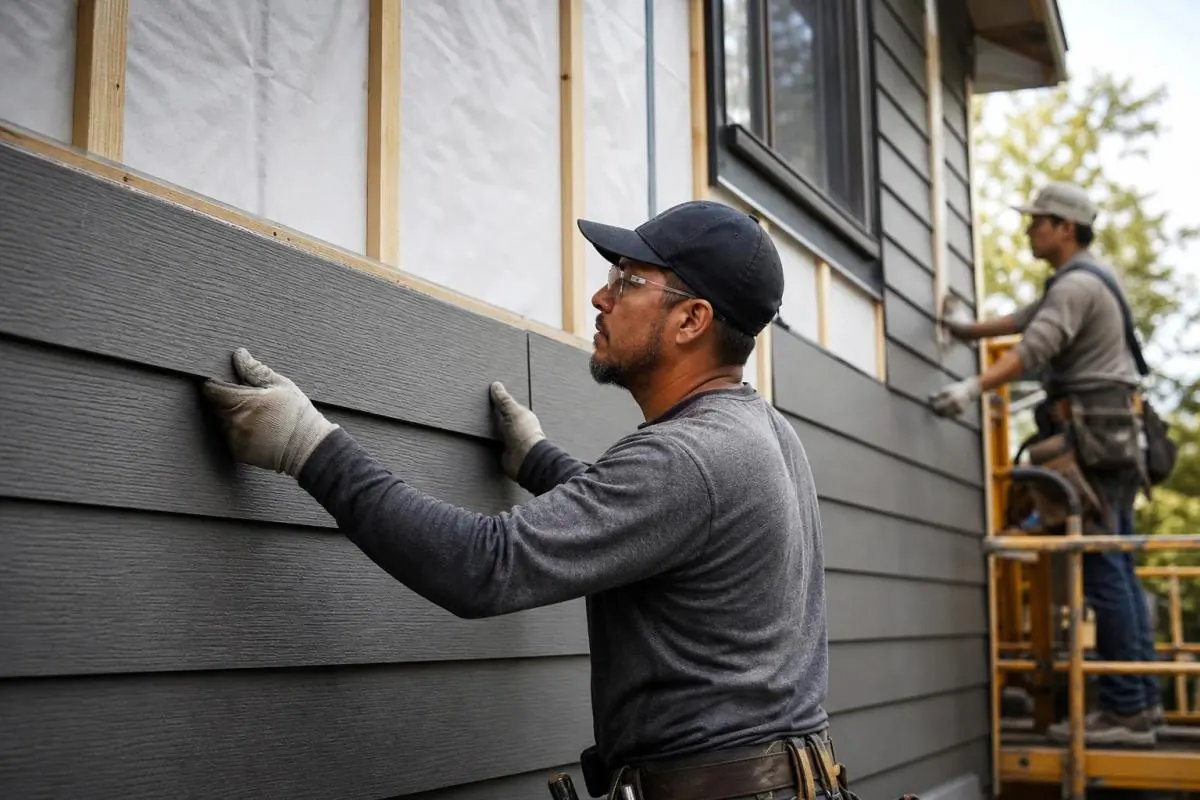
Repair or replace
A few cracked panels on one wall can be swapped, and the new panels are matched to the profile and color of the old ones. The crew checks the sheathing behind each cracked panel, since water may have soaked the wall even where the siding looks fine. A repair that swaps the panel and leaves wet sheathing behind it will fail again at the same spot.
Wider damage calls for more. When panels are cracked across several walls, when courses have pulled away along their length, or when the sheathing is soft in several places, the wall needs a fuller repair: new sheathing, new house wrap, and new siding over the top. The work is planned wall by wall, so the house is never left open to the weather.
The roof and the siding meet at the eaves, and winter damage often hits both at once. Ice sliding off the roof cracks the siding below the eaves, and a gutter that overflows in a thaw soaks the wall under it. Our post on gutter cleaning and maintenance in Rochester covers the gutter side, and how snow load affects older Rochester homes explains the ice and snow that cause the damage.
Patch or reside
The wall behind the siding decides. A sound wall takes a patch, a wet wall takes more.
Preventing winter siding damage
Most winter siding damage starts with water or ice where it should not be. A few habits keep both away from the walls.
Keep the gutters clean, so meltwater drains away from the eaves instead of overflowing onto the wall below. Keep snow from piling against the base of the walls, where it melts and refreezes against the lowest course. And trim branches that hang over the roof, since ice sliding off the roof is what cracks the panels below the eaves.
In spring, walk the house and look at the walls the way you look at the roof: cracks, loose courses, stains, and gaps. A roof inspection that includes the eaves and the walls catches the damage that links the two. The City of Rochester posts snow and ice guidance for homeowners each winter, and it is worth a look before the season starts: City of Rochester.
People also ask
Short answers on cracked panels, loose courses, and when a wall needs more than a patch.
Cold makes vinyl brittle, so a panel that flexes in summer can crack in January when a ladder leans on it or ice slides off the roof and hits it. Freeze and thaw widens small cracks each winter, and a crack lets wind-driven rain behind the siding, where it soaks the sheathing.
Yes. A cracked panel or a gap at a corner lets wind-driven rain and meltwater behind the siding, where it soaks the sheathing and the framing. The stain may not show inside for months, but the sheathing softens while it waits, so a small crack can become a bigger wall repair.
It is often the right time to look at them together, since winter damage hits both at once and the crew is already working along the eaves. The roof and the siding meet at the eaves, and a gutter that overflows soaks the wall below it. A roofer reads both on the same visit.
Cracked or loose siding after the winter? Call and ask for a siding and wall read.
Call (585) 868-0065Frequently asked questions
Look for dark streaks under a joint or a window head, soft or swollen boards, and gaps at the corners. Inside, look for stains on the wall near the outside, and a musty smell in the room. A roofer or siding crew can lift a panel and read the sheathing behind it to confirm.
A single panel can be swapped with the right tool and a matching panel, but the sheathing behind it needs a read first. If water has soaked the wall, swapping the panel hides the damage. A crew checks the wall behind each cracked panel before the new one goes on.
Yes. A slab of ice sliding off the roof can crack the panels below the eaves, pull a gutter loose, and dent the corner boards. Snow guards and clean gutters help, and the panels below the eaves deserve a look each spring after a hard winter.
Fiber cement and metal siding handle cold and freeze and thaw well, and they resist the cracking that cold vinyl can suffer. Wood siding holds up too when it is kept painted and dry, but it needs more care. The right choice depends on the house, the exposure, and the look you want.
Once a year, in spring, after the snow clears. Walk the house and look for cracks, loose courses, stains, and gaps at the corners and windows. After a storm with ice or high wind, add an extra look. The check takes minutes, and it catches damage while it is still small.
It can, at the eaves. A gutter that pulls away from damaged siding lets water run down the wall and back under the roof edge, and a loose course at the eave lets wind lift the lowest shingles. The roof and the siding meet at the eaves, and damage on one side often reaches the other.
Keep reading
Call and we will read the panels and the wall behind them, and tell you plainly what the fix looks like.