A sagging roofline
A dip along the ridge or between rafters that was not there in fall means the frame is bending under the load. A new sag after a storm needs a roofer on site soon.
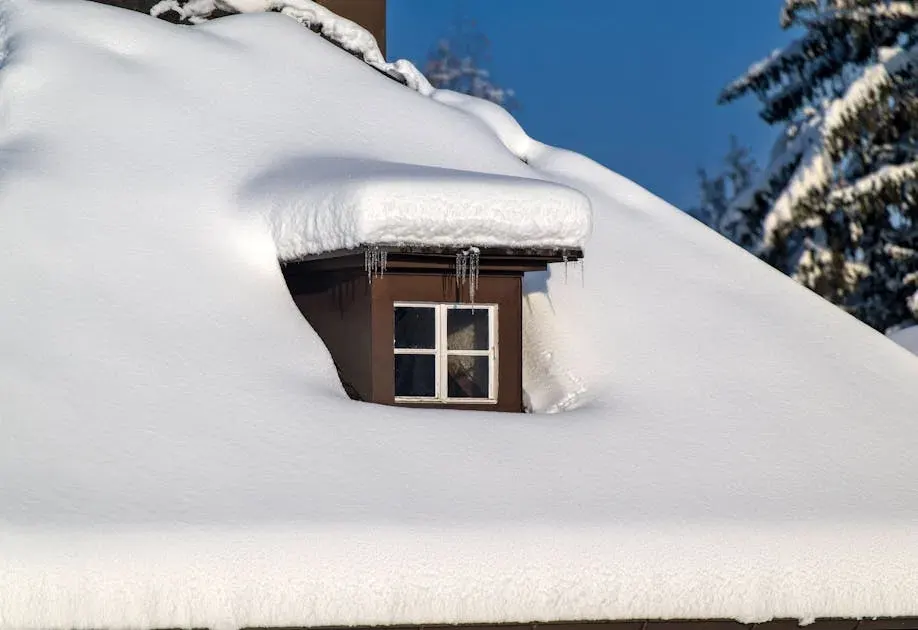
Snow Load on Older Homes
Heavy, wet lake effect snow adds real weight to a roof, and older frames feel it first. The signs show up in the roofline, the ceilings, and the doors.
Why older homes feel it first
Rochester sees about 102 inches of snow a season, much of it lake effect snow off Lake Ontario that falls heavy and wet. A foot of light, dry snow is one thing. A foot of wet snow, or snow that has partly melted and refrozen into a dense layer, is far heavier, and it sits on the roof until it melts or slides off. The load builds storm by storm, and an older home feels every added inch.
Older Rochester homes were framed to the standards of their day, and many have lived through decades of winters that slowly changed them. Rafters can sag a little, deck boards can soften where small leaks went unnoticed, and past repairs can hide weak spots. The frame may still be sound, but it carries snow differently than a new frame does, and the signs show up in the roofline before they show up anywhere else.
The roof's shape matters too. A steep pitch sheds snow on its own, while a low slope holds it. Valleys collect drifts, and the north side of a roof holds snow longer than the sunny south side. A low, shaded slope on an older home is where the load builds highest, and where the first signs of stress appear.
Warning signs
These signs mean the frame is under stress. Do not climb up to check them, read them from the ground and from inside.
A dip along the ridge or between rafters that was not there in fall means the frame is bending under the load. A new sag after a storm needs a roofer on site soon.
New cracks above doors and windows, or along the ceiling, can mean the frame is moving. Watch whether they grow after each storm.
A door that suddenly sticks or will not close can mean the frame has shifted a little under the load. One sticking door is a clue, several is a pattern.
Loud pops and creaks during a storm, or as the snow settles, can mean the framing is moving. A little settling noise is normal, but new loud sounds are worth a look.
Water stains that appear after a big snow, even without a thaw, can mean the load has opened a joint or pressed snow into a valley. Read our guide to roof leaks after heavy snow.
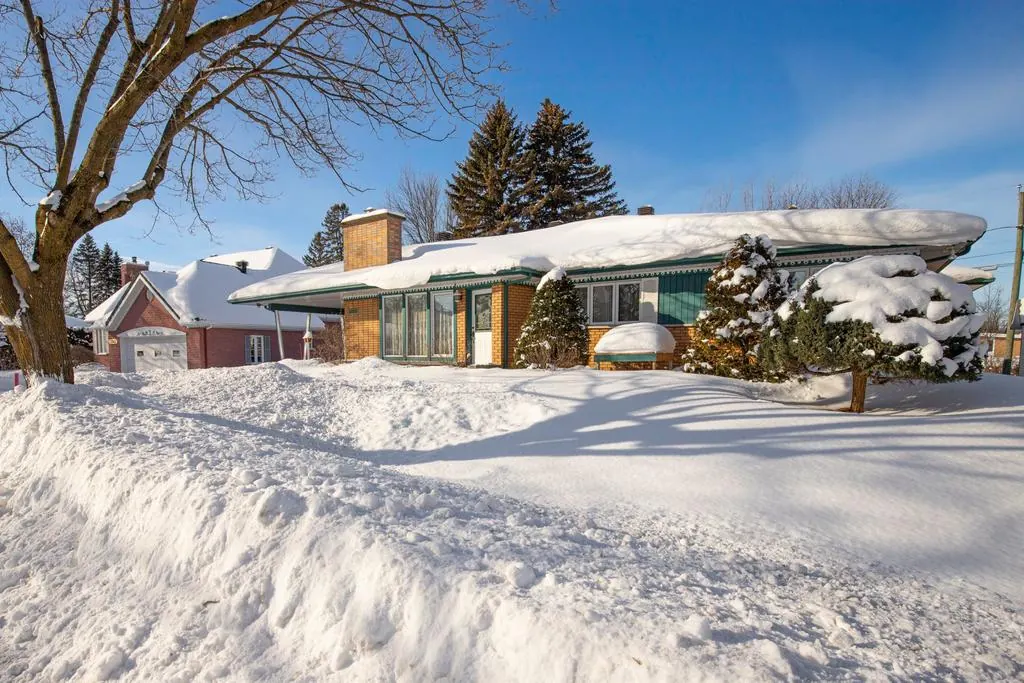
A slope that holds snow weeks after the rest of the roof has cleared may be shaded, low pitched, or holding a dense, refrozen layer. The load there keeps growing with each storm.
Safe removal
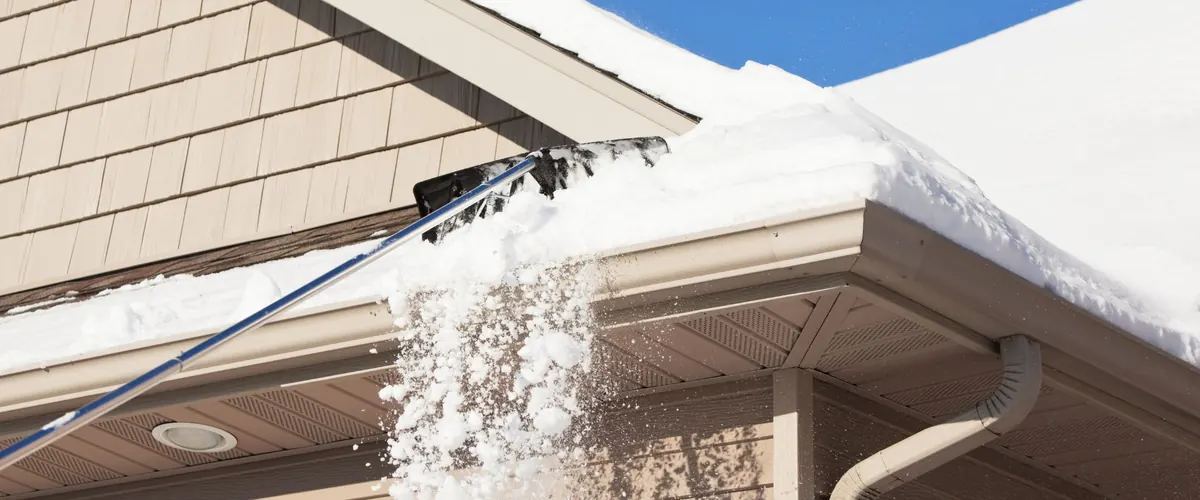
The safe way to take snow off a roof is from the ground, with a long roof rake, working in small pulls from the eaves upward. Never climb onto a snowy or icy roof, and never use a metal shovel or an axe on the slope: both tear shingles and open the deck to water. A plastic roof rake with a long handle keeps your feet on the ground and the shingles intact.
Take the snow off in layers, and clear the eaves first, where ice dams form. Leave a thin layer of snow on the shingles rather than scraping down to the surface: scraping lifts shingle edges and breaks the seal. If the roof is steep, tall, or already showing signs of stress, call for help instead. Roof snow removal and ice dam prevention covers the safe methods and when to call in a crew.
Watch the load, not just the depth. A foot of wet snow weighs far more than a foot of dry powder, and a dense, refrozen layer weighs more still. After a big lake effect storm, check the roofline from the sidewalk and listen for new creaks inside. The National Weather Service Buffalo office posts snow totals and storm outlooks for Rochester: National Weather Service Buffalo.
What holds snow, what sheds it
The same storm loads two roofs very differently. Pitch, shade, and age decide where the weight sits.
| Roof feature | How snow behaves | What to watch |
|---|---|---|
| Steep pitch | Sheds snow on its own in most storms | Snow sliding off in slabs above doors |
| Low slope | Holds snow until it melts | Load building storm by storm |
| Valleys | Collect drifts from both slopes | Packed snow and ice in the valley |
| North-facing slope | Holds snow weeks longer than the south side | Dense, refrozen layers that add weight |
| Older frame | May sag or creak under a load a new frame carries | New sags, cracks, and sticking doors |
Scroll sideways to see the full table.
What helps before winter
The best time to help an older roof is before the snow starts, when the work is dry and the attic is easy to read.
A roof inspection before winter reads the deck, the rafters, and the flashing, and it catches soft deck boards and sagging rafters while they are still small fixes. The attic tells the same story from below: look for cracked rafters, sistered repairs from years past, and stains that mark old leaks. A frame that has been patched before deserves a closer read.
Metal roofing sheds snow far better than shingles on low slopes, and it is worth a look when an older home gets a new roof. Our post on metal roofing vs asphalt shingles in Rochester compares the two in this climate. For the season ahead, how to prepare your roof for a Rochester winter walks through the checks that matter most.
People also ask
Short answers on snow weight, sagging rooflines, and when an older Rochester home needs help.
It depends on the frame, the pitch, and whether the snow is light powder or heavy, wet lake effect snow. A sound frame carries a normal season with ease, while a frame with soft deck boards or sagging rafters shows stress sooner. The signs matter more than any single number: a new sag, new cracks, or doors that stick.
A new sag means the frame is bending under the load, and it should be read by a roofer soon. A sag that has been there for years may be old settling, but one that appears or grows after a storm is a fresh sign of stress. Keep clear of the area below it and watch for new cracks inside.
No, climbing onto a snowy or icy roof is not safe, and a metal shovel tears shingles. The safe method is a long roof rake from the ground, pulling snow down in small layers from the eaves upward. For steep, tall, or stressed roofs, call a crew that does it with the right gear.
Roofline sagging after the last storm? Call and ask for a snow load read, from the ground.
Call (585) 868-0065Frequently asked questions
Look for a sagging roofline, new cracks in the ceiling, doors that stick, and loud popping sounds during the storm. A slope that holds snow weeks after the rest of the roof has cleared is carrying a dense, refrozen layer. Any of these signs means the roof deserves a read from a roofer.
Yes, far more. Lake effect snow in Rochester often falls heavy and wet, and a foot of it weighs much more than a foot of light powder. Snow that partly melts and refreezes into a dense layer is heavier still, and it sits on the roof until it melts or is raked off.
Not after every storm. Light snow on a sound roof is fine, and it insulates the deck. Rake after a big, wet storm, and always clear the eaves first, where ice dams form. Leave a thin layer on the shingles rather than scraping down to the surface, which lifts shingle edges.
Yes. The weight can open a joint, press snow into a valley, or crack a weakened deck board, and meltwater then finds the opening. Leaks that appear after heavy snow, even without a thaw, often trace to load stress. Our post on why roofs leak in Rochester winters explains the paths water takes.
Older homes were framed to the standards of their day, and many carry snow well for decades. What matters is the frame's condition now: soft deck boards, sagging rafters, and old repairs change how it carries a load. A pre-winter inspection reads the frame as it stands and finds weak spots early.
Take it seriously. Move people and valuables out from under the area, watch for new cracks or a sagging ceiling, and call a roofer right away. Loud cracking during a storm can mean the framing is moving under the load, and it should be read by someone on site, not waited out.
Keep reading
Call and we will read the roofline and the frame, and tell you plainly whether the snow needs to come off.