Plateau snow and valley wind
Snow settles deep on the plateau and the valley wind drifts it onto the leeward slope. The eaves stay cold while the attic stays warm, and ice dams form at the edge.
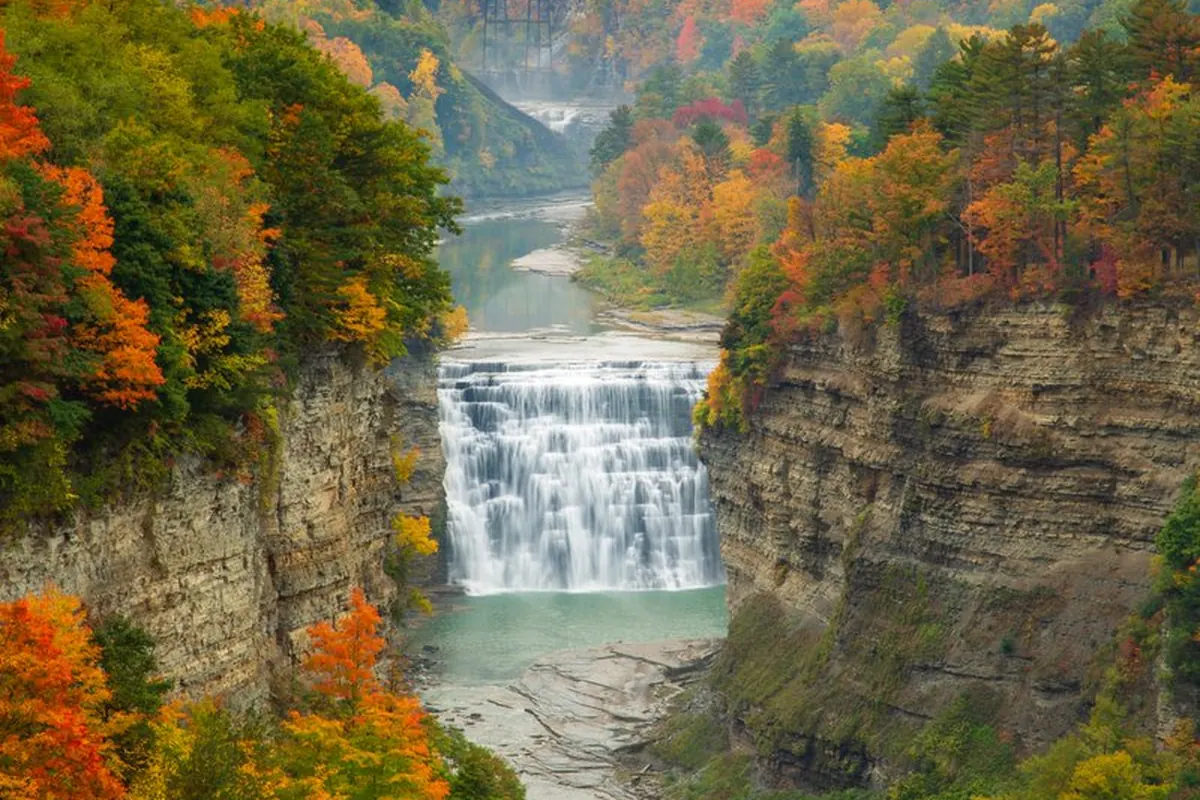
Wyoming County Seat
Warsaw is the county seat of Wyoming County, a village founded in 1804 at the crossroads of Routes 19 and 20A, between two steep ridges in the Wyoming Valley. Oatka Creek runs through the valley floor, Letchworth State Park lies to the east, and the roofs here face open wind off the ridges and deep snow off the plateau.
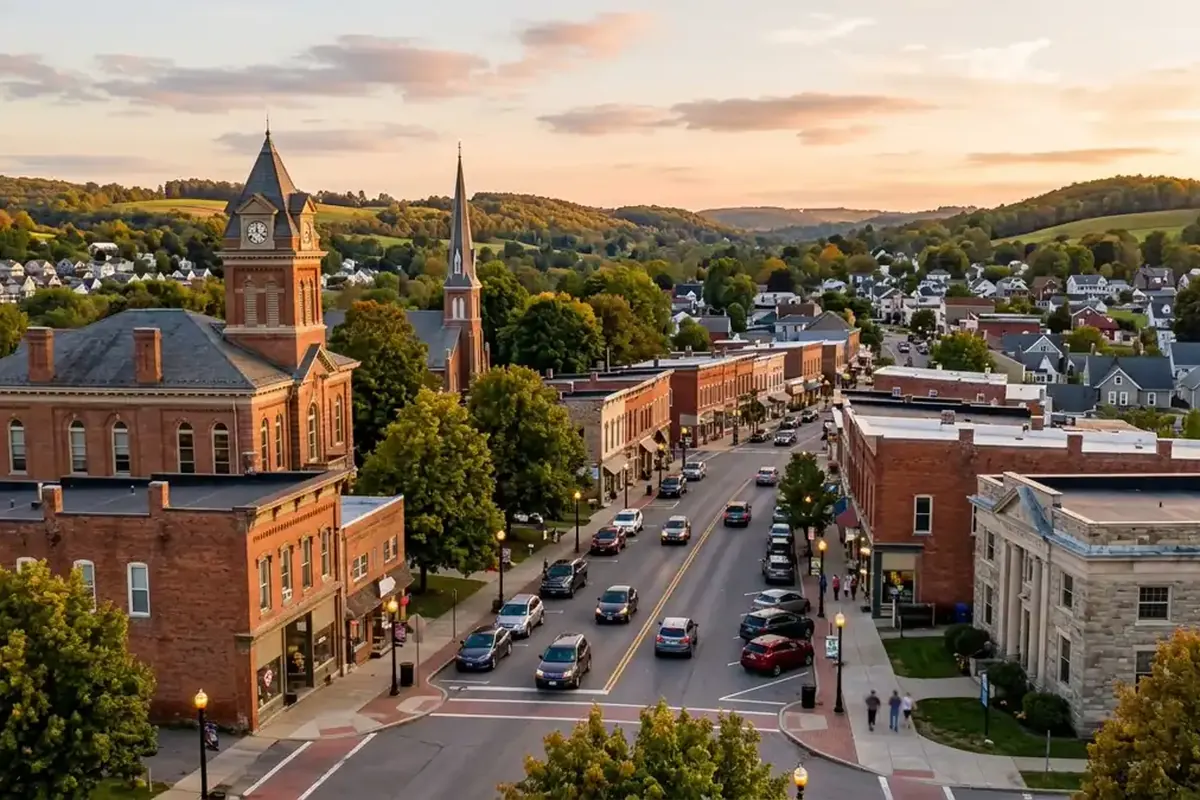
Warsaw, NY
Warsaw sits at the crossroads of Routes 19 and 20A, about 45 miles southwest of Rochester and 45 miles southeast of Buffalo by road, near Letchworth State Park. The village was founded in 1804 and became the county seat when Wyoming County was created in 1841, and the village was incorporated in 1843. The Monument Circle Historic District, listed on the National Register in 1992, holds 21 civic, religious, and domestic buildings from the late nineteenth and early twentieth centuries around the intersection of Main and Court Streets.
The village sits in a flat pocket between two steep north-south ridges, with Oatka Creek running north through the Wyoming Valley. That shape matters for a roof: wind comes down the valley and over the ridges, and snow settles deep on the plateau in winter. The National Weather Service office in Buffalo covers Wyoming County, and its winter storm warnings are the ones Warsaw watches.
Housing runs from the historic homes around Monument Circle to newer houses toward the edges of the village, and farmhouses and barns spread across the town beyond it. The Perry-Warsaw Municipal Airport sits east of the village on Route 20A. A roof inspection in Warsaw starts with the ridge and the windward slope, because the valley wind works there first.
Symptoms
Tap the sign that matches what you have seen. Each one leads to a different part of the roof, and each part is fixed in its own way.
The ridge is the highest line on the roof, and valley wind hits it first. A cap that has gone loose at the corners lets rain run straight into the peak. We reset the cap and check the fasteners along the whole ridge line.
Call (585) 868-0065Wind over the ridges drifts snow onto the leeward slope, loading one side of the roof far more than the other. A roof rake pulls the drift off the overhang, and the deck is checked for the stress the drift leaves behind.
Call (585) 868-0065Water runs fast through a valley, and the flashing and shingles in it wear sooner than the field. A stain below a valley points to the joint, not to the shingles around it, and the fix is in the valley itself.
Call (585) 868-0065Warsaw brick chimneys work hard through the winter, and the flashing at their base shifts with the frost and thaw. A stain running down the brick tells us the joint has opened, and we reset the flashing and seal the joint.
Call (585) 868-0065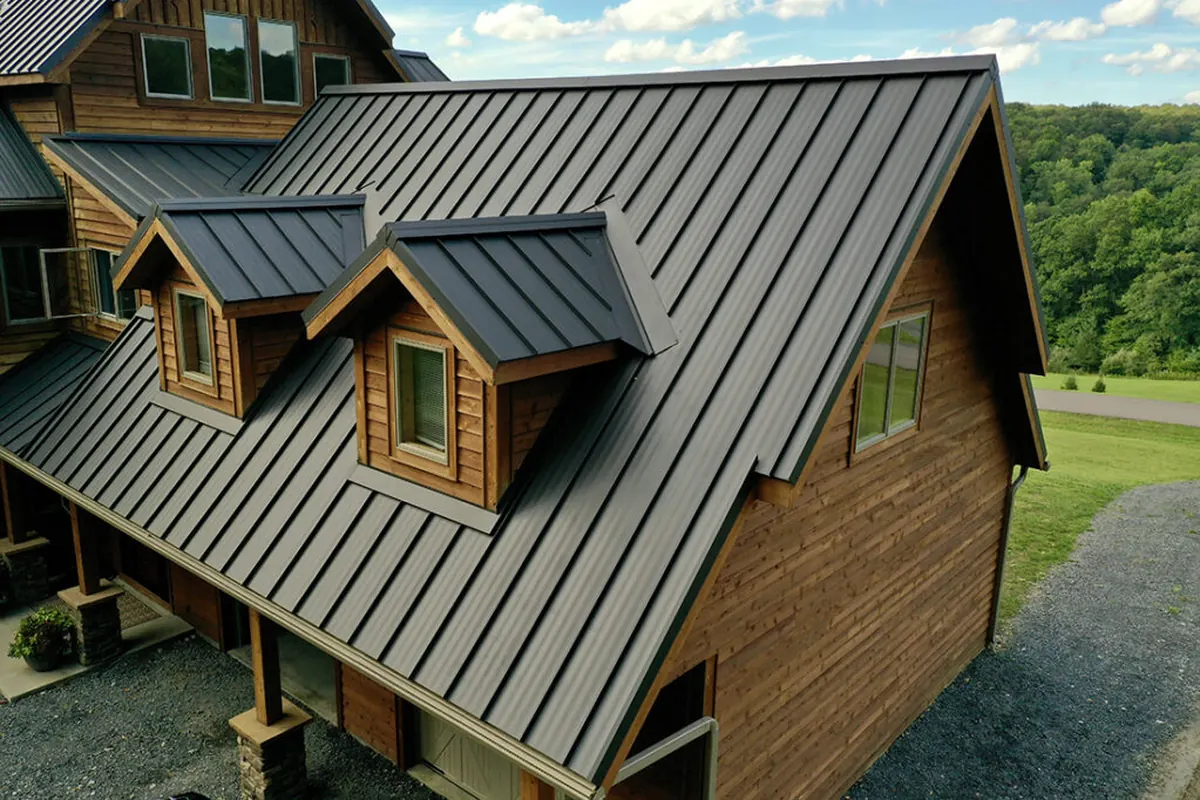
Materials
The valley wind and the plateau snow make Warsaw a good place for metal. Standing seam metal sheds snow before it can dam at the eave, and its long panels have fewer joints for the wind to work on. It suits farmhouses past the village line and steep roofs in the village, where the snow load is the thing to beat.
Architectural shingles suit most village homes, where the look of the street matters and the pitch is moderate. Slate suits the oldest homes around Monument Circle, where the original roof was slate and the pitch is steep. A metal roofing visit in Warsaw usually starts with the question of how much snow the roof holds, because that answer picks the material.
Through the year
Snow settles deep on the plateau and the valley wind drifts it onto the leeward slope. The eaves stay cold while the attic stays warm, and ice dams form at the edge.
When the snow melts, the winter shows itself: a loose ridge cap, a slipped slate, chimney flashing that opened. Spring is the time to walk the roof.
Summer storms run down the valley with wind and hail, and the ridges give them little to slow down. A storm check after hail catches bruised shingles while the fix is still small.
The old streets drop maple and oak leaves into the gutters, and a full gutter holds water against the fascia all winter. Get them cleared before the first snow, and the water stays off the fascia.
Coverage
The village sits about 45 miles southwest of Rochester by road, at the far end of our service area, the same crew making the trip.
The 14569 ZIP covers Warsaw village and the town of Warsaw in Wyoming County, at the crossroads of Routes 19 and 20A.
Services
Standing seam metal for a roof that needs snow to slide clear and wind to find few joints to work on.
Learn more →A loose ridge cap, a chimney joint leaking, or a valley worn through: Warsaw fixes each one where it started.
Learn more →Drifted Warsaw snow comes off the slope with a rake, the ice dams get steamed clear, and attic work follows so the dams stop coming back.
Learn more →Historic slate around Monument Circle, with tiles matched and flashing reset at chimneys and walls.
Learn more →Or drop us a line about your Warsaw county-seat roof.
A ridge cap loose after valley wind, or snow drifted deep on one slope? Call and tell us which side of the valley the house is on.
Call (585) 868-0065FAQ
Yes. Warsaw work runs from the historic homes around Monument Circle to the newer houses at the village edges and the farmhouses on the town roads. A repair visit starts up on the roof, with the shingles or metal, the flashing, and the deck, and it ends with a plain-words plan for the fix.
Standing seam metal suits many Warsaw homes, since it sheds the plateau snow fast and gives the valley wind few joints to work on. Architectural shingles also work well on village homes with a moderate pitch. Which one suits your house comes down to the pitch, the exposure, and the home itself, so we walk the roof before we name a material.
Wind comes over the ridges and down the Wyoming Valley, and it carries snow with it, piling it onto the leeward slope while the windward side stays nearly bare. The drift loads one side of the roof far more than the other. A roof rake pulls the drift off the overhang before the load grows.
Yes, most winters. Warsaw winters run cold on the plateau, and the eaves stay cold while the attic stays warm. Snow from the warm part of the roof melts, runs down, and turns back to ice where the eave stays cold. Air sealing and ventilation in the attic hold the deck cold, and that breaks the cycle.
Natural slate suits most historic homes near Monument Circle, since it matches the original character and holds up for a long time when it is cared for. Standing seam metal also fits steep historic roofs. The choice for your house comes down to the pitch, the structure, and the home itself.
Spring, after the first big snowmelt, and after any summer storm with hail or high wind down the valley. The spring thaw shows what the snow hid, and a look after a storm catches bruised shingles before they leak through. Older homes near Monument Circle deserve a look every year, since their flashing has been moving with the seasons for decades.
Creek, ridges, and farms
Warsaw sits in a flat pocket between two steep ridges with Oatka Creek running north through the valley floor, and the farms past the village line share the same valley wind.
Oatka Creek runs north through the Wyoming Valley on its way toward the Genesee River, and the village grew where Routes 19 and 20A cross beside it. The two ridges that wall the valley run north and south, so wind comes down the valley and over the ridges, and snow settles deep on the plateau in winter. Letchworth State Park lies to the east, and the Perry-Warsaw Municipal Airport sits east of the village on Route 20A, out where the ground opens toward the plateau. Housing runs from the historic homes around Monument Circle to newer houses toward the edges of the village, and farmhouses and barns spread across the town beyond it.
A farmhouse past the village line carries a wide roof over the house and a bigger roof over the barn, and the two take the valley weather differently. The house roof is steep enough to shed snow, while the barn roof is broad and low, so snow sits on it longer and the drift loads one side. Trees are scarce on the open farm ground, so there is little to break the wind before it hits the ridge, and the corners of the roof take the worst of every storm. The creek adds damp to the valley floor, and on a still autumn morning the mist off the water hangs over the low ground, keeping the shaded slopes wet long after the rain stops.
The village was founded in 1804 and became the county seat when Wyoming County was created in 1841, and the Monument Circle Historic District holds 21 civic, religious, and domestic buildings from the late nineteenth and early twentieth centuries around the intersection of Main and Court Streets. Those old homes carry slate and steep pitches, tall chimneys, and flashing joints that have moved with frost and thaw for generations. A roof inspection in Warsaw starts with the ridge and the windward slope, because the valley wind works there first, and then moves to the valleys and the chimney flashing, where the plateau snow and the creek damp do their slow work.
Two loads on one roof
A Warsaw roof carries two different loads, and plateau snow and ridge wind attack different parts of it.
| Roof point | Plateau snow | Ridge wind |
|---|---|---|
| Where it hits | The whole slope at once, settling deep and even across the wide farmhouse roofs past the village line. | The ridge and the windward corners first, where the valley wind has a clear run over the ridges. |
| How it behaves | Snow sits and builds through the storm, then drifts onto the sheltered slope until one side carries far more than the other. | Wind gusts lift tabs at the corners and work the ridge cap loose, a little more with each storm. |
| What it leaves behind | Ice at the eaves where the attic stays warm and the edge stays cold, with water pooling behind the dam. | A lifted tab or a loose cap that lets rain run under the next course and into the peak. |
| First thing to check | The eaves and the attic, since a cold deck and sealed air leaks end the dam cycle. | The ridge line walked end to end, with the fasteners checked along the whole run. |
Swipe sideways to see plateau snow beside ridge wind.
Main Street roofs
The roofs above the shops around Monument Circle are low-slope roofs behind brick parapets, and they fail in ways a house roof never does.
Main Street and Court Street meet at Monument Circle, and the brick storefronts around it hold the civic heart of the county seat: the courthouse, the churches, and the old commercial blocks that have served the village for well over a century. Above the shops, the roofs are low slope behind a parapet, which means water has almost no pitch to run off, and it ponds after a heavy rain until the drains carry it away. A drain clogged with leaves turns a low-slope roof into a shallow pool, and the pooled water finds every seam and flashing joint on the deck.
The parapet itself is the joint to watch. Flashing where the parapet meets the roof deck moves with frost and thaw, and the brick above it sheds water down the face of the wall and onto that joint with every storm. A stain on the brick below the parapet, or a damp patch on the ceiling of the top floor, points to the parapet flashing rather than to the field of the roof. Chimneys on the old buildings add another joint, and their flashing shifts with the seasons just as it does on the houses around the circle.
A flat, foam, and single-ply roofing visit in Warsaw looks at the drains first, then the seams, then the parapet flashing, each in turn, because a shop roof gives up in that order. The houses around Monument Circle, with their slate and steep pitches, want the opposite approach: the ridge first, then the valleys, then the chimney flashing. The two kinds of roof stand a street apart, and the walk that reads them has to change with the building it is standing on.
From Monument Circle out to the valley farms, plateau snow loads one slope while the wind strips the other, so name the road, the roof shape, and the stain or lifted tab you spotted, and the visit will begin where the damage sits.