Slate look
Molded pieces that copy the varied tones and rough edges of natural slate. The right choice for Victorians and historic homes that want the slate look without the stone weight.
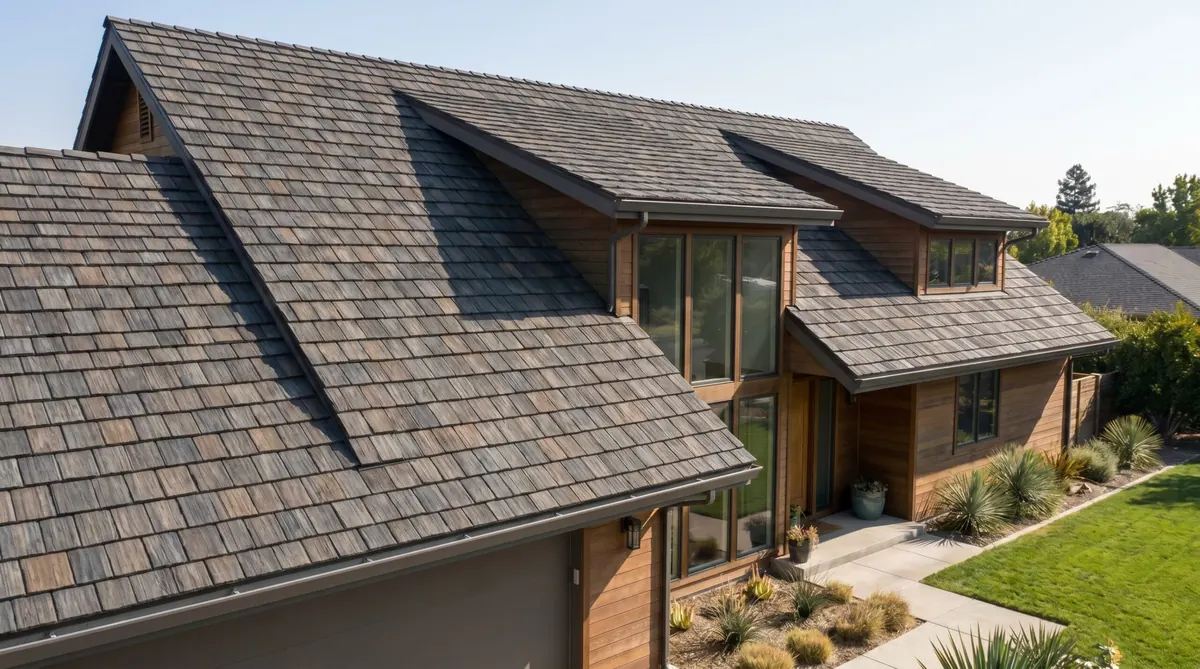
Synthetic Slate and Shake
Composite roofing copies the classic looks, slate and cedar shake, in a molded material made for snow country. It gives a Rochester home the rich look of stone or wood without the weight, the brittle tiles, or the constant care.

What composite is
Composite roofing is made from molded polymers and recycled materials, pressed into shingles that copy the look of slate or cedar shake. Each piece carries the texture and shadow lines of the real thing, and from the street the roof reads as slate or shake, not as a copy. The difference is underneath: the pieces are lighter, tougher, and more forgiving than stone or wood.
The molded build is what makes composite work in Rochester. Stone slate is brittle underfoot and heavy on the frame, and cedar shake holds damp and needs steady care. Composite pieces bend instead of cracking, they do not soak up water, and they shed snow on a pitched roof the way any good roof should.
Composite is also the easiest specialty roof to repair. A damaged piece comes out and a matching piece goes in, without disturbing the courses around it, and the color runs through the piece, so a repair does not show as a fresh patch. Roof repair in Rochester on a composite roof is a small job, and roof replacement in Rochester with composite gives a home the slate or shake look in a single project.
Three looks
Composite comes in three main looks, and each one suits a different Rochester home.
Molded pieces that copy the varied tones and rough edges of natural slate. The right choice for Victorians and historic homes that want the slate look without the stone weight.
Wide pieces with a hand-split texture that copy cedar shake. Warm and natural on Craftsman homes and bungalows, without the damp and moss care that real wood needs.
Clean, layered pieces that read as a rich architectural shingle. The quiet choice for Colonials and newer homes that want depth without a bold statement.
Side by side
Composite sits between asphalt and slate: richer than shingles, lighter than stone.
| Roof | Look | Weight | Care it needs |
|---|---|---|---|
| Composite | Copies slate or shake closely | Light, most frames carry it easily | Piece swaps, valley and flashing checks |
| Architectural asphalt | Layered shingle, many colors | Light, the standard Rochester roof | Granule watch, tab and ridge checks |
| Natural slate | Real stone, varied tones | Heavy, needs a sound frame | Tile-by-tile tending, flashing checks |
Which look fits
Tap the home you have, and see which composite look suits it best.
Victorians wear slate, and the composite slate look keeps that reading from the street: varied gray tones, rough edges, and a roof that looks like it belongs to the house. It suits Park Avenue and Corn Hill homes that want the historic look without the stone weight.
Craftsman homes wear wood, and the composite shake look copies the hand-split texture of cedar without the damp care that real wood needs. It suits the bungalows of the 19th Ward and Maplewood, where the roof is part of the home's warmth.
Colonials and newer homes read best with a clean, layered roof, and the composite shingle look gives that depth without a bold statement. It suits Brighton and Pittsford homes where the roof should support the house, not lead it.
Composite is light, so most frames carry it without any change, which is the real advantage over stone slate. When the frame was never built for slate, composite gives the slate look on a frame that could never hold the stone.
Winter and install
Composite handles Rochester winters the way a good roof should: it sheds snow on a pitched slope, it does not soak up water, and it does not crack in a hard frost the way stone can. The pieces are molded to interlock, so wind has less edge to lift, and the color runs through the piece, so a scuff from ice or a limb does not show as a pale scar.
Install matters as much as the material. Composite goes on over the same system as any good roof: decking, underlayment, ice and water shield at the eaves, and flashing at every joint. The pieces are nailed in courses like shingles, and the crew works slope by slope, which keeps the job tidy and the roof tight.
The winter routine is the same as for any Rochester roof: clear gutters in fall, keep the attic vents open, and check the roof in spring. Roof maintenance in Rochester covers that spring check, and roof snow removal and ice dam prevention in Rochester covers the winter half. Slate, tile, and specialty roofing in Rochester is the page to read when the real stone is what you want.
People also ask
Short answers to the composite questions that come up most.
Composite roofing is made from molded polymers and recycled materials, pressed into pieces that copy the look of slate or cedar shake. Each piece carries the texture and shadow lines of the real thing, and the color runs through the piece, so a scuff or a repair does not show as a fresh patch.
From the street, yes. The molded pieces copy the varied tones, rough edges, and shadow lines of natural slate, and the roof reads as slate, not as a copy. Up close, a trained eye can tell the difference, but the look from the curb is what most homeowners care about, and composite holds it well.
Yes. The pieces do not soak up water, they do not crack in a hard frost the way stone can, and they shed snow on a pitched roof. The molded pieces interlock, so wind has less edge to lift, and the winter routine is the same as for any Rochester roof: clear gutters and keep the attic vents open.
Yes, much lighter. Natural slate is the heaviest roof here and needs a frame built for it, while composite is light enough for most frames to carry without any change. That is the real advantage: a home that could never hold stone slate can still wear the slate look in composite.
Want the slate or shake look without the stone weight? Call and talk about composite roofing.
Call (585) 868-0065Frequently asked questions
Composite is a long-lived roof, and a well-installed composite roof commonly serves for decades, well beyond a shingle roof. The pieces do not rot, they do not soak up water, and they hold their color, so the roof ages slowly. Ventilation and flashing care matter as much as the material itself.
Yes, and that is one of its strengths. A damaged piece comes out and a matching piece goes in, without disturbing the courses around it, and the color runs through the piece, so the repair blends in. A single-slope repair is a small job, and the rest of the roof stays untouched.
No special care beyond what any Rochester roof needs: clear gutters in fall, a spring check for lifted pieces and worn flashing, and an attic that stays dry and vented. Composite does not need the tile-by-tile tending that natural slate needs, and it does not need the damp watch that cedar shake needs.
It is a strong choice when the frame cannot carry real slate. The slate look keeps the historic reading from the street, and the light weight means no frame work is needed. When the home already wears real slate and the decking is sound, tending the slate is usually the better call.
Composite comes in a wide range of colors, from grays and greens that copy slate to warm browns that copy cedar shake. The color runs through the piece, so it holds up better than a surface coating, and the choice is made from samples laid on the roof in daylight, not from a screen.
Keep going
Composite copies slate, shake, and shingle. These pages cover the roofs it is compared with.
Slate, tile, and specialty roofing in Rochester covers the real stone and tile that composite copies.
Learn more →Asphalt shingle roofing in Rochester is the standard roof that composite is often compared with.
Learn more →Roof replacement in Rochester is the project that puts a composite roof on in one go.
Learn more →Weighing composite roofing against shingles for a long Rochester winter? Call and talk through how each one handles snow, ice, and wind.
Call (585) 868-0065The install, step by step
A composite roof goes on in courses from the eave to the ridge, and each course locks the one below it into place.
The crew starts by checking the deck from above and below, looking for soft boards, wide gaps, and old nails left standing. Any board that gives underfoot gets swapped before anything else goes on, because a molded piece needs a flat, firm base to sit right. Then underlayment rolls out over the deck, and a sticky membrane goes along the eaves, in the valleys, and around chimneys and skylights, sealing the spots where meltwater tries to slip under the covering.
Starter pieces run along the eave first, giving the first full course a straight edge to sit on. After that the crew works up the slope, setting each molded piece with nails placed in the marked nailing zone, and staggering the joints so no two seams line up. The pieces interlock at their edges, and the crew checks the line every few courses, since a course that drifts at the bottom shows as a wave at the ridge.
Ridge caps finish the peak, hips get the same treatment, and flashing goes in at every wall and chimney before the pieces around it are set. A roof inspection in Rochester after the install looks at the courses, the ridge, and the flashing with fresh eyes, and it catches the small misses while the crew is still on site.
The starter strip along the eave sets the line for every course above it, and it seals the edge where wind and meltwater push hardest.
Each molded piece carries a marked zone for its nails, and nails set outside that zone can crack the piece or leave it loose in a windstorm.
Molded ridge caps bend over the peak and lock the two slopes together, closing the gap where wind-driven rain would otherwise find a way in.
Winter science
Freeze and thaw cycles work on every roof in Rochester, and molded composite pieces handle them by bending a little instead of cracking.
A winter day in Rochester often swings above and below freezing, and each swing moves water through the roof covering. Meltwater slips into tiny openings during the thaw, freezes overnight, and pushes the opening wider as the ice grows. Stone slate answers that push by cracking, and wood shake answers it by holding the damp. A molded polymer piece answers it by flexing, and the flex lets the piece ride out the cycle without splitting.
The color in a composite piece runs all the way through, so the surface wear from ice, limbs, and sliding snow does not leave a pale mark. The interlock at each edge also matters in a thaw, because meltwater running down the slope meets a locked joint rather than an open seam. Valleys take the most water, so the membrane beneath them and the flashing beside them do the quiet work that keeps the thaw out of the house.
Spring is the season to read what winter did. Look for pieces that lifted at the eave, flashing that pulled away from a wall, and grit in the gutters that points to wear on the courses above. Roof maintenance in Rochester covers that spring look-over, and a lifted piece found in April is a small swap, while the same piece left through another winter can let meltwater under the courses around it.
| Winter stress | What happens | What to look for |
|---|---|---|
| Hard frost overnight | Pieces flex instead of splitting | No cracked pieces after a cold snap |
| Thaw and refreeze | Locked edges keep meltwater on the surface | Dry decking under the eaves |
| Sliding snow and ice | Smooth molded faces shed the load | No pale scuffs or gouged edges |
| Wind off the lake | Interlocked courses resist lifting | Courses still straight after a storm |
Avoidable trouble
Most composite roofs that fail early fail for reasons that had nothing to do with the pieces themselves.
A nail set high on the piece misses the deck below and leaves the piece loose, and a nail set low shows through the course above it.
A valley with pieces but no sticky membrane beneath them lets meltwater through at the first long thaw.
Old flashing carries old bends and old holes, and it will not seal a new roof the way fresh metal does.
Another common miss is the color match on a later repair. Composite colors vary a little from batch to batch, so a repair done years later with a piece from a new batch can read as a shade off. Keeping a few spare pieces from the original install solves it, and the spares sit in the garage until the day a limb or a storm calls for one. The last miss is the simplest: gutters left full through fall. A full gutter holds meltwater against the eave, and the eave is where a composite roof meets its hardest winter test. Clearing the gutters before the snow arrives keeps that test fair.
The roof around the composite matters too. A chimney with a cracked crown drips water onto the courses below it, and a skylight with tired flashing does the same, so the pieces around those joints wear faster than the open slopes. Chimney work in Rochester and skylight repair and installation in Rochester cover those joints, and fixing them protects the composite around them.
Slate look, shake look, or shingle look, and which one suits your home. Call or email and tell us about it.
Roofing Rochester, 75 S Clinton Ave Ste 510, Rochester, NY, (585) 868-0065