Call (585) 868-0065
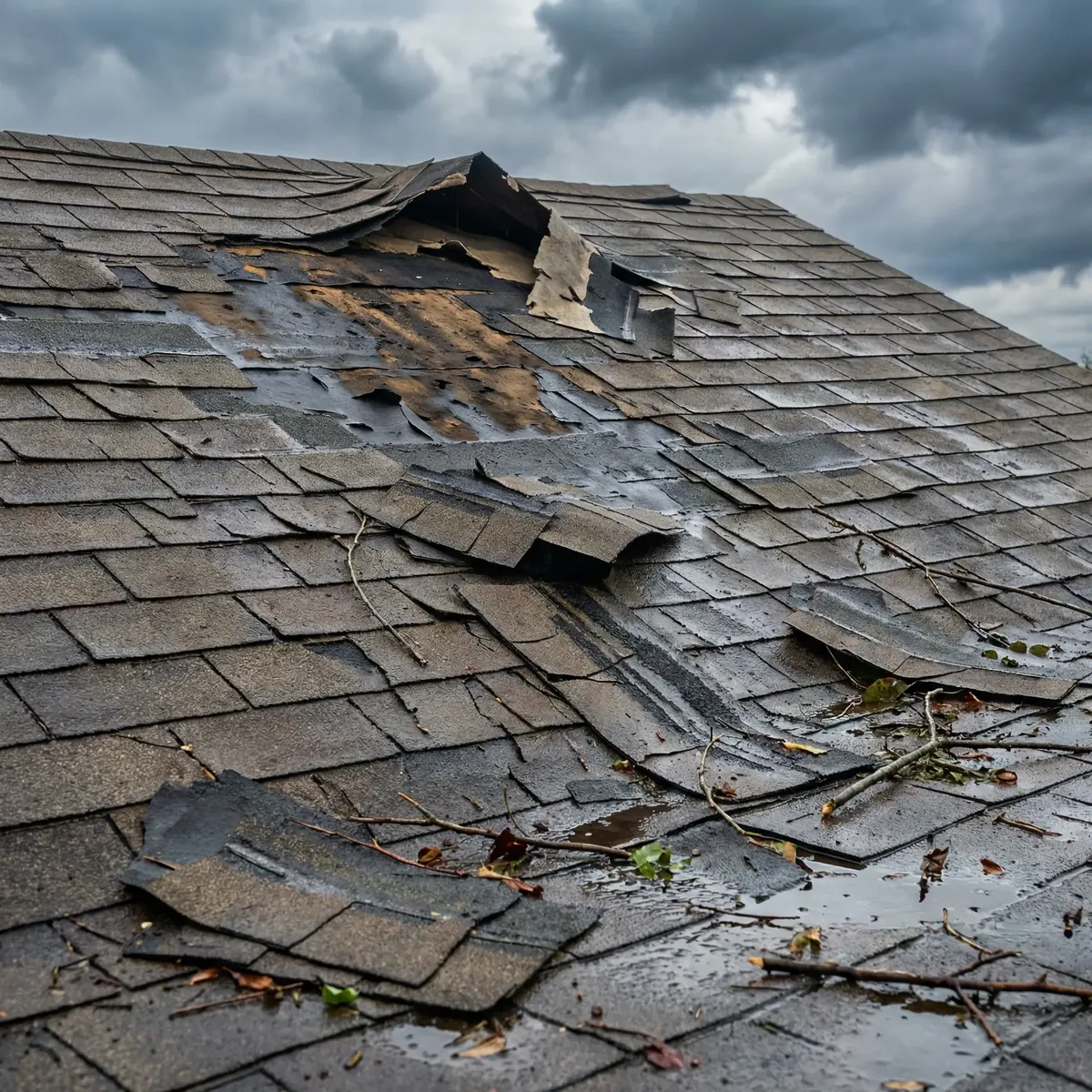
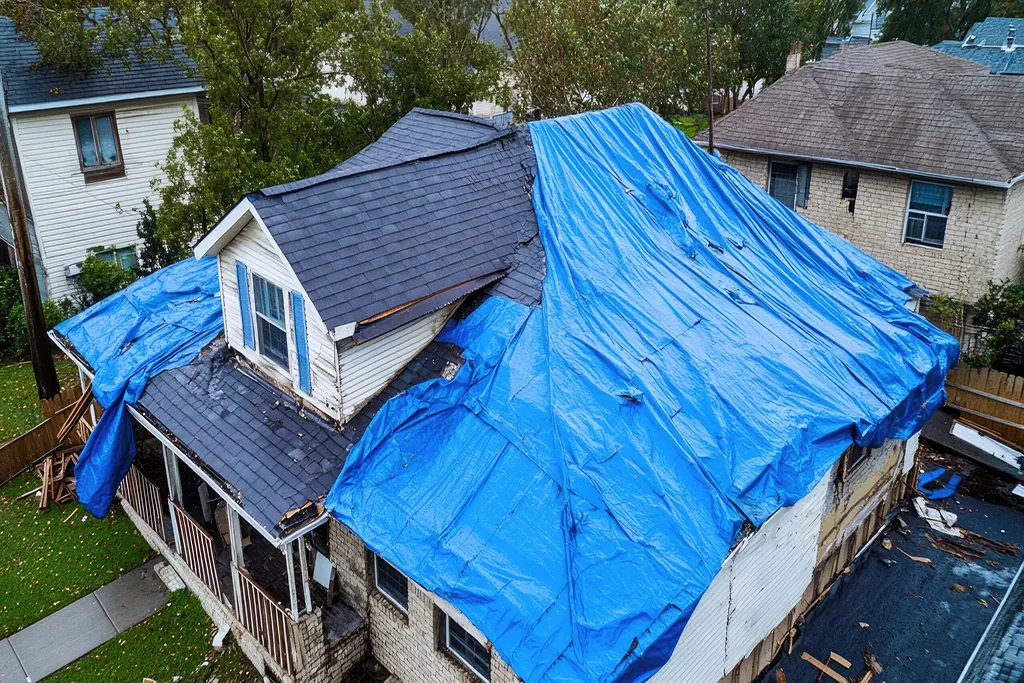
Blue tarp covering a damaged section of a house roof after a storm

Storm Damage Response

Emergency roof tarping after storm damage

After a storm opens a roof, the first job is to keep the rain out. A tarp does that, and it buys time while the repair is planned.

Blue tarp covering a damaged section of a house roof after a storm
A tarp goes over the ridge and down past the damage, so rain runs off it instead of into the opening.

When a tarp is the right call

A tarp is a short term cover, not a repair

After a storm opens a roof, the first job is to keep the rain out. A tarp does that: a heavy sheet laid over the damaged area, fastened so the wind cannot lift it, with the top edge over the ridge so water runs off it instead of into the opening. It is not a repair, and it is not meant to last. It is a cover that buys time while the repair is planned.

A tarp fits when the opening is too big to patch on the spot, when the weather will not let the crew work, or when the repair needs parts, a dry day, or a framing read first. A missing patch of shingles after a windstorm, a limb through the deck, a skylight cracked by hail: all of them are tarp jobs first, repair jobs second. Emergency roof repair in Rochester starts with the tarp and ends with the repair.

The tarp goes on as soon as the storm passes and the roof is safe to climb. Wind and rain wear a tarp down, and a loose tarp can tear shingles as it flaps, so the tarp is checked after every storm until the repair is done. A tarp that has been up for weeks is a sign the repair has waited too long.
Five steps, in order

How an emergency tarp goes on

A tarp that holds through the next storm is laid in a particular way. The order is the difference between a cover and a sail.

Step 1

Read the damage

Find every opening from the ground and the attic, and mark the edges of the damage. The tarp must cover past the last broken shingle on every side.

Step 2

Clear the loose pieces

Lift off loose shingles and debris so the tarp sits flat. A lump under the tarp becomes a tear when the wind pulls at it.

Step 3

Lay it over the ridge

Run the tarp over the ridge and down past the damage on both sides, so water runs off the tarp instead of into the opening.

Step 4

Fasten it down

Fasten through battens, not through the tarp alone, so the wind cannot tear the sheet off its fasteners. The edges get the most fasteners.

Step 5

Check it after storms

Walk the ground after every storm and look up. A lifted edge or a sag means the tarp needs tightening before the next rain.

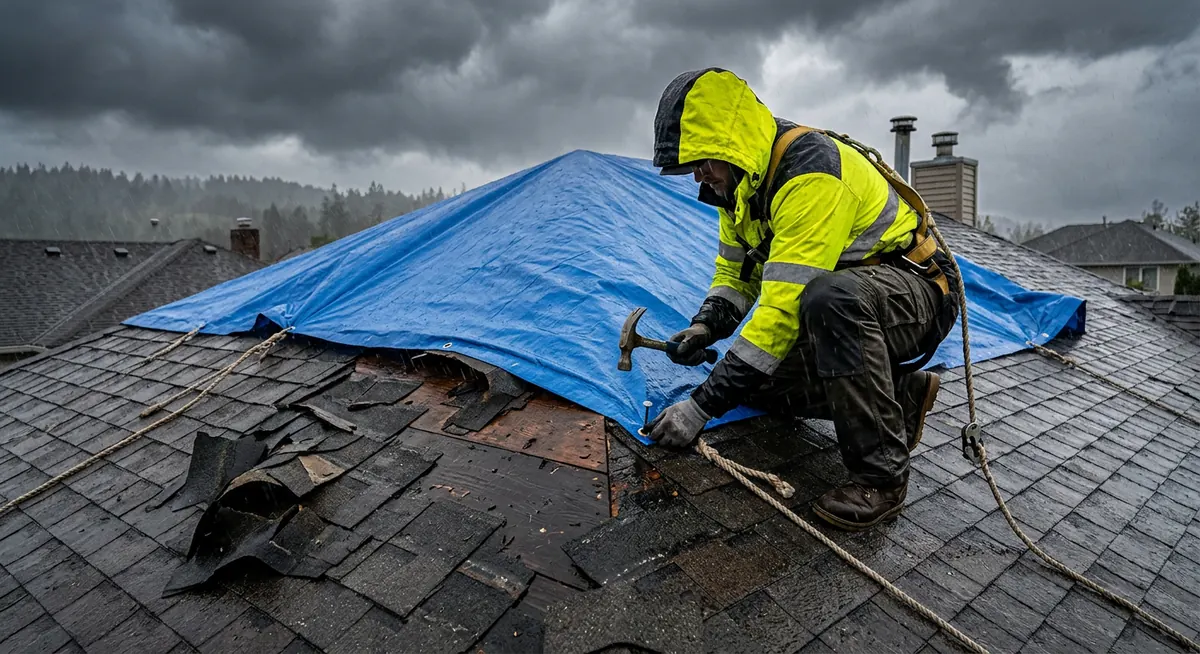
Roofer securing a blue tarp on a storm damaged roof
Battens hold the tarp down along its edges, so the wind cannot tear the sheet off its fasteners.

What not to do

The mistakes that turn a tarp into more damage

The most common mistake is nailing straight through the tarp with no batten. The wind pulls at the sheet, the nail holes tear wider, and the tarp lifts off in the next storm, taking shingles with it. Battens spread the load along the edge, and they are what hold the tarp through a storm. A tarp nailed through the sheet alone is a sail waiting for wind.

The second mistake is stopping the tarp short of the damage. A tarp that ends at the last broken shingle leaves the next course exposed, and rain driven sideways gets under the edge. The tarp must run past the damage on every side, and over the ridge above it, so water has no path in. A short tarp is worse than no tarp, because it hides the opening while the water keeps coming in.

The third mistake is leaving the tarp up for months. Sun and wind wear the sheet down, the edges fray, and the tarp starts to leak through its own fabric. A tarp is a short term cover, and the repair should follow as soon as the roof can be read and the parts are in hand. Our post on what to do after a tree falls on your roof covers the same order: cover, document, then repair.

Tarp or repair

When a tarp is enough, and when it is not

A tarp covers an opening. It does not fix what made the opening, and it cannot hold forever.

Tarp vs repair after storm damage
SituationTarp firstRepair next
Missing shingles, deck soundYes, cover the patch until the crew arrivesSwap shingles, reseal the course
Limb through the deckYes, cover the hole and the cracked boardsNew deck boards, then shingles and flashing
Cracked skylightYes, cover the whole unit, not just the crackNew skylight and flashing
Ridge cap blown offYes, the ridge is the highest openingNew ridge cap and vent
Small lifted edgeUsually no, a reseal on the spot fitsReseal and renail the course

Scroll sideways to see the full table.

After the tarp

After the tarp: documenting and planning the repair

The tarp stops the water. The photos and the roofer's read decide what happens next.

Photograph the damage before the tarp goes on, and again after, from the ground and the attic. Note the time, the storm, and what you heard. Keep the roofer's written read, with photos of the broken boards and torn flashing, since that record is what the repair plan and the claim are built on. Insurance claim help walks through what to gather and what to keep.

Then the repair is planned: the deck boards that need swapping, the shingles that need matching, the flashing that needs rebuilding. A storm repair that follows the damage, rather than covering it, is the one that holds. Read wind damage to roofs in Rochester for the wider picture of what a storm does to a roof, and hail damage to roofs in Rochester for the hail side of the same story.

People also ask

What people ask next about emergency roof tarping

Short answers on when to tarp, how it is fastened, and how long it can stay.

When should I tarp my roof after a storm?

As soon as the storm passes and the roof is safe to climb. A tarp fits when the opening is too big to patch on the spot, when the weather will not let the crew work, or when the repair needs parts or a dry day first. The tarp keeps rain out while the repair is planned.

How long can a tarp stay on a roof?

A tarp is a short term cover, not a roof. It holds through rain and snow while the repair is planned, but wind and sun wear it down, and a loose tarp can tear shingles as it flaps. The repair should follow as soon as the roof can be read and the work is planned.

Can I tarp my own roof after storm damage?

It is safer to call a roofer. A wet, damaged roof is slippery, and a tarp laid wrong becomes a sail in the next wind. A crew knows how to lay the sheet over the ridge, fasten it through battens, and run it past the damage on every side, so it holds through the next storm.

Roof open after the storm? Call now and we will get it covered before the next rain.

Call (585) 868-0065

Frequently asked questions

Before you decide: roof tarping answers

Bigger than the damage, on every side. The tarp must run past the last broken shingle and over the ridge above the opening, so water runs off it instead of into the gap. A tarp that ends at the damage leaves the next course exposed, and rain driven sideways gets under the edge.

Through battens, not through the sheet alone. Battens are strips of wood laid along the tarp edges and fastened through them, spreading the load so the wind cannot tear the sheet off its fasteners. The edges get the most fasteners, since the wind pulls hardest there.

A well laid tarp stops rain from reaching the opening, but it is not a roof. Water can still get under a lifted edge in wind-driven rain, and a worn tarp leaks through its own fabric. The tarp buys time, and the repair is what stops the leak for good.

No, not while the storm is still passing. Wait until the rain eases and the roof is safe to climb, then get the tarp on before the next band of rain. A roofer with the right gear can work in light rain, but a wet, damaged slope is not a place for an owner to climb.

Put buckets under any drips that started before the tarp went on, and watch the ceilings for new stains. Move valuables out from under the damaged area, and keep the attic ventilation open so trapped moisture can dry. The tarp stops new water, and the inside needs time to dry out.

The roofing crew, as part of the repair. The tarp comes off in sections as the crew works, so the roof is never left open to the weather. The crew reads the deck underneath as the tarp comes off, since the damage under a tarp can be wider than it looked from outside.

Keep reading

Read next: storm damage, trees, and wind

Roof open after the storm?

Call now and we will get the opening covered, then read the damage and plan the repair.