Call (585) 868-0065
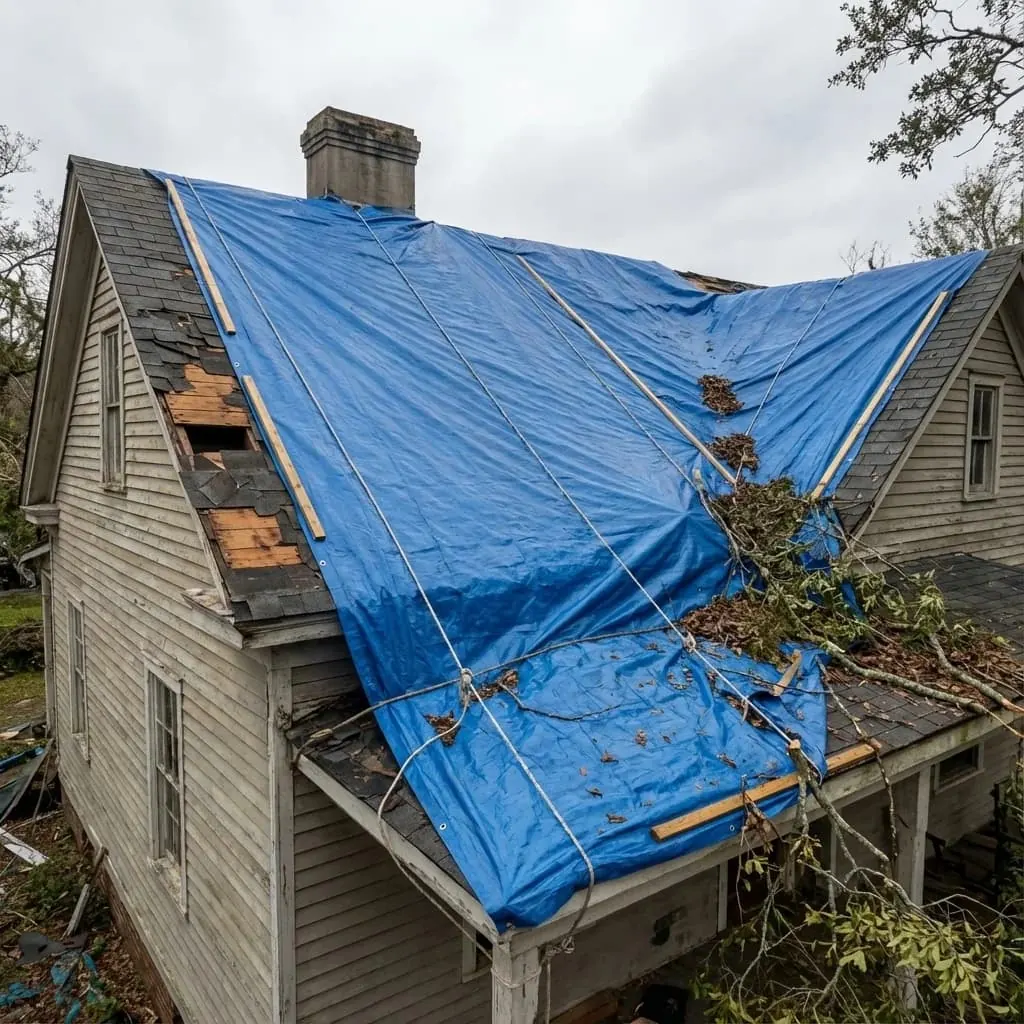
Fallen tree resting on the roof of a house after a storm

Tree Damage Response

What to do after a tree falls on your roof

A tree on a roof is frightening, and the order of what happens next matters. Safety first, water second, removal third, and the roof repair last.

Fallen tree resting on the roof of a house after a storm
A tree on the roof is a structural problem first and a roofing problem second.

First minutes

Stay out from under it, then call for help

A tree on a roof is frightening, and the first job is to keep everyone safe. Stay out of the rooms under the tree, and keep clear of the outside walls where limbs hang. A limb that looks settled can shift without warning, and a roof that has taken a hit can hide a broken rafter under the shingles. Do not climb up to look, and do not try to move the tree yourself.

Once everyone is safe, call for help in this order: the power company if a line is down or touching the tree, then a roofer for the roof, then a tree crew for the removal. A downed line is the most dangerous part of the scene, and it decides what happens next. If the tree has opened the roof to rain, a tarp goes on before the tree comes off, so the inside stays dry while the removal is planned.

Take photos from the ground before anything is moved: the tree, the roof, the rooms inside, and any water coming in. Those photos help the roofer read the damage, and they help the insurance claim that follows. Our insurance claim help page walks through what to gather and what to keep.
Five steps, in order

What to do after a tree falls on your roof

The order matters. Safety first, water second, removal third, and the roof repair last.

Step 1

Get everyone clear

Stay out of the rooms under the tree and keep clear of hanging limbs. A settled limb can shift, and a broken rafter can hide under the shingles.

Step 2

Check for power lines

If a line is down or touching the tree, call the power company and keep well clear. Never touch a line or a tree that touches one.

Step 3

Stop the water

Put buckets under drips, move valuables, and get a tarp over the opening. Water in the attic feeds mold and rot while it waits.

Step 4

Document the damage

Photograph the tree, the roof, and the rooms inside before anything is moved. Note the time, the weather, and what you heard.

Step 5

Remove, then repair

A tree crew lifts the tree off in sections, then the roofer reads the deck and framing and plans the repair. Removal first, repair second.

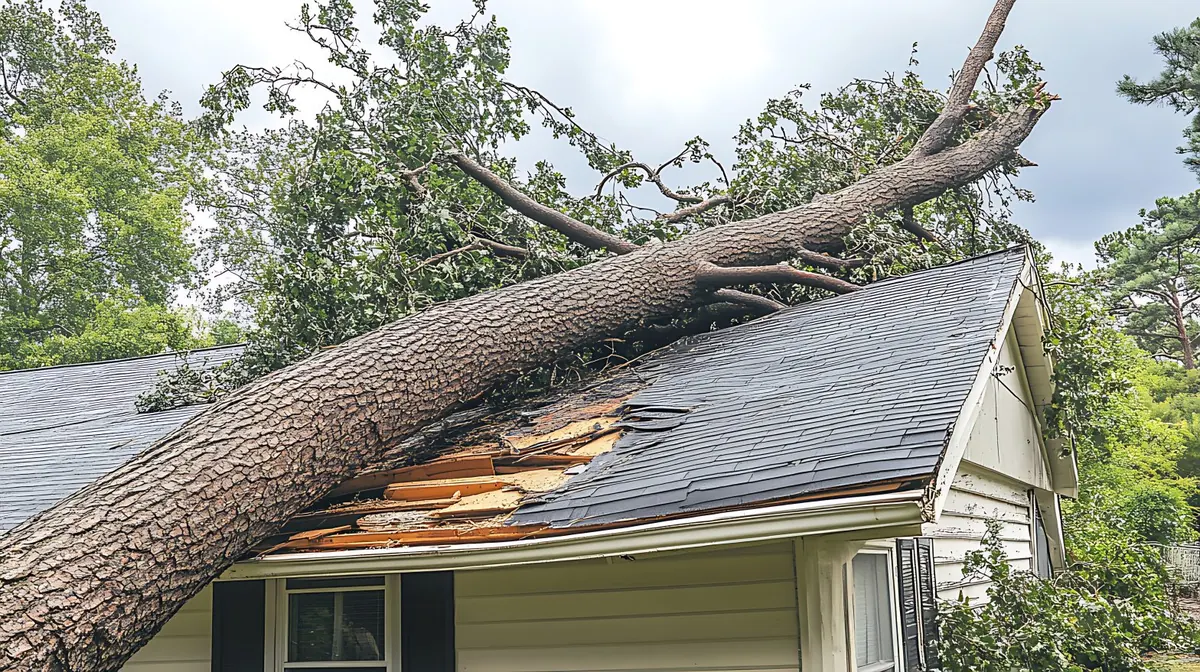
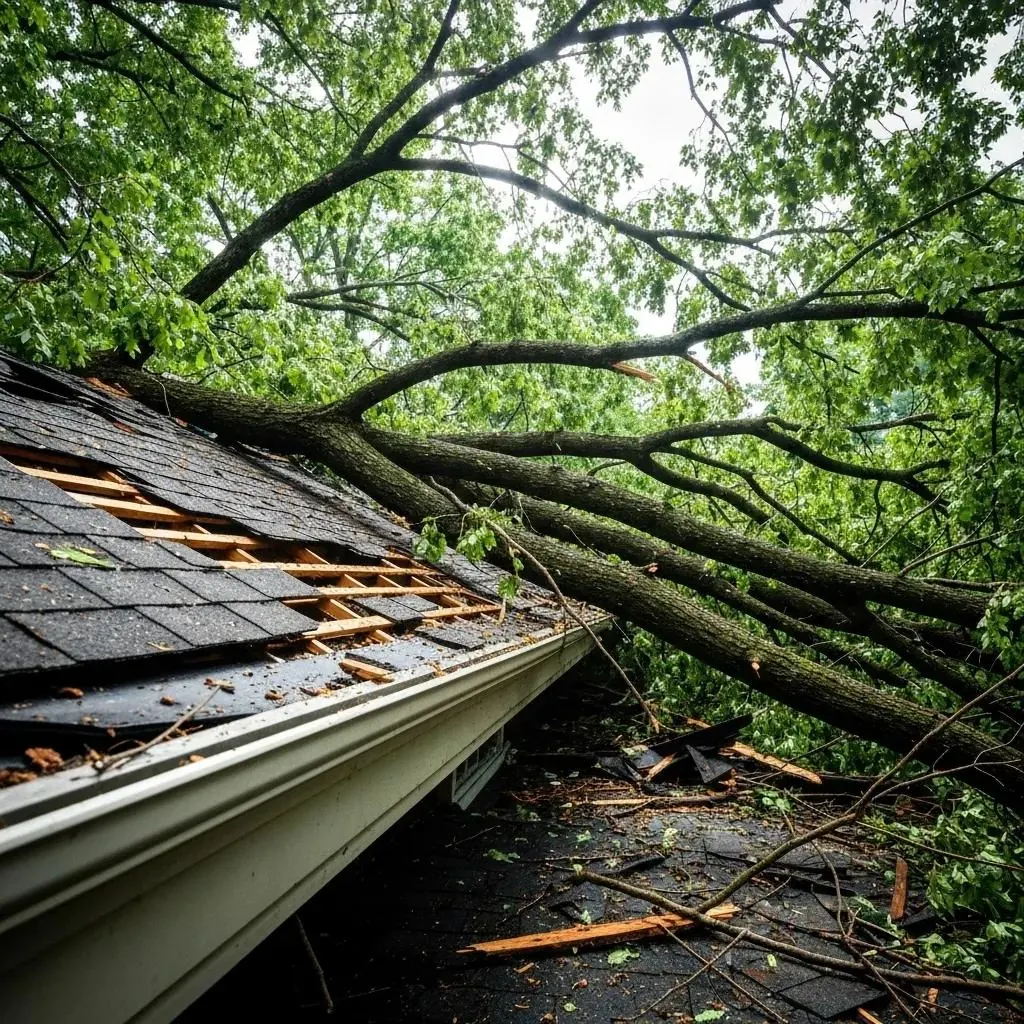
Tree branch that fell and damaged roof shingles
A single heavy limb can crack the deck and open a path for water, even when the roof looks intact from the street.

Reading the damage

What the roofer looks for under the tree

Once the tree is off, the roofer reads the deck board by board. A limb can crack a deck board without breaking through the shingles, and the crack only shows when the shingles are lifted. Rafters can split where the limb landed, and the ridge can shift if the tree hit near the peak. The roof may look fine from the street and still need framing work underneath.

The flashing takes a hit too. A limb sliding down a slope tears step flashing at the chimney and the valleys, and it can pull a vent pipe loose. Each of those joints needs a fresh read, because a joint that looks closed can open with the next freeze and thaw. Storm and hail damage repair covers the full read after a tree or a storm.

Inside, the attic tells the rest of the story. Look for cracked rafters, daylight through the deck, and water stains on the insulation. A stain that runs down a rafter marks where the water entered, and it may sit far from the limb's impact point. Our post on emergency roof tarping after storm damage explains how the opening is covered while the repair is planned.

Trees and insurance

Trees, debris, and the cleanup that follows

The tree comes off in sections, and the debris goes with it. The cleanup matters as much as the removal.

A tree crew lifts the tree off the roof in sections, starting from the top, so the roof takes no more weight than it already has. The limbs and trunk are cut and hauled away, and the yard is cleared of the smaller debris that falls during the work. The EPA publishes guidance for handling debris and damaged buildings after a storm, and it is worth a read before the cleanup starts: EPA guidance on debris and damaged buildings.

Keep the damaged shingles and deck boards the crew removes, and keep every photo and note. The roofer's written read, with photos of the cracked boards and the torn flashing, is the record the claim is built on. Roof repair in Rochester after a tree strike starts with that read, and the repair follows the damage, not the other way around.

People also ask

What people ask next after a tree falls on a roof

Short answers on safety, tarping, and the order of removal and repair.

What should I do first when a tree falls on my roof?

Get everyone out from under the tree and keep clear of hanging limbs, then check for downed power lines and call the power company if any line is involved. Put buckets under drips and get a tarp over the opening. Take photos from the ground before anything is moved, and call a roofer and a tree crew.

Can I remove a tree from my roof myself?

No. A tree on a roof is heavy, unstable, and often tangled with power lines, and lifting it wrong can drop it through the deck. A tree crew lifts it off in sections from above, with the right rigging, and a roofer reads the deck once it is clear. Leave the removal to crews with the gear.

Should the tree come off before the roof is repaired?

Yes, always. The tree comes off first, in sections, so the roof takes no more weight. Then the roofer reads the deck, the rafters, and the flashing and plans the repair. A tarp covers the opening in between, so the inside stays dry while the work is planned.

Tree on your roof right now? Call and we will help you get it covered and read.

Call (585) 868-0065

Frequently asked questions

Before you decide: tree damage answers

Look for a sagging roofline, new cracks in the ceiling, and doors that stick, which can mean the framing moved. In the attic, look for cracked rafters and daylight through the deck. A roofer reads the deck board by board once the tree is off, since a cracked board can hide under intact shingles.

Keep well clear and call the power company right away. Never touch the tree, the line, or anything touching them. A live line turns the whole tree into a hazard, and no removal or roof work should start until the power company says the scene is safe.

Not always. A limb that hits one slope may only need deck boards, shingles, and flashing in that area, while the rest of the field stays sound. A tree that lands on the ridge or across two slopes can do wider damage. The roofer's read of the deck and framing decides the scope.

A tarp is a short term cover, not a roof. It holds through rain and snow while the repair is planned, but wind and sun wear it down, and a loose tarp can tear shingles. The repair should follow as soon as the tree is off and the damage is read.

Photograph the tree on the roof, the roof from several angles, the rooms inside, and any water coming in, before anything is moved. Note the time, the weather, and what you heard. Keep the roofer's written read and photos too, since they show the damage the eye cannot see from the ground.

It depends on the damage. If the tree has opened the roof, if a rafter is cracked, or if the ceiling is sagging, stay out of the rooms under it until a roofer has read the structure. If you are unsure, treat it as unsafe and get a read before sleeping under it.

Keep reading

Read next: tarping, storm damage, and leaks

Tree on your roof?

Call now. We will help you get the opening covered, the tree crew lined up, and the damage read.