Call (585) 868-0065
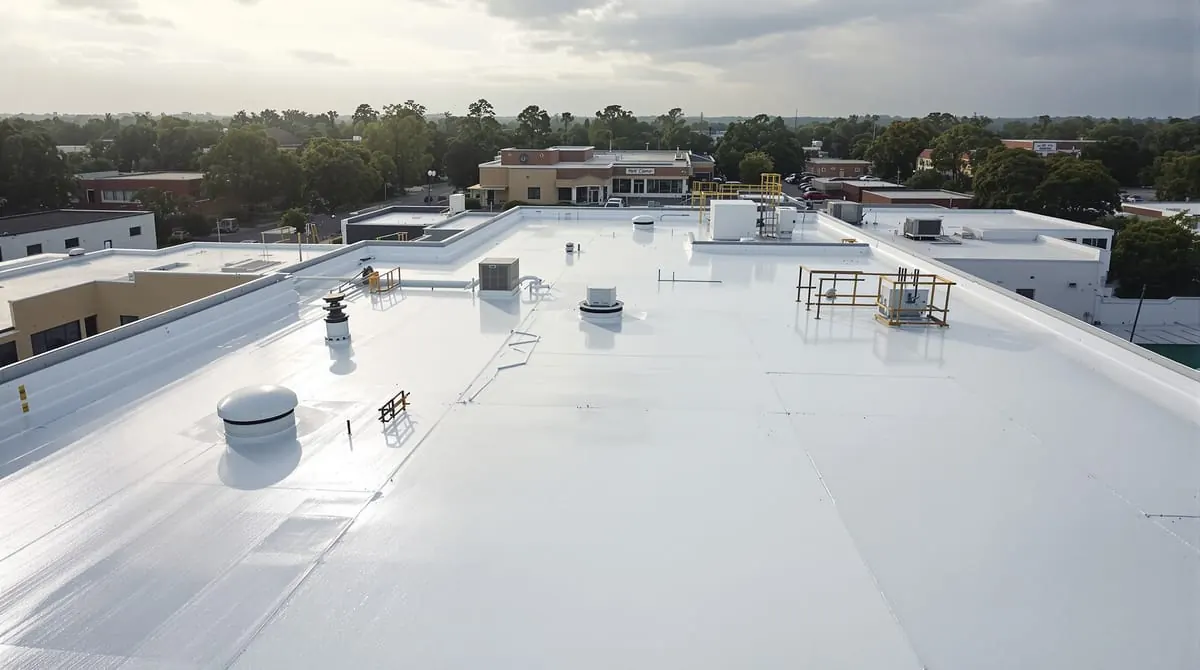
A white single-ply membrane flat roof on a commercial building

Membranes Through Winter

Flat Roof Care in Rochester's Freeze-Thaw Climate

A flat roof in Rochester lives a harder life than a pitched one. It holds every inch of snow until it melts, it ponds water after every rain, and the freeze and thaw cycles work its seams all winter long. The care it needs is different, and it starts with drainage.

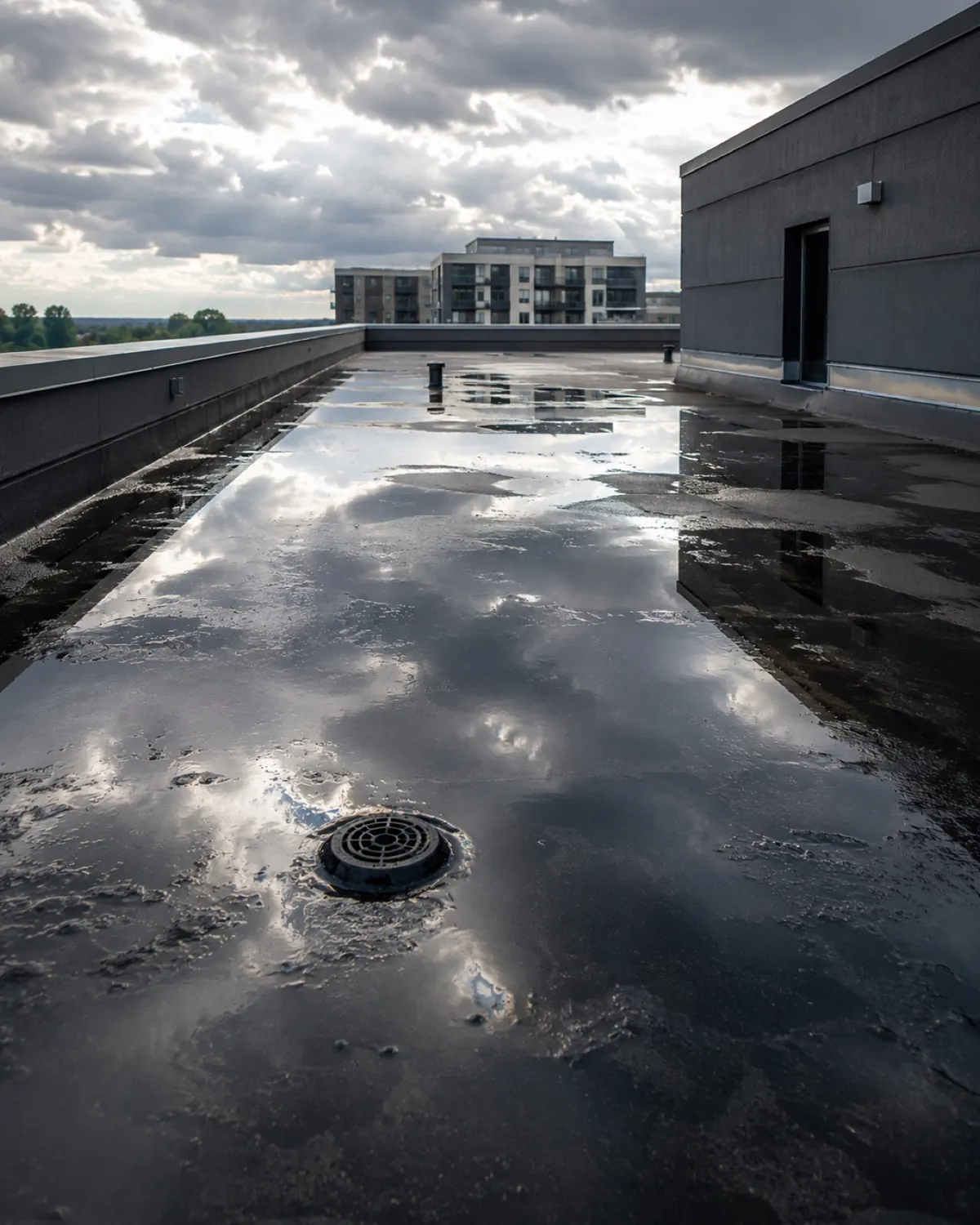
Standing water ponding on a flat roof membrane
Ponding water that sits for days after rain is the flat roof's biggest enemy in Rochester.

The core problem

A flat roof holds water, and water finds the seams

A pitched roof sheds water in seconds. A flat roof, which is really a very low-slope roof, holds it until it drains, and in Rochester that means it holds snowmelt, rain, and ice for hours or days at a time. Every hour the water sits, it works on the seams, the flashing, and the drains. The freeze and thaw cycles make it worse: water in a seam freezes, expands, and pries the seam open a little more, and the next thaw drives water deeper in.

That is why drainage is the first thing a flat roof needs, and the last thing it can do without. Drains, scuppers, and gutters have to stay clear through the whole year, and the roof needs enough slope, even a slight one, to move water toward them. A flat roof that ponds water for more than two days after a rain has a drainage problem, and the membrane underneath is aging faster than it should. Our flat, foam, and single-ply roofing in Rochester covers the systems that handle this climate.

Flat does not mean level

A good flat roof is built with a slight slope, usually toward the drains, so water moves instead of sitting. When the slope settles or the insulation compresses, low spots form, and the ponding starts. Those low spots are the first places to look in spring, and the first places to fix.
Systems compared

Flat roof systems for Rochester winters

The three common flat roof systems, and how each one handles snow, ice, and standing water.

Flat roof systems compared for Rochester freeze-thaw
SystemHow it sealsFreeze-thaw behaviorSnow and ponding
TPO single-plyHeat-welded seamsSeams stay sealed if welded wellSheds water when the slope is right
EPDM rubberGlued or taped seamsStays flexible in deep coldHandles ponding, seams are the weak spot
Spray foamSeamless coating over foamNo seams to pry openNeeds recoating to stay sealed
Modified bitumenTorch or self-adhered layersLayers move with the coldHeavy, handles foot traffic well

Scroll sideways to see the full table.

Water sitting on your flat roof after every rain? Call and get the drainage checked.

Call (585) 868-0065

Trouble signs

What a flat roof tells you when it needs help

Tap a sign to see what it usually means on a Rochester flat roof.

Water ponding for days

Ponding that lasts more than two days after rain means the slope or the drains are not moving water. The membrane ages faster under standing water, and the freeze and thaw cycles work the low spot harder. Clearing the drains is the first step, and re-sloping the low spot is the lasting fix.

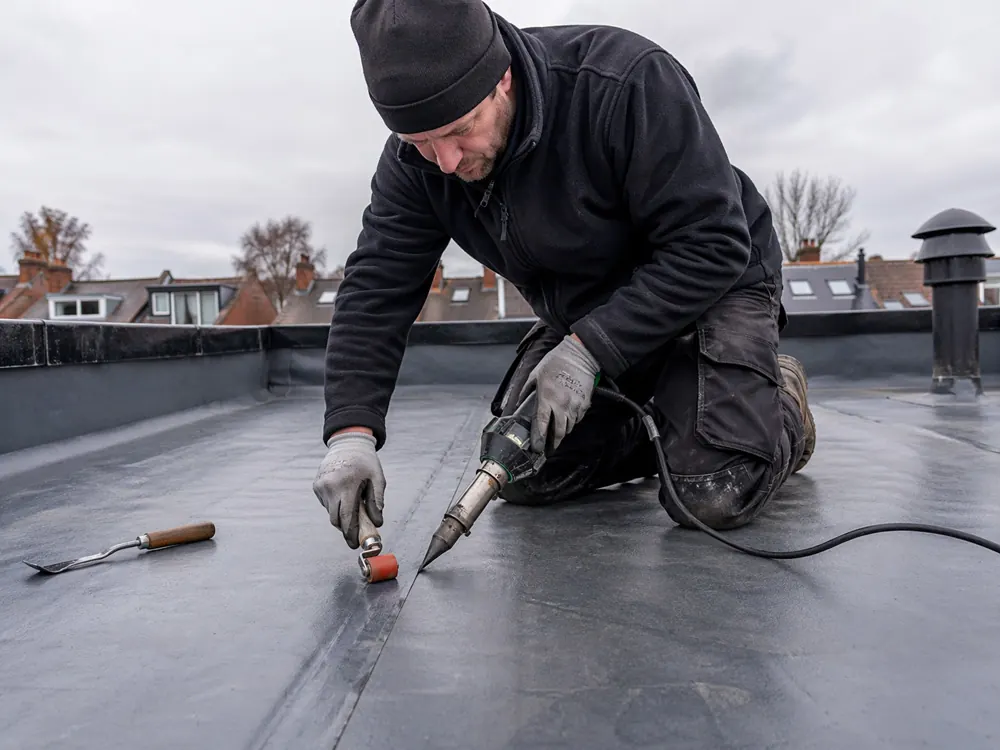
A worker welding a seam on a flat roof membrane
A welded seam on a single-ply membrane is only as good as the heat and the pressure that made it.

Year-round care

The flat roof routine that works in Rochester

Clear the drains and scuppers in spring and again in fall, after the leaves are down. Sweep the membrane clear of debris, since leaves and grit trap moisture against the surface. Walk the seams in spring looking for lifts and opens, and check the flashing at every wall and curb. After a heavy snow, clear the drains first, since a frozen drain turns the whole roof into a pond, and the pond turns into ice that pries the seams.

Keep foot traffic off the membrane when you can, and use walkway pads where the roof gets crossed often, since every step grinds grit into the surface. And get a look from a roofer every year or two, ideally in spring, since the freeze and thaw damage is easiest to read then. A flat roof that gets this routine lasts its full life, and one that does not fails at the seams years early. Our roof maintenance in Rochester includes the seasonal flat roof checks. For the pitched-roof side of the same winters, read how much snow a Rochester roof can hold and the spring roof inspection guide.

People also ask

Quick answers on flat roofs

Short answers on flat roof care in Rochester's freeze and thaw climate.

How long does a flat roof last in Rochester?

A single-ply or rubber flat roof in Rochester often serves 20 to 30 years when the drainage stays clear and the seams are checked every spring. The freeze and thaw cycles are what cut that life short: water in a seam freezes, expands, and pries the seam open a little more each winter.

Why does my flat roof pond water after rain?

Because the slope toward the drains has settled, the insulation has compressed, or the drains are clogged. A flat roof needs a slight slope to move water, and low spots form over time. Ponding that lasts more than two days after rain means the drainage needs a look.

Can a flat roof be repaired in winter?

Small repairs can be done in the cold, but the membrane is stiff and the adhesives do not bond well below a certain temperature. The best winter move is to clear the drains and keep the snow from ponding, then do the seam and flashing work in the spring, when the membrane is flexible again.

Flat roof holding water? Call and get the drains and seams checked.

Call (585) 868-0065

Frequently asked questions

What to ask about flat roof care

Single-ply TPO and EPDM rubber both handle Rochester winters well when they are installed right. TPO has heat-welded seams that stay sealed in the cold, while EPDM stays flexible in deep cold. Spray foam works too, since it has no seams, but it needs recoating to stay sealed.

Keep the drains and scuppers clear so meltwater can leave the roof, clear deep snow from the flat section after big storms, and check the seams and flashing every spring. A frozen drain turns the roof into a pond, and the pond turns into ice that pries the seams open.

Water that drains within two days is normal on a low-slope roof. Water that sits for days, or that stays through a freeze, is a problem: it ages the membrane faster, adds weight to the structure, and works the seams with every freeze and thaw cycle.

As little as possible. Foot traffic grinds grit into the membrane, and a cold membrane is stiff and easy to crack underfoot. Use walkway pads where the roof gets crossed often, and stay off it entirely when it is covered in snow and ice.

Trapped air or moisture under the membrane, which expands in the sun and splits in the cold. Small blisters can be cut out and patched, but a roof full of them means the bond to the deck has failed, and the membrane is near the end of its life.

Every year or two, and always in the spring after the freeze and thaw season. The inspection checks the drains, the seams, the flashing, and the low spots, and it is what catches an open seam while it is still a patch instead of a leak.

Yes. A pitched roof sheds snow, while a flat roof holds every inch until it melts or drains. A clogged drain can turn a snow load into standing water on top of it. Keep the drains clear through winter, and clear deep snow from the flat section after big storms.

Keep reading

Related articles

Flat roof ponding or leaking in Rochester?

Tell us what you see on the membrane and at the drains, and we will check the slope, the seams, and the flashing.